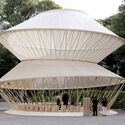
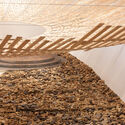
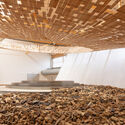
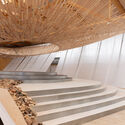
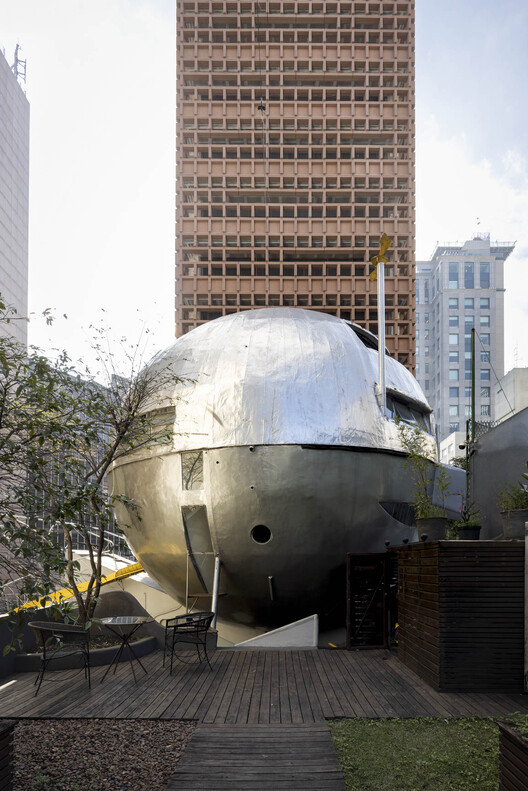
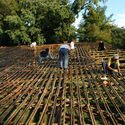
Zaha Hadid Architects' design for a digitally fabricated marine habitat in the North Lantau Marine Park conservation zone in Hong Kong was recently presented at the World Design Congress exhibition in London. The event took place at the Barbican Centre between September 9 and 10, one of the world's most recognized examples of Brutalist architecture. Its theme, "Design for Planet," called on designers and commissioners of design to take on their most critical brief to date: to design a regenerative future in the face of climate change and to examine design's role as a tool for environmental action. In this context, Zaha Hadid Architects presented Nereid, a digitally fabricated habitat developed with advanced 3D printing technologies by D-Shape, aimed at supporting the natural regeneration of marine ecosystems.
From September 6 to October 15, 2025, the Aedes Architecture Forum in Berlin will host an exhibition on the Finnish architectural firm Helin & Co. The show aims to examine the firm's role in shaping Helsinki over the past two decades. Titled Heart and Horizon, it reflects the practice's approach of combining the human scale ("Heart") with an engagement with urban space along the waterfront ("Horizon"). A central focus is placed on three projects that have been fundamental to Helsinki's transformation: the Kamppi Centre, a networked urban quarter with mobility hubs, cultural and residential areas; the Kalasatama Centre, a new district on the former harbour that combines urban density with views of the sea; and the Sello District Centre in Espoo, a multifunctional complex with a library, music school and concert hall.
The international design competition to select the architect for Finland's new Museum of Architecture and Design in Helsinki has concluded with the announcement that JKMM Architects has been awarded first prize. The Helsinki-based practice's proposal, known during the competition as Kumma, was chosen from 624 entries submitted from around the world. The open and anonymous competition, launched in April 2024, sought conceptual designs for a new 10,050-square-meter cultural institution to be built on the city's South Harbor waterfront. Construction is scheduled to begin in 2027, with completion and public opening planned for 2030.
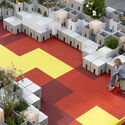
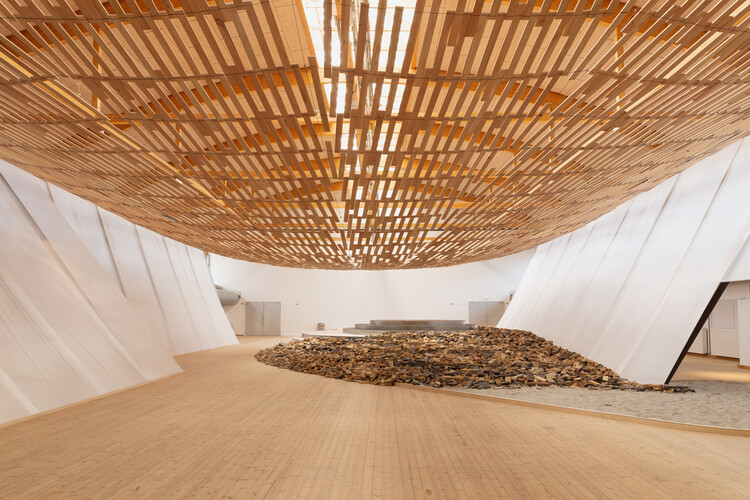
Working with the site instead of against it, the exhibition "Architecture is Cooperation," curated by Josep Ferrando, emphasizes the value of cooperation at the essence of architecture. Showcasing the work of professionals, organizations, and communities in cooperation projects driven from Spain, the installation takes shape through an exhibition design in earth and wood. The choice of these materials is understood not only from their aesthetic or symbolic qualities but also from their functionality and commitment to the principles of the circular economy. Until September 30, 2025, the exhibition will be on view at the Casa de la Arquitectura in Madrid, highlighting the necessary attention of architecture to the demands of the most vulnerable societies and communities by aligning the constructive language with the content of the exhibition.
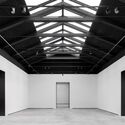
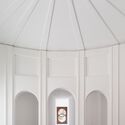
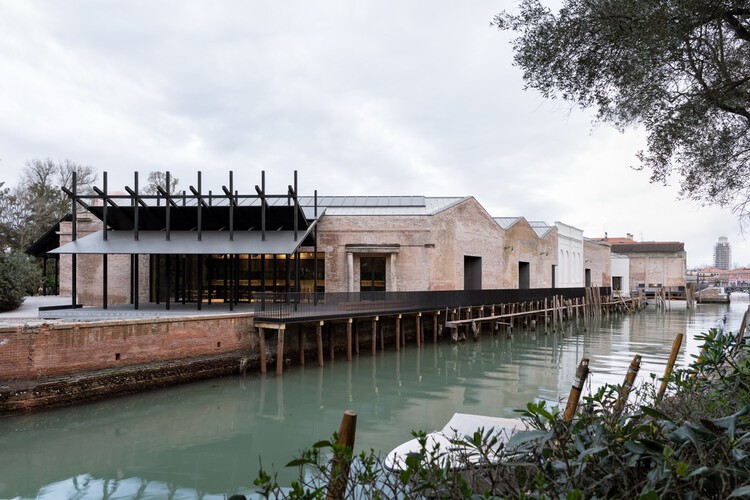
The Uzbekistan Art and Culture Development Foundation (ACDF) has announced the transformation of a 1912 industrial building in Tashkent into the Centre for Contemporary Arts (CCA), set to become the first permanent institution dedicated to contemporary art and research in Central Asia. Designed by the French architecture practice Studio KO, led by Karl Fournier and Olivier Marty, the project integrates preservation of the city's industrialheritage with a new cultural identity for the historic site. The building, originally designed by Wilhelm Heizelmann, known for the Treasury Chamber, was constructed as a diesel station and depot for Tashkent's first tram line. After decades of serving the city's electricity network, the structure was transferred to the Foundation in 2019 as part of Uzbekistan's long-term cultural development strategy. Under the leadership of Gayane Umerova, the project now represents a major step in shaping a contemporary cultural infrastructure for the region.
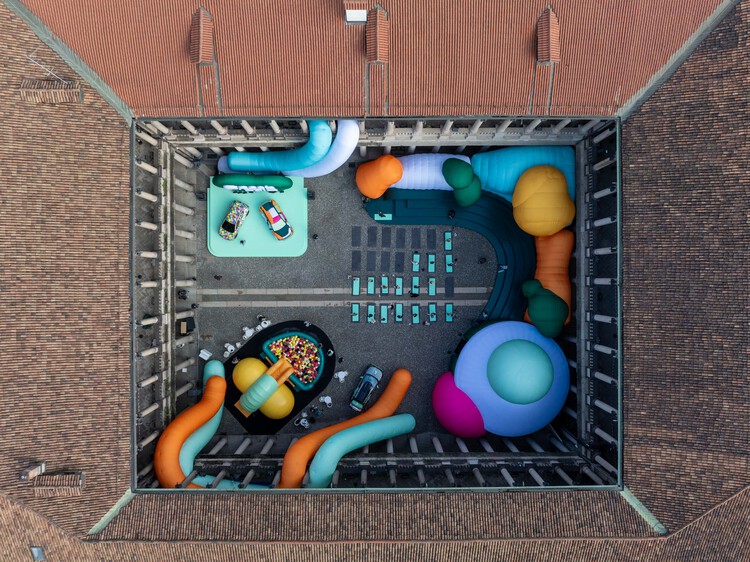
"Spinning Around" installation by Sophia Taillet. Musée de la Chasse et de la Nature, 4–13 September 2025. Image Courtesy of Maison & Objet
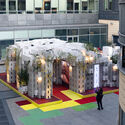
This year, the Maison&Objet interior design trade fair and the city-wide celebration Paris Design Week joined forces to highlight emerging designers, bring renewed value to French métiers d'art, and temporarily transform heritage landmarks with contemporary design visions. Both events began on September 4, turning Paris into a city-wide design festival. Galleries, showrooms, and concept stores opened their doors, while renowned landmarks became venues for designers from more than 30 countries. The abundance and diversity of the program have drawn comparisons to Milan Design Week, while giving Paris a distinct platform on the global design calendar. This article presents a selection of installations and exhibitions of architectural interest that emerge from the synergy between the two initiatives.
The Philippines' Pavilion at the 19th International Architecture Exhibition – La Biennale di Venezia presents Soil-beings (Lamánlupa), an exhibition curated by artistic director Renan Laru-an. Through interdisciplinary collaborations, the Pavilion brings together architects, technical experts, indigenous leaders, artists, policymakers, and local communities to explore the cultural, ecological, and technological dimensions of soil. Its objective is to challenge conventional architectural paradigms by shifting the focus from structure to soil, not as a passive material, but as a living force with agency, history, and power.
National Museum of Uzbekistan, Render by Tadao Ando Architect & Associates. Image Courtesy of The Uzbekistan Art and Culture Development Foundation
The Uzbekistan Art and Culture Development Foundation (ACDF) has announced the groundbreaking of the National Museum of Uzbekistan, designed by Japanese architect Tadao Ando. Marking Ando's first major project in Central Asia, the museum is envisioned as both an architectural and culturallandmark in Tashkent. Planned to open in March 2028, the building reflects Ando's minimalist architectural language, integrating references to Uzbekistan's heritage with his characteristic use of geometry, natural light, and spatial clarity.
The 2025 edition of the European Cultural Centre's (ECC) Time Space Existenceexhibition in Venice is guided by the mandate to "Repair, Regenerate, and Reuse." Aiming to move beyond surface-level solutions and overused terminology, the exhibition showcases a cohort of practitioners who interpret architecture as an active agent of repair. The most compelling works presented in Venice demonstrate that "repair" is a multifaceted practice, operating across material, social, and historical registers. The varied approaches showcase a shift in the role of the architect, from a master builder and designer of physical objects, to that of a mender, able to combine technology, community, and material intelligence to restore narratives and build stronger cultural systems.
Soleil·s, the second edition of the Solar Biennale, is currently open at mudac, the Museum of Contemporary Design and Applied Arts in Lausanne, Switzerland. Following the first edition hosted at Het Nieuwe Instituut in Rotterdam in 2022, this exhibition explores how design can drive the adoption of solar innovations toward a sun-powered future. The event is initiated by The Solar Movement, founded by designers Marjan van Aubel and Pauline van Dongen, an initiative dedicated to making solar energy the default power source by combining design, technology, and advocacy. This year's exhibition is curated by mudac and offers an immersive experience featuring new and existing projects by TAKK, ecoLogicStudio, Olafur Elíasson, and Andreas Gursky.
As part of the collateral events of the 2025 Venice Architecture Biennale, the Institut Ramon Llull presents the project "Water Parliaments: Projective Ecosocial Architectures", bringing together the waters of Lleida, Girona, Tarragona, Barcelona, Valencia, the Balearic Islands, and beyond to address the water crisis as an interconnected ecosocial, cultural, and political issue. Framing architecture as a tool for critical speculation and collective action, the project advocates for the imagining of future scenarios grounded in coexistence—interweaving the human and non-human, the natural and artificial, the technological and vernacular, the global and the local.
The Deutsches Architekturmuseum (DAM) in Frankfurt has opened a new exhibition titled Building Cities Today?, examining the complexities of developing new urbanneighborhoods in Germany. Running from June 28 to November 2, 2025, the exhibition brings together nine projects that reflect diverse approaches to newurban planning, with a focus on sustainability, social integration, and long-term adaptability. Referencing the legacy of the "Neues Frankfurt" housing program of the 1920s, the exhibition opens with the Römerstadt estate, one of Germany's early experiments in functional and standardized housing. From there, it transitions to eight urban developments from the 1990s to the 2020s, presenting case studies that include HafenCity in Hamburg, Bahnstadt in Heidelberg, Neckarbogen in Heilbronn, City of Wood in Bad Aibling, and Messestadt Riem in Munich.
The Museum of Modern Art (MoMA) in New York is hosting an exhibition dedicated to Japanese architect Kisho Kurokawa's Nakagin Capsule Tower from July 10, 2025, through July 12, 2026. Titled The Many Lives of the Nakagin Capsule Tower, the exhibition offers a retrospective on the building's 50-year lifespan. Constructed in Tokyo's Ginza district in 1972 and dismantled in 2022, the tower is presented through contextual materials, original drawings, archival recordings, and a fully restored capsule. The exhibition invites reflection on how cities address aging buildings and the rapid transformation of urban areas. The diverse materials documenting the tower's continuous evolution over five decades encourage viewers to consider how architecture might endure by taking on new roles and functions beyond its original purpose.
Studio Gang is an architecture and urban design practice founded in 1997 by Jeanne Gang and based in Chicago, with additional offices in New York, San Francisco, and Paris. Comprised of over 100 professionals, including architects, designers, and planners, the studio is known for its research-driven approach to design. On Friday, July 11, the Aedes Architecture Forum in Berlin will inaugurate an exhibition on Studio Gang's work, organized in collaboration with AW Architektur & Wohnen magazine. Titled Studio Gang: The Art of Architectural Grafting, the exhibition explores the studio's design methodology through six recent projects.