Dornbracht's Coya series designed by Sieger Design. Image Courtesy of Dornbracht
When is a form still circular or rectangular? In twentieth-century modernism, this question was largely absent. Architecture was built on clarity, reduction, and formal purity. Influenced by architects such as Le Corbusier and Ludwig Mies van der Rohe, modernist design established a visual order based on rational geometry, industrial materials, and the rejection of ornament. Circle and square, function and expression, were kept strictly apart—a logic that dictated the rigid, modular layouts of traditional bathrooms for decades.
What defines the atmosphere of a home? Beyond material palettes and natural light, sound plays a defining role in how spaces are perceived and inhabited. The reverberation of footsteps across stone, the muted calm of a textile-lined room, or the way music carries through an open-plan interior all shape the sensory identity of domestic space. Architecture is experienced not only visually, but acoustically.
The concept of the "soundscape" describes this relationship between people, sound, and the built environment. In residential architecture, sound is more than background noise or technical performance; it influences privacy, concentration, rest, and emotional comfort. Geometry and materiality act as the primary acoustic conductors: while concrete, glass, and stone reflect and amplify, timber and upholstery soften and absorb. Ceiling heights, circulation paths, and room proportions further shape how sound travels and settles across a space.
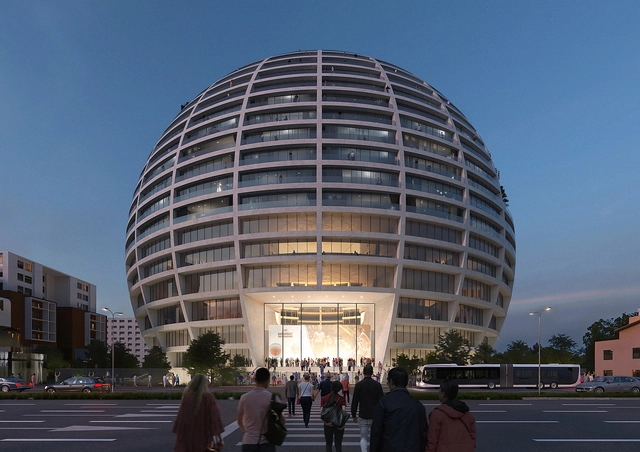
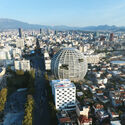
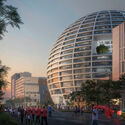
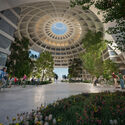
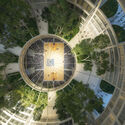
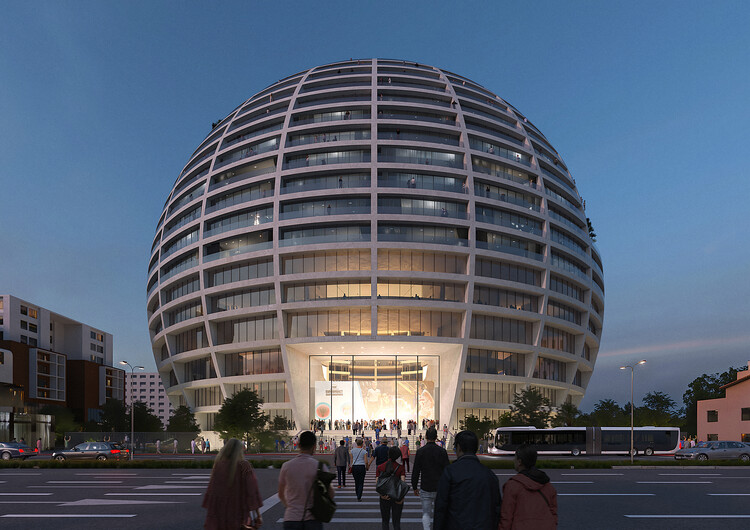
"The Grand Ballroom" Asllan Rusi sports palace project in Tirana, Albania by MVRDV. Image Courtesy of MVRDV
Tirana, the capital of Albania, is experiencing a rapid transformation driven by the long-term urban strategy outlined in the Tirana 2030 (TR030) Master Plan. Developed in 2017 by Stefano Boeri Architetti, UNLAB, and IND [Inter.National.Design] through a competition organized by the Ministry of Urban Development, the plan's objectives include increasing urban density, improving public infrastructure, and integrating green spaces and open areas into the urban fabric. It is in this dynamic setting that MVRDV has won the international competition for Tirana's new Asllan Rusi Sports Palace. Conceived as a mixed-use development, the project, named The Grand Ballroom, combines a 6,000-seat arena for basketball and volleyball with residential apartments, a hotel, and ground-level retail. With its spherical form exceeding 100 metres in diameter, the design adds a distinctive landmark to Tirana's growing collection of ambitious architectural projects.
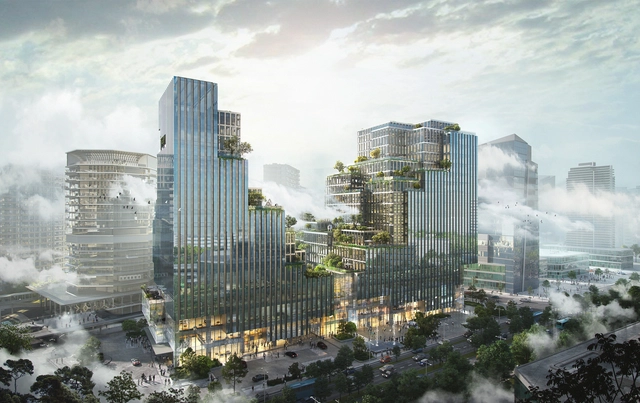
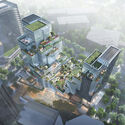
Büro Ole Scheeren has revealed their design for an 800,000 sq ft development following the concept of live-work-lay in Hangzhou, China. Titled Urban Glen, the project situated between West Lake and the Qiantang River comprises two towers connected by a central plinth. This feature, inspired by Hangzhou's hilly landscapes, becomes a built topography of terraces and exterior environments, aimed at optimizing natural light and the quality of both indoor and outdoor spaces. The Glen will house a variety of amenities, including ballrooms, meeting spaces, restaurants, and retail, all interwoven with public art from New World Development's extensive collection.
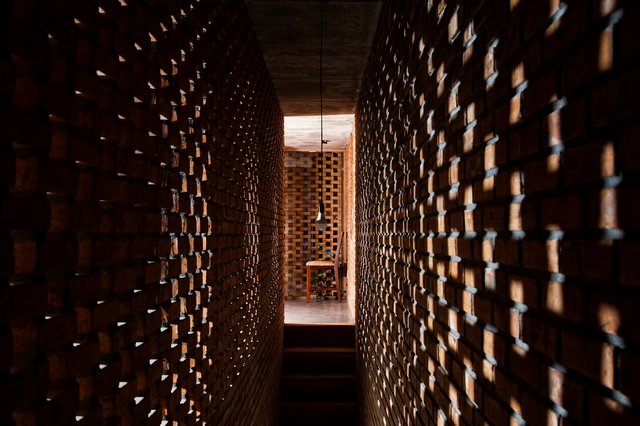
Although an architectural project comes to life with palpable materials, it is also defined by intangible qualities that give it richness, dynamism, and liveliness. Among them, the interplay of light and shadow can transform environments and affect their perception, determining the user's spatial experience. Besides providing natural ventilation, privacy, and thermal comfort, lattices allow this duality by filtering the entry of sunlight while projecting repetitive figures on the surface. In this way, perforated walls and ceilings can create multiple geometric patterns of light and shadow that become design elements capable of generating unique atmospheres.
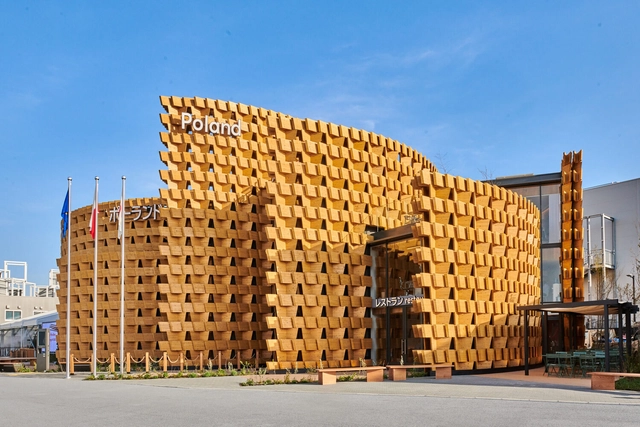
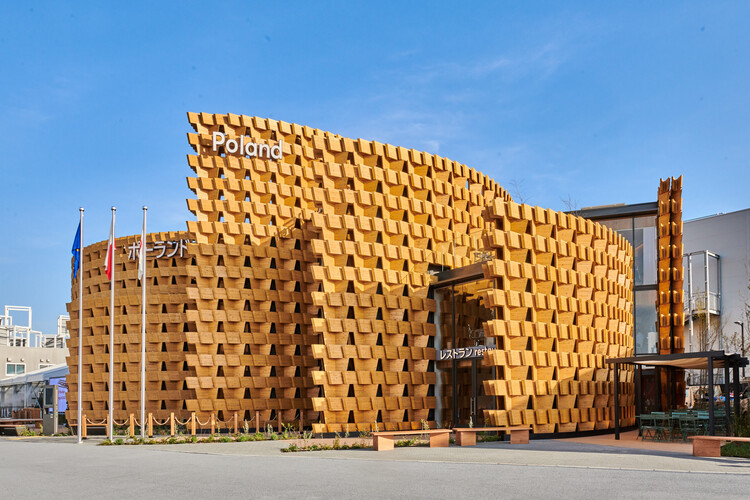
The Polish Pavilion at Expo Osaka 2025. Image Courtesy of Polish Pavilion Expo 2025
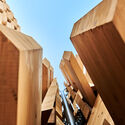
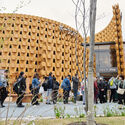
Commissioned by the Polish Investment and Trading Agency, Poland's Pavilion at the World Expo in Osaka is designed by Interplay The project is responding to the theme of the upcoming Expo, "Designing Future Society for Our Lives" and was born from the Interplay's fascination with spirals, specifically the shape's use in different scales, from "protein molecules to the structure of galaxies." Serving as a symbol of Polish ingenuity, the geometric-patterned pavilion aims to extend its influence beyond national boundaries.
In his latest TED Talk, Thomas Heatherwick decries a condition affecting areas of the city defined by monotonous buildings, or what he calls “an epidemic of boringness.” While recognizing the functionality which drove these designs, he states that functionality alone cannot ensure that the structures become active parts of urban life, as they often fail to provoke an emotional response from passers-by. Heatherwick explains that, in his view, this emotional function, or the ability of buildings to mean something to their users and visitors, is essential. When it succeeds, architecture can positively contribute to the quality of life and well-being of its residents, promote social cohesion and contribute to a sense of identity. So how can architecture provoke a positive emotional connection and provide an enjoyable backdrop to the communities it serves?
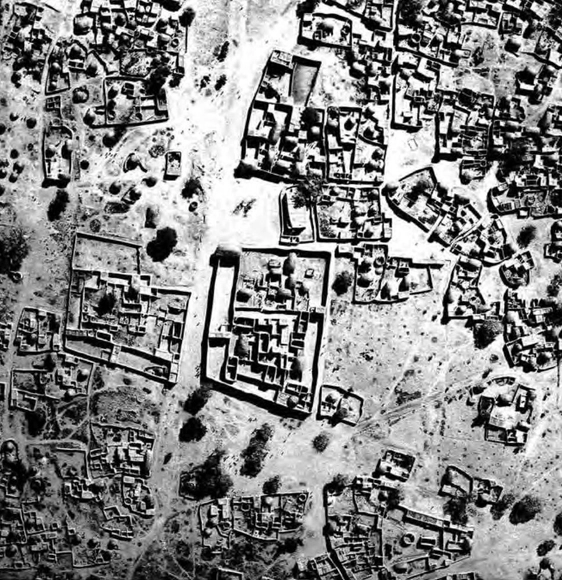
Fractals are complex geometric shapes with fractional dimensional properties. They have emerged as swirling patterns within the frontiers of mathematics, information technology, and computer graphics. Over the last 30 years, these patterns have also become important modeling tools in other fields, including biology, geology, and other natural sciences. However, fractals have existed far beyond the birth of computers, and have been observed by anthropologists in indigenous African societies. One of which is Ron Eglash; an American scientist who presents the evidence of fractals in the architecture, art, textile sculpture, and religion of indigenous African societies. In his book, “African Fractals: Modern Computing and indigenous design”, the fractals in African societies are not simply accidental or intuitive but are design themes that evolve from cultural practices and societal structures.
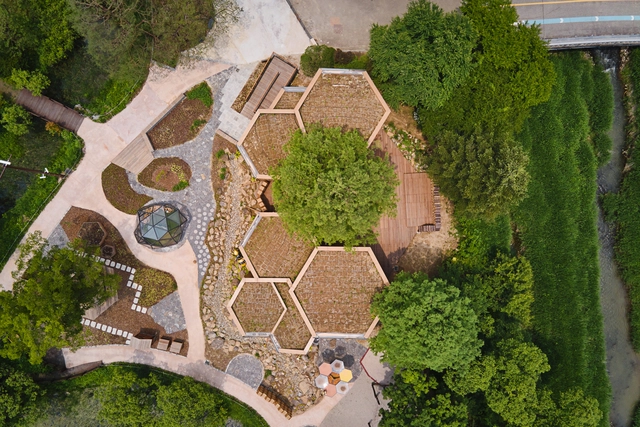
Despite not being found in nature, right angles are the most used by architects. In the search for more functionality and practicality in construction, squares and rectangles emerge as the main option when designing. On the other hand, several vernacular and ancestral architectures adopted arches and circular plans as a solution. The game of geometric shapes in the architectural composition is vast, but we cannot forget a polygon that also stands out: the hexagon.
Bees are perhaps the insects that most arouse our fascination and curiosity. With the exception of Antarctica, they are found on all continents, in all habitats that contain insect-pollinated flowering plants. Representations of humans collecting honey from wild bees date back to 15,000 years ago, and pots of honey have even been found in the tombs of Egyptian pharaohs like Tutankhamen. Although we generally have a fixed idea about what cartoon bees look like, there are thousands of species around the world, with different sizes, colors and behaviors. There are even several examples of solitary bees, many without stingers, and even some species that survive by plundering other weaker colonies. But something that has consistently impressed researchers is the organization of their hives, which are truly highly populated cities with an efficiency to make any urban planner envious.
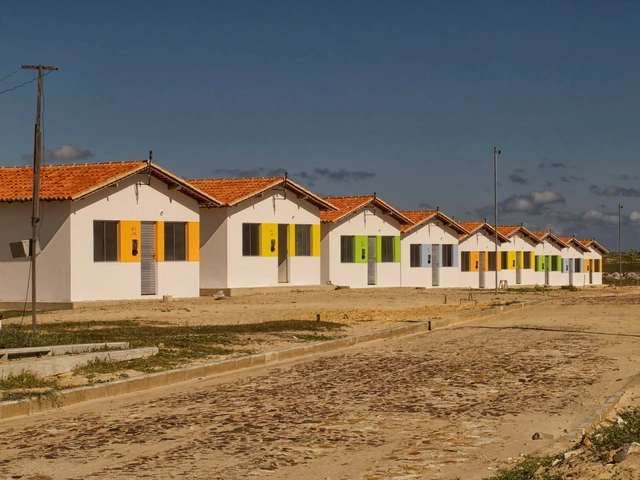
Program Minha Casa Minha Vida - Luís Correia/PI. Foto: Otávio Nogueira, via Flickr. Licencia CC BY 2.0
Having explored the design that establishes 'emotional ownership' and the antipatrons of social housing, Nikos A. Salingaros, David Brain, Andrés M. Duany, Michael W. Mehaffy and Ernesto Philibert-Petit continue their series of articles on social housing in Latin America. This time, the proposal studies how control influences the urban form and the form of housing.
https://www.archdaily.com/917182/socially-organized-housing-the-geometry-of-controlNikos A. Salingaros, David Brain, Andrés M. Duany, Michael W. Mehaffy & Ernesto Philibert-Petit
I happened to be in architecture school when the laser cutter was still a bit of a novelty for the inexperienced students in their first years of study. Sure, it saved you a lot up-close-and-personal-time with the X-Acto knife, but to unlock the true potential of the laser cutter one had to introduce a level of detail into the design or model that would otherwise be a nightmare to create by hand.
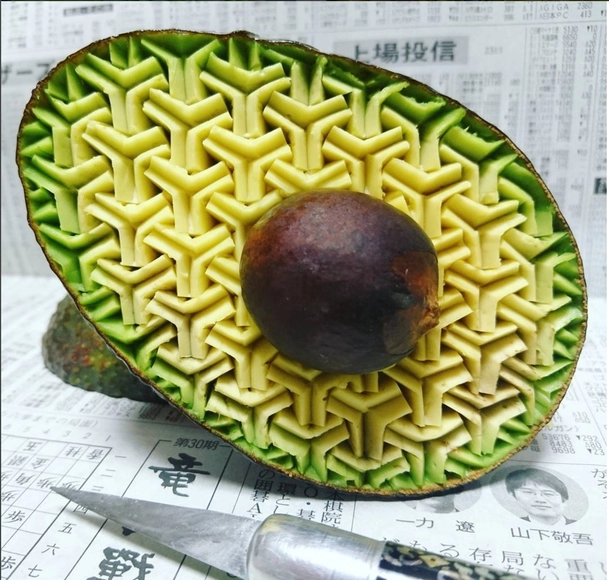
But here comes Japanese Instagram Fruit and Vegetable Carver gaku carving to make our jaws drop. How?! Why!? And on such an ephemeral canvas?! Who knows. But holy fractal if it isn't a work of geometric perfection. These videos capture levels of patience and precision that many only dream of.
Japan has a rich tradition of food carving called mukimono. If you’ve ever eaten at a fancy restaurant in Japan you might have found a carrot carved into a bunny, garnishing your plate. But in the hands of Japanese artist Gaku, the art of fruit and vegetable carving is elevated to a new realm of edible creations.
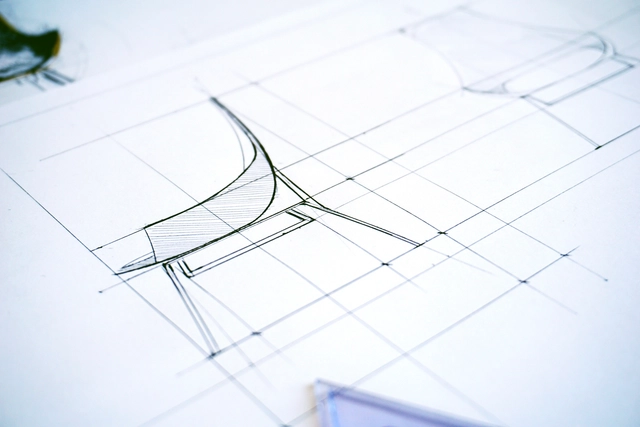
The black sheep of all architectural drawing has got to be technical drawing. Everybody loves drawing perspectives, sketches —you know the creative, interesting and expressive part of architectural drawing. But what about the aspects of drawing: the technical, logical, rational part? It might not be as sexy as freehand drawing, but it is just as important.
If you don’t know proper technical drawing skills it will show in your work; your perspectives will look ‘less smart’ and badly proportioned and your designs will lack consistency. So in order to make technical drawings look less cold and more approachable, I’m sharing the best 20 technical drawing tips I’ve come across.
A new train station in Cambridge is getting a lot of attention from a surprising audience: mathematicians. Cambridge North Station is clad in aluminum panels with a geometrical cutout design. The architecture firm, Atkins, originally claimed that the pattern was derived from Cambridge alumnus John Conway’s “Game of Life,” but eagle-eyed mathematicians soon realized that was incorrect. As the above video points out, the design is in fact based on a mathematical rule studied by Stephen Wolfram, an Oxford alumnus, much to the dismay of rival university Cambridge. Though the firm’s website still references Conway, a Senior Architectural Designer at Atkins, Quintin Doyle, has since confirmed that it was, in fact, Wolfram’s Rule 30 that they used in the design.
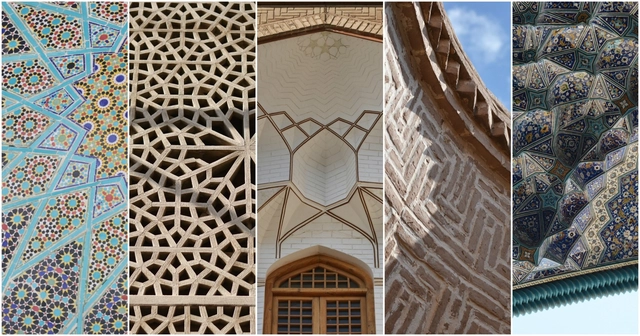
Iran’s geography consists largely of a central desert plateau, surrounded by mountain ranges. Due to the country being mostly covered by earth, sand, and rock, Iranian architecture makes fantastic use of brick or adobe elements. Most of the buildings seen in larger cities such as Tehran and Isfahan are constructed using similar brick-laying methods as can been seen in other parts of the world, but certain constructions, usually ones that date further back, contain incredible geometrical treasures. And it doesn’t stop there - old Iranian architecture often contains a layer of tiles over the brick constructions that can create just as mesmerizing geometrical wonders. The art of creating complexity by using many incredibly simple elements is one that has been mastered in Iran. In an architectural world where construction has become hidden by layers of plaster and plywood, we could learn a lot from the beauty of Iran’s structural geometry, where skin and structure are (almost always) one and the same.