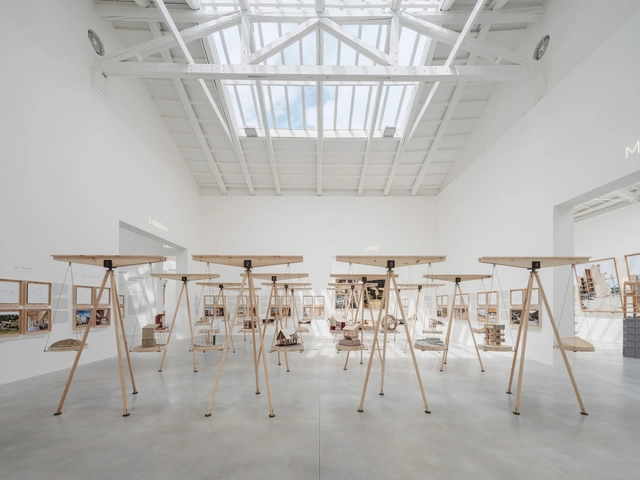
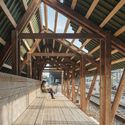
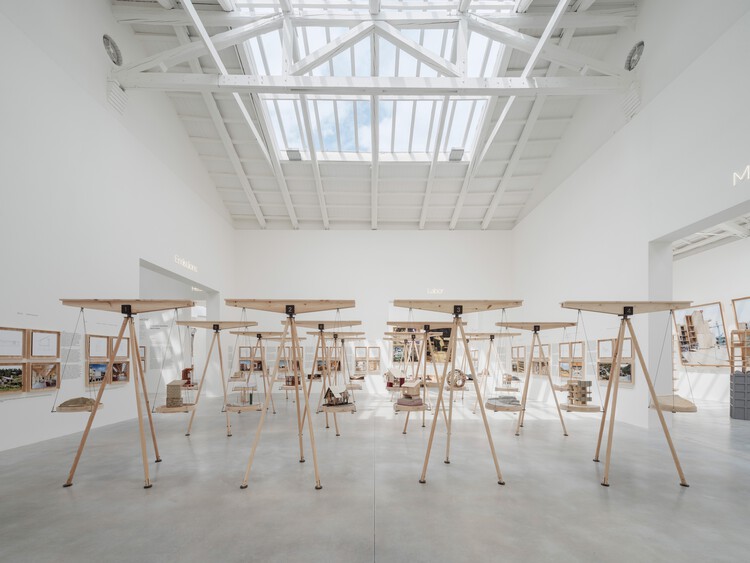
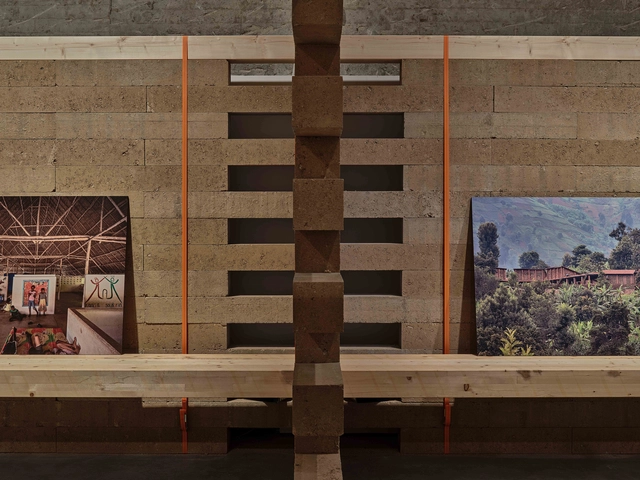
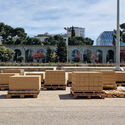
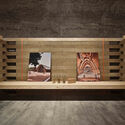
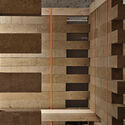
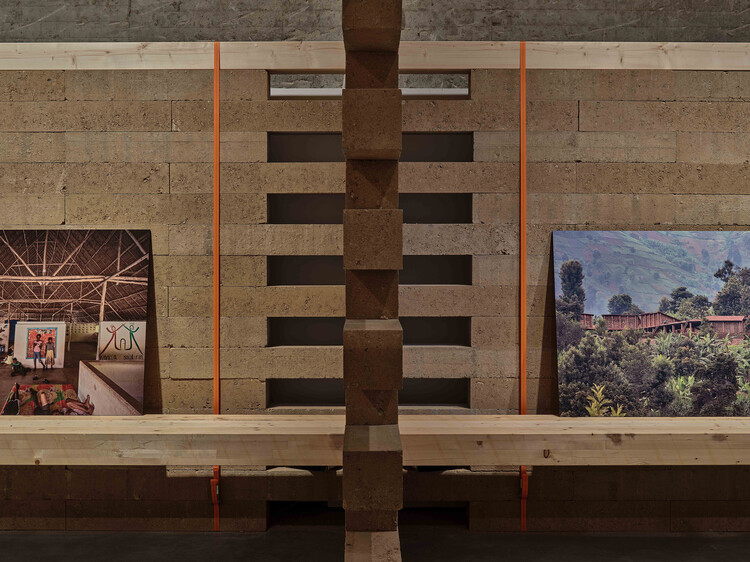
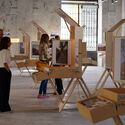
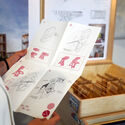
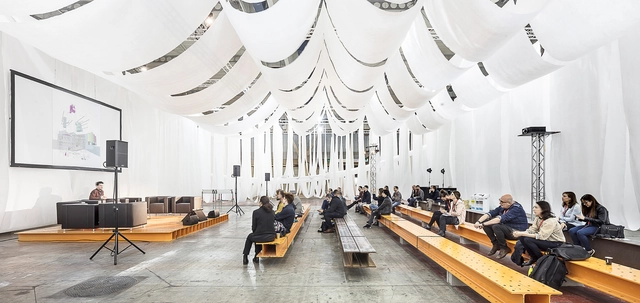
Working with the site instead of against it, the exhibition "Architecture is Cooperation," curated by Josep Ferrando, emphasizes the value of cooperation at the essence of architecture. Showcasing the work of professionals, organizations, and communities in cooperation projects driven from Spain, the installation takes shape through an exhibition design in earth and wood. The choice of these materials is understood not only from their aesthetic or symbolic qualities but also from their functionality and commitment to the principles of the circular economy. Until September 30, 2025, the exhibition will be on view at the Casa de la Arquitectura in Madrid, highlighting the necessary attention of architecture to the demands of the most vulnerable societies and communities by aligning the constructive language with the content of the exhibition.
Miguel Ramón López y Ander Bados Sesma, comisarios de la XVII Bienal Española de Arquitectura y Urbanismo. Image Courtesy of XVII Bienal Española de Arquitectura y Urbanismo
The seventeenth edition of the Spanish Biennial of Architecture and Urbanism (BEAU) will take place in December 2025. The event consists of an exhibition hosted in a former thermal power station repurposed as a cultural center in Ponferrada, in northeastern Spain. This edition will be curated by architects Ander Bados Sesma, from Atelier Ander Bados, and Miguel Ramón López, a Ponferrada native and architect at Estudio Lamela, under the curatorial proposal titled flujos comun.es ("common flows"). Their curatorial proposal responds to the theme of the open call: Architecture as a Policy for Change, an invitation to reflect on the role of the discipline in processes of social, economic, and environmental transformation. Within this framework, flujos comun.es presents a critical perspective on the challenges associated with hyperconnectivity. The call for proposals and project submissions is currently open, and will be until the end of July, depending on the category.
Cooking and architecture parallel one another. Combining ingredients to make a whole, both processes are tied to cultural context, creativity and meaning. While we can understand how cultures have changed over time by looking at how their cuisine has changed, the same can be said of architecture. In both cases, the end products are based around human interaction and are brought to life through experience.
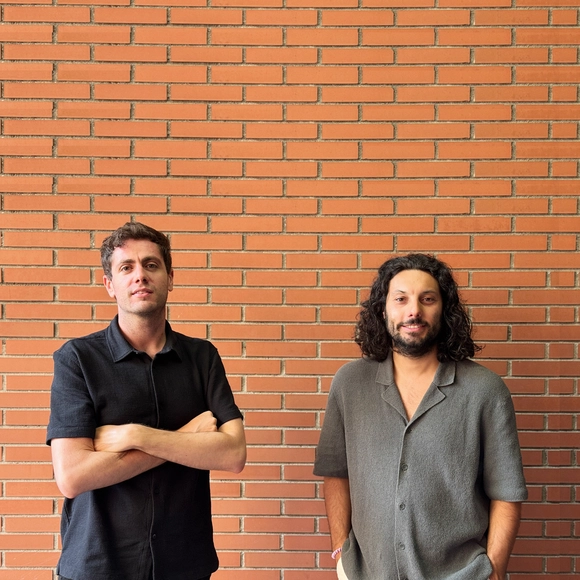
Josep Ferrando is an architect based in Barcelona. He is the Dean of the La Salle Higher Technical School of Architecture (ETSALS), as well as Director of the Obert d'Arquitectura Center of Barcelona and of the Department of Culture of the College of Architects of Catalonia (COAC). Combining his academic career and his frequent lectures, his office develops projects that explore different scales and materials, experimenting with constructive systems and innovative solutions. We talked with him about the importance of materials in architecture, and about the synergies he finds between practice and teaching.
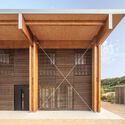
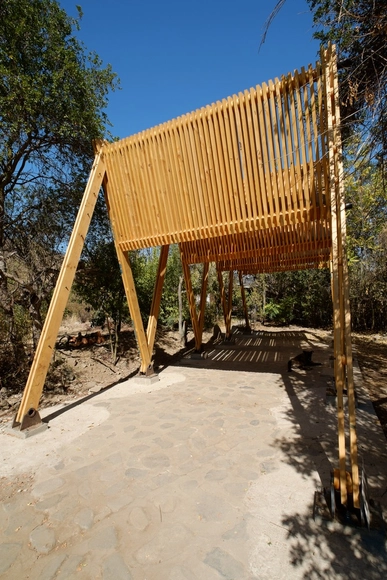
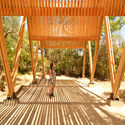
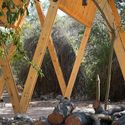
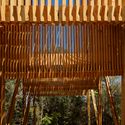
Set in a valley located 45 minutes west of Santiago de Chile, an elementary timber shed by Josep Ferrando and Diego Baloian seeks to unhinge the division between vertical and horizontal architectural elements. The scheme is the result of a private commission to build a wooden shed on a family-owned plot in the town of Curacaví, halfway between the Chilean capital and the coastal town of Valparaíso.
Drawing heavy inspiration from vernacular canopies which historically dotted the landscape of rural Chile, the scheme seeks to create a central family meeting point amongst a vast 2 hectare plot.
For this week’s edition of our Recessionary Interviews series – in which we talk to Architects across the globe surviving the Recession - we decided to get one final perspective from the Iberian Peninsula. We chatted with Spain’s Josep Ferrando, of Josep Ferrando Bramona Architecture, who told us how the economic bust has shifted focus from public works towards an architecture of “re”: rehabilitating, re-structuring, re-inhabiting.
Get Ferrando’s take on the state of Architecture in Spain today, after the break…