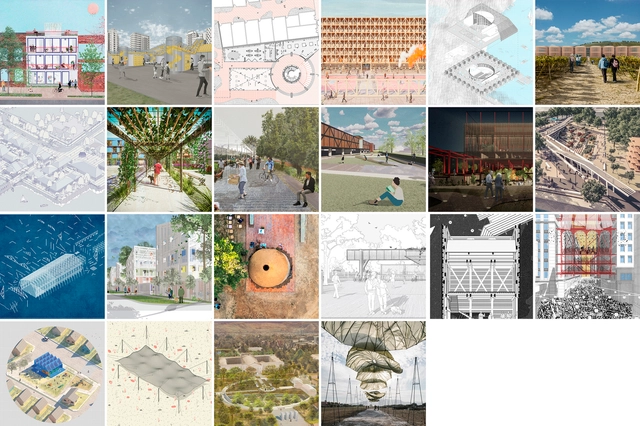
The 2021 National Competition for Undergraduate Projects (CNPP) and National Competition for Thesis Projects (CNPT) by Arquitectura Caliente are open competitions that seek to recognize and reward the best student projects in Chile. In this latest edition, a total of 371 registered projects were submitted, representing 29 schools across the country and 10 different cities.
https://www.archdaily.com/1128139/22-winners-of-the-national-competition-for-undergraduate-and-graduation-projects-cnpp-plus-cnpt-2021ArchDaily Team
Planting trees is one of the simplest and most effective ways to combat climate change, and many companies use tree planting to offset carbon emissions. However, when taking this approach, it is essential to ensure that the trees planted will effectively store sufficient amounts of carbon.
Planting location is a key factor. Trees must be planted where they can live for decades and properly absorb carbon from the air.
The 8th edition of the Arquiteturas Film Festival explored the theme Bodies Out of Space through an exploration of the social construction of space, connected by a thread running through its own narratives of domination. These are also narratives of identity, which is often stripped away or forced to represent our bodies.
Videos
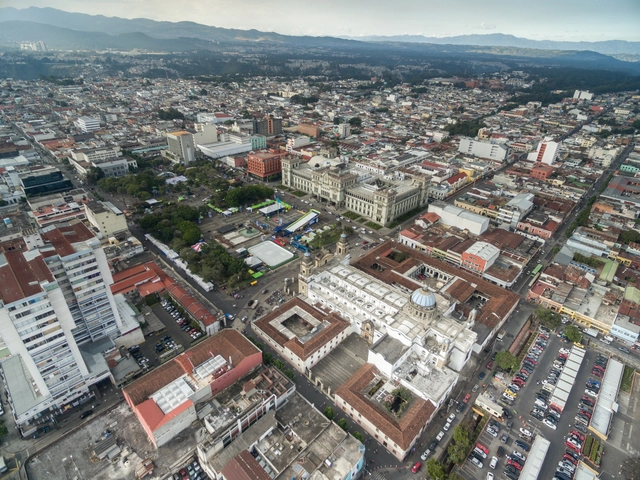
Guatemala City. Photograph by photosounds. Image via Shutterstock
The Guatemala Architecture Biennale 2021 begins today, serving as a platform that will bring together the region's most prominent professionals from November 16 to 18 at the Miguel Ángel Asturias Cultural Center through symposiums, lectures, and exhibitions.
CAU/RJ has extended the registration deadline for the CAU+Mulheres Awards. Female architects and urban planners now have until November 26 to submit their projects.
Now in its second edition, the CAU+Mulheres Award is one of the Council's initiatives to promote dialogue and increase the visibility of female architects and urban planners across their various fields of work. The award features five categories: Architectural Design; Interior Design; Urban Design; Architectural Design for Emergency Situations; and Theoretical Studies (theses, dissertations, books, and publications).
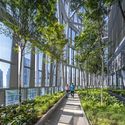
The pandemic highlighted the importance of open spaces with good natural ventilation. Despite their controversial name, elevated plazas and hanging gardens offer spatial solutions that improve thermal comfort and provide social spaces for residents—and, in some cases, the general public—alongside spectacular views.
Rescuing the invisible, diving into an erased urban memory, and walking on water. Surprising as it may seem, the world has not ended yet. However, those walking through Belo Horizonte, passing the busy intersection of Afonso Pena Avenue and Brasil Avenue, might be able to pinpoint exactly where it does. The “Acaba-Mundo” [World's End] is a creek that crossed the Curral del Rei settlement, the site to which the capital of Minas Gerais was relocated in 1897.
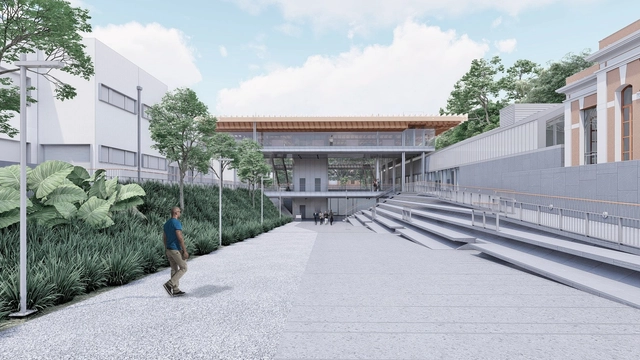
Smart campuses represent a unique architectural typology of our time. They not only showcase a brand's core technology and identity, but their vast footprint and significant investment also capture public interest, raising expectations for an innovative, interactive destination. In January of this year, construction began on the Midea Shanghai Global Innovation Park. Designed by the Beijing Institute of Architectural Design (BIAD), the campus spans a gross floor area of nearly 400,000 square meters with a total investment of over 6 billion RMB. It is scheduled for completion in 2024.
Located in the Hongqiao Business District of Shanghai, near the National Exhibition and Convention Center, the campus spans two urban plots. It is bordered by a natural waterway to the east and an urban green belt and the Shenhai Expressway to the west. BIAD conceived a "floating square ring" architectural form that hovers above the site. Both the building's roof and the landscape below are covered in "forests," seamlessly integrating the built volume with the environment. Equipped with Midea Group's proprietary smart building management systems and intelligent products, the campus aims to become a world-class green technology park.
https://www.archdaily.com/1128077/midea-shanghai-global-innovation-park-floating-square-ring-creates-a-two-tiered-forest韩爽 - HAN Shuang
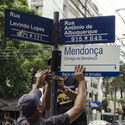
The upcoming edition of Open House Madrid, taking place from September 24 to 26, will pay tribute to Spanish architect Luis Gutiérrez Soto, a key figure and promoter of the Modern Movement in España.
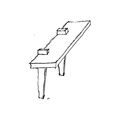
Luis Antonio Moreno Aguayo—architect and co-founder of Taller Matatipac in Tepic, Nayarit—presents his project: the Bípeda chair, which uses experimentation to simplify concepts to their elemental roots, employing critique as a tool to fuel creativity.
https://www.archdaily.com/1127907/taller-matatipac-presents-a-pre-hispanic-inspired-chair-in-mexicoArchDaily Team
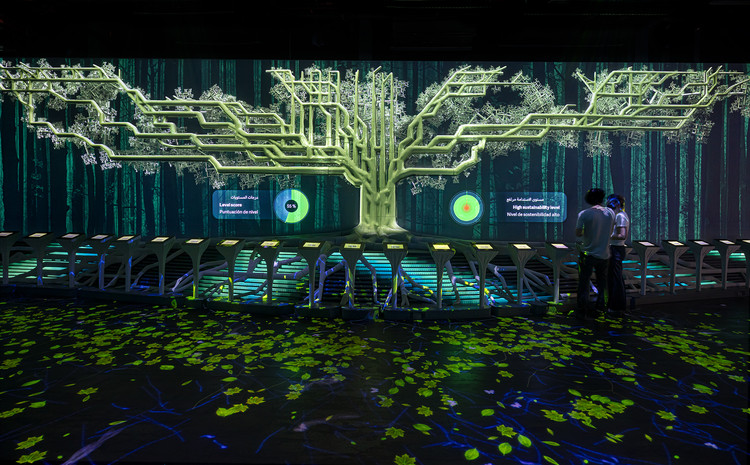
Under the theme “Connecting Minds, Creating the Future,” Expo Dubai 2020 —held from October 1, 2021, to March 31, 2022— is the first world expo hosted by an Arab nation and the Middle East region. The Spain Pavilion, under the slogan “Intelligence for Life,” synthesizes the idea of preserving a high quality of life on our planet for ourselves and future generations.
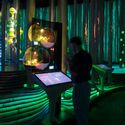
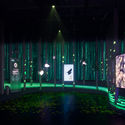
Designed by the firm amann cánovas maruri, the building is located in the expo's Sustainability District and stands out for its series of prominent truncated cones that rise above the landscape, evoking the feel of a traditional public square. Inside, the Pavilion houses two complementary thematic exhibition areas designed by the joint venture between External Reference and Onionlab. Here, the Barcelona-based firms have applied a striking blend of design, art, and technology to create a uniquely immersive experience.
In 15 years, gasoline-powered cars will be phased out in Japan. Photo by Jezael Elgoza via Unsplash
The days of gasoline-powered cars are numbered in Japan. Indeed, within 15 years, the country will phase out vehicles that run on gasoline. Announced by the Japanese government in late 2020, the measure is part of its goal to reach net-zero carbon emissions by 2050.
The green growth strategy also aims to generate $2 trillion a year through the adoption of new energy sources, such as hydrogen, and the expansion of sustainable industries.
The Government of São Paulo has announced the start of construction on Pinacoteca Contemporânea, the new building of the Pinacoteca de São Paulo. Combined with the Pinacoteca Luz—a building that earned several awards for Paulo Mendes da Rocha—and Pinacoteca Estação, the Pinacoteca de São Paulo complex will become, in terms of area and visitor capacity, one of the largest art museums in Latin America.
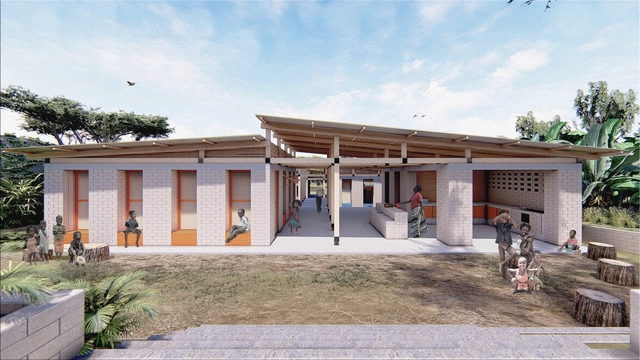
Awarded second place in the “Earth Architecture Competition,” organized by the NGO C-re-aid, the primary school in Moshi, Tanzania, designed by a team of students from the Federal University of Santa Catarina, aims to promote education and sustainability as a means of spatial and social integration within the local reality. Varying heights and lengths of the horizontal planter beds enhance safety in the school environment while maintaining its connection to the street.
The school unfolds from a central corridor that reveals various distinct spaces, allowing children to develop creatively and connect with their surroundings, according to the project's authors: Ana Luísa Schoenell, João Victor Ortiz, Julia Stopasolla Copat, and Mariana Bruggmann Spricigo Pfleger. The program is divided into blocks, with classrooms and services connecting to this central corridor to foster physical and visual integration across all spaces.
Casa Ugalde del arquitecto José Antonio Coderch. Image Cortesía de Archivo Coderch
The popular architecture festival 48h Open House BCN invites us this October 23 and 24 to explore Barcelona through a specific theme: Mediterranean architecture. In the words of its organizers, this represents "a vernacular, anonymous architectural tradition with popular roots that has been interpreted and adapted to new realities."
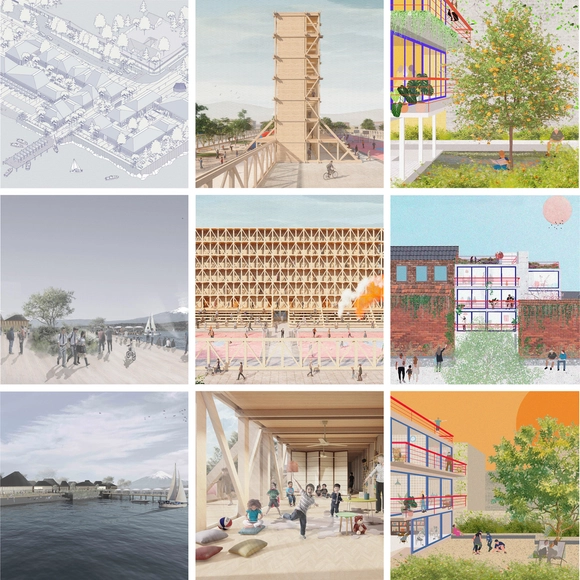
As part of the 2021 CNPP National Undergraduate Project Competition organized by Grupo Arquitectura Caliente and Graphisoft Archicad, a total of 127 proposals were submitted from 20 architecture schools across Chile. The jury highlighted three projects that, through their formal and conceptual diversity, achieved the highest recognition within their respective categories. Explore the winning proposals of this latest edition of the competition below.
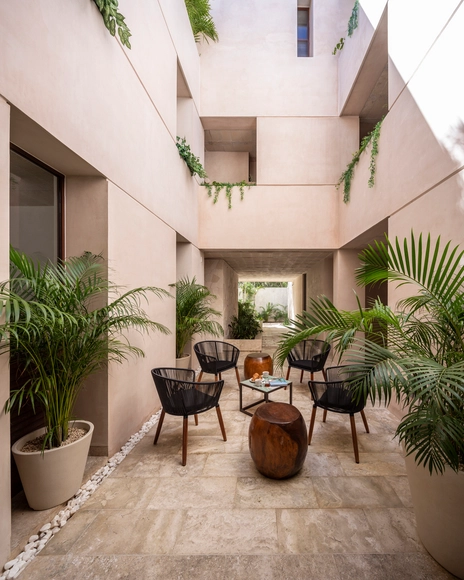
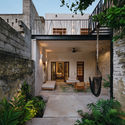
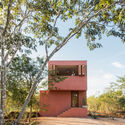
The results of the XIII Yucatecan Architecture Biennial have been announced. A total of 28 awards were presented across 15 categories, including 1 Gold Medal winner, 14 Silver Medal winners, and 13 honorable mentions. The jury was composed of architects Alejandro Ibarra, Carlos Rodríguez, Miguel Rivera, and Elías Cisneros. Read on to discover the winners.
























_2_RecordandoACoderch_©Archivo_Coderch.jpg?1634916362&format=webp&width=640&height=580)

.jpg?1624313332 "Music Palace / Alejandro Medina Arquitectura + Reyes Ríos + Larraín arquitectos + Muñoz arquitectos + Quesnel arquitectos. Image © Onnis Luque")
