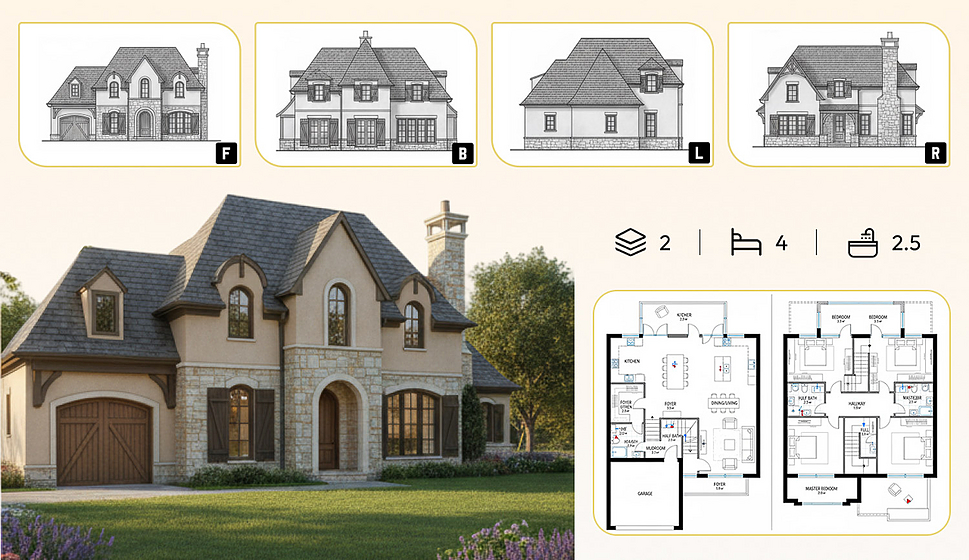
This guide covers a workflow that moves from project parameters to generated floor plans, 3D perspective views, exterior design exploration, and site context visualization, using AI tools in place of preliminary CAD and rendering work.
This guide covers a workflow that moves from project parameters to generated floor plans, 3D perspective views, exterior design exploration, and site context visualization, using AI tools in place of preliminary CAD and rendering work.

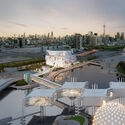
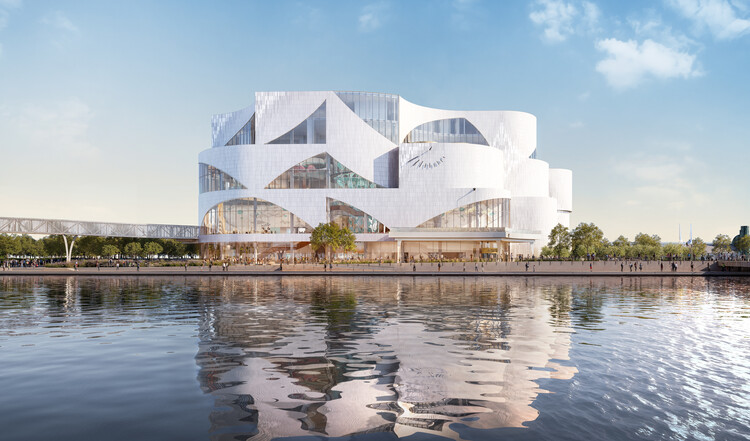
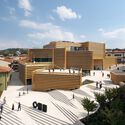
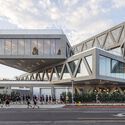
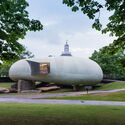
Hariri Pontarini Architects and Snøhetta have been selected to design the new Ontario Science Centre in Toronto. Announced in February 2026, the 400,000-square-foot facility will anchor the site's ongoing transformation through a 220,000-square-foot building defined by a series of scalloped, modular volumes. A central component of the proposal is the physical integration of the existing Pods and the historic Cinesphere via elevated connections and a continuous public promenade. Construction is expected to begin in Spring 2026, with completion anticipated in 2029 as part of a broader waterfront redevelopment strategy.

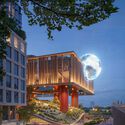
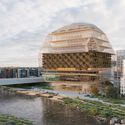
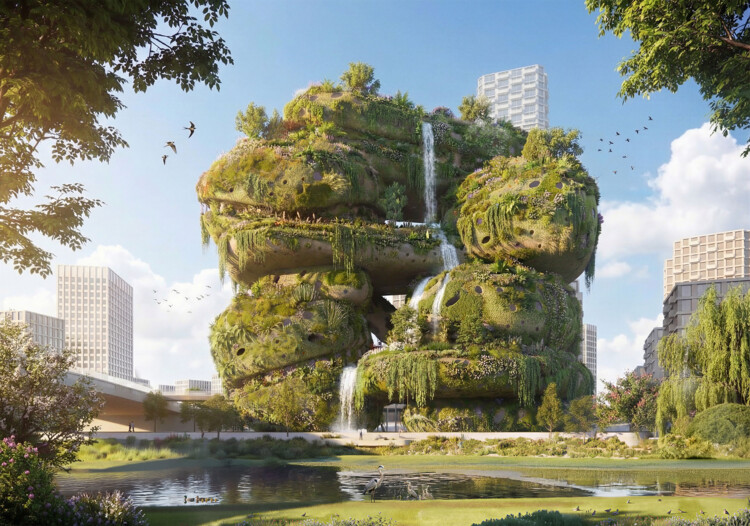
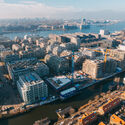
Shift, a company offering digital programs to reduce carbon emissions through individual behavior change, has announced the five finalist teams advancing to Stage Two of its international architecture competition. Launched in January 2025, the Shift International Architecture Competition called for proposals to design "the Shift Landmark": a 25,000 to 30,000 m² building in Waterkant, a new waterfront district in southern Rotterdam. The project includes a hotel, a conference and meeting center, and a sustainable food court. Its objective is to set a new standard for a purpose-driven destination that turns circular living into "something individuals, companies, and organisations can feel, experience, and act on." The five shortlisted design concepts reflect different visions of sustainability and climate action, developed by teams led by the European offices of MVRDV (Netherlands), Heatherwick Studio (United Kingdom), Office for Political Innovation (Spain), Mecanoo (Netherlands), and Ecosistema Urbano (Spain).

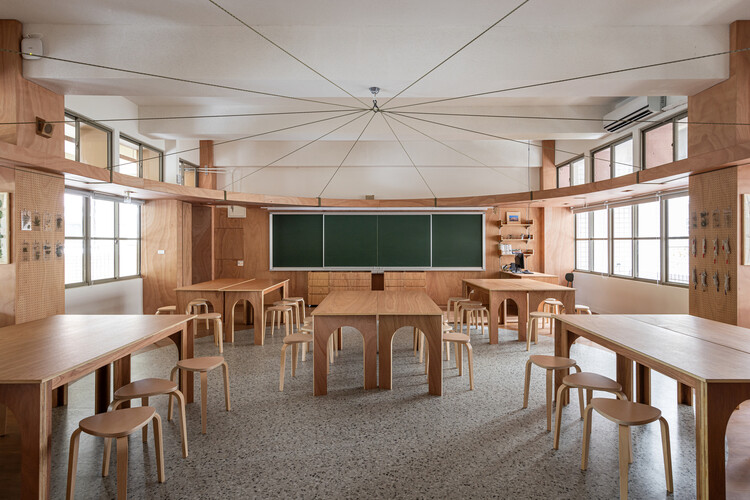
Every year on March 3, World Hearing Day highlights the importance of preventing hearing loss and ensuring equitable access to ear and hearing care worldwide. Led by the World Health Organization, the 2026 theme, "From communities to classrooms: hearing care for all children," emphasizes early identification, inclusive education, and supportive environments as fundamental components of children's development. As global estimates continue to indicate a rising number of children experiencing preventable or untreated hearing conditions, the conversation increasingly expands beyond healthcare systems and into the spaces where daily life unfolds.

The AJ and The Architectural Review have named architect Barbara Buser as the winner of the 2026 Jane Drew Prize. The prize, named after English modernist architect and urban designer Jane Drew, is part of the W Awards and the W Programme, which recognise women's contributions to the architectural profession. Swiss-based architect Barbara Buser is known as an innovator in the field of recycling and reuse, and as an expert in circular construction, recognised for pioneering repurposing practices in Switzerland. The award, therefore, recognises not only her contribution to architecture itself, but above all her efforts to reduce the industry's environmental impact through socialisation initiatives. The recognition follows Anne Lacaton's award in 2025, as well as other prominent figures in the field, such as Kazuyo Sejima in 2023, Farshid Moussavi in 2022, and Yasmeen Lari in 2020.

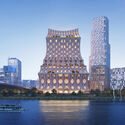
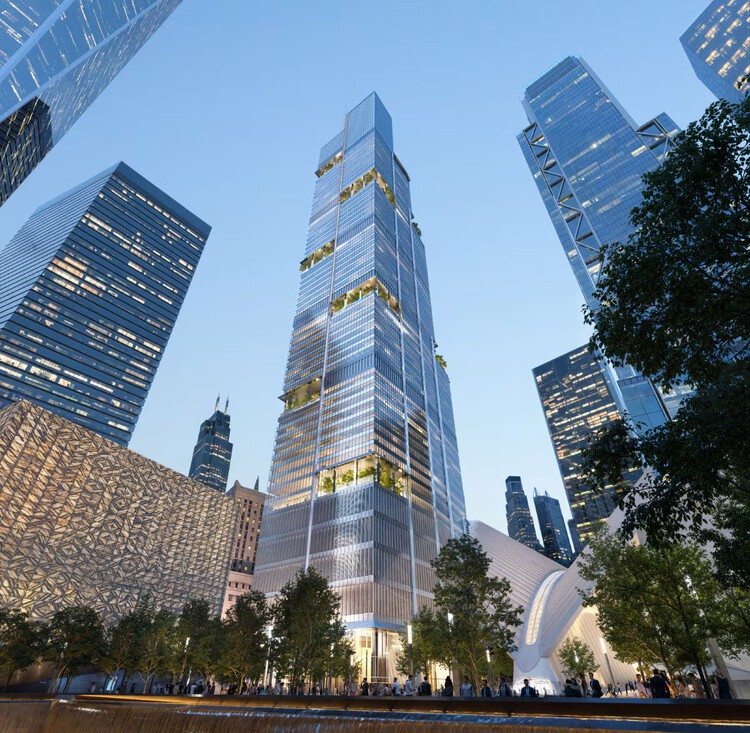
Updated renderings for Two World Trade Center, the final commercial tower planned for the World Trade Center campus in Lower Manhattan, have been unveiled by Foster + Partners in collaboration with developer Silverstein Properties. Rising 373 meters at 200 Greenwich Street, the 55-story skyscraper will occupy a central position within the site, directly across from Santiago Calatrava's Oculus transportation hub and adjacent to the Perelman Performing Arts Center, completing the commercial edge of the master plan. The tower is set to become the new global headquarters of American Express, which will serve as the building's sole owner and occupant. Completion is currently anticipated in 2031, with construction scheduled to begin in spring 2026.

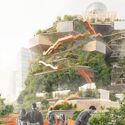
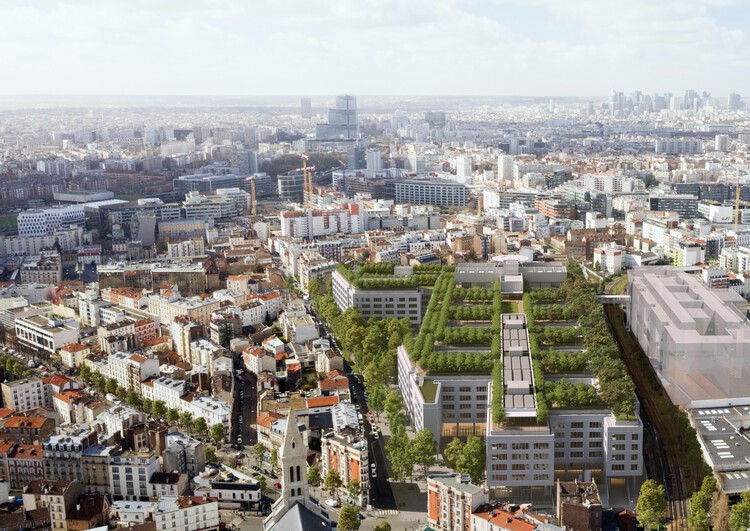
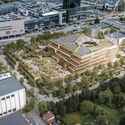
On February 20, Renzo Piano Building Workshop announced that the building permit for the Hôpital Universitaire Saint-Ouen Grand Paris Nord (HUSOGPN) has been officially granted. The project is a state initiative responding to rapid population growth, increasing demand for care, and evolving technical standards with a "next-generation" hospital in Saint-Ouen-sur-Seine, a commune in the northern suburbs of the French capital. The hospital will be located on the site of the former PSA factory, once an industrial engine of the region and now large and well-connected enough to host a program of rare scale: 986 beds and 288 day places, a workforce of over 5,500 professionals, and facilities equipped with contemporary technology for areas such as surgery and maternity. Envisioned as a "hospital-landscape," the building designed by RPBW in association with Brunet Saunier & Associés stands out for featuring a 1.3-hectare roof garden and an urban forest with over 1,000 trees.

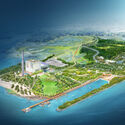
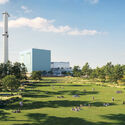
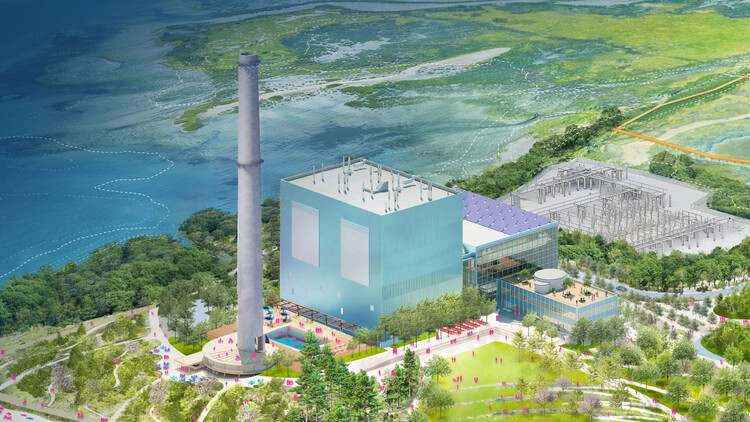
Manresa Island Corp. has unveiled the final vision for Manresa Wilds, a 125-acre waterfront park planned on a former power plant peninsula along Long Island Sound in Norwalk, United States. Developed in collaboration with landscape architecture firm SCAPE and architecture studio BIG, the proposal outlines the transformation of a polluted and long-inaccessible industrial shoreline into a publicly accessible coastal landscape. Following the receipt of a stewardship permit from Connecticut's Department of Energy and Environmental Protection in December 2025, the project will move forward in phases, beginning with the opening of the 28-acre Northern Forest in spring 2027. Subsequent phases, extending into the early 2030s, will deliver the majority of the restored landscape and the adaptive reuse of the 1960s-era power plant as a year-round civic and educational hub, opening nearly two miles of coastline that have been closed to the public for decades.

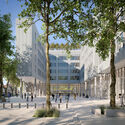
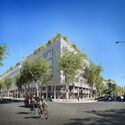
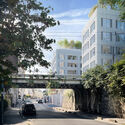
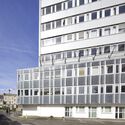
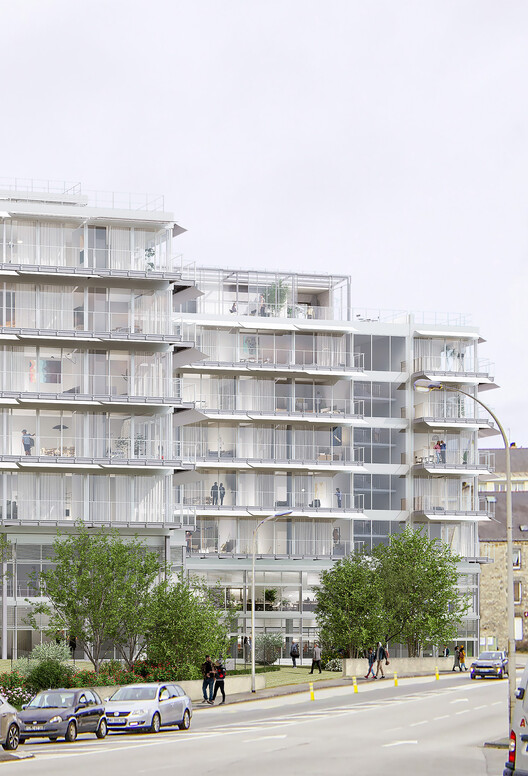
Lacaton & Vassal have announced the transformation of a former administrative center into a mixed-use residential and office building in Vannes, a medieval town in Brittany, northwest France. The project is part of a State policy to mobilize state-owned land for housing. In 2023, the French State launched a call for expressions of interest for a project on the former administrative complex, which housed several State services, in consultation with the City of Vannes. The winning proposal is a partnership between GReeStone Immobilier and Grand Ouest Immobilier, with an architectural team formed by the office of Anne Lacaton and Jean-Philippe Vassal, winners of the 2021 Pritzker Prize, in partnership with Emmanuelle Delage Architecte. According to the city government, the proposal was chosen with the aim of promoting resilience and limiting the carbon footprint by renovating rather than demolishing.

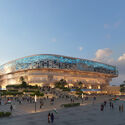
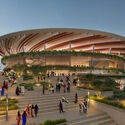
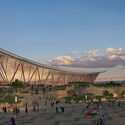
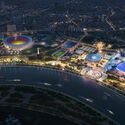
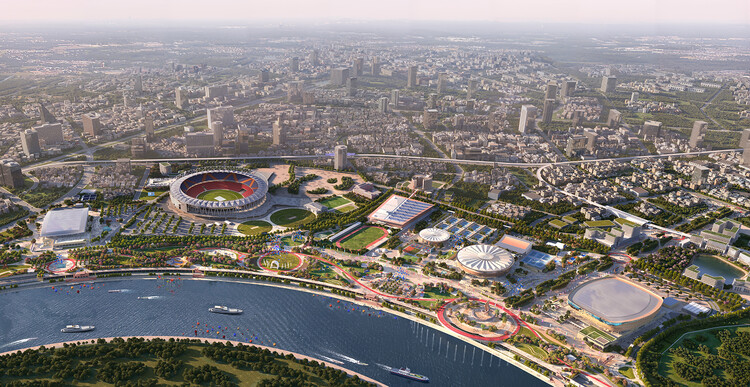
BDP, Cox Architecture, and Collage Design have unveiled the master plan for the 350-acre Sardar Vallabhbhai Patel Sports Enclave in Ahmedabad, India. Positioned on the Sabarmati Riverfront and structured around the 132,000-seat Narendra Modi Stadium, the world's largest stadium by capacity, the project proposes a large-scale sports district integrating international competition venues with public landscapes and community facilities. Conceived as both an events precinct and an urban park, the development is intended to accommodate the 2030 Commonwealth Games centenary event, following Ahmedabad's selection as host city.

As the architecture community looks ahead to the announcement of the 2026 laureate of the Pritzker Architecture Prize, anticipation once again gathers around what is widely regarded as the profession's highest honor. Founded in 1979 by Jay Pritzker and administered by the Hyatt Foundation, the prize recognizes a living architect whose body of work demonstrates a consistent and significant contribution to humanity and the built environment.

This week began with the World Day of Social Justice, foregrounding urgent questions of labor rights, spatial equity, and resource governance, and framing architecture as both a product of and a response to the social systems that shape access to land, housing, and opportunity. The announcement of the 15 winning projects of the 2026 ArchDaily Building of the Year Awards highlighted a global cross-section of built works recognized for their architectural quality, innovation, and social impact, offering a snapshot of contemporary practice across scales and geographies. This week's news prompts a broader reflection on architecture's civic responsibility, with heritage and community-building through cultural architecture emerging as central themes. Housing, meanwhile, anchors another critical strand of the discussion with three highlighted initiatives: a manifesto reframing housing not as a market commodity but as a civic right and collective project grounded in care; a large-scale waterfront regeneration masterplan responding to regional housing demand through coastal transformation; and a timber residential project that explores the potential of wood in medium-density housing.

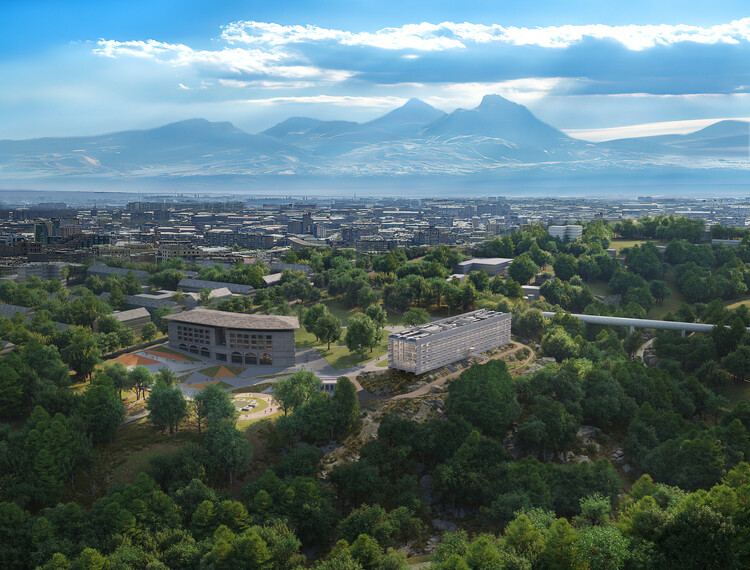
MVRDV has started construction on the EU TUMO Convergence Center, a new educational and research facility in Yerevan, Armenia. Located in Tumanyan Park, the five-story building will expand TUMO's campus, providing spaces for free technology and creative education for teenagers and adults, alongside research and co-working areas for technology and design companies. Positioned on a hilly outcrop above the Hrazdan River Gorge, the project responds to the surrounding topography while establishing visual connections with the city, the gorge, and Mount Ararat. Construction officially commenced on 24 February, with local and international representatives in attendance.

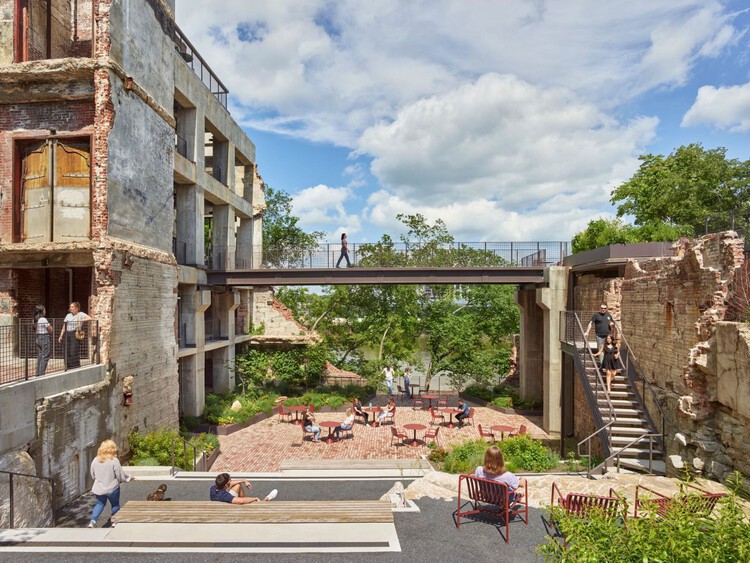
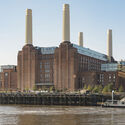
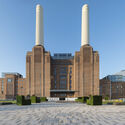
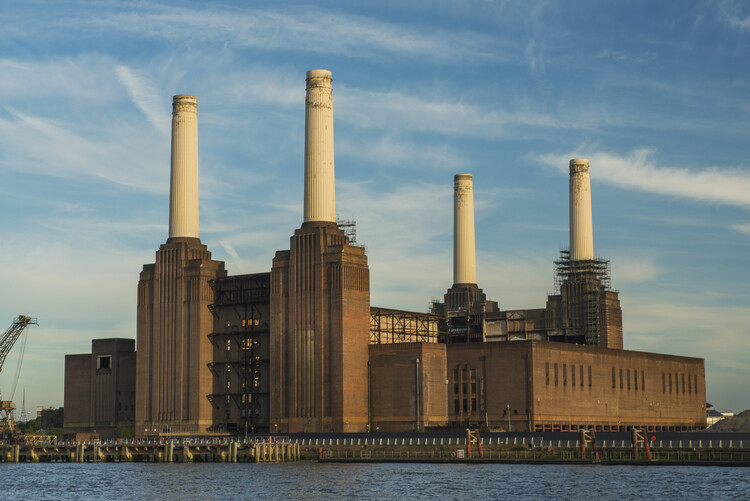
Battersea Power Station is a former coal-fired power station located on the south bank of the River Thames in London, originally designed by architects J. Theo Halliday and Giles Gilbert Scott. Notable for its appearance on the cover of Pink Floyd's 1977 studio album Animals and in Alfred Hitchcock's 1936 film Sabotage, the station is one of the world's largest brick buildings and is known for its Art Deco interior fittings and décor. Recognized today as part of modern industrial heritage, the site's transformation into a commercial development began in 2012, with the adaptive reuse guided by a masterplan designed by Rafael Viñoly. On February 16, Battersea Power Station announced the appointment of the strategic urban design practice Studio Egret West to evolve the original masterplan for the remaining 16 acres of the 42-acre riverside neighbourhood in the southwest London.


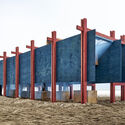
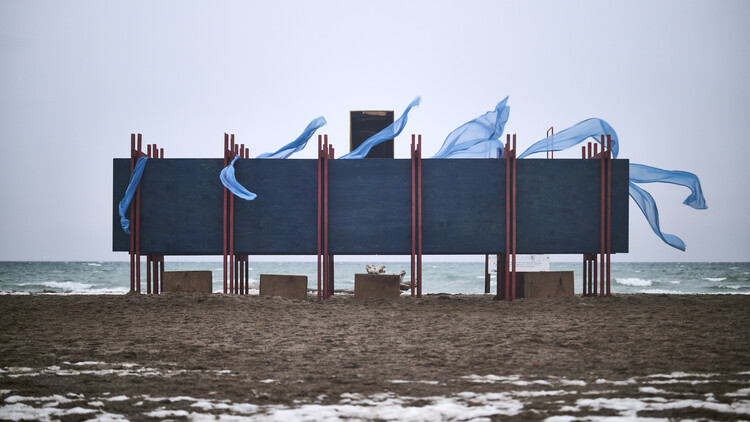
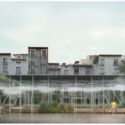
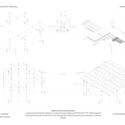
The annual Winter Stations design competition returns to Toronto for its twelfth edition, once again transforming the lifeguard stations of Woodbine Beach into temporary works of public art. On view from February 16 to March 30, 2026, this year's exhibition is organized under the theme Mirage, inviting participants to examine perception, illusion, and the shifting boundaries between what is seen and what is constructed. Selected from more than 300 international submissions, three winning proposals from Canada, the United States, and a Germany–Ukraine collaboration are presented alongside two installations developed by university teams. Installed along the frozen shoreline of Lake Ontario, the projects reinterpret seasonal infrastructure as platforms for spatial experimentation during the winter months.

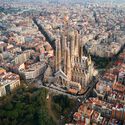
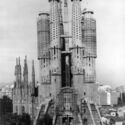
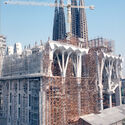
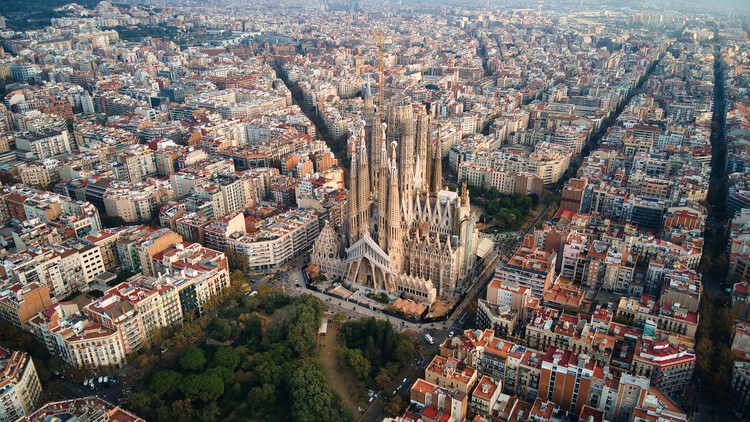
The final piece of the central tower of Barcelona's Sagrada Familia has been laid in place, bringing the church to its maximum height of 172.5 m. La Sagrada Familia, one of architectural history's most notorious unfinished buildings, became Antoni Gaudí's defining project in 1883, when he transformed a neo-Gothic design into one of the best-known structures of Catalan Modernisme. One hundred and forty-four years after construction began, the upper section of the 17-meter-high, four-sided steel and glass cross was winched into position at 11 a.m. on Friday, February 20, completing the tower dedicated to Jesus Christ. This milestone confirms the project's final stage of construction, which, back in March 2024, was announced as one of the most anticipated completions of 2026, commemorating the centenary of Antoni Gaudí's death.

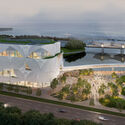
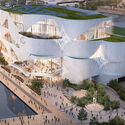
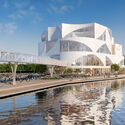
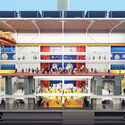
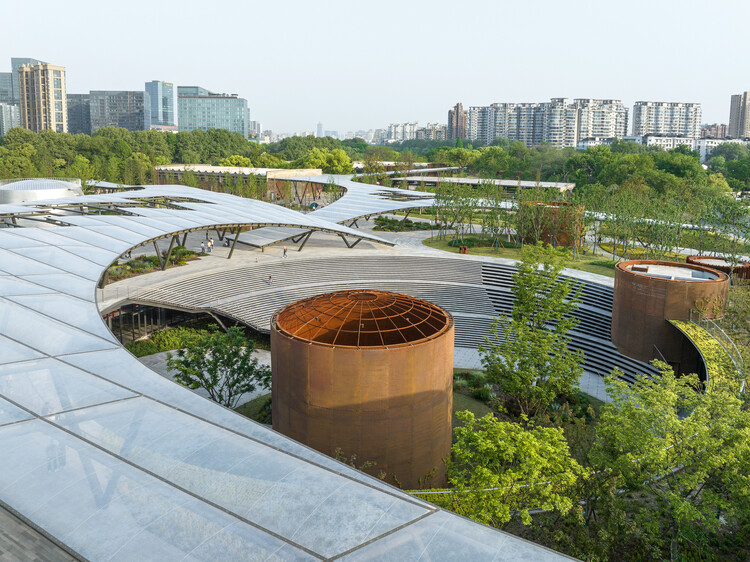
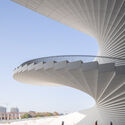
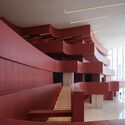
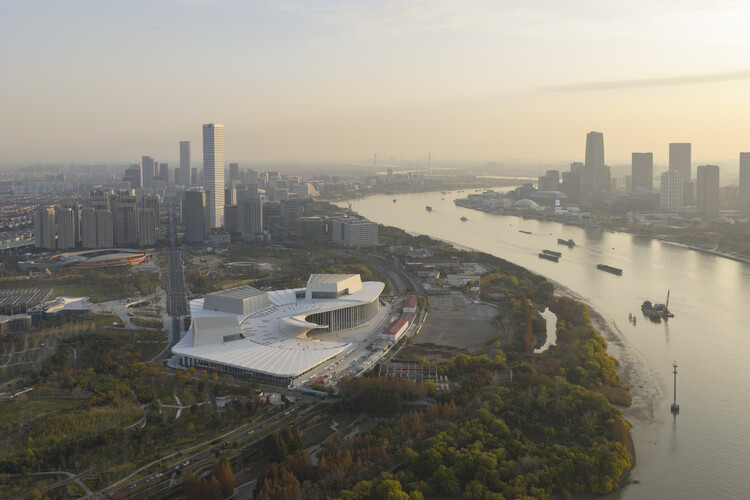
The Snøhetta–designed Shanghai Grand Opera House is nearing completion on the banks of the Huangpu River, with opening anticipated in the second half of 2026. Newly released images document the project as interior works advance and key public spaces take shape. The opera house was first awarded to Snøhetta following an international competition in 2017 and has since been developed by a consortium including East China Architectural Design & Research Institute (ECADI), Theatre Projects, and Nagata Acoustics. Commissioned in 2019, the team has led the project from concept design through construction, integrating architectural, landscape, interior, and acoustic strategies within a unified framework.

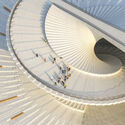
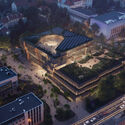
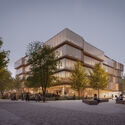
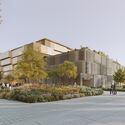
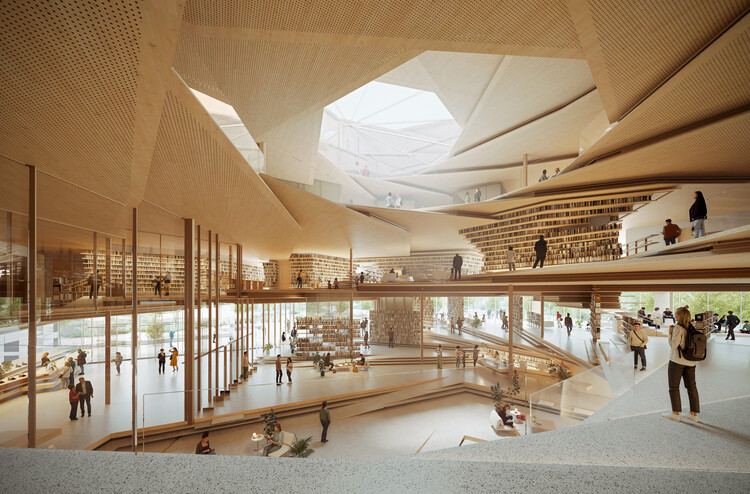
Kengo Kuma and Associates was recently awarded first prize in the competition to design a new library in Rzeszów, the capital of the Subcarpathian Voivodeship in southeastern Poland. The city, home to nearly 200,000 residents, lies on the Wisłok River and is known as a center for the aviation industry. Strategically positioned along the main Kraków-Lviv railway and road corridor, it also serves as an important transit point near the Ukrainian border. Located on Józef Piłsudski Avenue, the new library is conceived as a connector between the Marshal's Office of the Podkarpackie Voivodeship and the nearby Secondary School Complex, reinforcing the area's civic character. The program combines traditional library functions with cultural, educational, and artistic spaces. In addition to reading and collection areas, an expanded event zone includes a music hall, multifunctional hall, conference rooms, and administrative areas. A spiraling library volume forms the tallest element of the complex, while event spaces and roof terraces extend the program outward, linking the building's activities with the surrounding city.

Today, 20 February, the United Nations marks World Day of Social Justice under the theme "Renewed Commitment to Social Development and Social Justice." This year's observance takes place in the aftermath of the Second World Summit for Social Development in Doha and the adoption of the Doha Political Declaration, renewing the commitments first articulated in the 1995 Copenhagen Declaration: poverty eradication, full and productive employment, decent work for all, and social inclusion as interdependent pillars of development. At a moment defined by widening inequalities and accelerating environmental and technological transitions, the 2026 commemoration calls for translating political affirmation into measurable, cross-sectoral implementation.

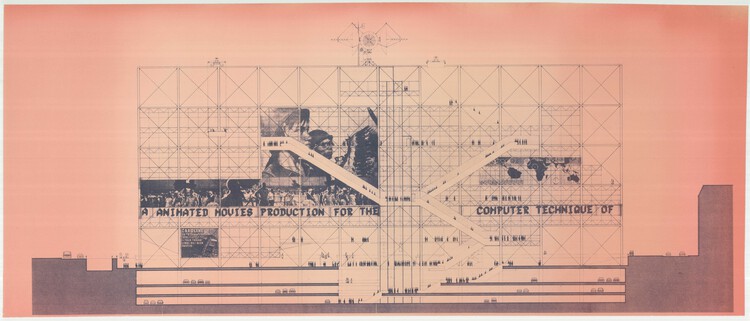
On January 30, an exhibition entitled "Concours Beaubourg 1971: Une mutation de l'architecture" opened in Paris, showcasing archival material from the competition that resulted in the selection of the current Centre Pompidou, designed by Renzo Piano and Richard Rogers between 1969 and 1974. In view of the building's recent closure for renovation, approximately 100 archival documents, including some never before exhibited from the Centre Pompidou's collections (plans, drawings, photographs, models, etc.), are on display at the Académie d'Architecture at Place des Vosges until February 22, 2026. Co-produced by the Académie d'Architecture and the Centre Pompidou, with support from the École nationale supérieure d'architecture de Saint-Étienne, the exhibition presents alternative, imaginative, and sometimes unbuildable proposals for the building. It offers a review of a fertile period in architectural history, highlighting the lasting effects of the "Beaubourg competition" on the discipline and profession.
A revitalized canning factory in a coastal Portuguese city, a memorial park in Ethiopia, a small-town Brazilian home, a wooden pavilion evoking Bahrain's heritage, and 11 other visionary projects comprise the winners of the 2026 ArchDaily Building of the Year Awards. Chosen over three weeks of public voting, the winners are representative of the current architectural landscape, reflecting a diversity of approaches, materialities and aesthetics, while also showcasing common threads across cultures.
In its 17th edition, this year's Building of the Year Awards received more than 120,000 votes from over 100 countries, marking a record-breaking year for the world's largest community-driven architecture award. The winners represent 14 different countries, cultures and perspectives, coming from Brazil, Canada, Chile, Colombia, Denmark, Ethiopia, Germany, India, Indonesia, Japan, Portugal, South Korea, United States and Vietnam.

This week's news brings together developments in professional recognition, cultural programming, and large-scale urban strategy, reflecting the multiple scales at which architecture shapes contemporary discourse. As the field anticipates the next Pritzker Architecture Prize announcement, conversations around authorship, civic responsibility, and long-term impact unfold alongside the American Institute of Architects' 2026 Honorary Fellowship appointments, situating individual achievement within broader institutional frameworks. At the same time, updates from Riyadh to London foreground the role of architecture in both enabling new cultural platforms and safeguarding post-war heritage. Complementing these narratives, the reassignment of the 2029 Asian Winter Games and progress on expansive public landscapes highlight how cities are aligning infrastructure delivery, environmental resilience, and territorial planning with long-term economic and social agendas.

Concéntrico is an urban innovation laboratory that invites reflection on the city through architecture and design. Since 2015, it has carried out more than 180 interventions in Logroño, Spain. The new 2025/2026 season of the festival expands on this experimental spirit with three international calls for proposals that bring the ideas in the book Concéntrico: Laboratorio de Innovación Urbana (Park Books, 2025) into action. Through these calls, the organization seeks to explore further three lines of research, the ephemeral, the ecological, and the symbolic, to imagine different ways of inhabiting the city. The winning projects from this edition's calls for entries will be developed, built as urban installations, and presented in the exhibition during the festival, taking place in Logroño from June 18–23, 2026.

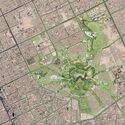
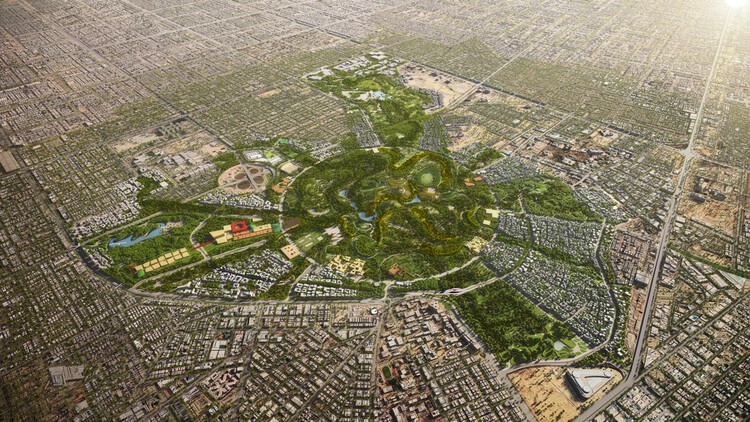
Construction continues on King Salman Park in Riyadh, a 16.9-square-kilometre public landscape taking shape on the grounds of the city's former airport. Led by Omrania as lead design consultant, in collaboration with Henning Larsen for master planning and urban design, the project reimagines the centrally located site as a large-scale green and cultural district. Conceived as a new civic core for the capital, the park combines ecological restoration, public programming, and mixed-use development. Initial phases are expected to open in late 2026, with substantial completion targeted for 2027, following a phased construction schedule currently underway.

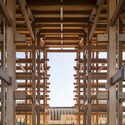
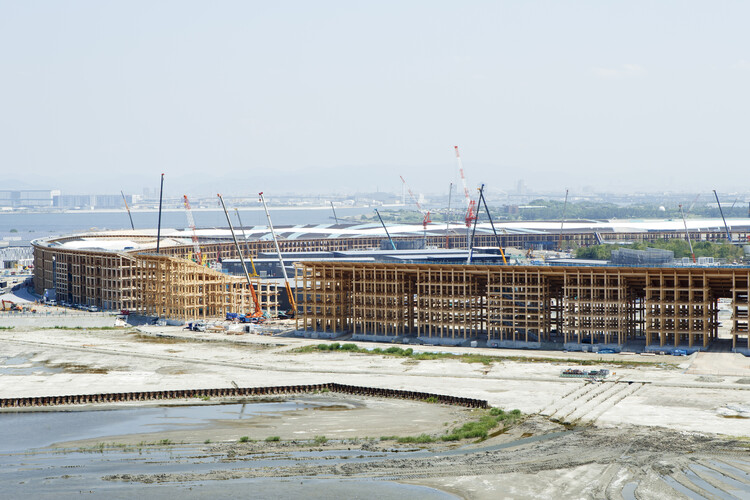
Exhibitions can be an opportunity to extend architectural discourse beyond professional circles, opening conversations with broader publics and serving as an interface between architecture and society. Within this concept, major international events such as the Osaka International Expo 2025 and the Venice Architecture Biennale have adopted the idea of the circular economy as one of their organizational objectives. The idea of circularity in events can be reflected in, for example, their energy consumption, the impact of the displacement they generate, their waste, or the useful life of their infrastructure. The site destined for the last World Expo, held in Osaka from 13 April to 13 October 2025, was surrounded by a massive timber structure designed by Sou Fujimoto Architects, one of the world's largest wooden constructions. The Japan Association for the 2025 World Exposition committed to reusing building materials "as much as possible," with concrete plans for their reuse to be finalized by March. In the meantime, some relocation alternatives are already emerging for the pieces of the World Expo structure.