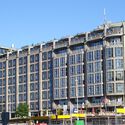
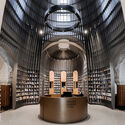
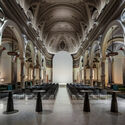
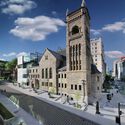
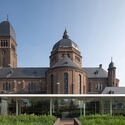
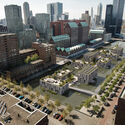
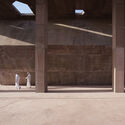
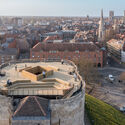
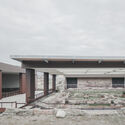
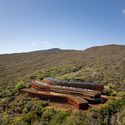
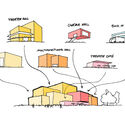
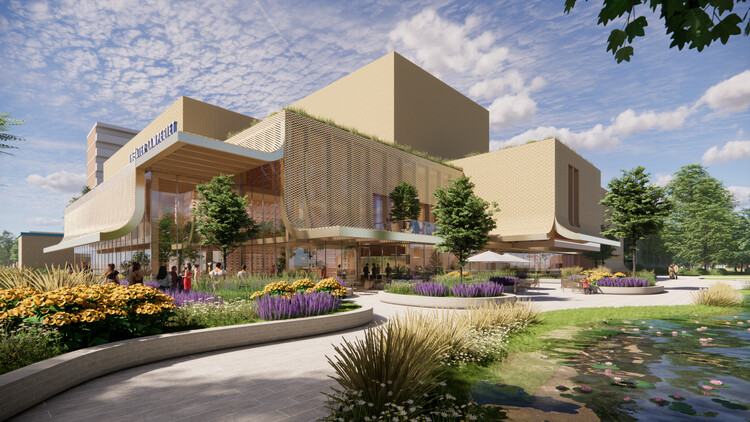
MAD, the architecture studio founded by Ma Yansong, has revealed the designs for Danshuis, a new dance center planned for Rotterdam, the Netherlands. Located on a landmark site in the city's historic docklands, adjacent to the Fenix Museum of Migration, also designed by MAD, the project is expected to open in 2030. The 9,500-square-meter center will transform an Art Deco warehouse dating from 1923 on the south bank of the River Maas. Planned as a center for the production, development, and practice of dance across different styles, Danshuis aims to bring together professional and amateur programs for different ages and levels of experience.
Architects are trained to choose materials, compare their properties, and decide how they should be used. Some practices are taking on a different task: developing the material itself.
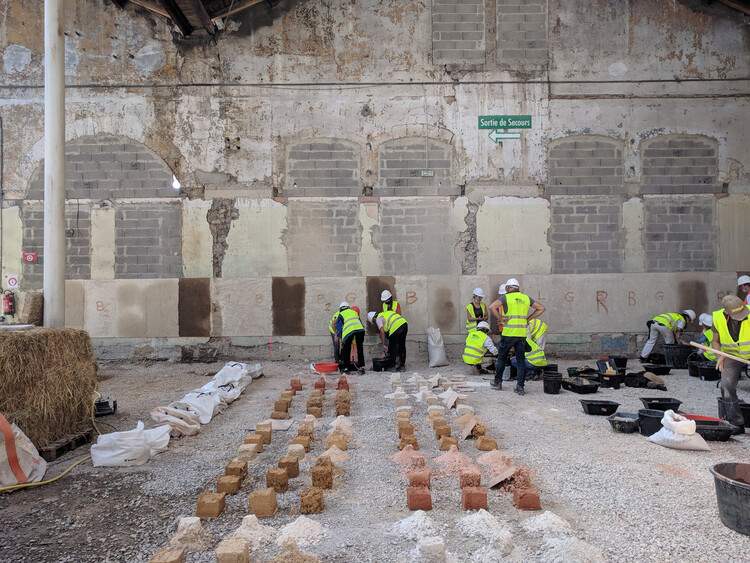
For Material Cultures, BC architects, and Studio Ossidiana, this can begin with hemp grown for construction, earth excavated from building sites, or mixtures of concrete, pigment, stone, and shells. Their work connects material research with processing, fabrication, and construction.
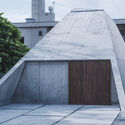
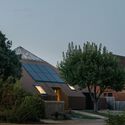
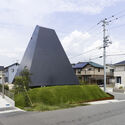
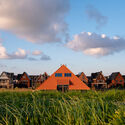
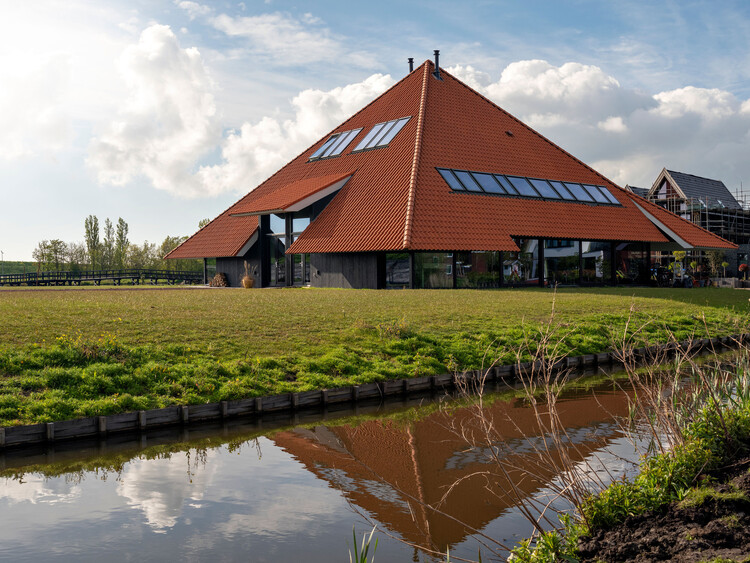
While pyramidal geometry appears in monumental historical structures, its contemporary application remains limited. The primary constraint is the sloping envelope, which contracts the building's floor area as it ascends and reduces usable interior volume compared to orthogonal or cylindrical forms. However, from a structural standpoint, the geometry offers lateral stability against wind and seismic loads due to its broad base, central mass distribution, and self-bracing triangular faces. Nonetheless, applying this shape at a residential scale introduces several layout constraints. These slanted walls limit vertical wall surfaces, which complicates the placement of standard windows, doors, and floor partitions. At the same time, the low clearance along the perimeter also creates unusable floor area at the edges of the room.
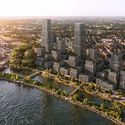
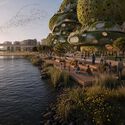
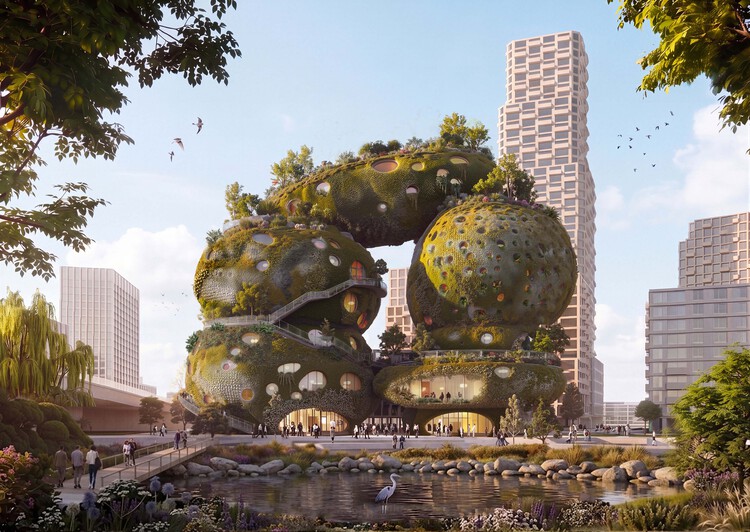
MVRDV has won the international design competition organized by the social enterprise Shift to design the Shift Embassy, a new cultural destination planned for Rotterdam's developing Waterkant district. Conceived as a hybrid of architecture and landscape, the proposal, titled Rotterdam ROCKS! combines exhibition spaces, hospitality, education, public amenities, and ecological infrastructure within a publicly accessible building intended to support Shift's mission of engaging visitors with environmental and societal challenges. The project will form part of Waterkant, a large-scale urban development on the south bank of the Maas, planned to include 3,750 homes alongside schools, workplaces, cultural venues, and public spaces.
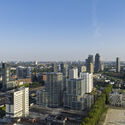
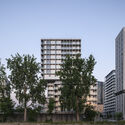
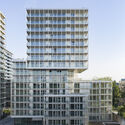
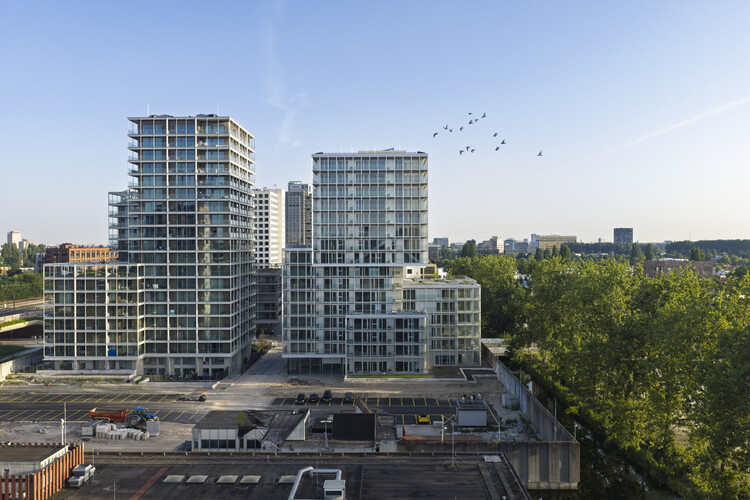
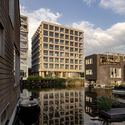
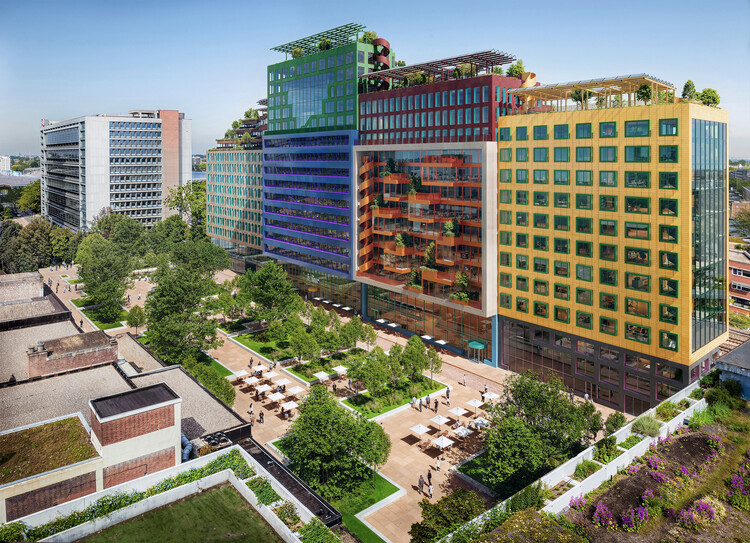
The Martin, a residential building designed by OMA's David Gianotten and Mariano Sagasta, has been completed in Amsterdam's Bajes Kwartier. Located within the Central Cluster of the 7.5-hectare redevelopment, the project is the latest completed component of OMA's master plan to transform the former Bijlmerbajes prison complex, which operated between 1978 and 2016, into a mixed-use, energy-neutral neighborhood. The completion follows that of The Jay in 2025, while a third residential building, The Cardinal, is expected to be finished in 2030.
With forty-eight psychogeriatric beds and sixty-eight wheelchair-accessible apartments, accommodation for informal caregivers, and space for bedside care, the De Keyzer building opened in Amsterdam in 2011. Its program had been conceived entirely for elderly people requiring assistance, but shortly after completion, the building was sold to an investment fund, and the apartments began to be rented to young families with children.
For the project's architects, Tom Frantzen and Karel van Eijken, the episode could have been interpreted as a failure of prediction. Instead, it became a confirmation. "It showed, very clearly, that buildings can end up being used in completely different ways than originally intended," Frantzen recalls. The transformation was only possible because the apartments were generous and because the structure allowed for uses more diverse than those anticipated in the original program. Had the building been designed solely for its initial function, the change of use would likely have required a destructive renovation or, in the extreme, demolition.
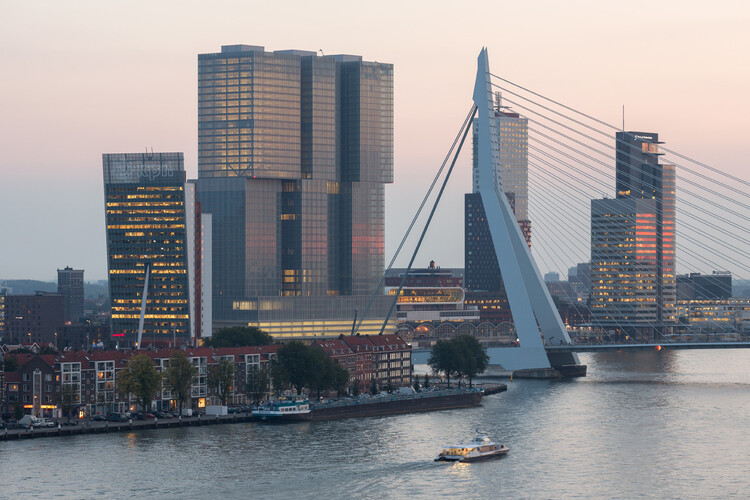
Who has the right to the city? Henri Lefebvre's writings question the structures that control urban space and, instead, put the citizens at the center of decision-making. His ideas have influenced the way architecture and urban design are practiced, bringing about community participation and co-design. These have been some of the most prominent themes at Utopian Hours 2026, the festival of city-making, the first part of which was held in the Dutch city of Rotterdam to mark its tenth anniversary edition.
What architecture leaves in the ground outlasts what it puts in the air. A demolished building disappears from the skyline in a matter of days, but its foundations remain embedded in the soil for generations. The contamination caused by an industrial complex does not clear when the complex is torn down. The legal boundaries inscribed across colonial territory do not dissolve when the colonial administration ends. The ground holds what architecture quickly forgets.
This is what makes soil so uncomfortable as a subject. The discipline tends to orient itself upward, toward the form, the façade, the spatial experience of inhabitation. The ground is where architecture begins and, in a certain sense, where it ends: the point at which building becomes geology, legal title becomes territorial claim, and construction becomes extraction. Treating soil as a medium rather than a datum means acknowledging that the acts of building carry consequences that run deeper than the visible object above grade.
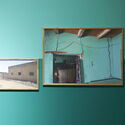
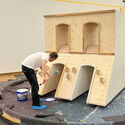
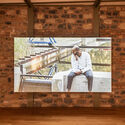
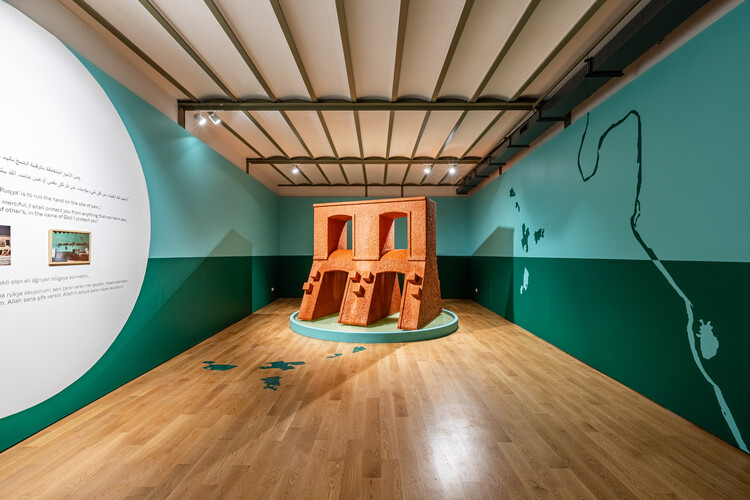
Tell the Water What the Clay Kept Secret. Image Courtesy of Ola Hassanain
Ola Hassanain is a Sudanese architect and artist operating in the Netherlands, and will be exhibiting at the Pan-African Architecture Biennale in Nairobi, Kenya, later in 2026. All three locations tell stories of the built environment's relationship with water. These illustrate the continuous battles between the amorphous forces of nature that are the rivers and seas, and human attempts to shape and control them. In most cases, they are attempts at extraction. Catastrophes happen as a result of the overreach of these attempts or of their mismanagement, or both.
The conversion of disused religious temples through cultural programs constitutes one of the most compelling adaptive reuse strategies in contemporary urban planning. This functional compatibility seems to be rooted in the specific characteristics of churches: their central naves offer large-scale, clear floor plans and monumental cross-sections that easily accommodate the volumetric requirements of museums, theaters, or community hubs. Furthermore, the acoustic properties inherent to their vaulted ceilings, combined with intentional natural lighting filtered through stained glass windows or domes, create the spatial conditions for activities ranging from the performing arts to the exhibition of cultural artifacts. By assuming a public and cultural role, these buildings not only avoid demolition or physical abandonment but also preserve their status as urban and identity landmarks within the city fabric, revitalizing their immediate surroundings without altering their historical significance.
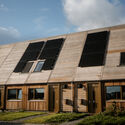
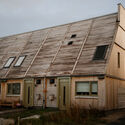
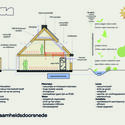
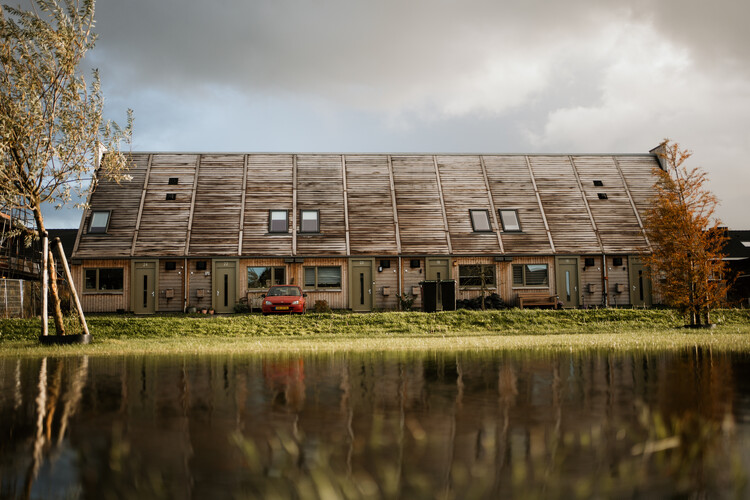
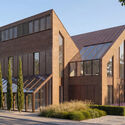
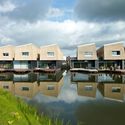
Netherlands-based, nature-inspired architecture practice ORGA has completed the design of a carbon-negative neighborhood in Marknesse, a village in the Dutch province of Flevoland. The project comprises 12 affordable rental homes built with a high percentage of biobased materials. Its main objective is to develop scalable housing solutions that minimize CO₂ emissions and reduce reliance on fossil resources. The design reinterprets the traditional Dutch brick house, known as the "Delft Red" typology, characterized by red brick facades and orange-red roof tiles, while introducing wooden chimneys that double as habitats for bats. Commissioned by housing association Mercatus, the prototype was built in the first half of 2025 and is intended for first-time buyers and low-income households.
Residential architecture continues to offer a productive ground for unbuilt exploration, revealing how architects respond to site, climate, and constraint at the scale of the domestic. In this Unbuilt edition, submitted by the ArchDaily community, the selected projects bring together a range of proposals that reconsider the house not as an isolated object, but as a spatial system shaped by its environment. These works position architecture as a framework that negotiates between ground, material, and inhabitation, often emerging directly from the conditions of the site.
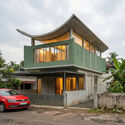
Across varied geographies, from Kerala and Cartagena to Amman, Tromsø, and Zwolle, the projects demonstrate diverse responses to domestic architecture. They include compact urban dwellings organized through vertical layering, courtyard houses partially embedded within the ground, residences adapted to sloping terrains, and typological transformations shaped by regulatory constraints. Some projects explore linear spatial sequences rooted in traditional proportions, while others organize domestic life around atria or excavated voids that mediate light, ventilation, and privacy. Together, these proposals examine how the house can be structured through section, material, and environmental performance rather than formal expression.
Heritage sites constitute complex spatial archives in which architecture, history, and collective memory converge. They encompass a wide spectrum of contexts—from archaeological remains, ancient and historic townscapes, UNESCO-listed landscapes, to early modern civic structures and industrial infrastructures. Yet these environments confront challenges: climate change, urban transformation, disaster, shifting social needs, and the gradual erosion of material fabric. Revitalization and restoration projects respond to these conditions by positioning architectural and spatial practice as an active mediator between preservation and the contemporary topologies.
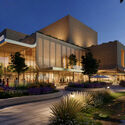
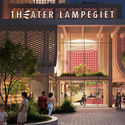
Lampegiet Theatre in Veenendaal, Netherlands. Image Courtesy of MVRDV
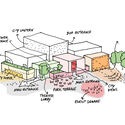
Designed by MVRDV in collaboration with Buro Happold, the new Lampegiet Theatre in Veenendaal, the Netherlands, is scheduled to replace the existing theatre building from 1988. Approved by the Veenendaal City Council in January 2026, the project is expected to begin construction in 2027 and reach completion in 2029. Conceived as a contemporarycultural venue that responds to both current performance requirements and the city's historical identity, the new theatre introduces a compact, multi-volume composition wrapped in a porous ceramic facade that allows the building to act as an illuminated urban landmark.
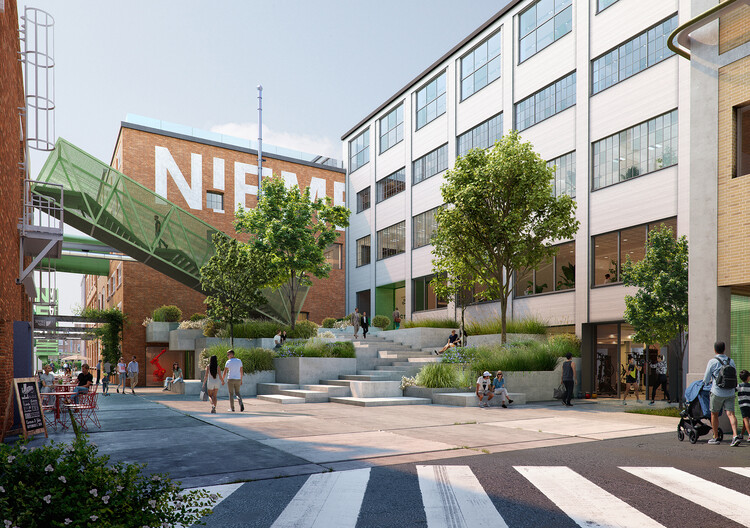
Studioninedots is leading the transformation of a 200-year-old tobacco factory site into Niemeyer, a mixed-use urban complex accommodating digital innovation, cultural venues, hospitality, education, and manufacturing within the existing industrial buildings. Located on Paterswoldseweg in Groningen, the Netherlands, the 38,000 m² project is commissioned by MWPO, with MWPO and Campus Groningen jointly acting as clients for the Shared Facilities. Currently in the design phase (2023–2025), the project's provisional timelines indicate a phased construction start beginning with the factory's southern section in 2026, followed by the northern section in 2027. The Amsterdam-based office's proposal opens the formerly closed industrial ensemble to the public, introducing cafés, galleries, workshops, and shared workspaces distributed across interior streets and adjacent park areas.
Timpaan, Blauwhoed and White Arkitekter, together with SeARCH, Space&Matter, Atlas Architects and DS Land Landschapsarchitecten, have been selected for the proposed development of The Erven, a timber-based neighbourhood planned for Hoofddorp in the Amsterdam metropolitan region. The winning proposal forms part of a major phase of the Lincolnpark area and outlines approximately 519 homes designed around four courtyards, or erven, inspired by the traditional Dutch farmstead.
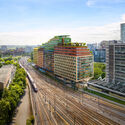
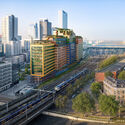
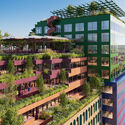
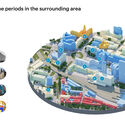
MVRDV and SYNRG have received approval to construct Schieblocks, a 47,000-square-metre office building in Rotterdam, the Netherlands. Designed for developer LSI, who markets the project as The Bluezone Offices, the building will occupy a narrow site along the railway line, reaching 61 metres in height and extending almost 150 metres in length. The programme includes commercial spaces at ground level, offices throughout, and a restaurant and event venue on the upper floors. Conceived as a "3D neighbourhood," the design breaks the large volume into a series of colourful, distinct blocks that incorporate numerous references to Rotterdam's architectural character.