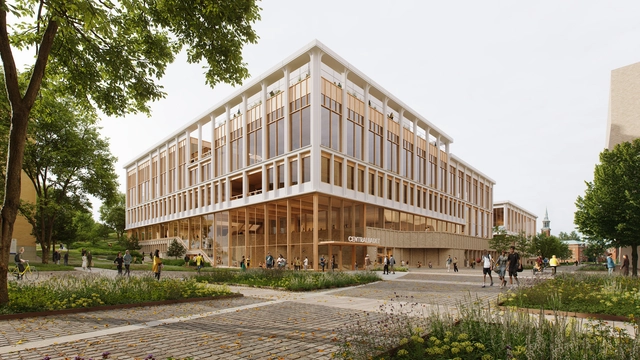
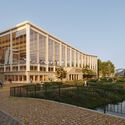
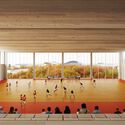
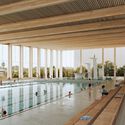
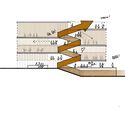
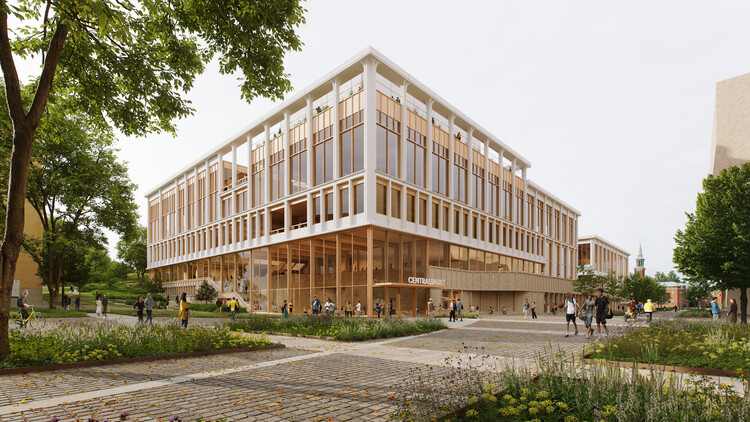
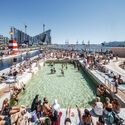
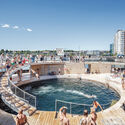
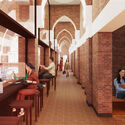
Centralbadet public swimming and sports center project in Sweden. Entrance render. Image Courtesy of Plankton Group
Henning Larsen has been selected to design Gothenburg's new Centralbadet, a public swimming and sports facility intended to strengthen the city's network of community and health-oriented spaces. The winning team includes Winell & Jern Architects, Ramboll, and John Dohlsten, Sports Science Lecturer at the University of Gothenburg. Organized by the City of Gothenburg, the competition included teams such as BIG and Wingårdh Arkitektkontor. The new center is planned as a multifunctional public facility that supports both everyday recreation and organized sport for residents of all ages.
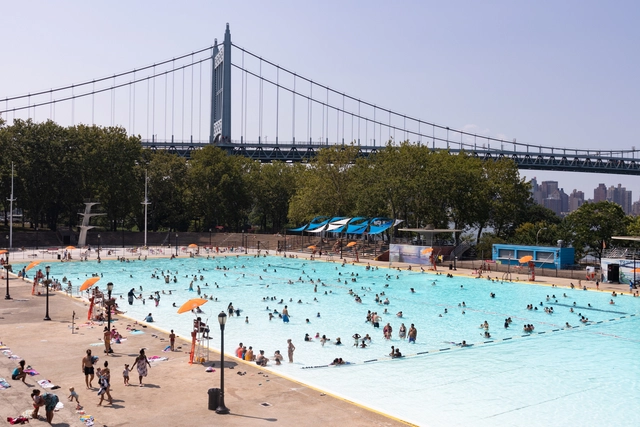
When one thinks of public spaces, the image of a pool rarely comes to mind. Public spaces are the center of civic life, places where most interactions, activities, and behaviors follow strict social and cultural norms to ensure the safety and comfort of all users. In contrast, swimming and bathing represent something more intimate and primordial, a sensorial experience distinct from any other. In addition to the health benefits, the act of floating in space creates a break from everyday life and its constraints.
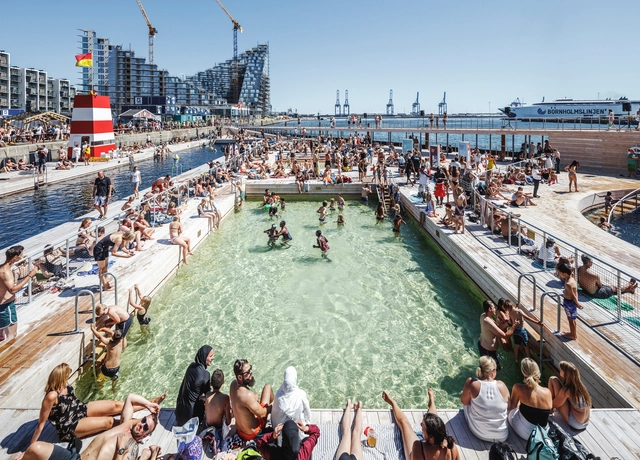
As social spaces, public baths, and pools offer an even more unusual experience. Here, regular conduct rules and norms no longer apply. Social nudity becomes the new norm, and, as people strip off their clothes, they also lose their status markers, transforming the pool into an egalitarian oasis. Across history, these often-discredited spaces offered a heightened social experience, fostering connections and bringing a new element to dense urban environments. As a typology present since antiquity, public baths and pools have also been a disputed space, as a manifestation of difficult topics such as gender and racial segregation, gentrification, and surveillance in contrast to the freedom they promise.
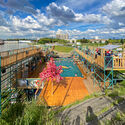
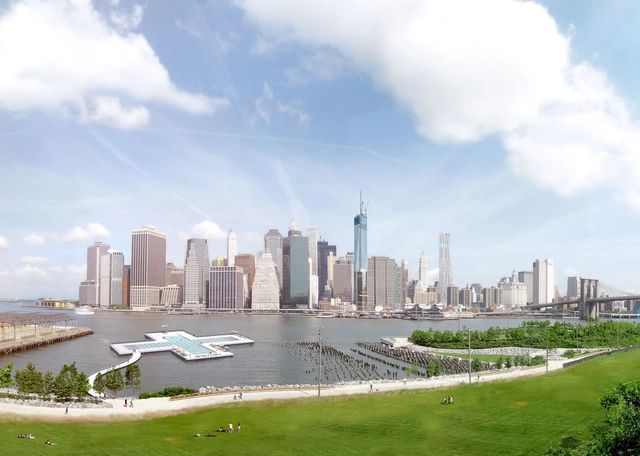
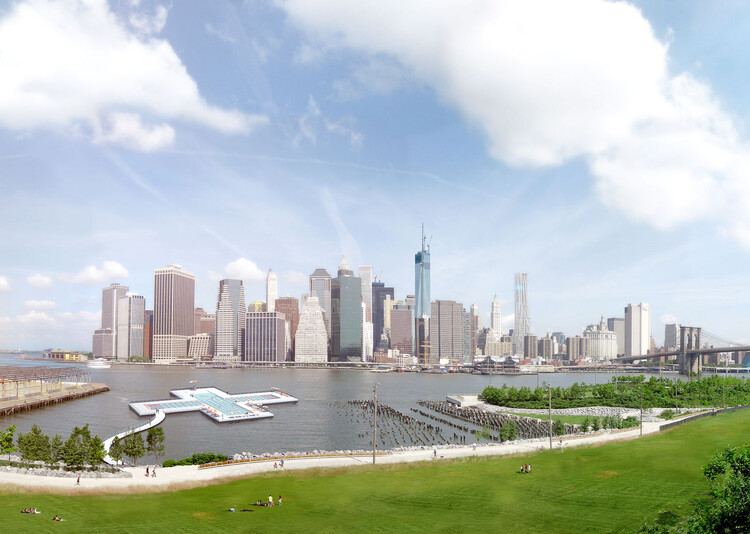
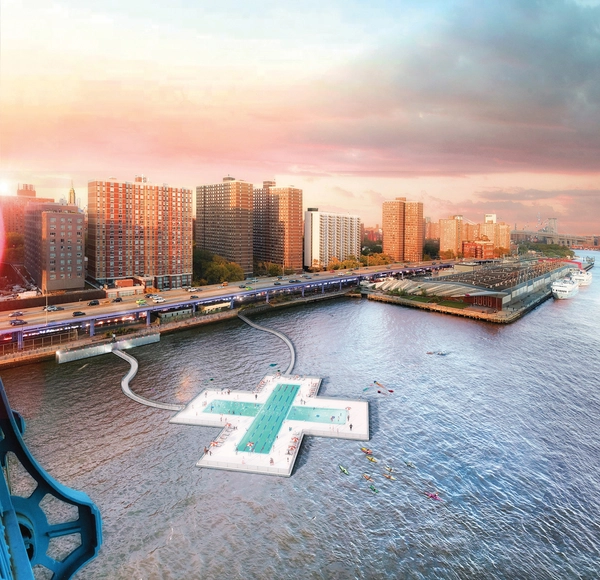
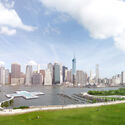
Friends of + POOL has announced the next steps in the realization of New York City's first water-filtering floating swimming pool, to be installed at Pier 35, north of the Manhattan and Brooklyn Bridges. The project seeks to provide safe public access to swimming in the city's rivers by integrating a custom-designed filtration system into a floating pool structure. Installation at Pier 35 is scheduled for May 2026, when the pool will enter its final phase of evaluation. Public access will be contingent on the successful completion of large-scale filtration testing and the full build-out of the facility for safe public use.
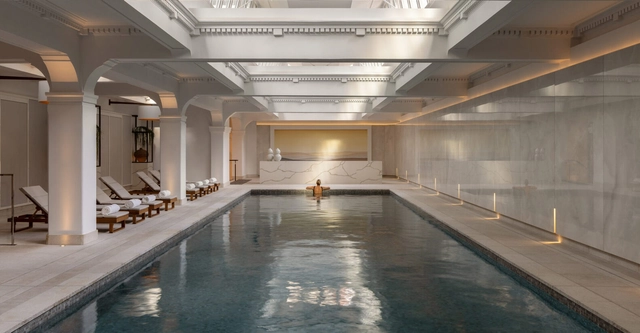
Les Bains des Docks Aquatic Centre. Image Courtesy of VELUX Commercial
Condensation, maintenance, and humidity are three familiar challenges that continue to test the buildings we design and construct. Whether stemming from climate conditions, limited airflow, or the specifics of construction detailing, these factors affect not only the durability of materials but also the everyday comfort and performance of inhabited spaces. When the setting is an aquatic center or an indoor swimming pool, the demands are even greater. The constant presence of steam, moisture accumulation, and the risk of mold can compromise both energy efficiency and the user experience. In such environments, ventilation and access to daylight, beyond their aesthetic value, become essential tools for maintaining equilibrium, enhancing indoor comfort, and ultimately improving how the space is perceived and utilized.
https://www.archdaily.com/1030573/letting-the-sky-in-4-case-studies-of-daylight-solutions-in-aquatic-architectureEnrique Tovar
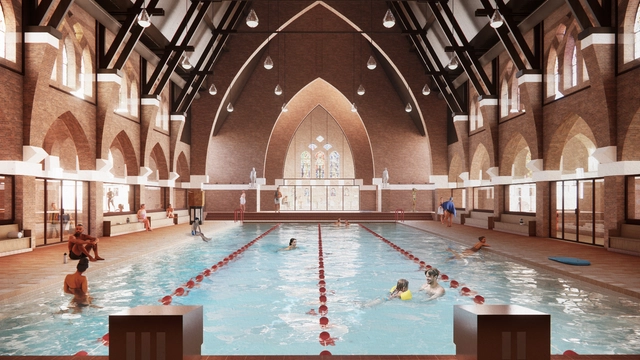
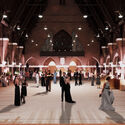
MVRDV and Zecc Architecten have won the competition to transform the St. Francis of Assisi Church in Heerlen into a public swimming pool. Originally built over 100 years ago, the church stopped hosting services in 2023, presenting the municipality with the opportunity to repurpose the building for community use. Nicknamed Holy Water, the adaptive reuse project is meant to give this listed national monument, with its recognizable silhouette, a new social function while preserving its historic elements. The design was created through a collaboration between MVRDV, Zecc Architecten, IMd Raadgevende Ingenieurs, Nelissen Ingenieursbureau, and construction economics consultancy SkaaL, and is expected to be completed at the end of 2027.
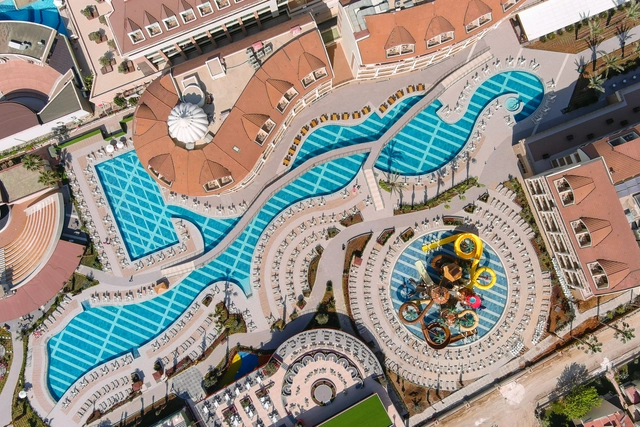
The evolution of new technologies, innovative applications, and a shift towards sustainable solutions are central to contemporary hotel architecture. These developments aim to raise awareness about environmental care while enhancing indoor comfort and well-being. From expansive resorts and tourist complexes to cabins and remote retreats, the design of common areas incorporates essential furniture for effective activities, proper climate control equipments, and wall and floor finishes that align with specific needs.
Serapool, a leading brand in porcelain pool tiles and complementary porcelain products, has been innovating and producing sustainable design solutions for residential, spa and wellness centers, hotels, water parks, and Olympic-size pools globally for 40 years. The brand's holistic approach to pool design has led to a comprehensive porcelain collection that includes pool tiles, stair nosings, pool copings, porcelain pool grates, infinity tiles, concealed overflow handles, terrace nosings, and rain channels. With years of expertise in the industry, the company stands as a leading example of innovation, consistently delivering safe and long-lasting products.
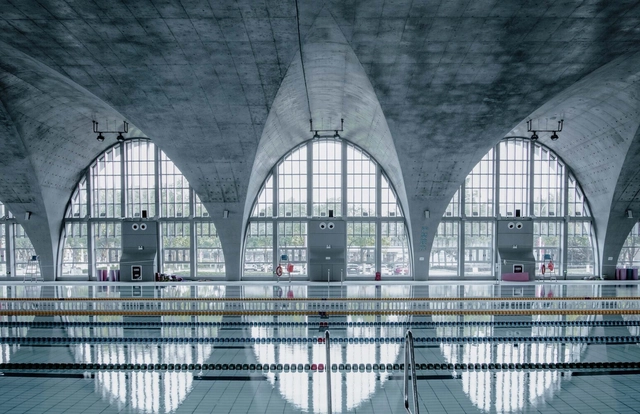
Natatorium of Southeast University / SEU-ARCH Zhou Qi Studio. Image Courtesy of SEU-ARCH Zhou Qi Studio
Sports infrastructure has become an important aspect of contemporary life, addressing the growing need for physical activity and leisure spaces to offset the stresses of urban living. In this context, architecture, particularly in the realm of sports facilities, plays a pivotal role in shaping these environments. Sports architecture, in particular, has evolved into a highly specialized discipline that not only addresses the functional and technical aspects—such as structural integrity, safety standards, and the specific requirements of different sports—but also emphasizes the importance of thoughtful design. A well-designed sports facility not only enhances the user experience but also integrates seamlessly into its urban or natural surroundings, contributing to the overall aesthetic and social value of the space. By blending functionality with innovation and creativity, sports architecture has the potential to positively impact both individual well-being and community cohesion.
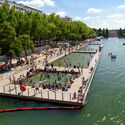
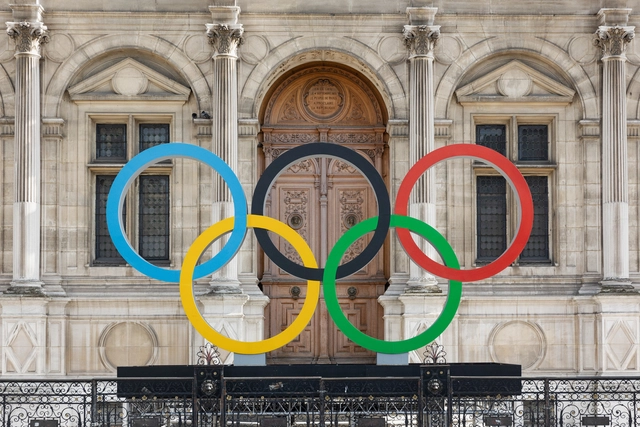
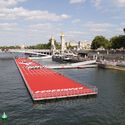
Guillaume Bontemps/Ville de Paris. Image Courtesy of Paris 2024 Olympic Games
The recent history of the city of Paris is entangled with that of the Olympic Games. In 1900, Paris hosted the second edition of the Games, starting a journey of urban adaptations and architectural developments that prepared the city for the event. Among the most important changes was the introduction of Line 1 of the metro, inaugurated in 1900 to link the locations of the Universal Exhibition with those of the Olympic Games in Vincennes. Just 24 years later, the city hosted one of the most influential editions of the Olympic Games. The event, the first to be broadcasted on the airwaves, contributed to a substantial rise in the popularity of the Games. It was also during this edition that the concept of the Olympic Village was born. Several of the infrastructures and venues built over a century ago are still in use in Paris, with some of them returning now as hosts of Olympic events.
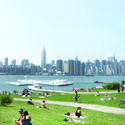
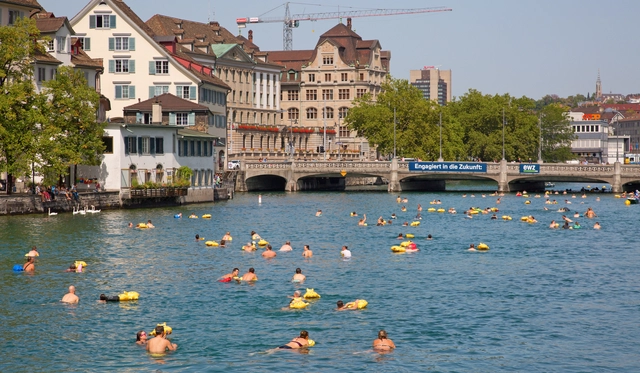
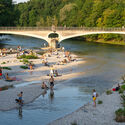
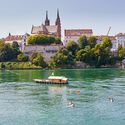
Throughout history, rivers played a crucial role in the social structures of cities. Along riverbanks, communities often congregated for socializing, swimming, and fishing. Swimming in rivers was a popular summertime activity enjoyed by people of all ages. Whether it was the Thames in London or the Seine in Paris, rivers were bustling with swimmers; integrated into urban lifestyles.
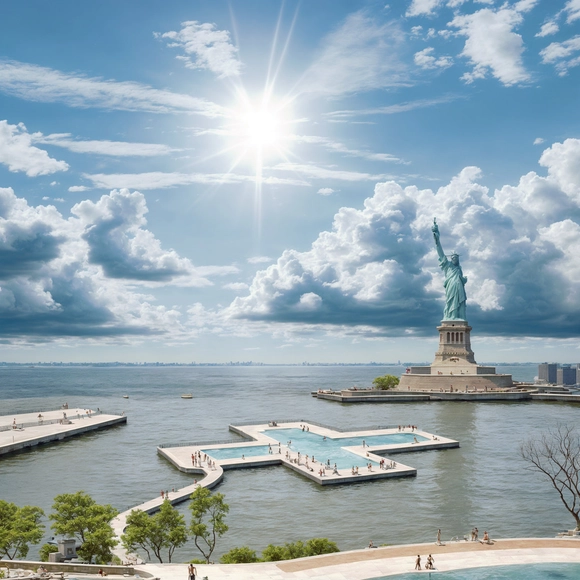
New York Governor Hochul has announced a partnership with the nonprofit Friends of + POOL to open the first urban river-sourced swimming facility in the United States. Utilizing + POOL’s design and technology, the 2,000-square-foot plus-shaped swimming pool is set to open in New York City’s East River in the summer of 2024. In 2010, four young designers, Archie Lee Coates IV, Dong-Ping Wong, Jeffrey Franklin, and Oana Stanescu, established + POOL with the goal of providing New Yorkers with access to free and safe river swimming. Now the state promised to invest $16 million to pilot and scale the system, hoping to expand it across the state of New York.
Contemporary family living setups mean parents and grandparents in need of care, teenagers and young adults in need of independence, and homeowners in need of the financial security of a guaranteed passive income are all finding themselves in the same situation, and under the same roof. With little extra space to move into, and few options in an increasingly squeezed housing market to move out to, the simple solution is just to add another roof.
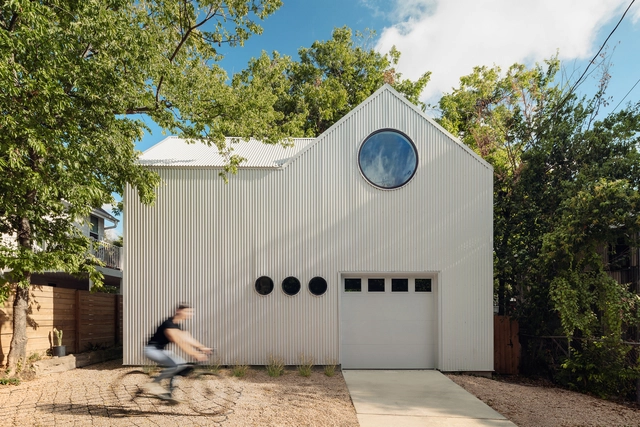
For those in the market for more functional floorspace, detached single-story ADUs (accessory dwelling units) are a simple way to boost a home’s usability fast, while avoiding the regulatory wranglings inherent in more complex structural adaptations.
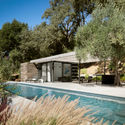
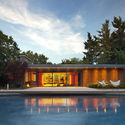
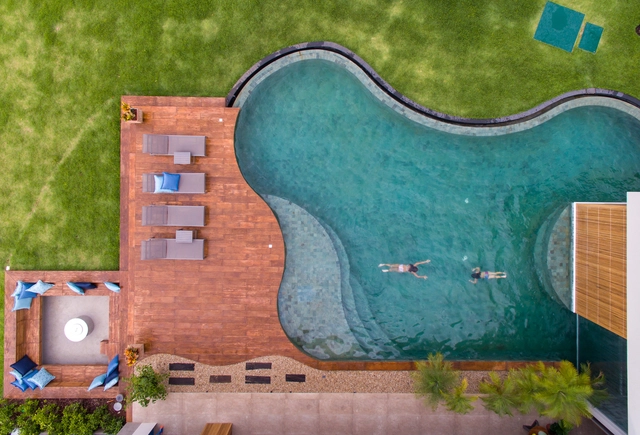
Residential swimming pools are nothing new, but they have become an unique component of modern living. Increasingly popularized, pools became a status symbol and a residential recreation element. Today, private swimming pools can be found across the world, and in many different climates. As more pools were built, so too were structures that could house equipment and pool amenities, as well as guest rooms or living quarters. These “poolhouses” were designed as spaces for accommodation, storage, and maintenance.
The end of the summer season is usually marked by crowds rushing to public pools to enjoy their final days splashing around the water. Public pools are much more complex than the fenced-in, chlorinated, and noisy bodies of water that they may seem to be. A delicate history and many socio-economic influences lie beneath the surface and dictate who gets to go for a swim. What happens when pools shift towards becoming private property and a sort of status symbol, and when these public spaces aren’t intended for everyone?
Often times in architecture, the way that a project's ability of its underscored elements to subtly carry a dialogue with the existing site is one of the most powerful moments in design. Swimming pools are a great example of these types of projects, since their designs often are a direct response to a variety of existing site conditions, including occupying both inside and outside spaces, assuming different forms, and incorporating a variety of finishes that might completely transform the aesthetic of the space.
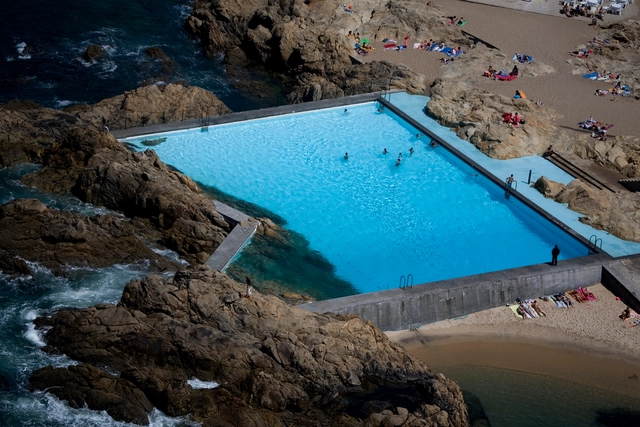
Few architectural typologies have the power to invoke a sense of being dual-natured quite as the modernist swimming pool can. The design of pools themselves implies that there are moments of activity both above and below the water. Above, and in the more obvious and visible sense, pools act as a space for leisure and athletic training. But underneath the surface, swimming pools have a long-standing history of acting as symbols of surveillance, death, and social conditions associated with an economic class.
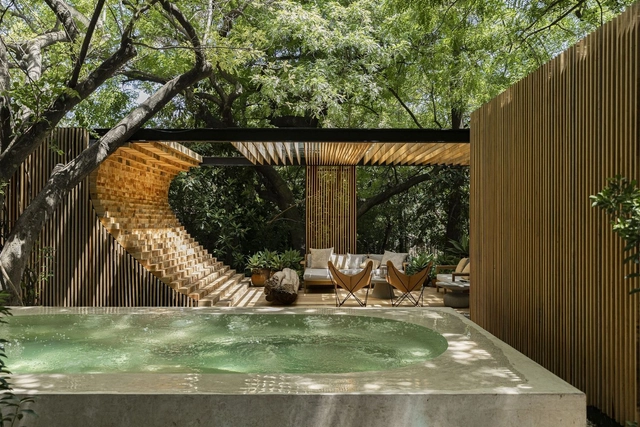
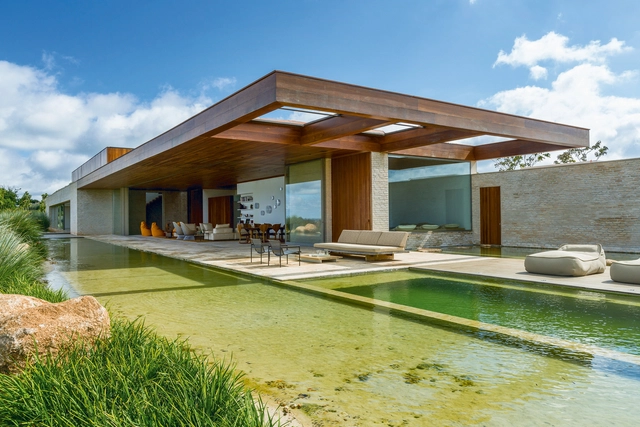
At a time when biophilia is highly valued in architecture, natural pools become another element capable of increasing the connection with nature, enabling the creation of a recreational and contemplative space at the same time. Also known as ecological or biological pools, they reproduce an ecosystem composed of plants, rocks and even some species of fish.