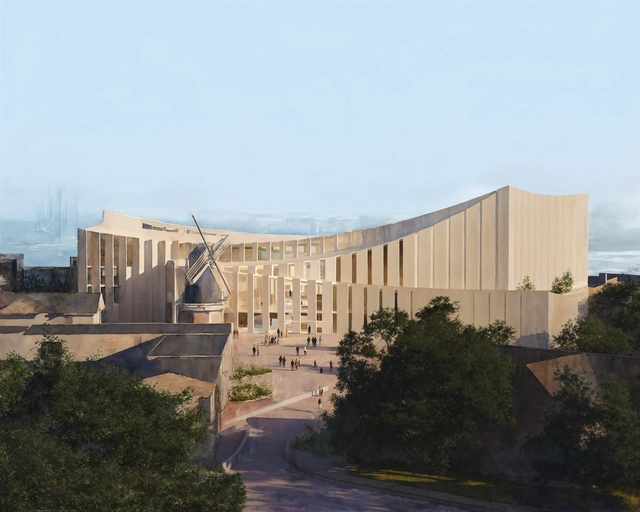
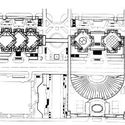
The House of Culture and Administration, a new civic complex designed by Benthem Crouwel Architects in collaboration with Snøhetta, is gradually taking shape in the Dutch city of Delfzijl. Located at Molenbergplein, the project brings together cultural and administrative functions in a unified architectural gesture that aims to strengthen the urban fabric of Eemsdelta. The current visualization marks a step forward in the structural design phase. Technical and financial refinements will continue over the summer, with final approval from the municipal council expected in October 2025.
As cities grow and available land becomes more limited, high-rise architecture plays an important role in addressing urban density while shaping new ways of living and working. Tall buildings are evolving beyond their traditional functions to integrate environmental strategies, enhance public engagement, and contribute to the urban fabric. Architects are exploring new materials, energy-efficient technologies, and spatial configurations that make towers more adaptable to their surroundings. Some projects incorporate green spaces and shared amenities to create a stronger connection between the built environment and its users, while others introduce innovative construction techniques to improve sustainability and efficiency.
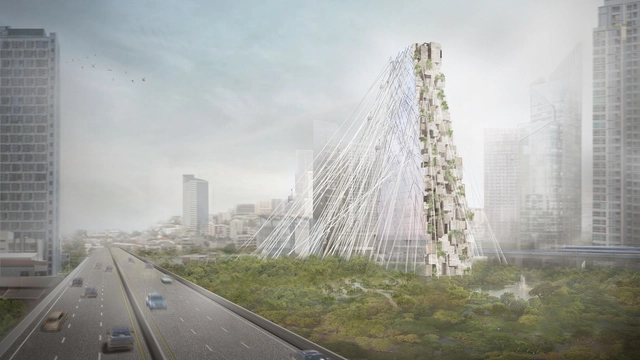
Among this selection of projects submitted by the ArchDaily community, The Residences at 1428 Brickell by Arquitectonica in Miami, United States introduces a solar-powered facade that contributes to the building's energy needs. In Dubai, UAE, AVA by SOMA creates a transition from the city into a more enclosed, water-defined environment with a focus on luxury living. In Bangkok, Thailand, HAS Design and Research proposes the Bangkok Civic Center Tower as a new type of public space, combining green landscapes with mirrored surfaces to connect the city with nature. These projects reflect different approaches to vertical architecture and highlight how designers are responding to the challenges and opportunities of dense urban environments.
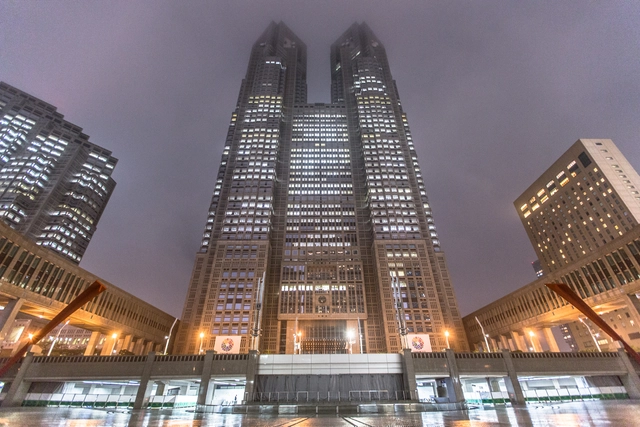
The career of Japanese architect Kenzō Tange features a curious anomaly: he received the same commission twice. In 1952, during the early stages of his career, Tange designed an administrative building in Yūrakuchō, Tokyo, for the city's metropolitan government. Over thirty years later, when the government relocated to Shinjuku, Tokyo, he again won the commission to design its administrative building. Completed in 1991, this would be one of his last, and most ambitious, projects. The second incarnation now dominates the city’s skyline, its highly distinctive design guaranteeing it landmark status. Nicknamed Tochō (an abbreviation of its Japanese name Tōkyō-to Chōsha), its architectural references to both tradition and modernity act as a visual metaphor for the eclectic city over which its inhabitants govern.