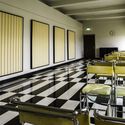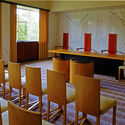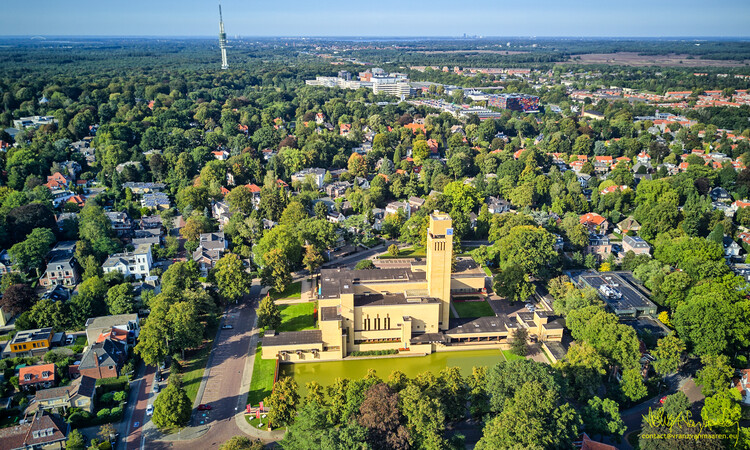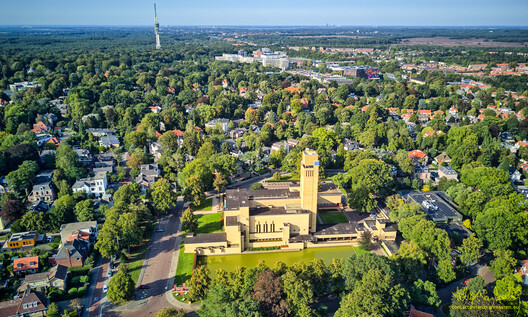
In the Dutch city of Hilversum, a municipal building completed in 1931 redefined the very idea of what a town hall could be. More than a house for local administration, the Hilversum Town Hall became the architectural expression of a community in transformation. With its tower rising above reflective ponds, its brick masses composed around courtyards, and its carefully detailed interiors, the building asserted that civic architecture could unite function with symbolism, efficiency with ceremony.
The architect behind this vision, Willem Marinus Dudok, was not only responsible for individual buildings but for the broader shaping of Hilversum itself. As a city architect and planner, he designed schools, housing districts, and parks, developing a language that fused Dutch craftsmanship with Modernist clarity. The town hall represented the culmination of this trajectory: a civic centerpiece where urban ambition, material refinement, and human scale converged in a single, coherent form.