1. ArchDaily
  2. Archeology

Archeology: The Latest Architecture and News

Anatomy of a Maya City: The Urban Structure of Copán in Honduras

Subscriber Access | 

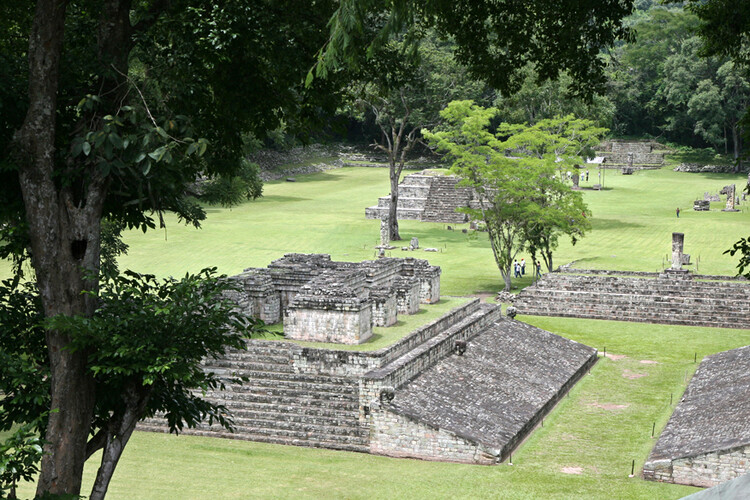
Deep in western Honduras, within a valley near the Guatemalan border, lies the ancient Maya city of Copán. Flourishing during the Classic period between the fifth and ninth centuries CE, the city developed as a regional epicenter through trade networks, dynastic politics, and monumental architecture. Today, the site is designated a UNESCO World Heritage Site due to its extensive architectural remains, including stepped pyramids, sculpted stelae, and ceremonial core. Over a century of systematic archaeological research has documented its urban morphology, revealing distinct residential districts, civic spaces, and systems of movement and visibility.

This analysis examines the spatial organization of Copán through the framework of urban theorist Kevin Lynch and "The Image of the City". By applying Lynch's five structural elements — edges, districts, paths, nodes, and landmarks — it is possible to analyze how Copán functioned not only as a ritual center but as a legible urban landscape designed to reinforce political hierarchy and regulate collective movement. Historical data for this analysis was taken from books and articles linked throughout the text, and was possible thanks to the collaboration of historian Arnulfo Ramirez de la Costa, professor and coordinator of the History program in the Department of History at the National Autonomous University of Honduras (UNAH) in Tegucigalpa.
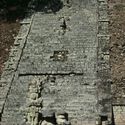
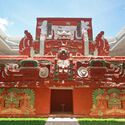
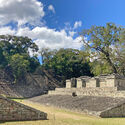
Anatomy of a Maya City: The Urban Structure of Copán in Honduras - Image 1 of 4Anatomy of a Maya City: The Urban Structure of Copán in Honduras - Image 2 of 4Anatomy of a Maya City: The Urban Structure of Copán in Honduras - Image 3 of 4Anatomy of a Maya City: The Urban Structure of Copán in Honduras - Image 4 of 4Anatomy of a Maya City: The Urban Structure of Copán in Honduras - More Images+ 8

STARTT Designs New Access to the Archaeological Areas Behind the Pantheon in Rome

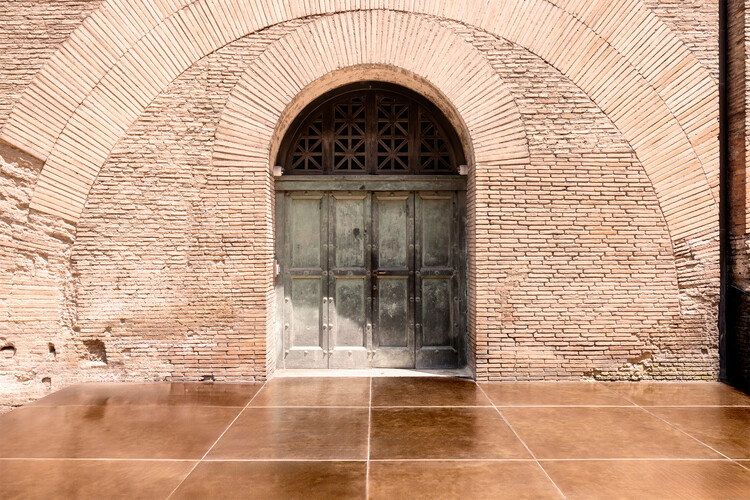
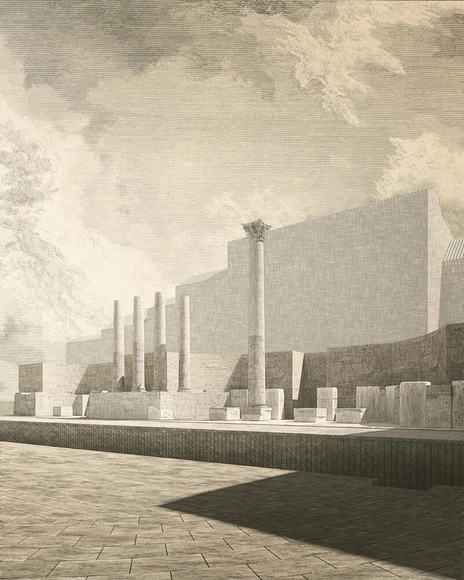
The Pantheon in Rome is globally known as a major tourist and architectural icon, a built testimony to both Greek culture and Roman technique, and a symbol of the Roman Empire. The monument was recently intervened upon by the Italian architecture studio STARTT (Studio of Architecture and Territorial Transformations). The project, titled Pantheon – Micro Architectures for Archaeology, was promoted by the Italian Ministry of Culture as part of a program of interventions initiated in 2019 to open public access to the archaeological areas of the Pantheon. STARTT's project represents the first phase of the program, focusing on opening a new entrance from the Pozzo del Diavolo, an area located behind the monument's Rotunda, allowing visitors to access parts of the building's archaeological fabric that were previously reserved for technical functions.

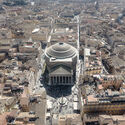
STARTT Designs New Access to the Archaeological Areas Behind the Pantheon in Rome - Image 1 of 4STARTT Designs New Access to the Archaeological Areas Behind the Pantheon in Rome - Image 2 of 4STARTT Designs New Access to the Archaeological Areas Behind the Pantheon in Rome - Image 3 of 4STARTT Designs New Access to the Archaeological Areas Behind the Pantheon in Rome - Image 4 of 4STARTT Designs New Access to the Archaeological Areas Behind the Pantheon in Rome - More Images+ 12

Stefano Boeri Interiors Restores Southern Ambulatory Areas of the Colosseum in Rome

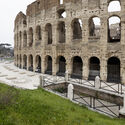
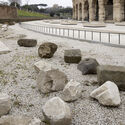
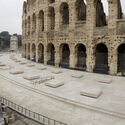
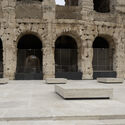
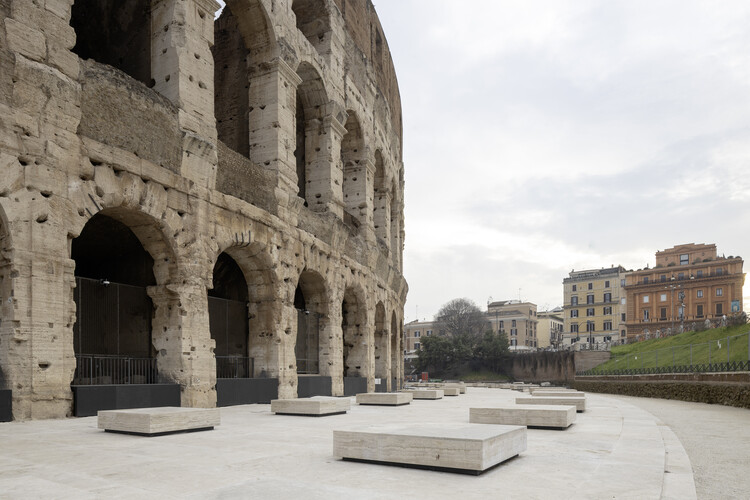
The southern ambulatory of the Colosseum in Rome has been restored through an intervention led by Stefano Boeri Interiors, a multidisciplinary studio founded by architects Stefano Boeri and Giorgio Donà, for the Parco Archeologico del Colosseo, focusing on the reconstruction of the crepidine and the repaving of missing sections to reinstate the monument's original ground levels and improve the legibility of its southern perimeter. The project builds on an archaeological investigation campaign that informed both the geometric definition of the intervention and its material articulation.

Stefano Boeri Interiors Restores Southern Ambulatory Areas of the Colosseum in Rome - Image 1 of 4Stefano Boeri Interiors Restores Southern Ambulatory Areas of the Colosseum in Rome - Image 2 of 4Stefano Boeri Interiors Restores Southern Ambulatory Areas of the Colosseum in Rome - Image 3 of 4Stefano Boeri Interiors Restores Southern Ambulatory Areas of the Colosseum in Rome - Image 4 of 4Stefano Boeri Interiors Restores Southern Ambulatory Areas of the Colosseum in Rome - More Images+ 7

David Chipperfield Architects Presents Plan to Restore and Enhance a Roman Theater in Brescia, Italy

The preliminary design for the architectural restoration and functional redevelopment of the Roman Theatre was presented on Tuesday, April 8, 2025, at the Auditorium of the Santa Giulia Museum in Brescia. The project was developed by the Milan office of David Chipperfield Architects, commissioned by the Fondazione Brescia Musei in collaboration with the Municipality of Brescia and the Brescia Chamber of Commerce, Industry, Handicraft, and Agriculture. Chipperfield was tasked with identifying the essential architectural elements to guide future design phases, leading to the drafting of the Technical-Economic Feasibility Project (PFTE) and the final project, including the necessary authorizations. This initiative is financially supported by the Italian Chamber of Commerce under a 2019 ministerial decree prioritizing cultural heritage, especially where it enhances tourism.

David Chipperfield Architects Presents Plan to Restore and Enhance a Roman Theater in Brescia, Italy - Image 1 of 4David Chipperfield Architects Presents Plan to Restore and Enhance a Roman Theater in Brescia, Italy - Image 2 of 4David Chipperfield Architects Presents Plan to Restore and Enhance a Roman Theater in Brescia, Italy - Image 3 of 4David Chipperfield Architects Presents Plan to Restore and Enhance a Roman Theater in Brescia, Italy - Image 4 of 4David Chipperfield Architects Presents Plan to Restore and Enhance a Roman Theater in Brescia, Italy - More Images+ 5