1. ArchDaily
  2. Brescia

Brescia: The Latest Architecture and News

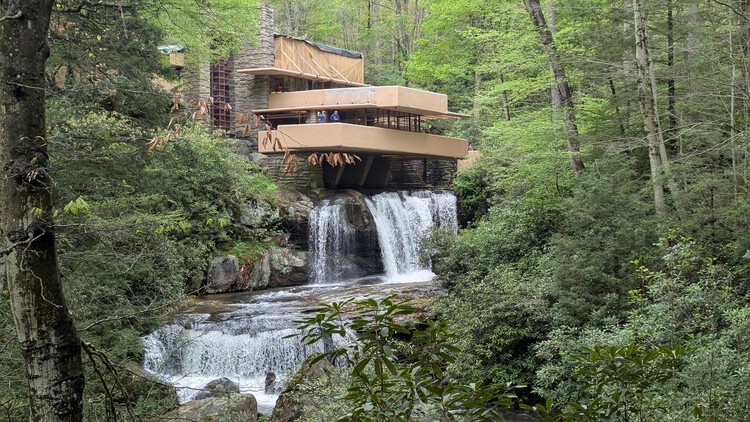
Frank Lloyd Wright’s Fallingwater Restoration and Salone del Mobile.Milano 2026: This Week’s Review

This week marked World Health Day, observed annually on April 7 by the World Health Organization. This year's edition issued the call to "Stand with science," inviting renewed engagement with scientific knowledge as a foundation for collective action across disciplines. In architecture and urban design, this imperative resonates through projects that translate research into spatial strategies: from the deployment of digital twins to inform urban planning and decision-making, to rewilding initiatives that integrate biodiversity as a tool to mitigate climate change, and materially informed practices that engage resource-conscious construction. Within this broader framework, recent works also foreground architecture's social agency at multiple scales, including a landscape-driven cancer support center in Kent that aligns wellbeing with environmental sensitivity, an urban installation in Brescia operating as a civic awareness device around life in prison and pathways to reintegration, and the transformation of a street in Mantua into a pedestrian-oriented, biodiversity-rich public space.

Frank Lloyd Wright’s Fallingwater Restoration and Salone del Mobile.Milano 2026: This Week’s Review - Imagen 1 de 4Frank Lloyd Wright’s Fallingwater Restoration and Salone del Mobile.Milano 2026: This Week’s Review - Imagen 2 de 4Frank Lloyd Wright’s Fallingwater Restoration and Salone del Mobile.Milano 2026: This Week’s Review - Imagen 3 de 4Frank Lloyd Wright’s Fallingwater Restoration and Salone del Mobile.Milano 2026: This Week’s Review - Imagen 4 de 4Frank Lloyd Wright’s Fallingwater Restoration and Salone del Mobile.Milano 2026: This Week’s Review - More Images+ 30

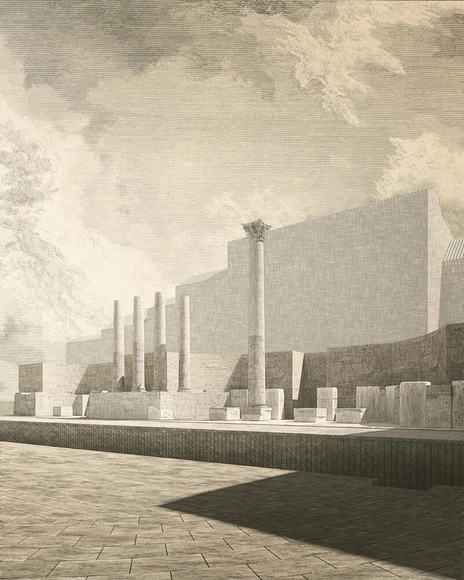
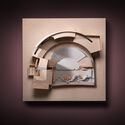
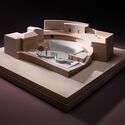
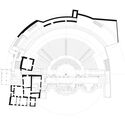
David Chipperfield Architects Presents Plan to Restore and Enhance a Roman Theater in Brescia, Italy

The preliminary design for the architectural restoration and functional redevelopment of the Roman Theatre was presented on Tuesday, April 8, 2025, at the Auditorium of the Santa Giulia Museum in Brescia. The project was developed by the Milan office of David Chipperfield Architects, commissioned by the Fondazione Brescia Musei in collaboration with the Municipality of Brescia and the Brescia Chamber of Commerce, Industry, Handicraft, and Agriculture. Chipperfield was tasked with identifying the essential architectural elements to guide future design phases, leading to the drafting of the Technical-Economic Feasibility Project (PFTE) and the final project, including the necessary authorizations. This initiative is financially supported by the Italian Chamber of Commerce under a 2019 ministerial decree prioritizing cultural heritage, especially where it enhances tourism.

David Chipperfield Architects Presents Plan to Restore and Enhance a Roman Theater in Brescia, Italy - Image 1 of 4David Chipperfield Architects Presents Plan to Restore and Enhance a Roman Theater in Brescia, Italy - Image 2 of 4David Chipperfield Architects Presents Plan to Restore and Enhance a Roman Theater in Brescia, Italy - Image 3 of 4David Chipperfield Architects Presents Plan to Restore and Enhance a Roman Theater in Brescia, Italy - Image 4 of 4David Chipperfield Architects Presents Plan to Restore and Enhance a Roman Theater in Brescia, Italy - More Images+ 5

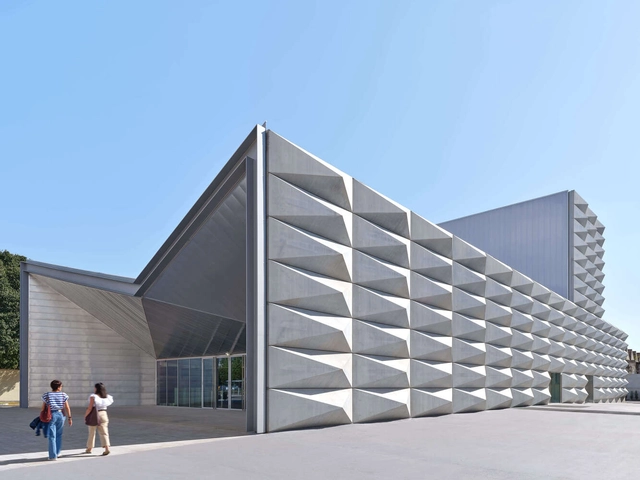
Teatro Borsoni / Botticini + Facchinelli ARW + Brescia Infrastructure

Teatro Borsoni / Botticini + Facchinelli ARW + Brescia Infrastructure - Exterior Photography, Theater, CityscapeTeatro Borsoni / Botticini + Facchinelli ARW + Brescia Infrastructure - Exterior Photography, TheaterTeatro Borsoni / Botticini + Facchinelli ARW + Brescia Infrastructure - TheaterTeatro Borsoni / Botticini + Facchinelli ARW + Brescia Infrastructure - Exterior Photography, TheaterTeatro Borsoni / Botticini + Facchinelli ARW + Brescia Infrastructure - More Images+ 24

Brescia, Italy
  • Area Area of this architecture project Area:  3500
  • Year Completion year of this architecture project Year:  2024
  • Manufacturers Brands with products used in this architecture project
    Manufacturers:  Camuna Prefabbricati, Festi Lattonerie, Giorgio Ceretti, Glifo, Kuotazio, +8

PR House / aa-ls luigi serboli architetti

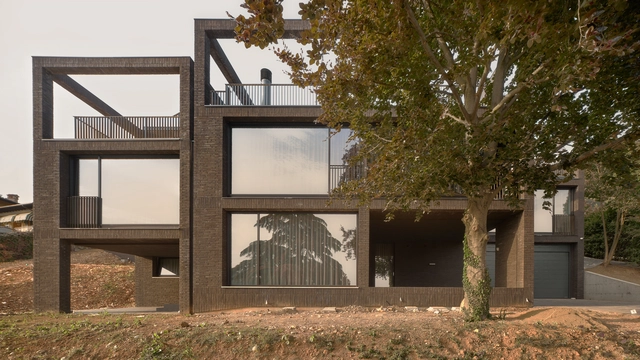
PR House / aa-ls luigi serboli architetti - Exterior Photography, Houses, BeamPR House / aa-ls luigi serboli architetti - Interior Photography, HousesPR House / aa-ls luigi serboli architetti - Exterior Photography, HousesPR House / aa-ls luigi serboli architetti - Interior Photography, Houses, FacadePR House / aa-ls luigi serboli architetti - More Images+ 21

Brescia, Italy
  • Area Area of this architecture project Area:  465
  • Year Completion year of this architecture project Year:  2020
  • Manufacturers Brands with products used in this architecture project
    Manufacturers:  Reggiani, Acerbis, Betacad, Ceretti B, Florim, +6

New Regolo Quarter / Atelier(s) Alfonso Femia

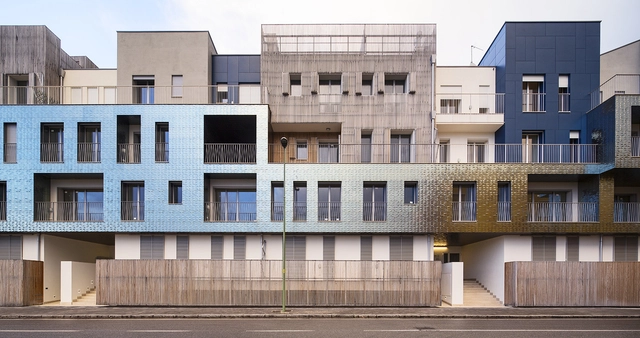
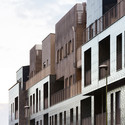
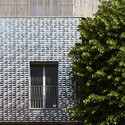
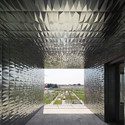
New Regolo Quarter / Atelier(s) Alfonso Femia - Apartments, Facade, BalconyNew Regolo Quarter / Atelier(s) Alfonso Femia - Apartments, FacadeNew Regolo Quarter / Atelier(s) Alfonso Femia - Apartments, FacadeNew Regolo Quarter / Atelier(s) Alfonso Femia - Apartments, FacadeNew Regolo Quarter / Atelier(s) Alfonso Femia - More Images+ 44

Brescia, Italy

HARDWARE SOFTCORE Installation / Gabriele Falconi

Subscriber Access | 
HARDWARE SOFTCORE Installation / Gabriele Falconi - Image 18 of 4
© Paolo Red Spinoni

The HARDWARE SOFTCORE Installation, designed by Gabriele Falconi, is directed to the interaction of the viewer, to his involvement, even physical, as an actor aware of choices and paths. Of monumental size, its modular installation was born from the idea of using the standard scaffolding system, which is made of shiny galvanized steel, repeating and assembling in vertical and horizontal direction.“The use of construction element, the simplest, declined to unusual, different, ambiguous shapes. For a skeleton of a large lizard, a cathedral with many naves, an interstellar starship. All that is involved here is multiple and transforms itself, starting from temporary basis to monumental forms, contradicting its premises. And finding its attractive side in construction hardware.” – Falconi. More images and architects’ description after the break.