Architecture praxis has traditionally focused on customized, project-based services – a well-established model continually favored by industry professionals. While this approach yields remarkable built environments, it struggles to achieve scalability and longevity. The architectural industry has shown little interest in exploring alternative practices, processes and business models, considering that the traditional mode is equally vulnerable to market cycles as other industries are. Bespoke design solutions, the cornerstone of conventional practice, make standardizing processes and scaling services challenging. This focus also leads to fragmented workflows among firms and stakeholders. The stability and establishment of traditional practices can breed a risk-averse culture, hampering disruptive innovations within the industry.
The field of architecture and design is a dynamic one, often managing large-scale investments and involving a wide array of professionals. It stands to reason that, in this type of environment, success is not simply defined by just the quality of the completed structures, but also by the internal ability of architecture firms to effectively manage their business operations. For architects and designers, measuring performance goes beyond financial metrics; it encompasses a diverse range of factors that reflect the firm's efficiency, creativity, and impact within the industry.
Several key metrics can be measured, from financial goals to client relationship management, innovation, influence, and professional development, all helping architects and designers gauge their performance from different perspectives. As the famous saying goes, “What gets measured gets managed.” To help in this effort, Monograph's 2024 Architecture Business Benchmarks Report offers a thorough examination of five key metrics.
In today’s globalised, ever-evolving world, the architectural field continues to re-invent itself. Innovation has seen the emergence of new building technologies and new methods of communicating with clients, however, in some ways, a large majority of the architecture industry is still outdated – architects relying on client fees received from projects to run their architecture firms. Perhaps as a consequence of the emergence of start-ups in the technology sector, and the increased competitiveness of the global economy, architects have more recently chosen not to confine themselves to within the world of architecture and use their unique skill-sets and abilities in entrepreneurial ways.
As the world slowly adjusts to the "new normal," so too does the architecture industry. Data related to market size and workloads shows that the profession continued to grow even after the pandemic struck. Other statistics show how architects are starting to be hit by the present crisis – such as the fall in full-time work and rising unemployment. While these statistics could take one down a road of despair (or enthusiasm), there is more to the numbers: Mobility, digital and managerial competencies are framing the profession in the 2020's. Not only as data for the sector to approach the market and retain talent but also as strategies in the face of crises and technologies to come.
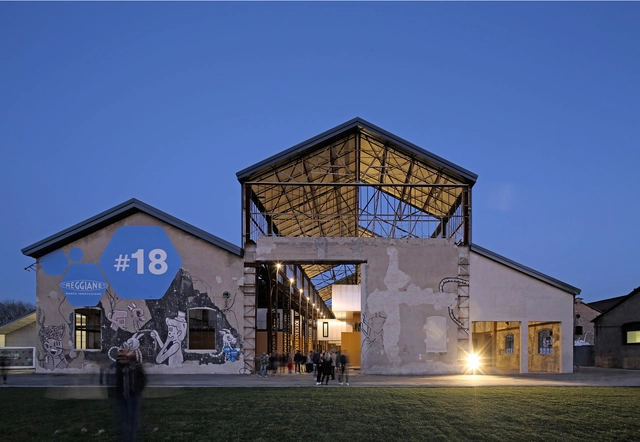
Winner project: Riqualificazione architettonica e funzionale del Capannone 18 nell’area Ex “Officine Reggiane”. Image Courtesy of Dedalo Minosse
The International Award for the Commission of Architecture “Dedalo Minosse” promoted the Italian association for professional Architects returns after three years on hold, to tribute worldwide architects. Firms like ODDO architects, Ryuichi Ashizawa, and The Kresge Foundation - Detroit are some of the winners for their promotion and contribution to the discipline. The Anniversary is also de 12th edition of the Dedalo Prize, which will be held From September 16 to October 2, 2022, in Vicenza, Italy. The event will host forums and workshops about and around the city, opening with the spectacular award ceremony at the iconic Teatro Olimpico, and continuing with a Multimedia exhibition at the Basilica Palladiana.
Originally published by Entrepreneur Architect, Associate Professor at Louisiana Tech Kevin J Singh gives his 21-point rundown of how to have a successful and happy life as an architect. The list gives some pointers that will certainly help young students and graduates, but may well be useful to some of the not-so-young practitioners who need to refocus on what's important.
The following is a compilation of my professional practice lecture on the last day of class. Instead of recapping the course or giving a final exam, I share with my students a presentation titled Advice as You Finish School and Start to Practice. I present a series of statements followed up with a brief explanation.
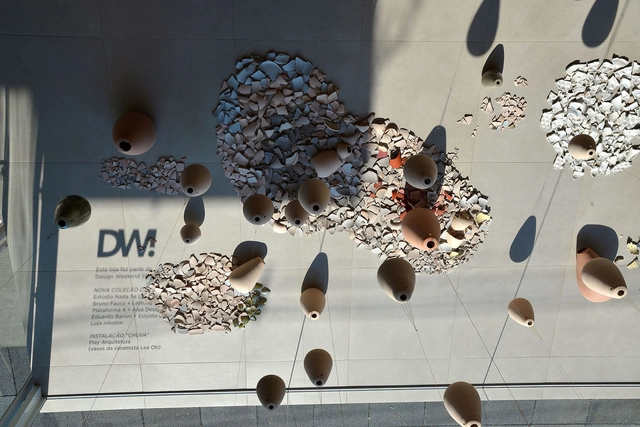
Between August 29 and September 2, the city of São Paulo will be the scene of São Paulo Design Week, the largest urban design festival in Latin America. The event is in its 7th edition and has more than 300 events spread across 130 different venues to promote design culture and its connections with architecture, art, decoration, urbanism, social inclusion, business and technological innovation.
Arena das Dunas, Brazil by Populous. Image Courtesy of Populous
As an industry populated by creators, the business of design is continually reconsidered and reshaped by processes of reinvention and experimentation. Rarely content with yesterday’s innovations in anything from modeling software to building materials, architects naturally look for strategic ways to gain maximum advantage in both building and business. Taking just such a creative approach to the challenge of improving athletic venues within the stringent time frame of a team’s offseason, the dominant Kansas City-based sports architecture firm Populous recently launched a standalone service that employs the efficiency advantages of a design-build firm to simplify and expand the process of implementing stadium upgrades without any disruption to the fan experience.
There has been a recent trend to monetize design businesses online. Outside the world of architecture, digital marketing is growing exponentially, and every day more and more companies are taking advantage of the benefits that come from curating an online presence.
The traditional architectural business model is largely dominated by the fees associated with design and construction. The actual structure of the billing is perhaps another argument to have all on its own, but relying on this type of income has been (and likely will continue to be) an efficient and successful model for the majority in the design industry. But what if there was another market to leverage to supply your design business with passive, additional income?

There has long been an understandable stigma associated with spec-house plan sets. Most spec plans lack any response to site, personalization, and even quality design. There is a relatively saturated market for these spec-type plan sets, but the untapped potential lies in this model's intersection with architectural practice.
Here are three ways you can begin to reverse the stigma associated with selling plan sets online while providing your design business with an additional revenue stream.
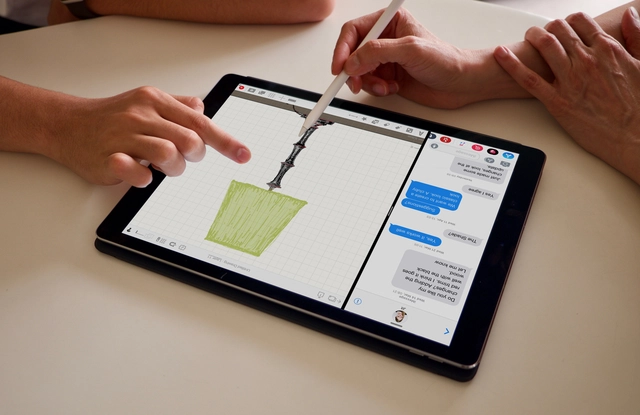
Sketching is the best way to work through design problems. Since no designer is an island, sometimes sketching collaboratively is the best way of working through design problems together. Other times, you sketch a bit, create a proper drawing, and then present to colleagues, clients or stakeholders.
"Whether you're resolving a challenging condition by yourself, or helping a client to visualize, we all sketch it out first," explained Sophie Amini, Creative Director at Pooky. "With Archisketch, more often than not, even I prefer to put aside my paper and pencil and whip off a sketch on my iPad. At Pooky, we work very closely, both with each other and with the manufacturers. We talk through sketches and ideas at length before deciding which samples to get made up. Sketches are translated into technical drawings, from which the manufacturers can work."
https://www.archdaily.com/893820/this-ipad-app-can-make-your-client-meetings-fast-efficient-and-productiveSponsored Post
Architecture's reliance on digital tools is rapidly advancing. Building Information Modeling (BIM) and augmented and virtual reality are quickly becoming the industry standard, along with more and more design businesses putting more effort and money into creating a stronger online presence. Because of this recent shift in focus, many firms have also begun experimenting with digital marketing strategies.
Content creation is at the heart of any successful online business, so what does that look like in the field of architecture? These 4 examples of content could help you begin to monetize your designs and/or practice online. By no means are these 4 examples the only means to grow a design business, but all 4 take advantage of the present trajectory of architectural practice, leveraging the possibilities of an increasingly digital world.
The way we consume long-form content has transformed drastically in recent years. More and more parts of our everyday lives are now transitioning to new digital mediums to save us time.
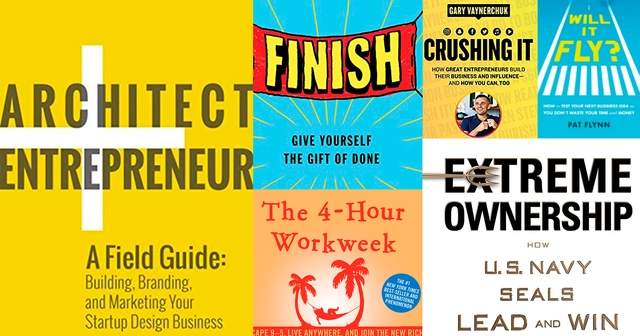
If you are the type of person who enjoys plugging into a good hard rock or soft jazz playlist while hammering out those 10 sheets of section details, why not simultaneously gain some knowledge about self-motivation or the latest business tactics? These 6 audiobooks could be just what you need to hear to fuel your inner entrepreneur.
We live in a world that spends more time online than outside. And as architects and designers, we invest in creating a more engaging world by means of enhancing life through our buildings. However, through a perhaps unique form of tunnel vision, we are missing an incredible opportunity to leverage alternative mediums to impact more people through our design businesses.
Here are 5 ways to utilize your creativity to produce unique content that will help enhance your impact on the world of design, and in turn, push you and your design business forward:
When you’re talking about a total of 151 million Americans, it’s tricky to make sweeping but accurate generalizations. And yet, that’s how many Americans fit into just two widely-recognized demographic groups: Baby Boomers, the 75 million people born between 1946 and 1964 and Millennials, the 76 million who came along between 1981 and 1997. Just as we can tell an LP record from an iPod, we’ve likely recognized common differences between Boomers and Millennials: How they typically work, communicate, balance job tasks and personal life, and what they expect for mentoring and promotions.
How can Boomers and Millennials work together without driving each other nuts? We recently turned to two New York architects to discuss their experience, proposed solutions, and general observations. This discussion resonates far beyond the design industry as it is applicable to the workforce of today and has implications for the workplace of tomorrow.
The architecture profession is in a perpetual debate concerning the myriad issues that impact how we practice and how that work can and should impact the world around us. As the chair of the AIA’s Young Architects Forum, I am keenly aware of the problems facing the next generation of practice leaders: inefficient practice models that lead to overworked, underpaid, and highly unsatisfied staff. We hear repeatedly that a seismic shift in the way firms operate is necessary to successfully move the profession forward and retain talent.
In October, the AIA held their first ever Practice Innovation Lab, looking to develop new practice models to raise the value of architects and the services that they provide to their clients with the goal of sparking a new debate that could challenge the status quo in firm management.Ten teams of six were formed with the intent of creating 10 new innovative practice models which would be pitched, “Shark Tank” style, after a daylong hackathon. Attendees then voted on the best practice model for the People’s Choice Award. Among the 10 pitches, there were five major themes to come out of the Practice Innovation Lab, which are discussed in more detail below:
https://www.archdaily.com/887308/5-innovative-business-models-for-young-architectural-practicesEvelyn Lee
Even with tech like virtual reality, augmented reality, 3D printing, computational design and robotics already reshaping architecture practice, the design community is just scratching the surface of the potential of new technologies. Designers who recognize this and invest in building skills and expertise to maximize the use of these tools in the future will inherently become better architects, and position themselves for entirely new career paths as our profession evolves. It is a uniquely exciting moment for architecture to advance through innovative use of technology. Even just a decade ago, designers with interests in both architecture and technology were essentially required to pursue one or the other. Now, with architecture beginning to harness the power of cutting-edge technologies, these fields are no longer mutually exclusive. Rather than choose a preferred path, today’s architects are encouraged to embrace technology to become sought-out talent.
One of the rising conversations in the architecture world in recent years has been the issue of architects' salaries. But how much are you worth? When is it time to ask for that much-needed raise? Two key elements to successful salary negotiation are timing and asking for the right reasons.
First, what do you deserve? Raises are earned, but there is a certain amount of money you deserve. For US salary data, check the AIA Compensation Report, which is updated annually. If you live internationally, see if you can find a similar resource for your country or city. Unless you are performing below average (coming in late, not being productive, or worse, setting back the office’s productivity), you shouldn’t be making a below-average salary.
Once you have an equitable starting salary, how can you tell if you’ve earned a raise from there? You may have earned a raise if...