1. ArchDaily
  2. Italian Alps

Italian Alps: The Latest Architecture and News

Milano Cortina 2026 Winter Olympics Officially Open as Citywide Events Launch Across Italy

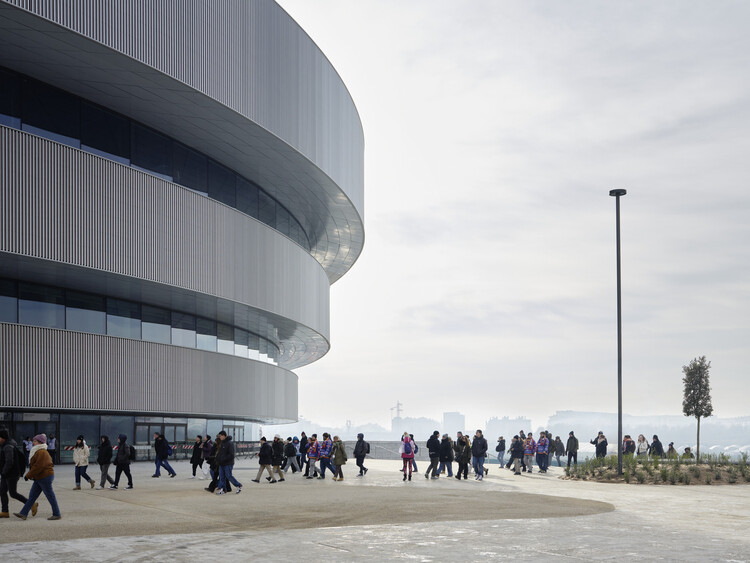
The Milano Cortina 2026 Winter Olympics officially opened on Friday, February 6, with a ceremony staged across four locations in northern Italy. The main opening event took place at San Siro Stadium, one of Milan's most significant modernist landmarks, and combined dance and performing arts, referencing Italian culture with performances by international artists, including pop star Mariah Carey. Although several competitions had already begun on February 4, the opening ceremony marked the start of a broader programme of sporting, social, and cultural events distributed across Milan and the three Alpine host areas: Cortina d'Ampezzo, Valtellina, and Val di Fiemme. The Games are scheduled to run until February 22, concluding with a closing ceremony at the Verona Arena, ahead of the Paralympic Games, which will take place from March 6 to 15. As a large-scale international event, the Olympics place significant demands on sports infrastructure, transportation networks, accommodation, and tourism capacity, offering early indications of the longer-term urban, architectural, and territorial impacts the Games may leave behind.


Milano Cortina 2026 Winter Olympics Officially Open as Citywide Events Launch Across Italy - Image 1 of 4Milano Cortina 2026 Winter Olympics Officially Open as Citywide Events Launch Across Italy - Image 2 of 4Milano Cortina 2026 Winter Olympics Officially Open as Citywide Events Launch Across Italy - Image 3 of 4Milano Cortina 2026 Winter Olympics Officially Open as Citywide Events Launch Across Italy - Image 4 of 4Milano Cortina 2026 Winter Olympics Officially Open as Citywide Events Launch Across Italy - More Images+ 5

One Week to Milano Cortina 2026: The Cultural Olympiad Expands the Games Through a Distributed Arts and Public Programme

Nearly one week before the start of the Milano Cortina 2026 Winter Olympics, the organizing committee has released official information on the event's Cultural Olympiad: an arts and culture programme accompanying the Olympic and Paralympic Games. The programme is recognized by the IOC as one of the three pillars of the Olympic Movement, alongside sport and education. Conceived as a widespread platform involving territories, institutions, and communities across Italy, the Cultural Olympiad aims to highlight the Italian Alps and Milan's cultural heritage while promoting Olympic values through art, history, and participation beyond the official sports venues.

One Week to Milano Cortina 2026: The Cultural Olympiad Expands the Games Through a Distributed Arts and Public Programme - Image 1 of 4One Week to Milano Cortina 2026: The Cultural Olympiad Expands the Games Through a Distributed Arts and Public Programme - Image 2 of 4One Week to Milano Cortina 2026: The Cultural Olympiad Expands the Games Through a Distributed Arts and Public Programme - Image 3 of 4One Week to Milano Cortina 2026: The Cultural Olympiad Expands the Games Through a Distributed Arts and Public Programme - Image 4 of 4One Week to Milano Cortina 2026: The Cultural Olympiad Expands the Games Through a Distributed Arts and Public Programme - More Images

One Month to Go: Adaptive Reuse and Alpine Transport Upgrades Shape the Road to Milano Cortina 2026

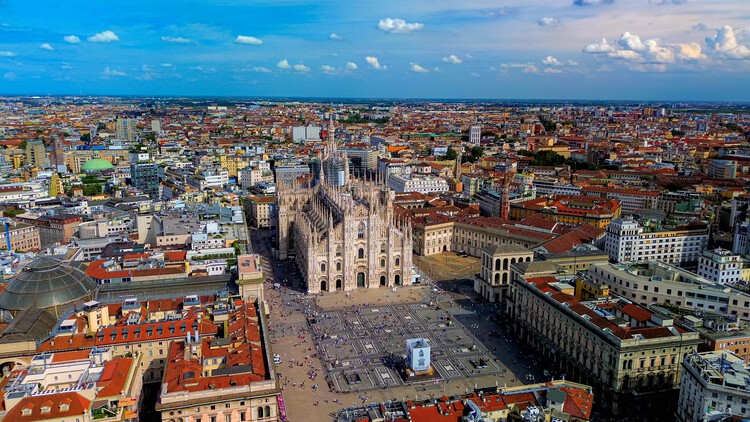
One month remains until the Opening Ceremony of the Olympic Winter Games Milano Cortina 2026, with competitions set to run from February 4 to 22, 2026. The Opening Ceremony will take place on February 6 at the Milano San Siro Olympic Stadium and will bring together approximately 2,900 athletes from around the world competing across 16 sports, with 116 gold medals to be awarded. The Olympic Winter Games return to Italy twenty years after Torino 2006 and seventy years after Cortina 1956. This edition, however, adopts a markedly different approach, proposing a shift away from the traditional high-cost, high-waste model toward adaptive reuse, renewable energy, and long-term regional development. The most geographically dispersed Winter Games in history plan to rely on 92% existing or temporary venues, build on regions with established tourism industries, avoid major environmental disruption, and implement circular design and recycling strategies, the results of which will become evident in the coming months. The Milano Cortina 2026 Winter Paralympics will follow, taking place from March 6 to 15, 2026.

One Month to Go: Adaptive Reuse and Alpine Transport Upgrades Shape the Road to Milano Cortina 2026 - 1 的图像 4One Month to Go: Adaptive Reuse and Alpine Transport Upgrades Shape the Road to Milano Cortina 2026 - 2 的图像 4One Month to Go: Adaptive Reuse and Alpine Transport Upgrades Shape the Road to Milano Cortina 2026 - 3 的图像 4One Month to Go: Adaptive Reuse and Alpine Transport Upgrades Shape the Road to Milano Cortina 2026 - 4 的图像 4One Month to Go: Adaptive Reuse and Alpine Transport Upgrades Shape the Road to Milano Cortina 2026 - More Images+ 7

CRA–Carlo Ratti Associati Designs Self-Sufficient Bivouac Pavilion for the 2026 Milano Cortina Winter Olympics

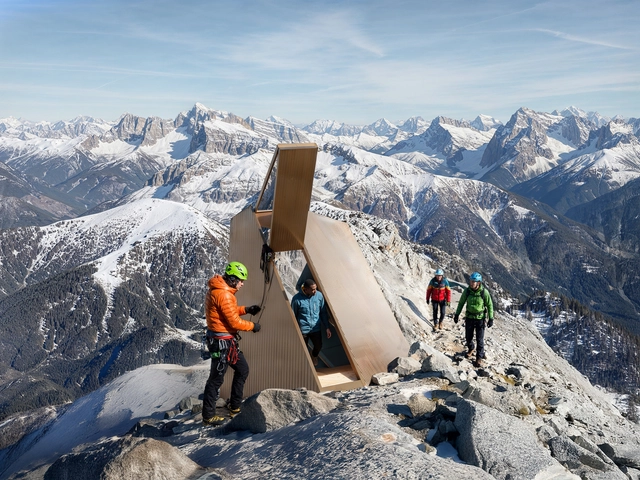
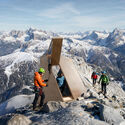
CRA–Carlo Ratti Associati, in collaboration with Salone del Mobile.Milano, recently unveiled the design of a digitally fabricated bivouac set to debut as an urban pavilion during the 2026 Winter Olympics in Milan. The digitally fabricated wooden structure is designed to be self-sufficient, incorporating systems for energy production and storage, as well as water harvesting through air condensation. After its debut at Milano Cortina 2026, the structure is planned to be airlifted by helicopter to its permanent high-altitude location in the Italian Alps, where it will serve as a refuge for mountaineers.

CRA–Carlo Ratti Associati Designs Self-Sufficient Bivouac Pavilion for the 2026 Milano Cortina Winter Olympics - Image 1 of 4CRA–Carlo Ratti Associati Designs Self-Sufficient Bivouac Pavilion for the 2026 Milano Cortina Winter Olympics - Image 2 of 4CRA–Carlo Ratti Associati Designs Self-Sufficient Bivouac Pavilion for the 2026 Milano Cortina Winter Olympics - Image 3 of 4CRA–Carlo Ratti Associati Designs Self-Sufficient Bivouac Pavilion for the 2026 Milano Cortina Winter Olympics - Featured ImageCRA–Carlo Ratti Associati Designs Self-Sufficient Bivouac Pavilion for the 2026 Milano Cortina Winter Olympics - More Images+ 1

Peter Pichler Architecture Unveils the Design of a Family of Ski Stations in the Italian Alps

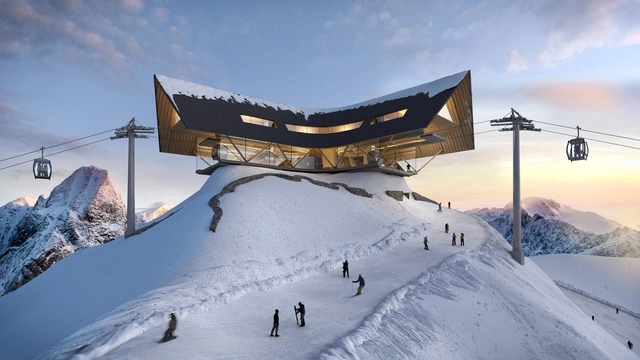
Peter Pichler Architecture has been invited to participate in a private competition for the design of a set of Ski Facilities in Ponte di Legno, Italy. The project includes the addition of three new cableway lines for the ski resort, each marked by an architectural intervention designed to provide shelter and dining options. The buildings also include exhibition spaces dedicated to the preservation of the cultural, natural, and historical heritage of the site.

Italian Studio Peter Pichler Designs Eco-Resort in the Alps, Europe

Milan-based architecture studio Peter Pichler has designed an eco-resort to develop a new concept of hospitality in the European Alpine region. Dubbed the YOUNA Nature Resorts, the complex follows the mountain’s silhouette to offer a maximized relaxation experience. The A-shape typology allows wide opens the front facade to connect with nature while reaching high-private interiors under the same roof. The resort is the last of the studio’s series of projects in the Italian rural area, including a hotel in Maranza and a prototype of a treehouse in the forest of the Dolomites.

Piuarch Wins Competition To Build a New Cooperative Dairy In the Alps

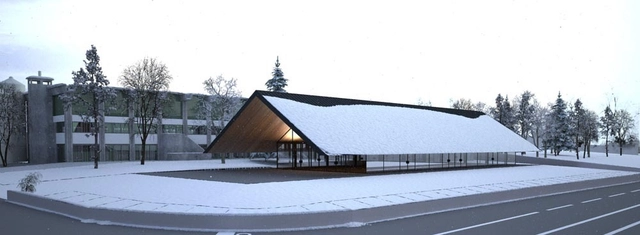
Milan studio Piuarch unveiled their design for the new Latteria Sociale Valtellina cooperative dairy in the Italian Alps. The competition, commissioned by the Latteria, sought to renovate the old building and expand it to include a sales outlet, restaurant, conference room and small museum. Piuarch's winning design builds on the economic and historic context of the area and surrounding landscape.