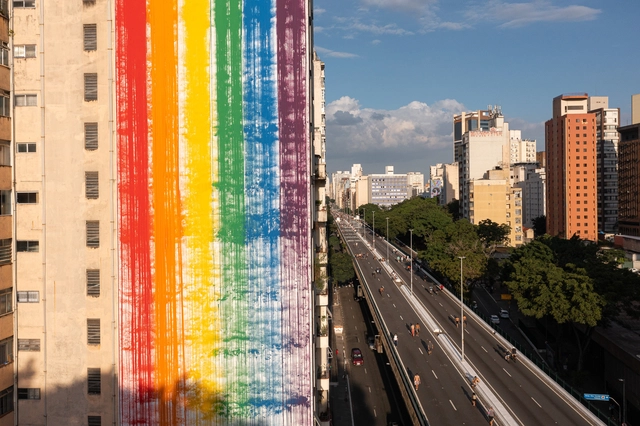
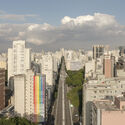
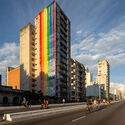
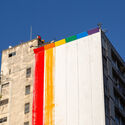
To celebrate LGBTQIA+ Pride Month in June, Facebook colored São Paulo with a hybrid installation titled #JuntosComOrgulho, fusing the analog and the digital at an iconic city landmark, the Minhocão. The elevated highway, which is open to pedestrians at night and on weekends, features a massive blank wall painted with the colors of the LGBTQIA+ flag, designed by Estudio Guto Requena in partnership with Mutato and Studio Curva.
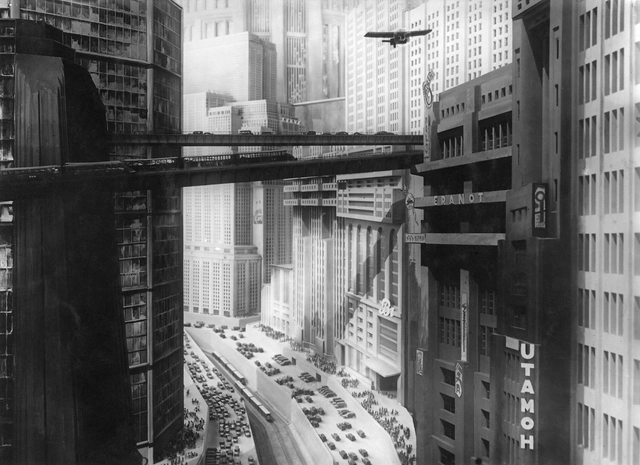
Metropolis. Directed by Fritz Lang. Distributor: Kino Video, 1927. 1 DVD (153 min) and the possibility of a dystopian future. Source: Film screenshot
Belas Artes À La Carte is a movie streaming service designed for film lovers. Its catalog of around 400 titles includes films from all corners of the world and all eras: contemporary works, classics, cult films, works by great directors, award winners, and, above all, those that deserve to be revisited and touch the hearts of cinephiles.
Another highlight is the curated film showcases. Recently, À La Carte featured specials dedicated to French, Italian, Korean, Spanish, and Swiss cinema. Recognizing the close and prolific relationship between architecture and cinema, ArchDaily and Belas Artes À La Carte have partnered to offer readers one month of free access to the platform's film catalog!
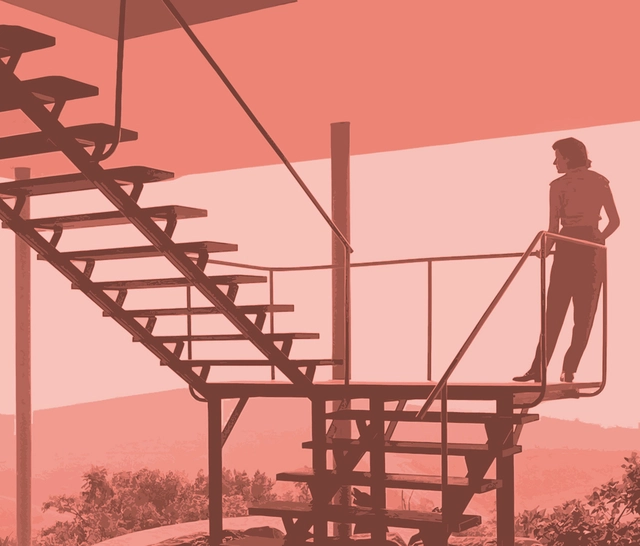
Original photo: Francisco Albuquerque. Lina Bo Bardi on the staircase of the Glass House, 1952, São Paulo, Brazil. Courtesy of Prêmio {CURA}
The 6th {CURA} Award continues the practice of holding idea competitions with themes aligned with current discussions on architecture, the city, and society, aiming to deepen the debate on contemporary Brazil. In 2021, the curatorial team of the 17th Venice Architecture Biennale awarded a posthumous Golden Lion for Lifetime Achievement to Lina Bo Bardi (1914-1992), Brazil's most prominent architect—who, despite being born in Rome, became a naturalized Brazilian citizen in 1953. The initiative also celebrates the release of the book Lina: Uma Biografia by Francesco Perrotta-Bosch, published by Todavia.
To celebrate the award and honor Lina and her incredible work, the theme of the 6th {CURA} Award is Lina Bo Bardi.
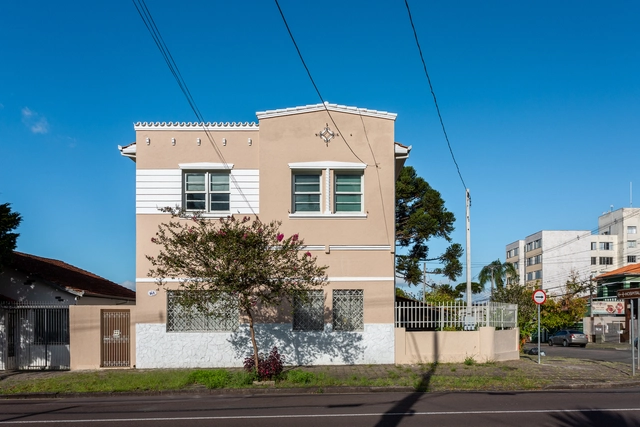
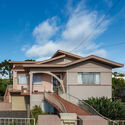
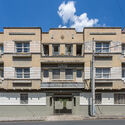
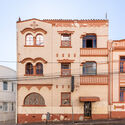
Most of the urban landscapes that shape our lives are made up of modest houses—those built in the 20th century by immigrants, artisans, and anonymous builders. However, this vernacular architecture, full of warmth, good design, and rich details, is not studied as frequently as it should be. But this is beginning to change. At least in Curitiba.
Architects Fábio Domingos Batista and Paula Domingos Fraiz Morais spent months studying the residential architecture of the Paraná state capital. Now, they are launching a two-book box set, *Inventário de Arquitetura Residencial Curitibana* [Inventory of Curitiba's Residential Architecture], aimed at the general public. The publication features architectural details of approximately 160 houses in Curitiba built between 1920 and 1960.
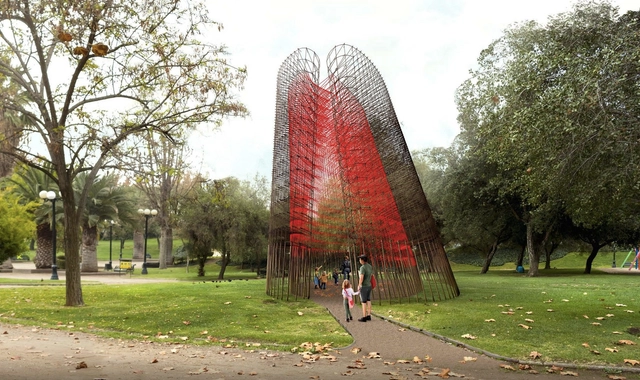
As the values associated with traditional monuments—such as landmarks, historical figures, and heroism—are called into question, the open, the internal, and the sensory are gaining prominence and relevance. In this context, "Dionaea," a forthcoming sculpture in Mapocho Río Park, Cerro Navia, seeks to highlight the historical role and contribution of women in Chile.
Videos
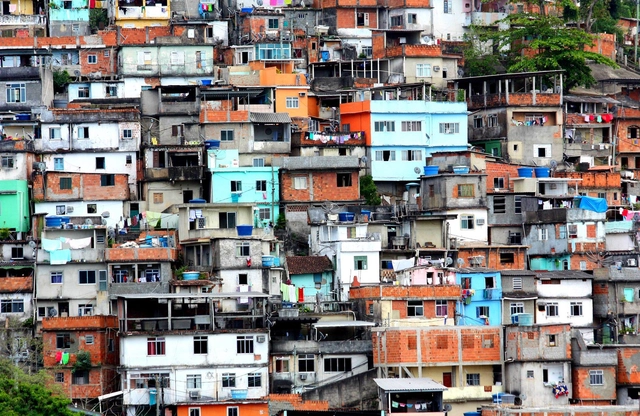
Favelas 4D/MIT Senseable City Lab. Publicity image
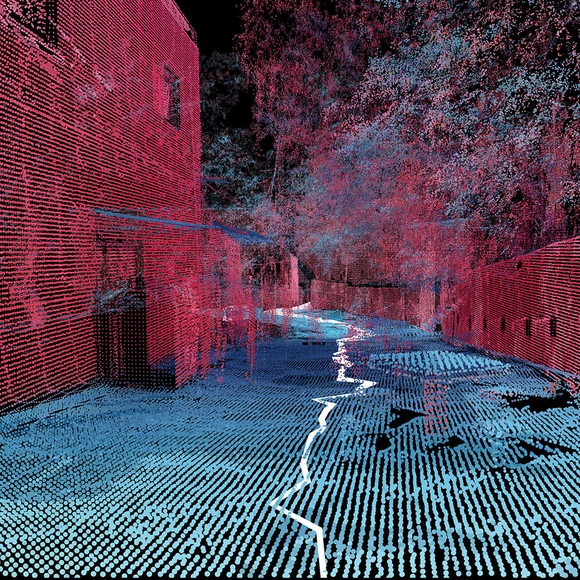
Using 3D laser scanning technology, the Senseable City Lab at the Massachusetts Institute of Technology (MIT), in collaboration with BRTech 3D and Washington Fajardo, Rio de Janeiro's Municipal Secretary of Urban Planning, is conducting a comprehensive morphological analysis of Rocinha, Brazil's largest favela, which has around 100,000 residents across 838,000 square meters and nearly 26,000 homes.
Located 60 km from Belo Horizonte, Caeté is the latest Brazilian city to adopt free public transportation. The initiative took effect on July 1 and will undergo a six-month trial period, with the potential for permanent implementation. Approved by the City Council, the bill allows residents to use the municipality's six bus lines free of charge. Previously, the fare was R$4.
The program is funded through a monthly subsidy of R$90,000 paid to Transcol Caeté, the transit concessionaire operating in the city, which had previously considered suspending services due to financial difficulties.
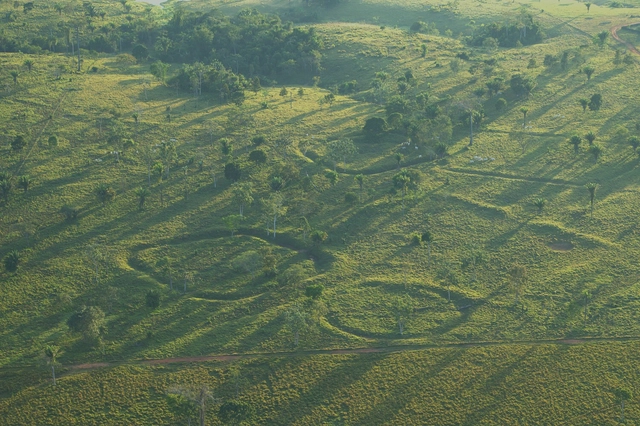
Brazil's participation in the 19th International Architecture Exhibition – La Biennale di Venezia will be marked by the exhibition (RE)INVENÇÃO, curated by architects Luciana Saboia, Matheus Seco, and Eder Alencar of the collective Plano Coletivo. The initiative, organized by the Fundação Bienal de São Paulo in partnership with the Ministries of Culture and Foreign Affairs, invites a reflection on the connections between nature and the city, exploring ancestral infrastructures and their potential reinterpretation in contemporary Brazil.
https://www.archdaily.com/1079993/brazilian-pavilion-at-the-venice-biennale-explores-ancestral-infrastructures-and-contemporary-projectsArchDaily Team
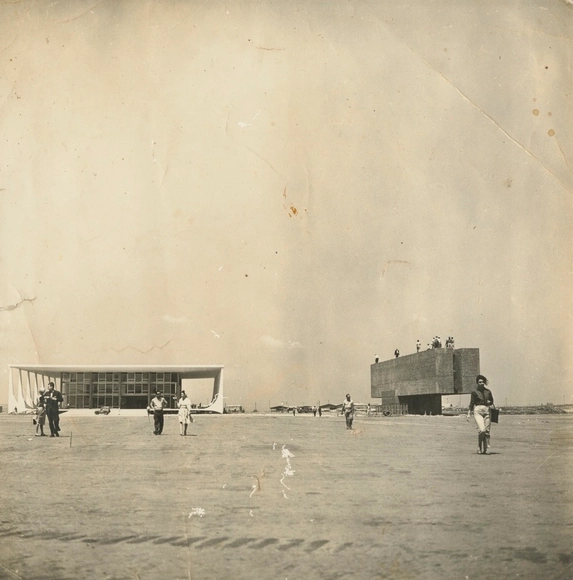
The Federal District of Brasília and Casa da Arquitectura in Portugal have signed an agreement to share the digital archive of Lucio Costa, the urban planner behind Brasília's Pilot Plan. The signing ceremony took place on February 18, 2025, at the Buriti Palace, in the presence of the governor of the Federal District, Ibaneis Rocha, the executive director of Casa da Arquitectura, Nuno Sampaio, and the Portuguese Minister of Culture, Dalila Rodrigues.
https://www.archdaily.com/1079991/federal-district-and-casa-da-arquitectura-sign-agreement-to-share-lucio-costas-digital-archiveArchDaily Team
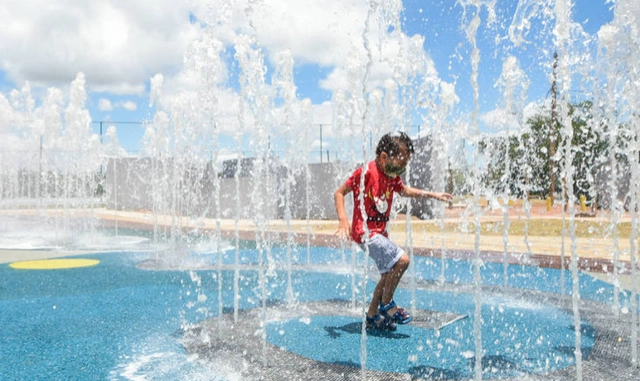
As of July, 11 new Brazilian cities will join the Urban95 initiative. In total, 24 cities in Brazil have already committed to creating and strengthening actions focused on early childhood in public spaces, data management, programs, and services, ensuring these initiatives are transformed into public policies.
Urban95 begins with the following question: "If you were 95 cm tall (the average height of a three-year-old child), what would you do differently in the city?" With this vision in mind, the proposal is to design and implement urban transformation and service policies. The goal is to build cities that are good for children and, consequently, for everyone.
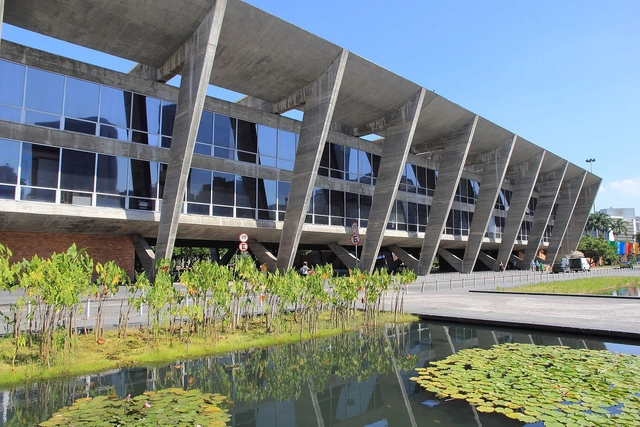
Museum of Modern Art of Rio de Janeiro. Photo by Halley Pacheco de Oliveira, via Wikipedia. License CC BY-SA 3.0
Professionals and students from several countries are about to participate in an unprecedented way in the world's largest architecture and urbanism event. The main program of the 27th World Congress of Architects (UIA2021RIO), which was scheduled to take place in July 2020 in Rio de Janeiro and postponed due to the coronavirus pandemic, begins on Sunday, July 18, in a 100% digital format for the first time in history. Through July 22, attendees will watch lectures by twenty of the most prominent names in global architecture and roundtables with more than one hundred internationally award-winning architects, as well as paper presentations, cultural activities, and awards. Since March, nearly 90,000 people from over 180 countries have been following the preparatory panels—an absolute record in the more than 70-year history of the event, which is held every three years by the International Union of Architects (UIA).
Today, Paulo Mendes da Rocha would have received the highest honor from the International Union of Architects at the World Congress of Architects (UIA 2021 RIO). To mark the occasion, the IAB São Paulo sent a letter to the city's mayor and councilors proposing a tribute to the architect.
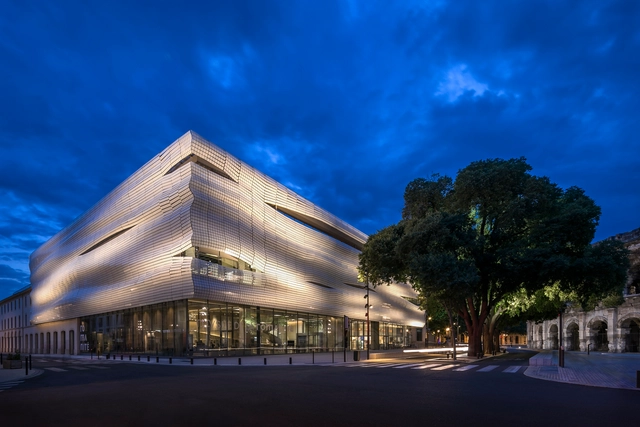
Elizabeth de Portzamparc - Musée de la Romanité de Nîmes. Photo by Wade Zimmerman, via UIA2021RIO
The World Stage at UIA2021RIO, the 27th World Congress of Architects, hosted three award-winning architects from its keynote speaker lineup this week: Elizabeth de Portzamparc, a Brazilian-born architect based in France; Anna Heringer of Germany; and Tatiana Bilbao of Mexico.
Elizabeth de Portzamparc discussed the concept of “Nexus Architecture,” which advocates for connecting various elements when thinking about and creating architecture. Meanwhile, Anna Heringer advocated for a working method focused on social justice and community inclusion in projects that can transform lives. Finally, Tatiana Bilbao gave a poetic presentation on the home as a social act, housing rituals that architecture must always consider.
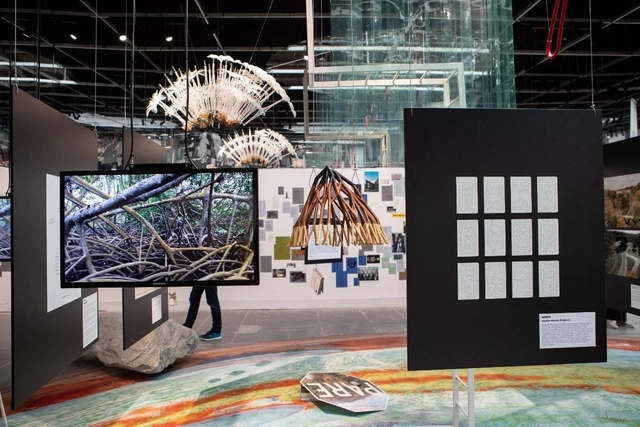
Designed by Atelier Marko Brajovic, the project ROOTS - mangrove ecosystem is part of the exhibition Future Assembly, curated by Studio Other Spaces, by artist Olafur Eliasson and architect Sebastian Behmann, which responds to the theme How will we live together? proposed by Hashim Sarkis, curator of the 17th International Architecture Exhibition of the Venice Biennale. The project features a 3D-printed model, hand drawings, and videos, which remain open to visitors until November 21, 2021, at the Giardini.
Future Assembly aims to introduce the United Nations' alternative multilateral value system to the Venice Architecture Biennale, reflecting on the past 75 years of UN multilateralism and imagining new futures of how we can collaboratively come together. The Atelier believes that a future multilateralism must expand beyond a human-centered worldview to a more-than-human gathering.
The Romano Guerra Editora and the Instituto Tomie Ohtake are launching a new book on the work of Ruy Ohtake, exploring aspects of the architect's career that have received little attention in previous publications. According to editors Abilio Guerra and Silvana Romano Santos, “the nine previous monograph publications lacked consistent technical drawings. Unrestricted access to the architect's archives, however, made it possible to analyze and present the complexity of the designs.”
Brazil has just gained another World Heritage site. The legacy of one of the 20th century's greatest landscape architects, the Roberto Burle Marx Site (SRBM) was recognized on Monday, July 26, during the 44th Session of the World Heritage Committee of the United Nations Educational, Scientific and Cultural Organization (UNESCO).
The Site was recognized under the Cultural Landscape category, which includes properties that represent the interaction between the natural environment and human activities, resulting in a modified natural landscape. Brazil now has 23 properties inscribed on the UNESCO World Heritage List, a registry of sites considered to possess outstanding universal value for human culture.
The Rio de Janeiro Charter, which outlines proposals for the urban development of cities worldwide in the coming years, was presented during the closing of the 27th World Congress of Architects on July 22. The document advocates for a new city model in the post-pandemic world—one more attentive to climate change, quality spaces, public health, dignified housing, and the reduction of inequalities. The UIA2021RIO Executive Committee announced that the Rio Charter will be delivered to the mayors of all state capitals in Brazil, marking the consolidation of the proposals discussed throughout the event, which was hosted in the country for the first time.
Anyone who has played with wooden blocks or the famous LEGO toy knows the satisfaction of imagining something and building it with their own hands. In Belgium, this concept has taken on a whole new scale. Construction specialist Gabriel Lakatos has always loved playing with blocks and turned this passion into a building system for wooden houses. His company, Gablok, sells home construction kits designed to make building simple and efficient.