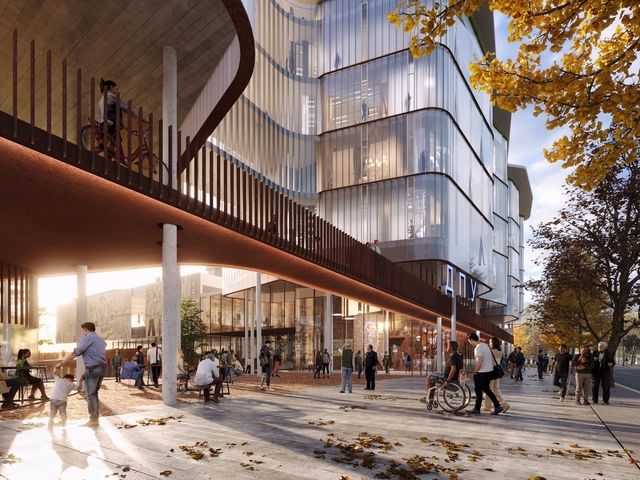
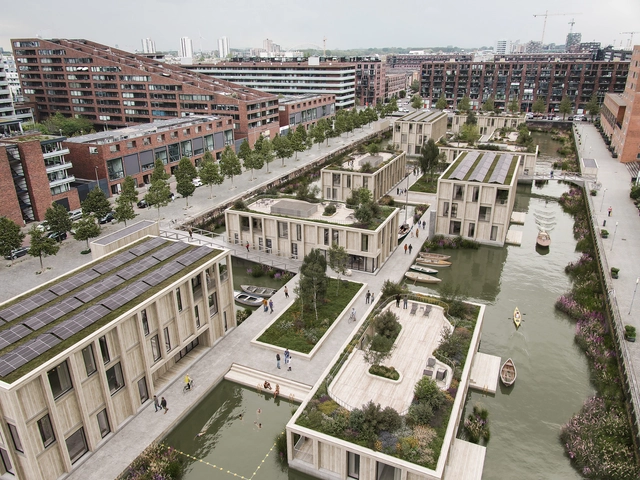
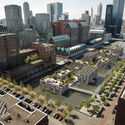
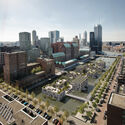
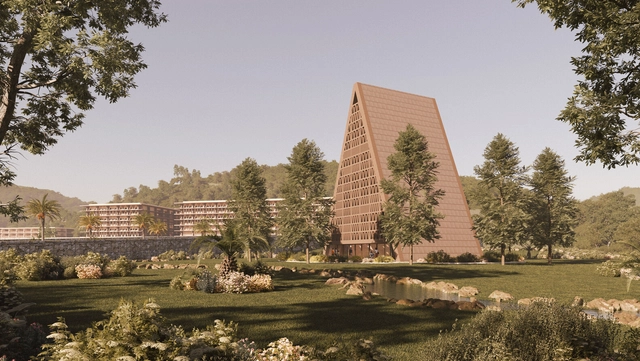
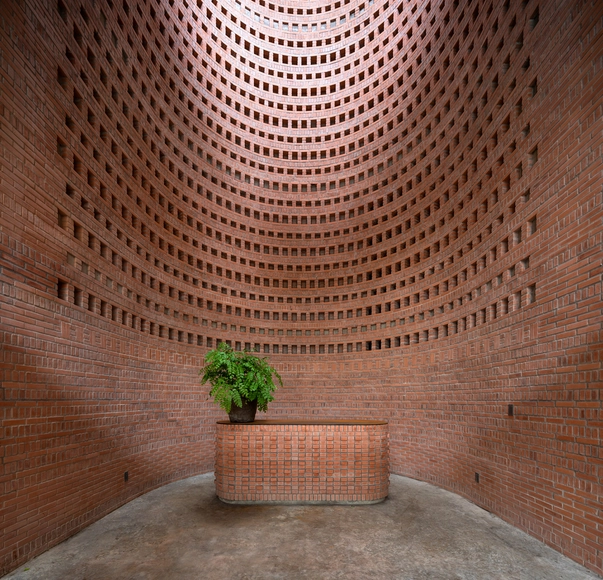
Campus sidewalk. Render. Image Courtesy of stantec
Stantec, an architecture, engineering, and environmental consulting firm, has been selected as the winner of an international competition organized by the State Tax University (STU) to redesign its Main Campus building. The building was partially destroyed in 2022 during the early stages of the war. The international call for redesign proposals was launched in November 2024, free of charge and "open to all design bureaus, architectural firms, and individual architects from every corner of the globe." The goal of the competition was to develop a 21st-century educational building described as a "progressive and comfortable place for learning, research, and student leisure based on innovative educational standards," as stated in the competition announcement.
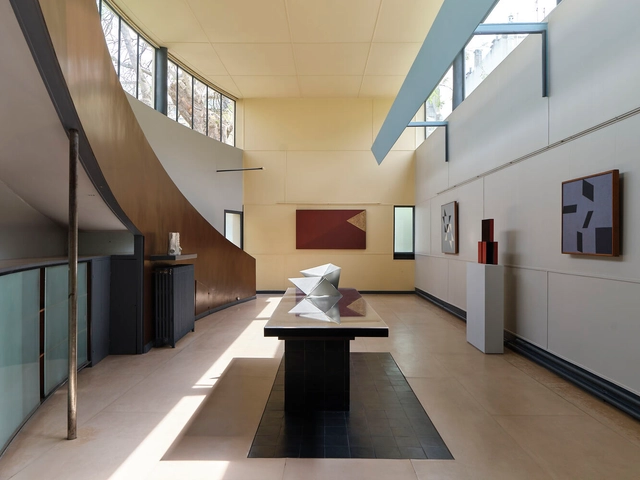
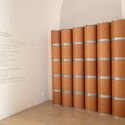
Founded in 2022 by art advisor Filipe Assis, ABERTO is an exhibition platform celebrating the convergence of art, design, and architecture in Brazil and beyond. Staging exhibitions in private and public modernist spaces, its past editions have highlighted the global connections forged by Brazilians from the 20th century onwards. Following three exhibitions in São Paulo, "ABERTO 4 – Brazil After Le Corbusier" marks its first international edition, taking place at Le Corbusier's Maison La Roche in Paris, from 14 May to 8 June 2025. The exhibition presents around 35 design and art pieces by Brazilian artists, spotlighting Le Corbusier's seminal connection to Brazilian modernist architecture and exploring his influence on contemporary Brazilian creatives. Previous editions of ABERTO have featured over 100 artists from Brazil and abroad in houses designed by Oscar Niemeyer (2022), Vilanova Artigas (2023), and Ruy Ohtake and Chu Ming Silveira (2024).
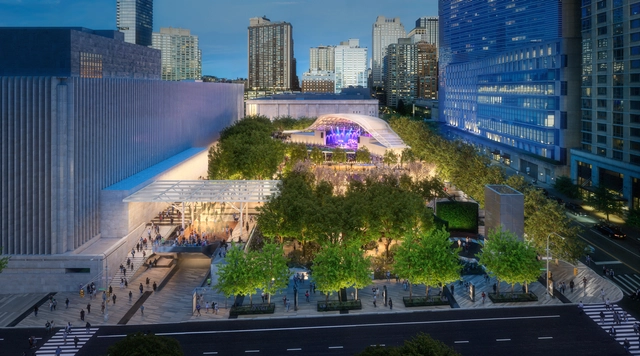
Lincoln Center for the Performing Arts, Inc. has revealed the design for the Amsterdam Avenue side of its campus, developed by Hood Design Studio, Weiss/Manfredi Architecture/Landscape/Urbanism, and Moody Nolan. Recently released renderings illustrate a transformation that includes a new outdoor performance venue, expanded community park spaces, and the removal of the existing wall along Amsterdam Avenue. In response to long-standing calls from both Lincoln Center and local communities, the construction is expected to begin in spring 2026 and be completed by spring 2028.
Søren Pihlmann is the curator of the Danish Pavilion at the 2025 Venice Architecture Biennale. The exhibition, commissioned by the Danish Architecture Center, is titled Build of Site, and focuses on exploring sustainable architectural practices through the lens of reuse and resourcefulness. Pihlmann's proposal transforms the existing Danish Pavilion, located within a historic building complex in the Biennale's Giardini, into an active exhibition space for material experimentation. The installation highlights techniques that incorporate recycled and bio-based elements. The Pavilion offers visitors the opportunity to observe ongoing experimental processes, witnessing how building resources are creatively reimagined for new uses. In this on-site interview, ArchDaily editors spoke with the curator about the ideas behind the project and the challenges its execution represents.
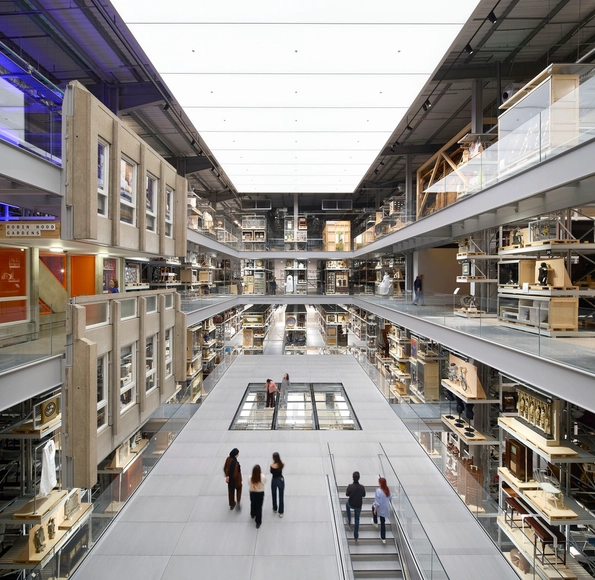
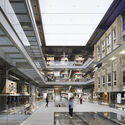
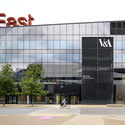
The V&A East Storehouse will open to the public for the first time on Saturday, 31 May 2025. Located in the Queen Elizabeth Olympic Park, the project is part of East Bank, a new cultural quarter supported by the Mayor of London. Designed by the internationally recognized architecture firm Diller, Scofidio + Renfro, the new facility serves as both a working store and a visitor destination. Following a decade of planning and extensive audience consultation, V&A East Storehouse is the first of V&A East's two new cultural destinations to open in East London. The second, V&A East Museum, is scheduled to open in spring 2026 and will explore the role of making and creativity as agents of change.
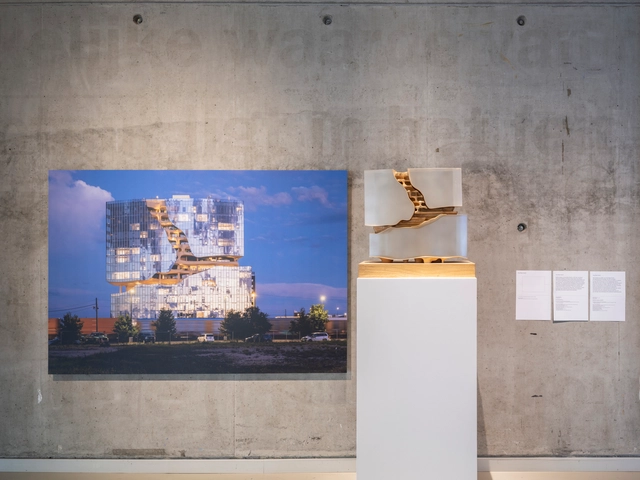
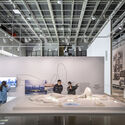
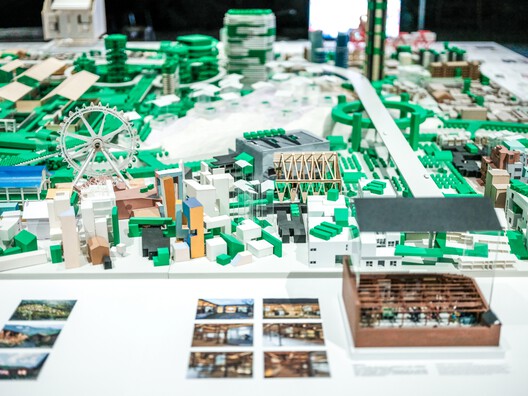
The exhibition "Ma Yansong: Architecture and Emotion," presenting the work of Chinese architect Ma Yansong and his globally recognized practice MAD Architects, has opened at the Nieuwe Instituut in Rotterdam, the Netherlands' national museum for architecture, design, and digital culture. Featuring a selection of projects from MAD's international portfolio, the exhibition explores how the studio challenges conventional architectural paradigms through forms influenced by nature and guided by sensorial experience. The exhibition will be on view until 12 October, and on Thursday 26 June, Ma Yansong will be the guest of honour at the Nieuwe Instituut for "An Evening With...", a public program where he will discuss his design philosophy with Aric Chen.
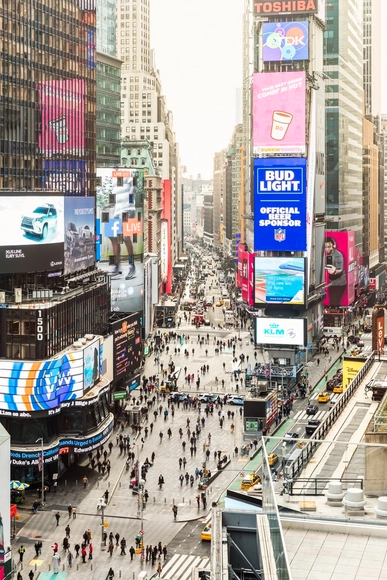
The Empire State Development (ESD) Board of Directors has approved a major office-to-residential conversion project at 5 Times Square, New York City, as announced by the New York state government. Originally built in 2002 as the headquarters for Ernst & Young, with Kohn Pedersen Fox (KPF) as the design architect, the building has been largely vacant since the corporation vacated the premises in 2022, with vacancy rates remaining around 75 percent. Gensler's proposal aims to repurpose this underutilized office space into a mixed-use complex, introducing up to 1,250 new homes, including 313 permanently affordable units.
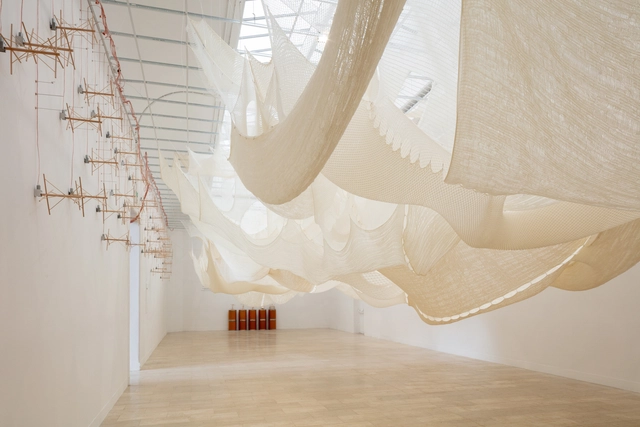
The Serbian Pavilion at the 19th Venice Architecture Biennale consists of an immersive installation made of wool. The exhibition, titled Unraveling: New Spaces, was curated by architect Slobodan Jović and designed by an interdisciplinary team composed of Davor Ereš, Jelena Mitrović, Igor Pantić, Sonja Krstić, Ivana Najdanović, and Petar Laušević. The interior space of the Pavilion, located in the Biennale's Giardini, is occupied by an ephemeral installation that follows the principles of circular design, effectively producing no waste. The installation consists of a broad woven wool fabric that gradually unknits according to a guided choreography of algorithmic precision, completely disassembling by the end of the Biennale's exhibition.
The Pavilion of China at the 19th International Architecture Exhibition - La Biennale di Venezia presents the exhibition CO-EXIST, curated by Ma Yansong, founder of MAD Architects, and organized by the Ministry of Culture and Tourism of the People's Republic of China at the Arsenale. Through ten works by twelve interdisciplinary groups, the pavilion examines how traditional Chinese philosophical thought can inform architectural responses in the age of advanced technology and artificial intelligence.
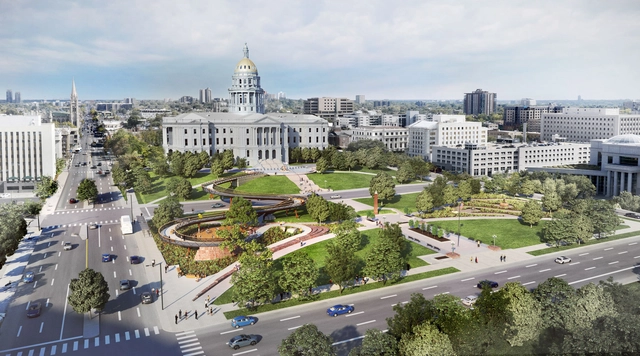
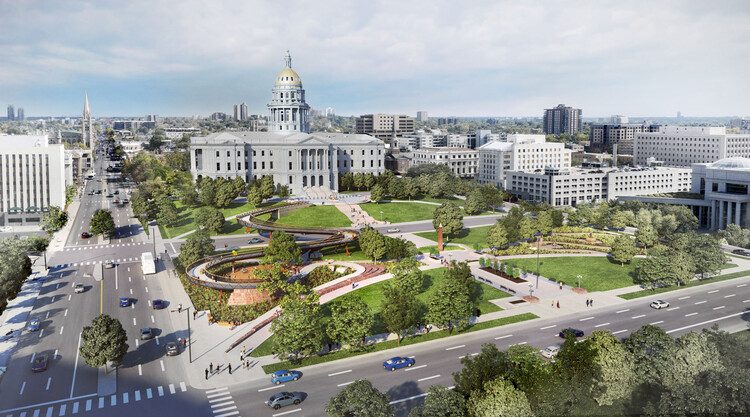
Studio Gang, led by Jeanne Gang, has revealed its design for the Colorado 150 PedestrianWalkway, a new civic infrastructure project commissioned by Governor Polis and the America 150-250 Commission. Spanning 11,000 square feet, the walkway is conceived as both a connective urban thread and a commemorative landscape, marking the 150th anniversary of Colorado's statehood. Strategically sited in downtown Denver, the intervention links key public spaces and monuments, enhancing pedestrianaccessibility while fostering a layered experience of art, culture, and history. Set to be completed by July 2026, various features, such as viewing platforms, monuments, new public artworks by Colorado-based artists, play areas, and interpretive elements, aim to invite users to explore, gather, and reflect along the route.
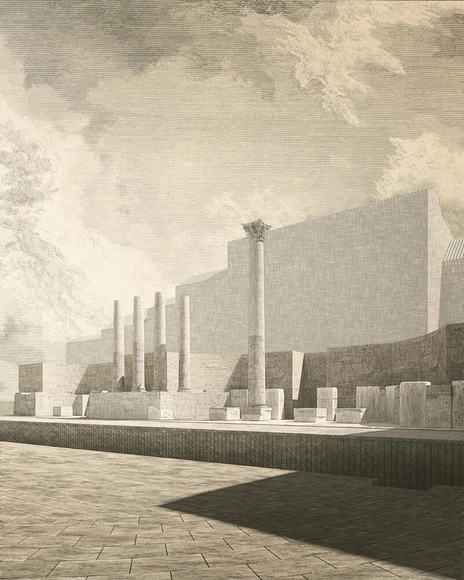
Scaenae view render. Image Courtesy of David Chipperfield Architects
The preliminary design for the architectural restoration and functional redevelopment of the Roman Theatre was presented on Tuesday, April 8, 2025, at the Auditorium of the Santa Giulia Museum in Brescia. The project was developed by the Milan office of David Chipperfield Architects, commissioned by the Fondazione Brescia Musei in collaboration with the Municipality of Brescia and the Brescia Chamber of Commerce, Industry, Handicraft, and Agriculture. Chipperfield was tasked with identifying the essential architectural elements to guide future design phases, leading to the drafting of the Technical-Economic Feasibility Project (PFTE) and the final project, including the necessary authorizations. This initiative is financially supported by the Italian Chamber of Commerce under a 2019 ministerial decree prioritizing cultural heritage, especially where it enhances tourism.
ArchDaily is seeking a freelance copywriter with expertise in architecture and a sharp marketing instinct to help us tell our story—clearly, confidently, and creatively. This role offers an exciting opportunity for someone to contribute strategically to our brand's voice and messaging, shaping how we connect with architects and the wider audience. This is not a full-time editorial role with high volume demands but an on-demand collaboration, ideal for someone with strong writing skills who comprehends architecture yet thinks like a brand strategist, storyteller, and marketer.
https://www.archdaily.com/1030491/call-for-freelance-architecture-copywriterArchDaily Team
At the 19th International Architecture Exhibition, La Biennale di Venezia, the Dicastery for Culture and Education presents "Opera Aperta", a project that positions architecture as a practice of collective care and responsibility. Curated by Marina Otero Verzier and Giovanna Zabotti, Opera Aperta is set within the Santa Maria Ausiliatrice Complex in Venice's Castello district. Designed by Tatiana Bilbao ESTUDIO and MAIO Architects, the project transforms the 500-square-meter site into a space for collaborative restoration and public engagement. Conceived as a work in progress rather than a finished installation, Opera Aperta functions as a platform for ongoing exchange, participation, and engagement rooted in the local context. This open and process-oriented approach was recognized during the opening events, where the Holy See Pavilion received the Golden Lion's Special Mention for National Participation.
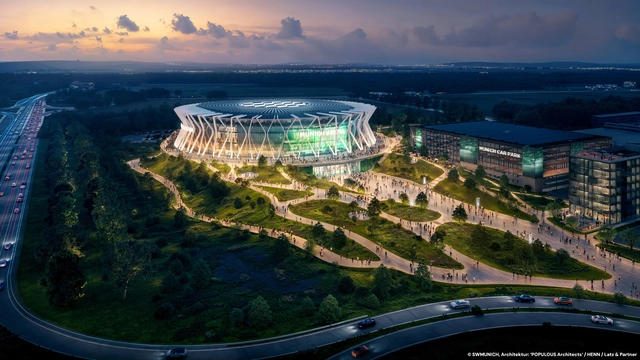
Architecture firm Populous was chosen to design a new multi-use, climate-neutral event arena in Munich, Germany. The structure aims to create a "compact, efficient, and visually stunning" venue that will be instantly recognizable and reflective of the character and culture of the Bavarian metropolitan area, serving as a new landmark. The 20,000 capacity venue draws upon Bavarian heritage through a support structure that pays homage to the lozenge shape used in the Bavarian state flag. Populous developed the design with general planners HENN from Munich and landscape architects Latz+Partner from Freising.
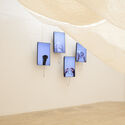
Adjaye Associates has revealed the design for the International Children's Cancer Research Centre (ICCRC) in Kyebi, Ghana. Commissioned by the Wish4Life Foundation, the project marks a step in the development of pediatric healthcare in West Africa. Situated on a 225,000-square-meter site along the eastern slopes of the Atewa Range, the ICCRC is envisioned as an integrated facility dedicated to healing, research, education, and community engagement. It will be the first center in the region solely focused on the treatment of childhood cancers. The project is currently on view at the Time Space Existence exhibition, part of the Venice Architecture Biennale 2025, held at Palazzo Bembo until 23 November 2025.
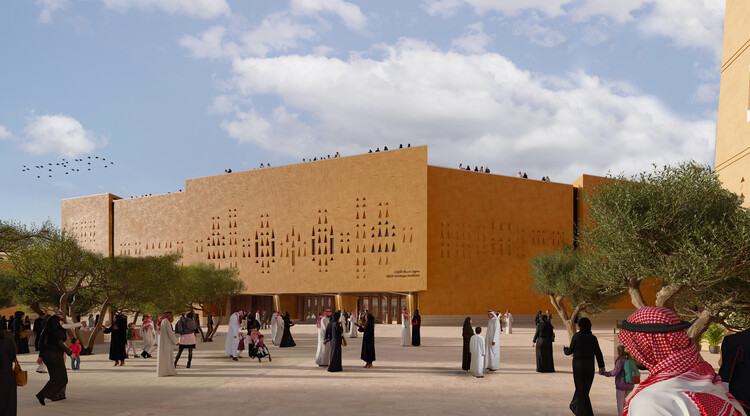
Asaan Museum, Render by Specto-Digital. Image Courtesy of ZHA
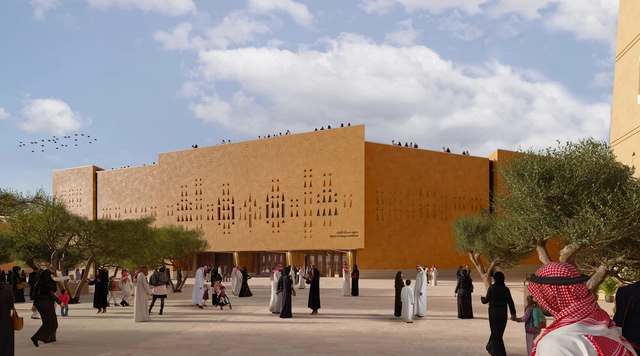
Designed by Zaha Hadid Architects, construction works for the Asaan Museum have recently begun. Located in the historic At-Turaif district of Diriyah, Saudi Arabia, the Asaan Museum aims to be a new cultural institution designed to preserve and celebrate the nation's heritage. Deriving its name from the Arabic word meaning "inheritance passed down through generations," Asaan underscores its role in connecting past and present. Situated within a site renowned for its mud-brick architecture and centuries-old urban fabric, the museum draws inspiration from traditional Najdi building techniques. Planned to be constructed using locally sourced clay mud-bricks, Asaan Museum will mark Zaha Hadid Architects' first project to employ adobe construction.