
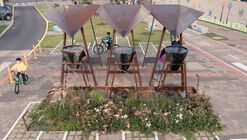


Water management, air quality, and heat mitigation are usually planned through systems much larger than the spaces where people actually experience them. Drainage networks sit below the street. Air pollution is measured across entire cities. Yet these conditions are felt much closer to the body: while waiting for a bus in the sun, walking through a flooded street, crossing an exposed plaza, or looking for somewhere to sit when the air itself feels difficult to breathe.


