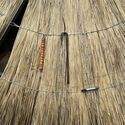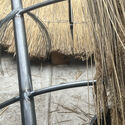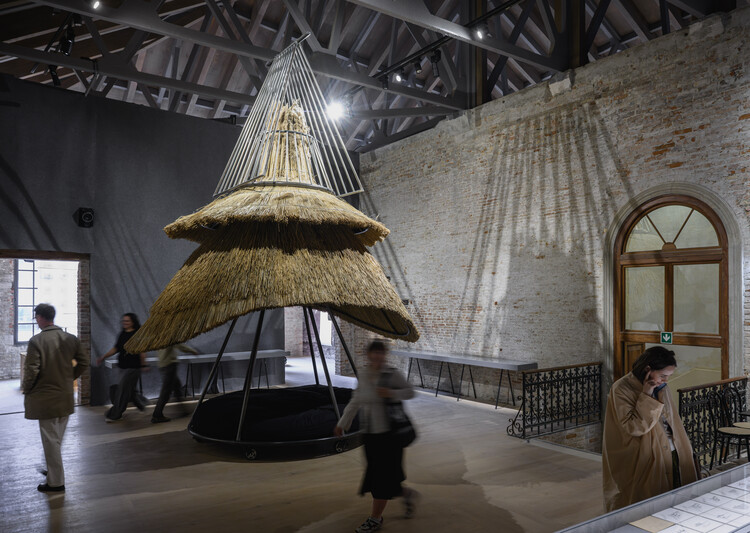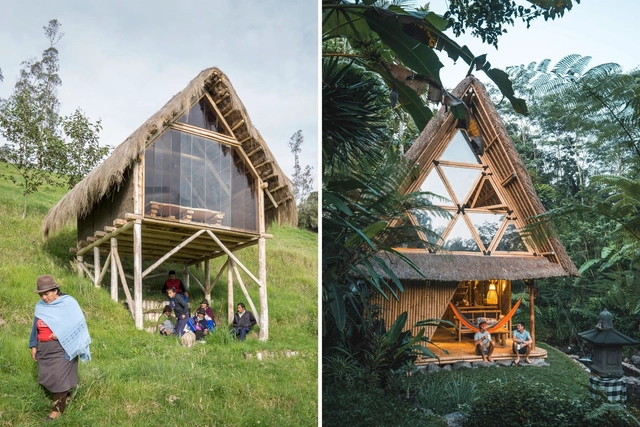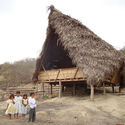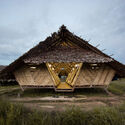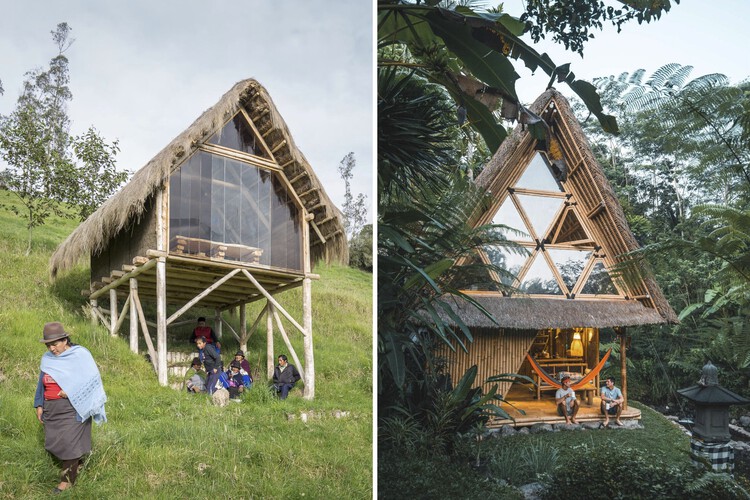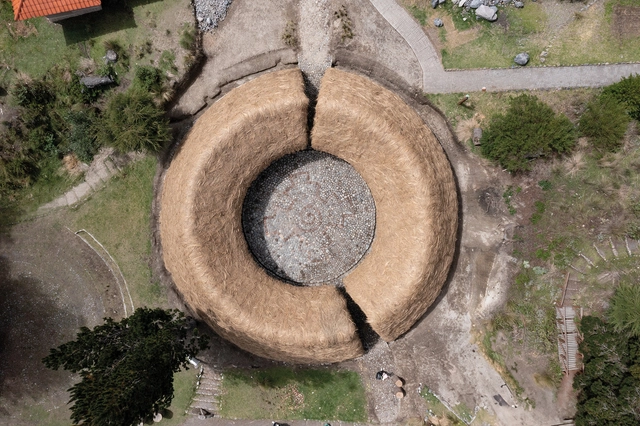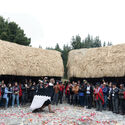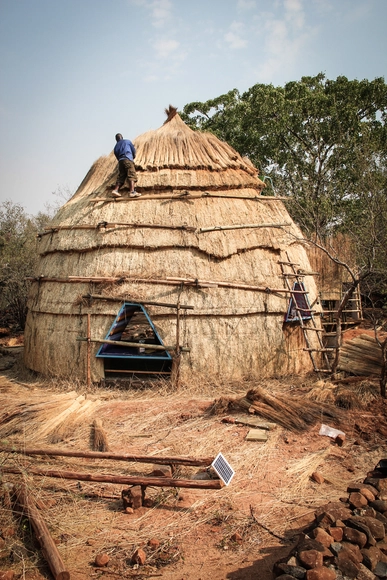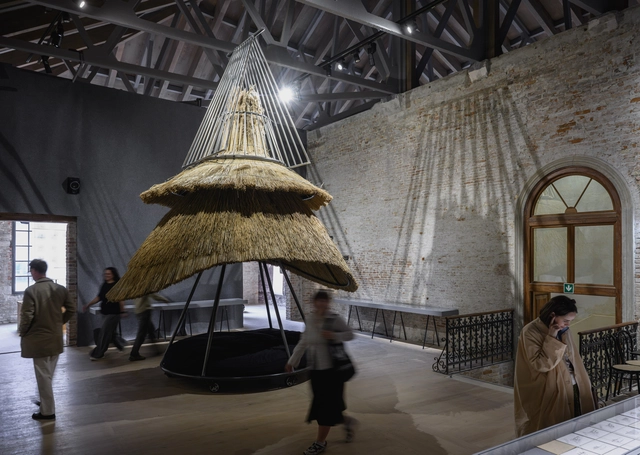
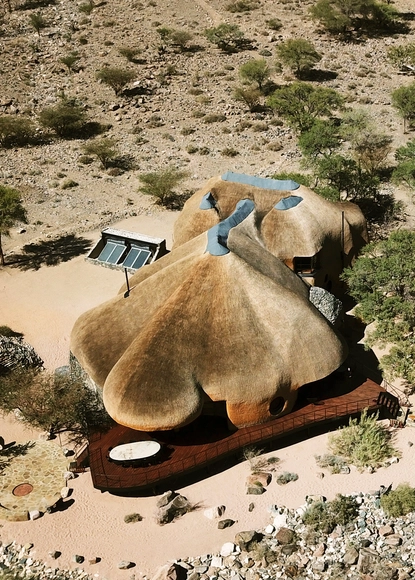
Thatching is a traditional building technique that has been reinterpreted in different ways in contemporary projects, allowing its value to continue to endure over time. As well as being a culturally and historically valuable technique, given its presence in humanity for centuries, it also has a number of other constructive advantages, such as its great environmental value, as it is an accessible renewable material.
The technique consists of grouping, intertwining, and overlapping dry vegetation, creating light surfaces with excellent thermal and sound insulation and which are cheap and relatively simple to build. In addition, flexibility is one of the technique's most prominent features, and it is particularly popular in roofing applications.
Marie Combette and Daniel Moreno Flores founded La Cabina de la Curiosidad in 2019, a studio focused on architecture and territory based in Quito, Ecuador. Their architectural approach is based on extensive fieldwork, with an urban and territorial perspective that prioritizes the use of available resources, water management, and recycling. They use drawing and mapping as essential tools to materialize their ideas and transform them into spaces. The name of the studio evokes a "trunk" turned into a cabin full of curiosities that invite exploration of various possibilities. This trunk is nourished by everyday experiences, derived from simple interactions with the city or the environment, which triggers a creative process continually fed by experimentation and daily discovery, unafraid of the unknown.
At first glance, Dorte Mandrup's design for the Wadden Sea Center seems to mimic the landscape. Its low height, its horizontal lines and, above all, its materiality make it a modern building in perfect harmony with the local nature. But its connection also encompasses the built heritage of the region, more specifically because of its covering with straw, harvested and dried close to the land. This is an extremely traditional and historic building technique, but which is rarely attributed to contemporary buildings. In this article we will rescue some of the history of this natural material, its constructive characteristics and some examples of use.
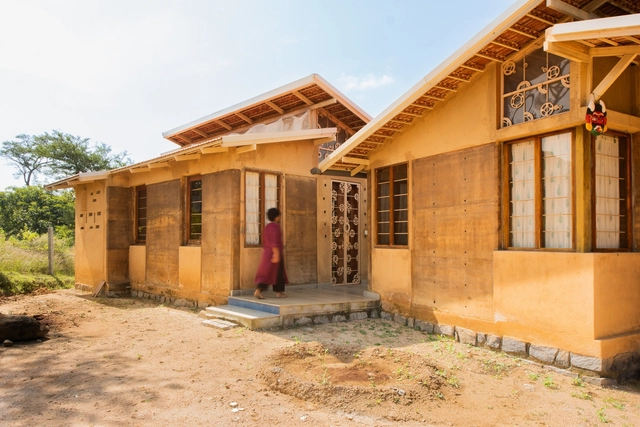
In recent years, India has seen a resurgence of interest in natural building materials, a movement driven by escalating environmental concerns and a growing desire to revive traditional lifestyles. From the busy streets of Mumbai to the serene villages of Kerala, architects, builders, and communities are coming together to experiment with the potential of earth, bamboo, lime, and other organic materials in shaping contextually relevant structures that also embody India's contemporary ideals. The shift towards using natural materials and other vernacular resources reflects a movement towards sustainability and a deeper connection with nature.
By recognizing and analyzing the multiple architectural possibilities of bamboo—a construction material mostly native to warm and tropical areas—the following questions arise: How can we take advantage of its qualities and enhance its use in colder climates? Such regions necessarily require a certain level of thermal isolation in walls, floors, and roofs—but for these climates, we can combine bamboo with materials that complement it.
We spoke with Penny Livingston-Stark, a designer and professor of permaculture who has worked for 25 years in the field of regenerative design based on non-toxic natural materials, to understand the opportunities offered by combining bamboo with earth.
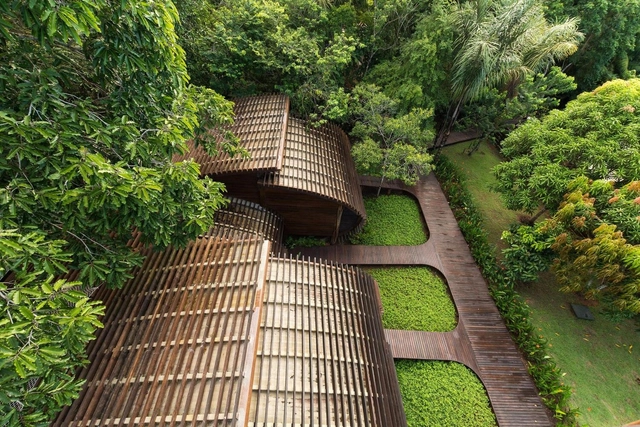
Mirante do Gavião Amazon Lodge / Atelier O'Reilly. Photo: Jean Dallazem
The architecture of indigenous peoples is deeply rooted in their surroundings, in the sense that materials are locally sourced and empirically tested, to discover the construction techniques and dwellings that best respond to the values of the community and their understanding of housing. The situation in the Amazon is no different. Many different groups of people have settled on the land and water, developing many unique building skills that attract a lot of architects working in these regions. As a result, there is an exchange of knowledge, combining native cultures and novel architecture.
Nowadays, when we imagine enclosed spaces, concrete slab roofs often come to mind. However, the use of concrete in construction now raises concerns due to its documented contributions to climate change and environmental harm. In response, it is necessary to incorporate vernacular and traditional techniques into our architectural toolkit. In this context, natural coverings emerge as an excellent solution. Despite their alignment with numerous desirable project attributes, these materials, which have sheltered humans for centuries, are still underutilized in contemporary construction. Natural roofs offer biodegradable materials, making them a more sustainable option with an aesthetic appeal and enhanced thermal comfort.
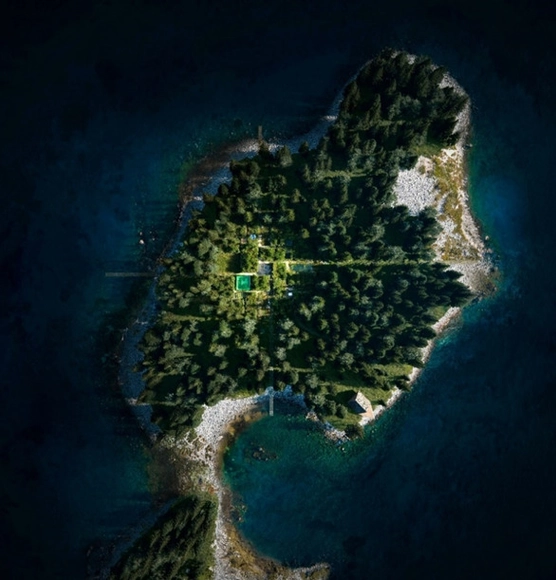
BIG has partnered with experimental clothing brand Vollebak to create the vision for a self-sufficient off-grid island in Nova Scotia, Canada. The 11-acre Vollebak Island will receive several pavilions built of natural and innovative materials such as seaweed, hempcrete, and 3D-printed concrete, all powered by carbon-neutral energy. The island, located in Jeddore Harbor, one quarter off the Nova Scotia mainland, will be auctioned via Sotheby’s Concierge Auctions beginning June 8. Bidders will vie for the chance to own the island and to be granted exclusive rights to the design vision, including the planning permission for those designs.
Architecture in Mexico has a vast history that is made up of various aspects that touch astrological, political, spiritual and economic issues. Although today there are only ruins of some of the most important pre-Hispanic complexes, thanks to the in-depth research that has been carried out, we can have some representations of what those buildings that laid the foundations of what makes us today were like. In these representations, it is possible to notice the presence of natural materials that were a response to their environment such as basalt stone, stucco and some vegetable paintings whose remains persist to this day.
Sustainability. A word that, for many of us, has been driven into our minds from the very start of our careers as architects. We have a responsibility to the planet and future generations to design buildings that are socially conscious—from solar panels to triple-glazed windows, we have tried it all.
Ultimately, whether our designs are sustainable comes down to the early decisions we make for the building, with our choice of materials having a huge effect on the overall carbon footprint. With new technologies come new ways of incorporating abundantly found materials into the skin of the building that could reduce the building's embodied energy and enhance the structure's properties.
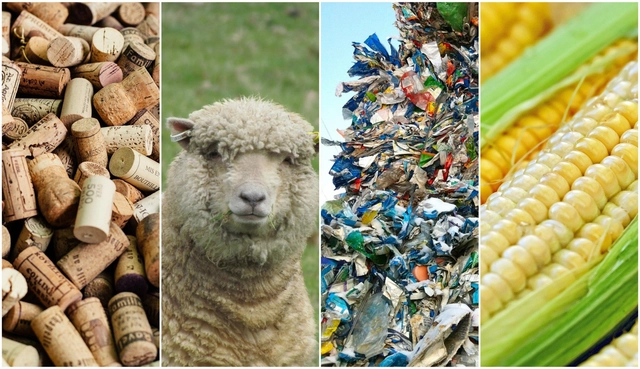
In this article, we have compiled a list of 8 familiar materials that you wouldn't initially associate with sustainability but which you might consider for your next design.