1. ArchDaily
  2. Regenerative Design

Regenerative Design: The Latest Architecture and News

Bauhaus Earth Transforms Disused Car Park into Bamboo Community Pavilion in Bali, Indonesia

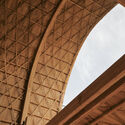
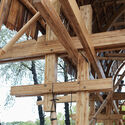
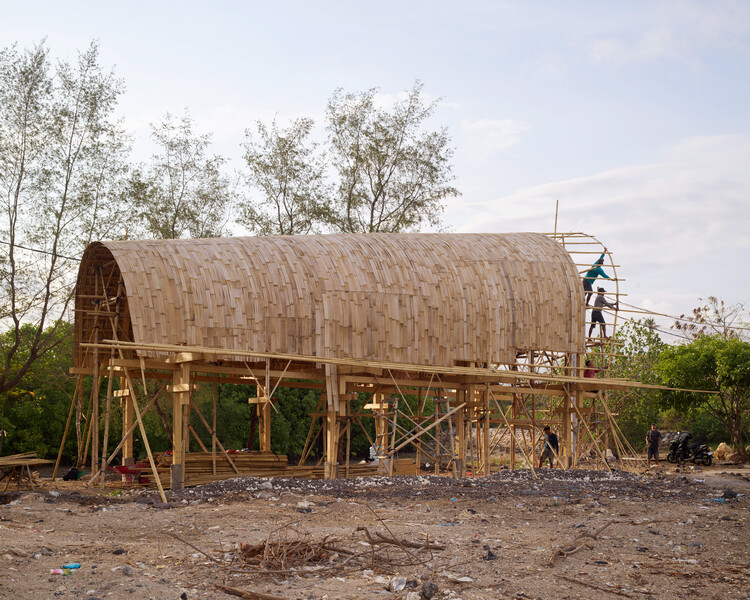
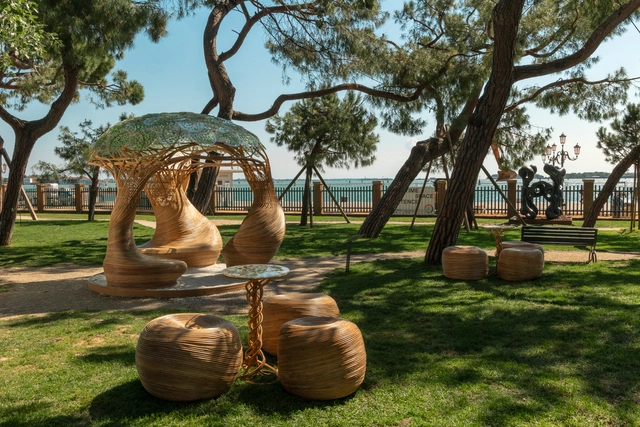
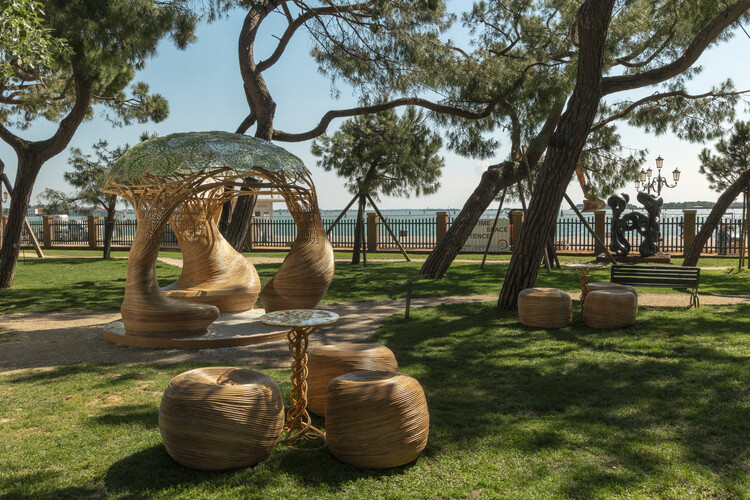
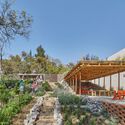
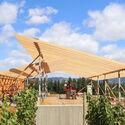
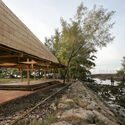
Bauhaus Earth is a Berlin-based non-profit organization working toward a systemic transformation of the built environment. Its mission includes transitioning to bio- and geo-based materials, reusing existing buildings, and restoring ecosystems. Together with the Bamboo Village Trust, a philanthropic financial vehicle, and Kota Kita, a participatory urban design organization, Bauhaus Earth has developed BaleBio, a bamboo pavilion designed by Cave Urban and rising above Mertasari Beach in Denpasar, Bali. The pavilion transforms a disused car park into an open community meeting space, offering a counterpoint to the city's tourism-driven coastal development. Designed as a regenerative building, BaleBio stores carbon instead of emitting it, challenging the extractive construction model that is replacing traditional wood and bamboo craftsmanship with concrete structures across the island.
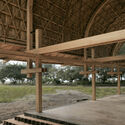
Bauhaus Earth Transforms Disused Car Park into Bamboo Community Pavilion in Bali, Indonesia - Imagem 1 de 4Bauhaus Earth Transforms Disused Car Park into Bamboo Community Pavilion in Bali, Indonesia - Imagem 2 de 4Bauhaus Earth Transforms Disused Car Park into Bamboo Community Pavilion in Bali, Indonesia - Imagem 3 de 4Bauhaus Earth Transforms Disused Car Park into Bamboo Community Pavilion in Bali, Indonesia - Imagem 4 de 4Bauhaus Earth Transforms Disused Car Park into Bamboo Community Pavilion in Bali, Indonesia - More Images+ 16

Reimagining Lisbon’s Azulejos: Regenerative Biomaterial Tiles from the Tagus River

Subscriber Access | 

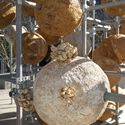
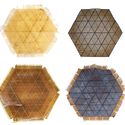
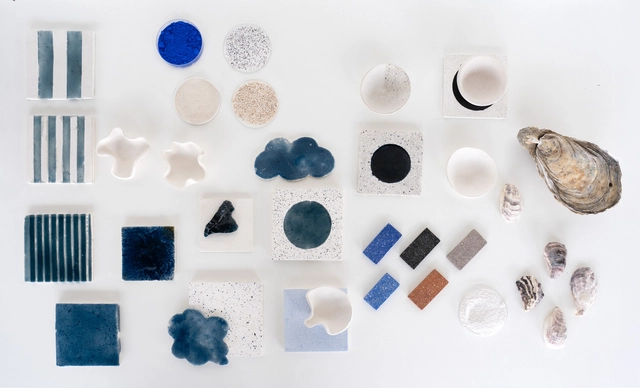
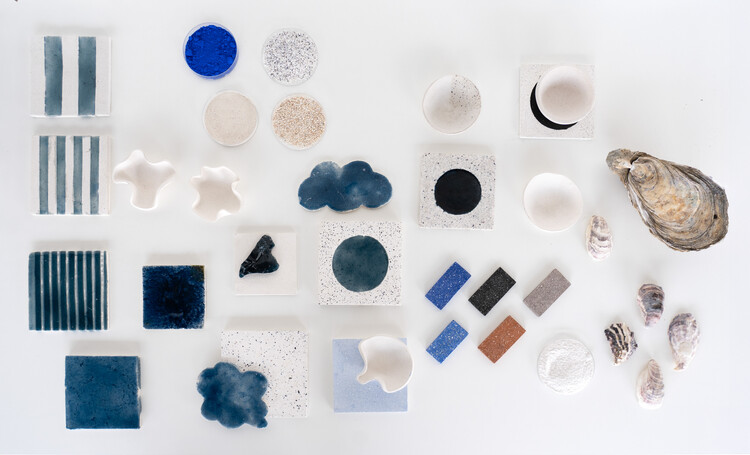
All materials come from somewhere, embedded in a chain of extraction, supply, production, and disposal that, depending on its scale, leaves more or less significant marks on the environment. In architecture, we usually approach this trajectory through the lens of materials' circularity, considering how they can re-enter production cycles rather than become waste. Yet, broadening our view to unexpected places reveals parallel systems where by-products from one industry become resources for another. This approach has found fertile ground in organic waste transformed into biomaterials, with one of the most recent examples being the work of Fahrenheit 180º. Through their installation, "From the Tagus to the Tile", they repurpose oyster shells initially discarded by food systems to create a reinterpretation of Lisbon's iconic tiles.
Reimagining Lisbon’s Azulejos: Regenerative Biomaterial Tiles from the Tagus River - Imagen 1 de 4Reimagining Lisbon’s Azulejos: Regenerative Biomaterial Tiles from the Tagus River - Imagen 2 de 4Reimagining Lisbon’s Azulejos: Regenerative Biomaterial Tiles from the Tagus River - Imagen 3 de 4Reimagining Lisbon’s Azulejos: Regenerative Biomaterial Tiles from the Tagus River - Imagen 4 de 4Reimagining Lisbon’s Azulejos: Regenerative Biomaterial Tiles from the Tagus River - More Images+ 10

Can We Build with Food? Circular Experiments at the Matter Matters Lab

Subscriber Access | 

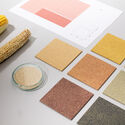
What does it mean to build with care, using what others leave behind? This question shapes the work of the Matter Matters Lab, an initiative founded by architect and researcher Catherine Söderberg Esper during the isolation of the pandemic. Drawing from experiences across cultures and motivated by a personal transformation during motherhood, Catherine began to investigate everyday waste as raw material for regenerative construction systems. Her first experiment involved gluing her own cut hair using white glue, initiating a radically intimate and handmade approach. Since then, the lab has focused on transforming organic waste into low-impact architectural materials, inspired by Indigenous knowledge systems and aiming to break from extractive models in construction. Projects like the Avocado Bricks, made from discarded avocado seeds, exemplify this approach of local, circular, and rooted in the idea of reciprocity between matter, place, and care, offering a new way of building with waste.