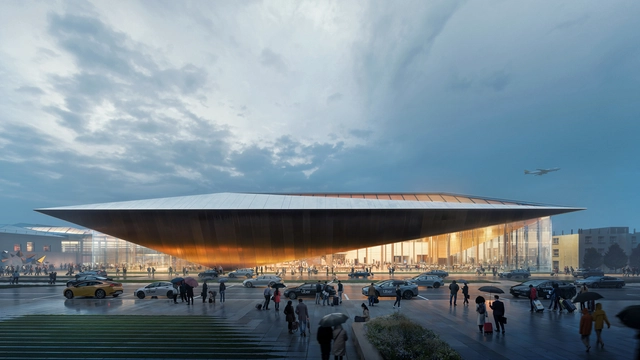
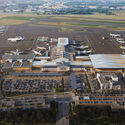
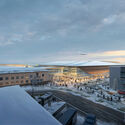
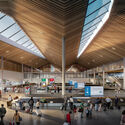
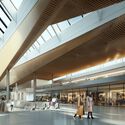
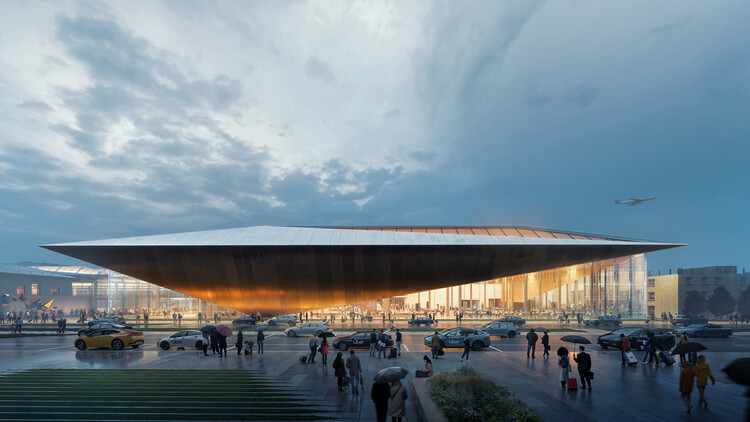
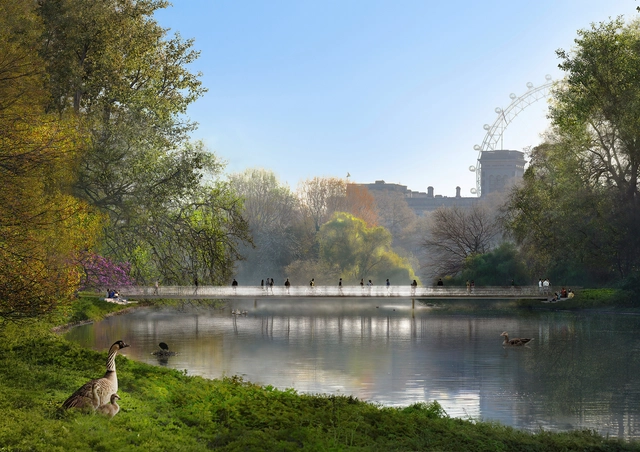
Lithuanian Airports has announced Zaha Hadid Architects as the winner of the international competition to design the new arrivals terminal at Vilnius Airport. Conceived as an integral part of the airport's evolving infrastructure, the new terminal will complement the recently completed departure terminal, enabling Vilnius Airport to accommodate up to 10.6 million passengers annually. The project marks a significant step in the airport's long-term development strategy, addressing future growth in passenger demand while enhancing Lithuania's role as a key gateway in the Baltic region.
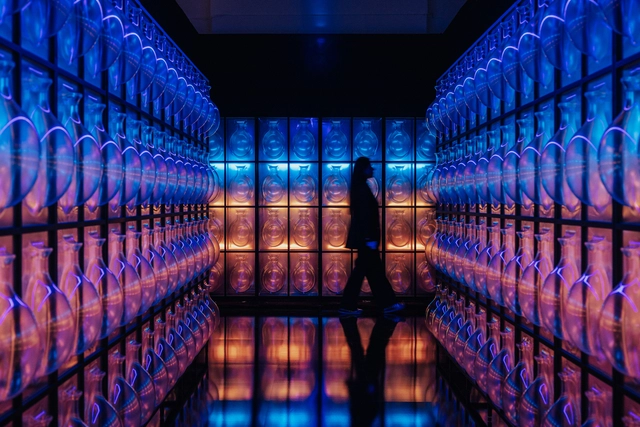
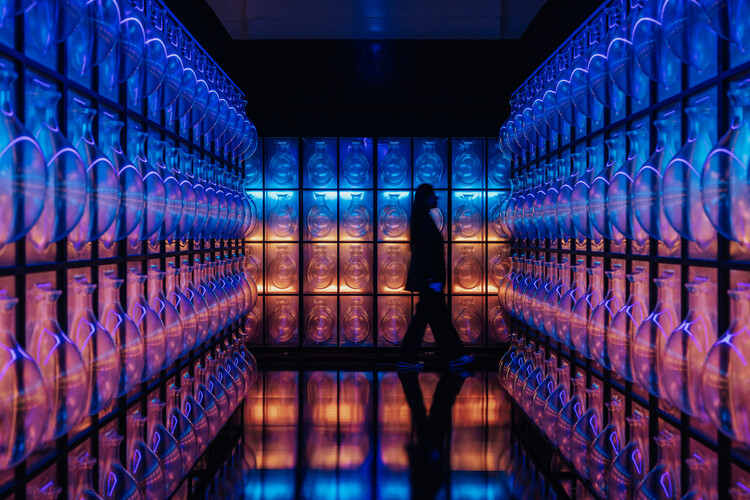
The fifth edition of the London Design Biennale is taking place at Somerset House from 5 to 29 June 2025. The theme of this year's edition is "Surface Reflections," an invitation to explore "the dynamic interplay between internal experience and external influence." The curatorial proposal, set by British artist and designer Samuel Ross, encourages a focus on the underlying layers of the objects, systems, and spaces that shape our daily lives. The Biennale exhibition is a journey through 35 pavilions by countries, institutional design teams, and curators, presenting soundscapes, immersive experiences, and performances, as well as sculptural and evocative objects. To confront contemporary global challenges, topics include identity, memory, innovation, technology, craftsmanship, ecology, and belonging.
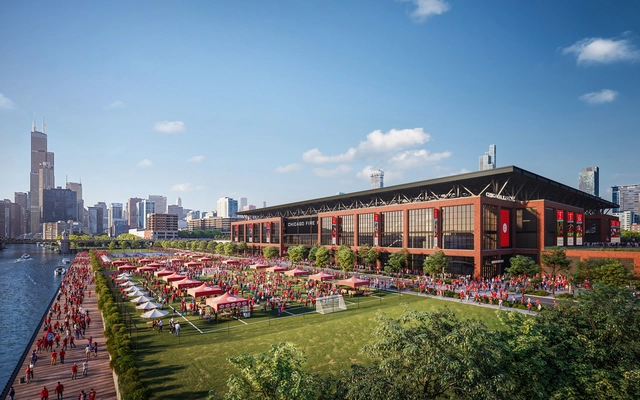
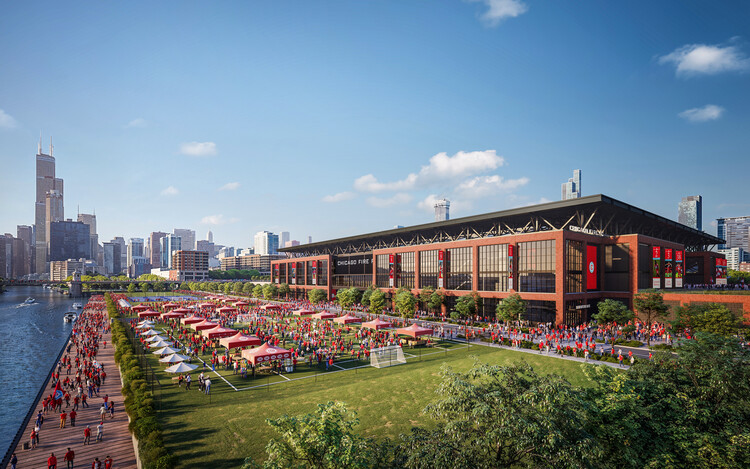
Chicago Fire FC soccer stadium. Image Courtesy of Gensler
From Milan's Scalo Farini to downtown Chicago, and from the Tuscan countryside to the UK's retrofit initiatives, recent announcements demonstrate how architecture is evolving in response to climate goals, cultural identity, and urban transformation. Herzog & de Meuron's new headquarters for UniCredit will anchor one of Europe's largest redevelopment sites with a focus on sustainability and workplace innovation, while Gensler's stadium design for Chicago Fire FC aims to redefine the U.S. matchday experience as part of a major waterfront development. In Tuscany, Alvisi Kirimoto's Sapaio Pavilion merges agricultural production with architectural sensitivity, and in the UK, RIBA and The King's Foundation are advancing retrofit as a national agenda. Meanwhile, finalists including MVRDV, Heatherwick Studio, and Mecanoo are advancing in an international competition to create a climate landmark intended to inspire large-scale behavioral change. This edition of Architecture Now brings together diverse yet interconnected efforts to shape how architecture can support long-term ecological, cultural, and civic impact.
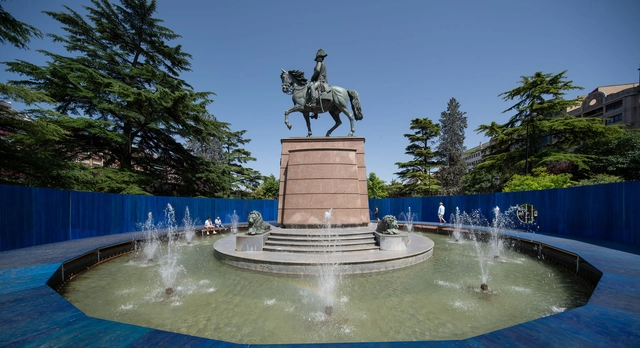
Every June, the Spanish city of Logroño transforms into a space of architectural dialogue, opening its streets, plazas, riverbanks, and traffic islands to temporary structures that redefine how cities are inhabited. For ten editions, Concéntrico has worked not as a specialized fair or an architecture biennale, but as a portable museum — a curatorial gesture that brings a dispersed collection of contemporary architecture into public space. Set in a city suspended between arid plains and distant mountains, far from the circuits of capital cities and cultural institutions, Concéntrico presents itself as a temporary promise. It's a reminder that even cities that are often overlooked can host architecture that is current, diverse, and speculative. In this sense, the festival is less about celebration and more about activation.
But beyond its curatorial logic, Concéntrico operates as a political structure. In the ancient sense of polis, it invites citizens, architects, and institutions to reassess what public space can be. The interventions offer speculative proposals for urban life that reveal what is missing, what is possible, and what should be questioned. A temporary pool over a fountain, a bathhouse in a roundabout, or a shared meal on a major avenue are not just spatial gestures — they are political statements, asking how urban infrastructure might be redirected from control to care, from efficiency to encounter. In that way, the festival becomes not just a reflection of the city, but an instrument for its transformation.
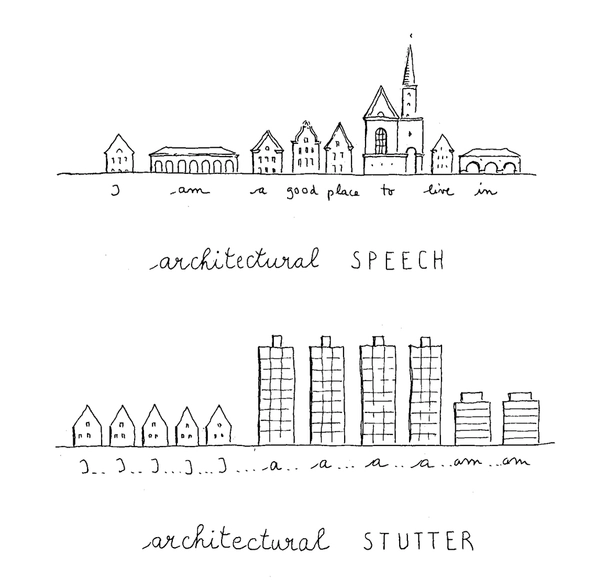
Léon Krier's Sketches. Image Courtesy of MIT Press
Léon Krier, the Luxembourg-born architect and urban theorist renowned for his critical stance against modernist planning and his influential role in the New Urbanism movement, passed away on June 17, 2025, at the age of 79. Known for his uncompromising critique of modernist planning and his vision for human-scaled, walkable communities, Krier leaves behind a substantial body of built work, theoretical writing, and educational influence.
Over a career spanning several decades, Krier advocated for a return to classical architecture and human-scaled urbanism, positioning himself as a leading critic of sprawling suburban development and high-rise modernism. His advocacy for walkable, mixed-use neighborhoods and his insistence on the cultural and social value of architecture challenged the prevailing norms of late 20th-century urban planning.
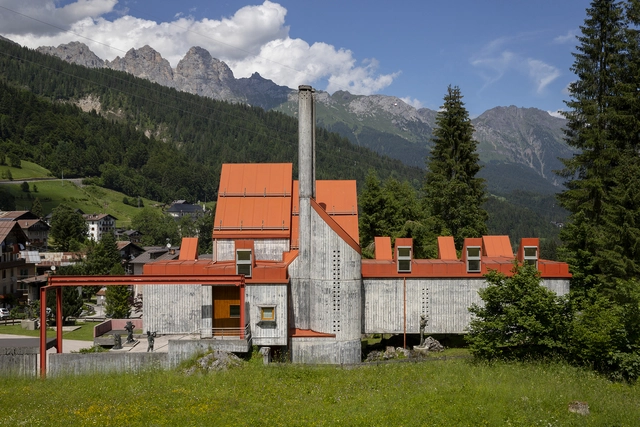
Born in the post-war period in the United Kingdom, the Brutalism movement was first met with skepticism but has found a new appreciation in the last decade, capturing the imagination of new designers fascinated with the interplay between striking geometric shapes and the exposed raw materials in which they are rendered. From Britain, the movement spread throughout Europe, Southeast Asia, and Africa, gathering different variations influenced by the cultural and socio-economic status of each area. In this article, we delve into the particularities that define Italy's contribution to the Brutalist movement, exploring the style through the lens of Roberto Conte and Stefano Perego. The two photographers have also published a photographic essay on the subject, taking the form of a book titled "Brutalist Italy: Concrete Architecture from the Alps to the Mediterranean Sea".
More than 200 universities from 33 countries participated in the 20th edition of the Architecture Student Contest. Students from all over the world imagined projects to transform and challenge the development of a peripheral urban city and a village in a territory at the crossroads of Europe, home to the largest logistical platform of Southern Europe and a major cross-Europe high-speed railway project to come, and linked by the ambition of "Attracting Youth."
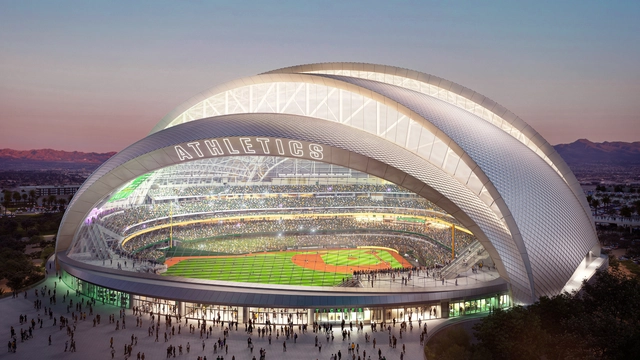
BIG – Bjarke Ingels Group, in collaboration with HNTB, has broken ground on its first-ever realized Major League Baseball stadium, marking a new chapter for the Athletics as they relocate to Las Vegas. The new A's Ballpark is scheduled to open ahead of the 2028 MLB season and will serve as the team's permanent home in the city. The architectural vision is supported by a broad team of collaborators, including Thornton Tomasetti, Henderson Engineers, CAA ICON, Mortenson, and McCarthy Building Companies. Located in what is widely known as "The Entertainment Capital of the World," the project reflects the growing presence of major sports infrastructure in Las Vegas.
Every year, the QS World University Rankings by Quacquarelli Symonds (QS) releases an updated list of best university programs worldwide. In the field of Architecture and the Built Environment, the list includes 250 institutions. The ranking evaluates institutions across all continents. This year, The Bartlett School of Architecture (part of UCL) maintains its position in first place, as the top 10 list sees a reorganization of the selected universities, with no new entrants. Tsinghua University is the only one among them to improve its position since last year, rising from eighth to joint seventh.
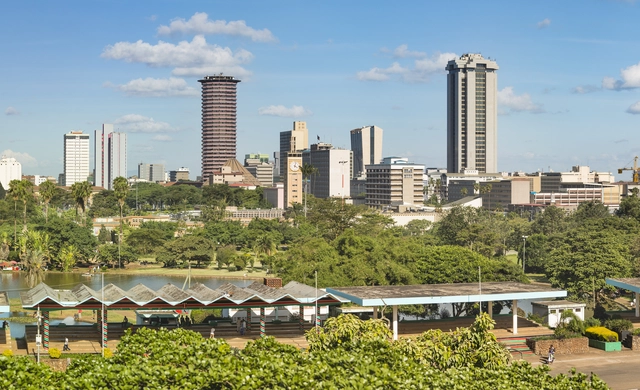
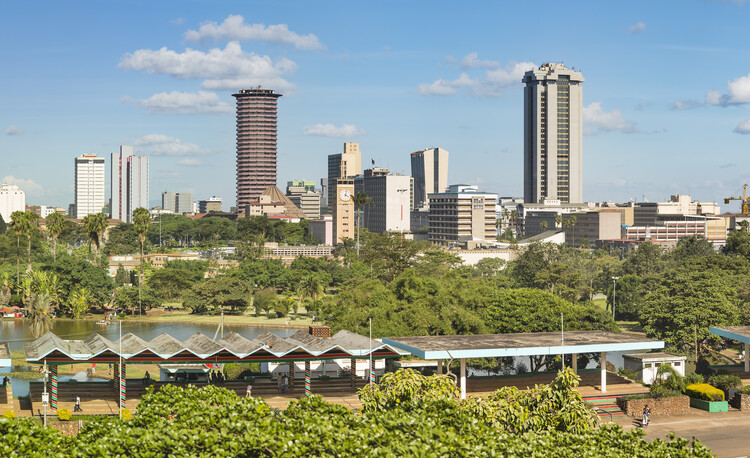
A Pan-African Biennale of Architecture is planned for 2026 in Nairobi, Kenya. According to the curator, it "represents an unprecedented opportunity to reclaim Africa's architectural narrative, reasserting the continent's role as a global leader in urban resilience, sustainability, and cultural expression."
Omar Degan, the curator in partnership with the Architectural Association of Kenya, is a practicing architect, professor, and teacher. He leads an architecture office known as DO Architecture Group, which was established between Italy and Somalia—two places deeply connected to his identity. His work focuses on what he describes as "fragile contexts" around the world, including areas affected by natural disasters, refugee camps, slum upgrades, and underserved neighborhoods.
Artificial intelligence is becoming an undeniable presence in our daily lives. It teaches, generates content, and disrupts the fragile boundaries—both visual and imaginative—that once governed our interactions on social media. On platforms like Instagram, we witness a flood of imagery where every kind of speculative exercise is freely shared, recalibrating our understanding of the relationship between architecture and image. Amid this transformation, entire professions find themselves on uncertain ground, as AI begins to challenge areas once defined by human expertise.
Yet beneath this apparent abundance lies the opaque core of closed-source AI: an algorithmic black box that systematically conceals the origins of the data it consumes. As a result, its outputs are inevitably prone to factual distortions, anachronisms, and subtle or overt biases. This same machinery can hollow out the significance behind the languages and stylistic signatures of canonical architects—manifest, for instance, in AI-generated visions speculating how famed designers, living or dead, might have reimagined the Eiffel Tower. We shared one such image to observe and better understand how people—especially architects—respond to AI's current possibilities and limitations, and the ways it mimics architectural intent. The response was quite fascinating, revealing a mix of curiosity, concern, and critical reflection.
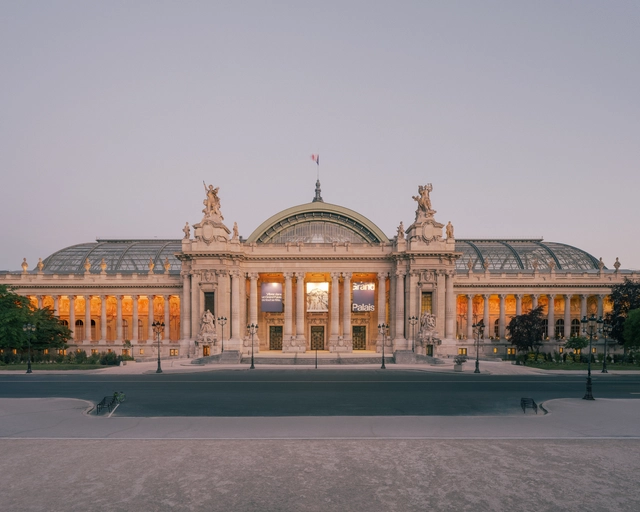
The Grand Palais in Paris has reopened to the public after the most comprehensive renovation in its 120-year history, led by Paris-based Chatillon Architectes. Originally built for the 1900 Universal Exhibition, the Grand Palais has long stood as a symbol of French cultural excellence, technical ingenuity, and architectural ambition. Following the reveal of the restored Nave for the 2024 Paris Olympics, the entire 77,000-square-meter building has now been renewed to enhance spatial clarity, restore original volumes, and transform the visitor experience. The project introduces expanded public access, new exhibition spaces, restaurants, and improved circulation, while remaining rooted in the building's architectural legacy.
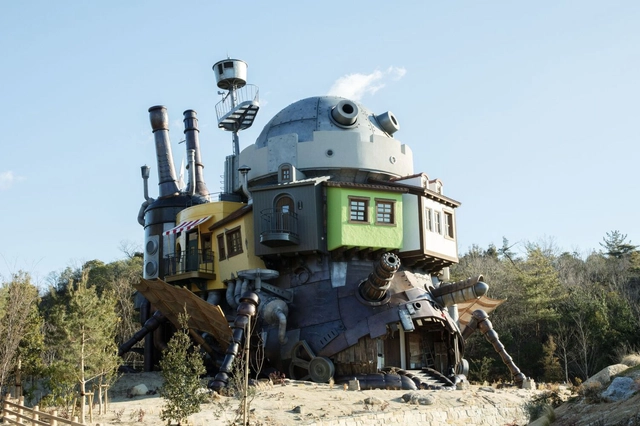
View of Howl's Moving Castle Replica inside the Valley of Witches area . Image via ghibli-park.jp, under policy of fair use
Studio Ghibli and its co-founder Hayao Miyazaki have become household names in the West, thanks to their impressive body of work, which includes over 10 feature films, 2 Oscars, and more than 100 awards worldwide. Films such as "Spirited Away" and "Howl's Moving Castle" showcase their mastery of world-building, story telling and compelling visuals which have earned them global acclaim. This has created a devoted fan base that previously only had the Studio Ghibli Museum in Tokyo to experience the films in real life. As the studio's popularity and movie portfolio grew, it became inevitable for them to expand into a larger space. That is why November 2022 marked the beginning of a new phase as the Ghibli Park opened its gates in Nagoya, Japan.
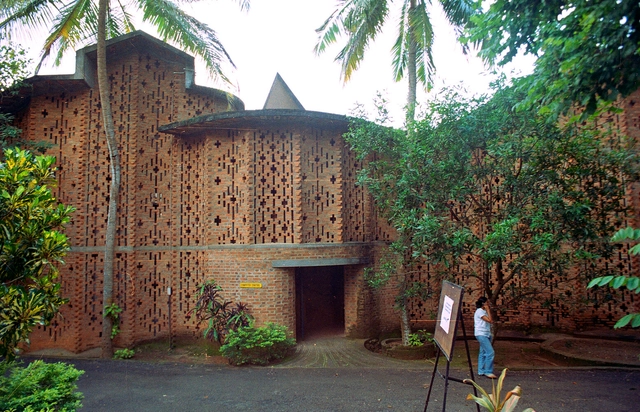
In India, brick as a construction material holds memory, meaning, and modernity. From the aligned fired bricks of the Indus Valley Civilization to the intricate brick jaalis that decorate homes, public buildings, and landmarks, the material's legacy is deeply embedded within the subcontinent's architectural identity. Yet no one has shaped the narrative of brick in modern Indian architecture more eloquently than Laurie Baker.
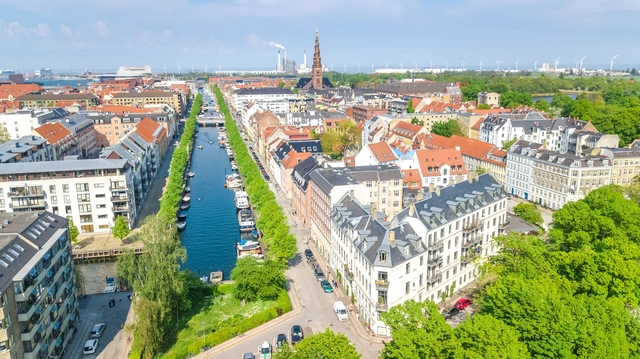
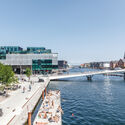
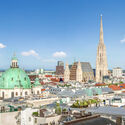
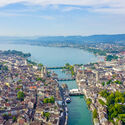
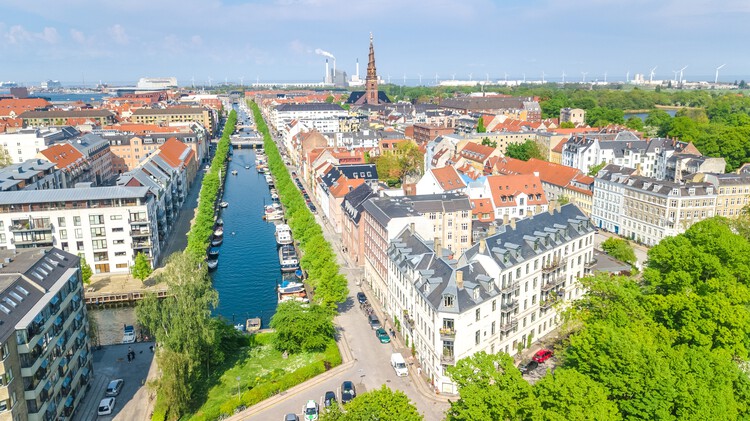
The Economist Intelligence Unit (EIU) has released its Global Liveability Index for 2025, assessing 173 cities worldwide across five categories: stability, healthcare, culture and environment, education, and infrastructure. This year, Copenhagen has taken the top position, ending Vienna's three-year run as the world's most liveable city. The Danish capital earned high scores in stability, education, and infrastructure, narrowly surpassing Vienna, which saw a decline in its stability rating following recent security incidents. The average global liveability score for 2025 remains steady at 76.1 out of 100, unchanged from 2024. While year-on-year improvements were recorded in healthcare, education, and infrastructure, these were offset by a continued decline in stability, driven by rising geopolitical tensions, civil unrest, and increased security threats in several regions.
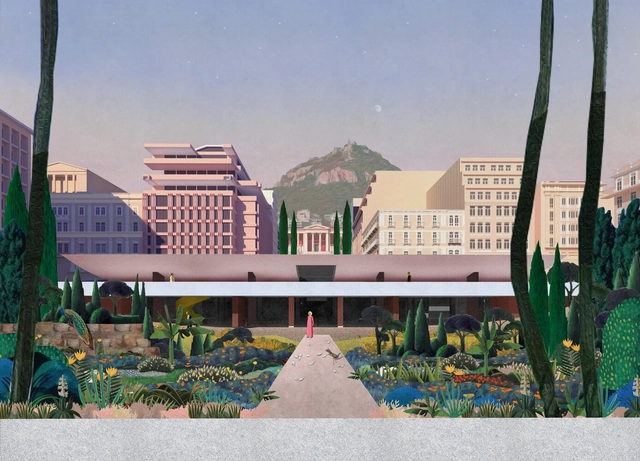
Brave New Axis by Spyridon Loukidis, Markos Georgios Sakellion, Georgios Thalassinos from National Technical University of Athens, Greece. EUmies Awards Young Talent winner. Image Courtesy of Fundació Mies van der Rohe