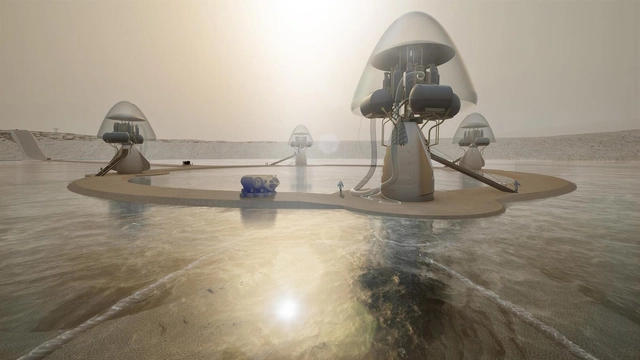
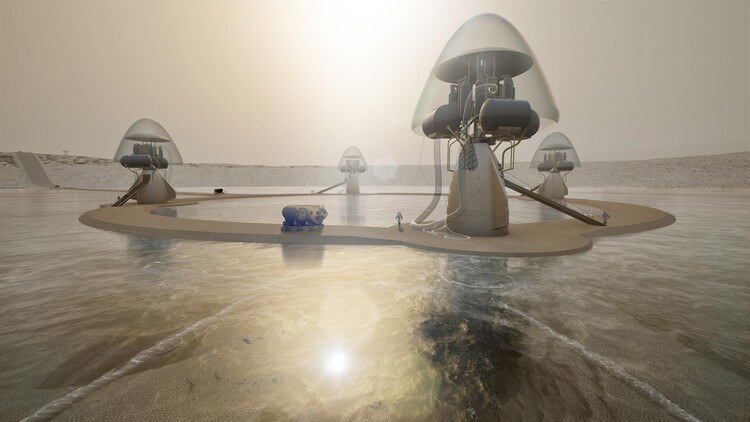
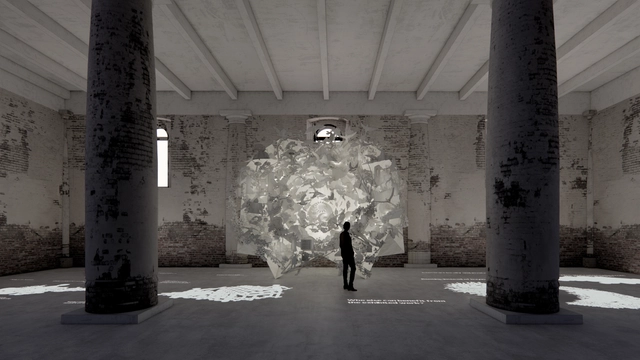
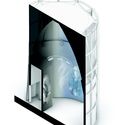
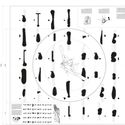
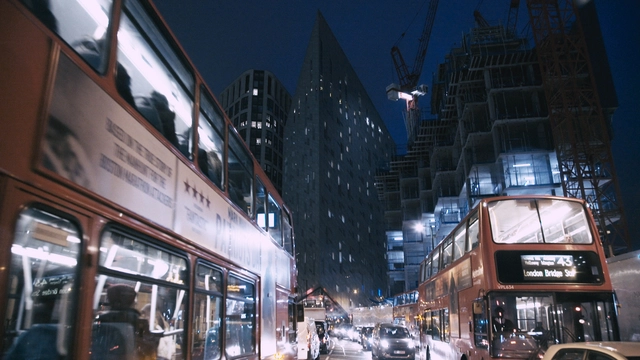
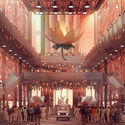
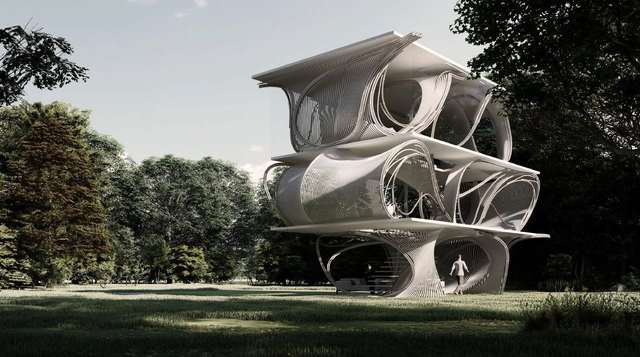
Cities today are being reimagined as living, evolving organisms, combining digital intelligence, ecological systems, and new materials to shape radical futures. At Carlo Ratti's "Intelligens. Natural. Artificial. Collective." biennial, over 750 participants challenge established boundaries between architecture, landscape, and technology. Several conceptual projects showcased in the main exhibition challenge conventional boundaries between architecture, landscape, and technology. From bio-adaptive urban systems and Martian water-based settlements to immersive symphonies of satellite data, these works collectively envision new models for cohabitation, resilience, and planetary awareness.
This month's Unbuilt selection presents six speculative projects, presented as part of the 2025 Venice Architecture Biennale exhibition, as provocations for rethinking the future of cities and human settlement. While some proposals transform architecture into self-sustaining, living infrastructures, others explore how data and sensory interfaces can redefine our relationship with natural and urban environments. Together, they offer a cross-section of how architects and designers are using unbuilt work to imagine new possibilities for life on Earth and beyond.
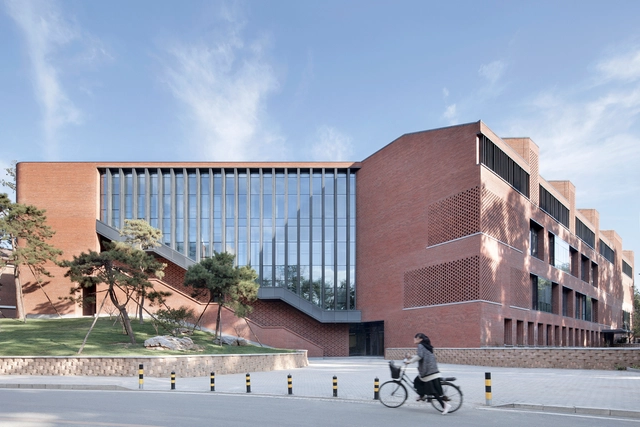
Every year, the QS World University Rankings by Quacquarelli Symonds (QS) releases an updated list of best university programs worldwide. In the field of Architecture and the Built Environment, the list includes 250 institutions. The ranking evaluates institutions across all continents. This year, The Bartlett School of Architecture (part of UCL) maintains its position in first place, as the top 10 list sees a reorganization of the selected universities, with no new entrants. Tsinghua University is the only one among them to improve its position since last year, rising from eighth to joint seventh.
The Biennale promises to be a dynamic platform uniting over 750 participants from diverse backgrounds, including architects, engineers, mathematicians, climate scientists, and artists. Such a broad coalition of over 280 projects underlines the Exhibition's focus on inclusivity and interdisciplinary collaboration, an essential aspect for adaptation. The selection process proposed a bottom-up, open call approach through the Space for Ideas initiative, which ran between May and June 2024. It encouraged participation from global teams, from Pritzker Prize winners and Nobel laureates to emerging architects and scientists.
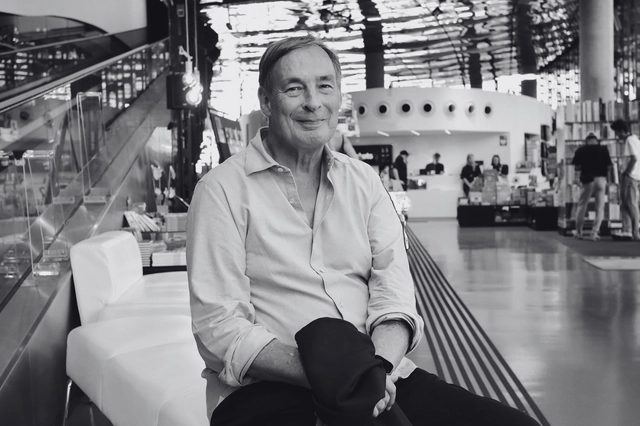
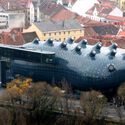
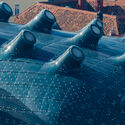
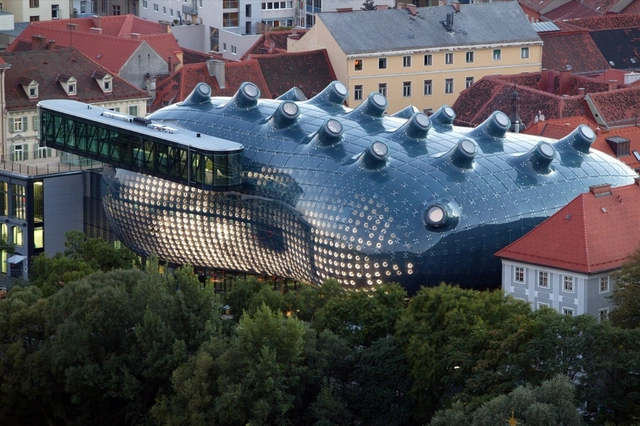
British architect and planner Colin Fournier, co-founder of conceptual architecture studio Archigram and Professor of Architecture and Urbanism at the Bartlett School of Architecture, has passed away at the age of 79. Fournier was best known for his co-design of the Kunsthaus Graz in Austria, also known as the "Friendly Alien." This project, completed together with Sir Peter Cook, is celebrated as one of the most distinctive cultural landmarks of its time. For his contributions to this work, Fournier was awarded Austria's Goldener Ehrenzeichen medal in 2005, a recognition of his impact on the architectural landscape.
QS, Quacquarelli Symonds World University Rankings, has announced the annual list of the top universities to study Architecture and the Built Environment in the year 2024. The ranking evaluates over 1,500 institutions from over 100 locations. The evaluation system has been updated this year to include new metrics such as sustainability, employment outcomes, and international research networks.
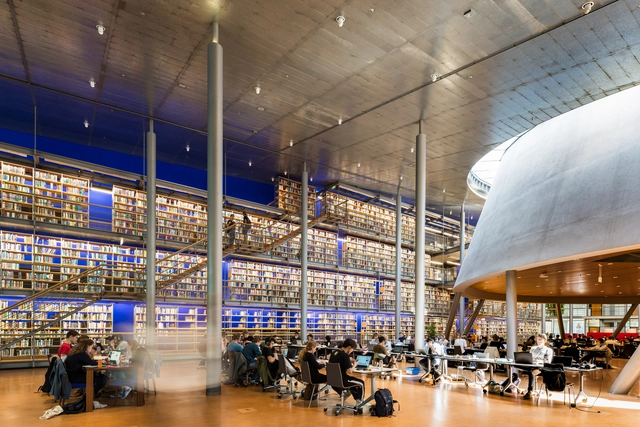
The top three contenders, the Bartlett School of Architecture, MIT, and Delft UT, have maintained their ranking from 2023, with ETH Zurich showing a slight decrease from an equal third position to the fourth. In the sixth position, Harvard University stands out as the top university for employer reputation in this subject. Among the top 10 universities, Politecnico di Milano had the greatest advancement in rankings, moving from the 10th position last year to the 7th.
In early 2018, spatial practitioner and Bartlett lecturer Neba Sere hosted a panel discussion at London's Architecture Foundation, where she was one of six young trustees. The topic: beginnings. How to go about them, move ahead, and transform them into something that lasts. Six years later, she looks back on the event as a beginning in itself: that day marked the creation of a WhatsApp group that would turn into Black Females in Architecture (BFA). BFA is now a 500-strong global membership network co-directed by Sere and fellow architects Selasi Setufe and Akua Danso.
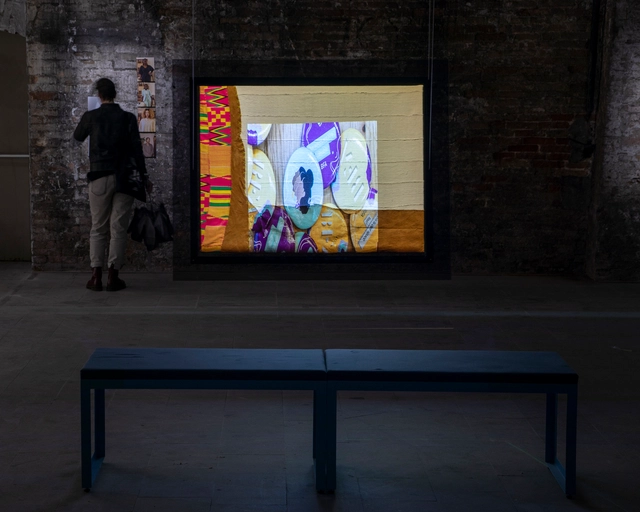
BFA was initiated in response to the need for visibility of black women and female-identifying people with black heritage in architecture and the built environment. Last year, the group celebrated its fifth anniversary with the showing of a short film and a panel discussion at the Venice Architecture Biennale. Now, after putting in the groundwork of spreading information about the lack of diversity and equality in the industry and increasing their numbers, BFA is gearing up to drive physical change.
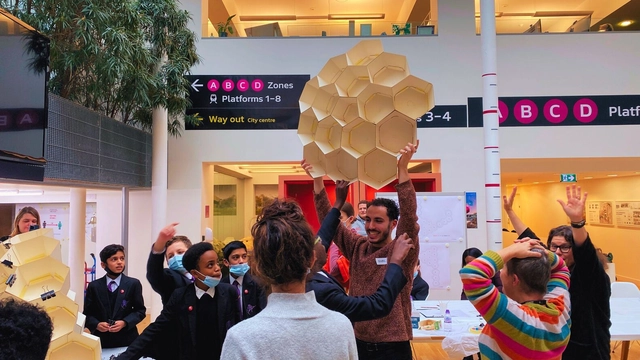
The Grimshaw Foundation is a charitable organization aiming to bring access to creative learning tools to a diverse range of young people. The organization was established by Sir Nicholas Grimshaw, in partnership with the partners of international architecture practice Grimshaw. The central purpose is to bring together a globally linked educational community of artists, architects, and designers to support and empower young people. It hopes to reach them at the stage of navigating their career options and help them discover the varied options and opportunities that the creative industry can offer. The Foundation officially launched on 6 July 2022 at the Royal Academy of Arts in London.
Nature has continually played muse to architects. Colors and forms from the natural world find themselves embedded in artificial edifices. Buildings are also shaped by patterns of the wind and sun, topography, and vegetation. While architecture is informed by the effects of nature, buildings have been proposed as inert objects that remain static in a biologically evolving world. Anthropocentric concrete “jungles” are devoid of life, separating humans from natural environments and causing imbalances that have manifested as pandemics. What would cities look like if there were no boundaries between humans and ecosystems?
Courtesy of Seoul Biennale of Architecture and Urbanism
Under the theme of "Crossroads: Building the Resilient City", the 2021 Seoul Biennale of Architecture and Urbanism explores cities through architecture, design, and urban planning by highlighting "the virtues and dialogue of crossroads of knowledge" through exhibitions, installations, and events, that tackle the city of tomorrow led by architect Dominique Perrault. With more than 100 participating cities across five continents and installations by world renowned architects and designers, the Seoul Biennale will take place at various locations across the city from September 16 until October 31st, 2021.
The Architecture Film Festival London, now at its third edition, fosters conversations around architecture, society and the built environment through the medium of film. Along with the International Film Competition, the 2021 programme, debuting on June 2nd and held online, will feature a collection of diverse thematic screenings, essays and events titled "Capsules", which offer a platform to multiple curatorial voices.
Videos
Slab House Proposal / Skeleton. Image Cortesía de reBENT
The reBENT project, developed by the Research Group 9 of the March 2019-20 Program of the Bartlett School of Architecture (UCL), explores the interactive relationship between augmented reality (AR) and manual construction processes using PVC pipes –highly resistant and cheap– as a base research material. In addition to taking advantage of its active bending properties to interact with AR, this material provides a fast and affordable system for the creation of complex concrete structures made by weaving together a series of bent PVC pipes and reinforcing bars, which are then used as formwork for glass fiber reinforced concrete (GFRC).
So far, the exploration of this hybrid approach –neither purely analog nor purely automated– has led to the design of prototypes, architectural elements, and habitable structures. In addition, the team developed an augmented reality platform for Microsoft Hololens in order to guide the construction and customization process through holograms.
Penelope Haralambidou, 'remodelling' The Book of the City of Ladies, study, 2019.
Penelope Haralambidou's project 'City of Ladies' studies 'The Book of the City of Ladies', 1405, by Italian/French medieval author Christine de Pizan (1364 – c.1430). The text is part of a compilation assembled for Queen Isabeau of Bavaria between 1410 – 1414 (Harley MS 4431) the largest surviving collected manuscript of her works and one of the foundation manuscripts at the British Library. In the book, de Pizan describes her visitation by three female Virtues, Reason, Rectitude and Justice, who commission her with the construction of an imaginary city inhabited solely by women. Conflating the act of writing a book
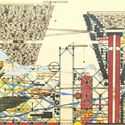
As one of the founding members of Archigram, the avant-garde neo-futurist architecture group of the 1960s, the British architect, professor, and writer Sir Peter Cook (born 22 October 1936) has been a pivotal figure within the global architectural world for over half a century; one of his most significant works from his time with Archigram, The Plug-In City, still invokes debates on technology and society, challenging standards of architectural discourse today.
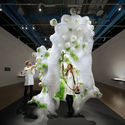
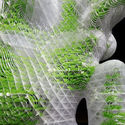
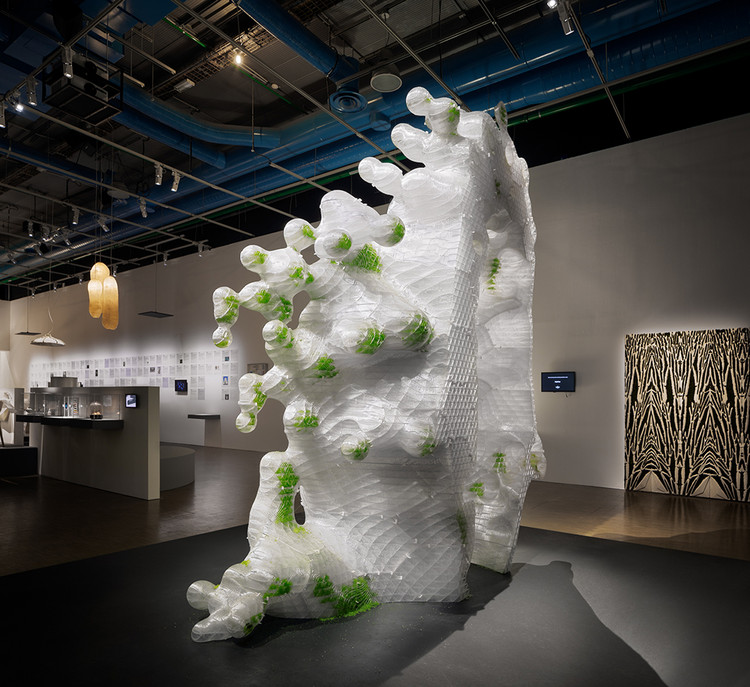
The renowned Centre Pompidou in Paris is to open its doors to two living sculptures, embodying the future forms of spatial intelligence. The exhibition, titled “La Fabrique du vivant” [The Fabric of the Living], will feature “H.O.R.T.U.S. XL Astaxanthin.g” by ecoLogicStudio in collaboration with Innsbruck University - Synthetic Landscape Lab, CREATE Group / WASP Hub Denmark - University of Southern Denmark, and "XenoDerma" by Urban Morphogenesis Lab directed by Claudia Pasquero at The Bartlett UCL.
Running from February 20th to April 15th, the exhibition will examine the notion of “living” in a digital era, where new interactions are emerging between the fields of life science, neuroscience, and synthetic biology. Permeating the entire urbanscape, this global, digital apparatus “encompasses miniaturization, distribution, and intelligence of manmade urban networks of in-human complexity, engendering evolving processes of synthetic life on Earth.”
Global higher education analysis firm Quacquarelli Symonds (QS) has revealed its rankings of the world’s top universities for the study of Architecture / Built Environment for 2018. The eight edition of the survey compared 2,122 institutions across the globe offering courses in architecture or the built environment, narrowing down the list based on criteria including academic and employer reputation.
For the fourth straight year, MIT has topped the rankings, once again coming out ahead of the Bartlett School of Architecture and the Delft University of Technology (TU Delft) in 2nd and 3rd respectively. Read on for the full rankings.
As final juries draw to a close, graduating architecture students are left with a crucial decision to make. While some might take a plunge into the scary real world looking to gain professional experience, others might choose to further reinforce their architecture education and skill set. Of the latter, most enroll in an MArch program, or take well-trodden paths into urban design and planning, landscape architecture, historic preservation, or theory and criticism. But in an increasingly complex world faced with myriad problems, what about those graduate architects looking to bolster their education in other related disciplines that will give them a more unique perspective on design problems? Here, we shortlist seven alternative, interdisciplinary graduate programs offered by architecture schools worldwide.
In a time of what seems to be ever-increasing religious and political conflict, Bartlett students Akarachai Padlom, Eleftherios Sergios, and Nasser Alamadi instead chose to focus on collaboration between religions in their thesis project entitled “Faith Estates,” which outlines a new method of mass religious tourism. In an area around the Dead Sea characterized by disputed boundaries and conflicting ownership claims, the group aims to reimagine the relationship between the world’s three monotheistic religions, but also to rethink the relationship between religion, tourism, and the landscape. The design consists of large-scale excavation sites which form tourist resorts along a pilgrimage route with the goal of forming a mutually beneficial relationship.