At a time of ecological emergency, architecture cannot be separated from the extractive systems on which it depends. As the technosphere expands, linking material flows, energy consumption, and digital infrastructures, design becomes increasingly entangled in these processes. How can design practice intervene in anthropocentric systems and transform the architectural process and aesthetics through an investigation of material intelligence? More broadly, how does architecture engage with the agency and intelligence of non-human entities to rebalance the environmental burden?
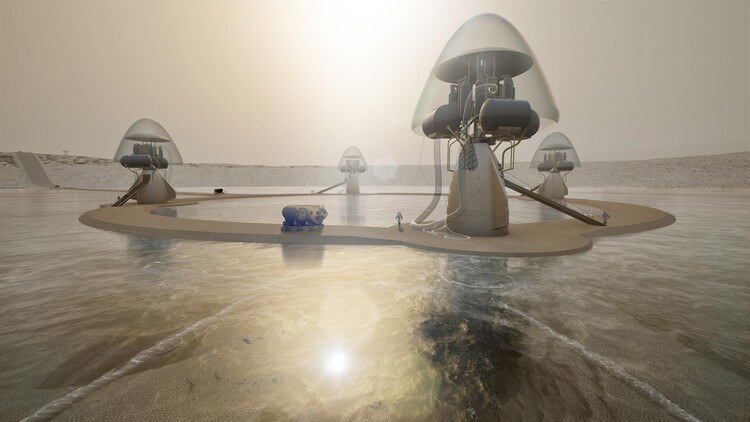
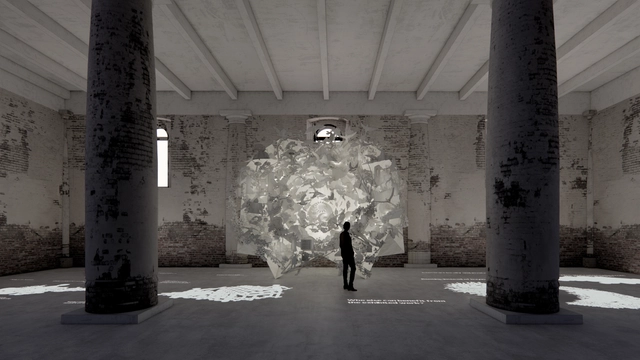
Cities today are being reimagined as living, evolving organisms, combining digital intelligence, ecological systems, and new materials to shape radical futures. At Carlo Ratti's "Intelligens. Natural. Artificial. Collective." biennial, over 750 participants challenge established boundaries between architecture, landscape, and technology. Several conceptual projects showcased in the main exhibition challenge conventional boundaries between architecture, landscape, and technology. From bio-adaptive urban systems and Martian water-based settlements to immersive symphonies of satellite data, these works collectively envision new models for cohabitation, resilience, and planetary awareness.
This month's Unbuilt selection presents six speculative projects, presented as part of the 2025 Venice Architecture Biennale exhibition, as provocations for rethinking the future of cities and human settlement. While some proposals transform architecture into self-sustaining, living infrastructures, others explore how data and sensory interfaces can redefine our relationship with natural and urban environments. Together, they offer a cross-section of how architects and designers are using unbuilt work to imagine new possibilities for life on Earth and beyond.
"The limits of our design language are the limits of our design thinking". Patrik Schumacher's statement subtly hints at a shift occurring in the built environment, moving beyond technological integration to embrace intelligence in the spaces and cities we occupy. The future proposes a possibility of buildings serving functions beyond housing human activity to actively participate in shaping urban life.
As architecture navigates a rapidly changing world shaped by ecological urgency, social transformation, and technological acceleration, the notion of intelligence is shifting. No longer confined to individual cognition or artificial computation, intelligence can emerge from cultural memory, collective practices, and adaptive systems. In this broader sense, architecture becomes a field of convergence, where natural, artificial, and social intelligences intersect to offer new ways of designing and building.
Vernacular traditions embed generations of environmental knowledge, often transmitted through materials, construction techniques, and spatial logics finely tuned to local conditions; participatory platforms expand decision-making to wider communities to take part in shaping their environments, redistributing agency in the design process; and computational processes simulate and respond to complex data in real time bringing the capacity to analyse, simulate, and respond to complex variables — whether environmental, social, or behavioural — offering new forms of adaptability.
The Biennale promises to be a dynamic platform uniting over 750 participants from diverse backgrounds, including architects, engineers, mathematicians, climate scientists, and artists. Such a broad coalition of over 280 projects underlines the Exhibition's focus on inclusivity and interdisciplinary collaboration, an essential aspect for adaptation. The selection process proposed a bottom-up, open call approach through the Space for Ideas initiative, which ran between May and June 2024. It encouraged participation from global teams, from Pritzker Prize winners and Nobel laureates to emerging architects and scientists.
In a recent interview with Louisiana Channel,ecoLogic Studio discusses a new approach to architecture that explores the relationship between nature and urban design. Claudia Pasquero and Marco Poletto, the studio's lead architects, explain that modern architecture should be rethought to adapt to the changing environment and to serve as a connection between urban life and natural systems. The architects compare the current transformation in the field to the period of the Renaissance, when architecture evolved in response to the needs of society. Today, they argue, there is an opportunity for architects to learn from nature and design urban spaces that are both sustainable and functional.
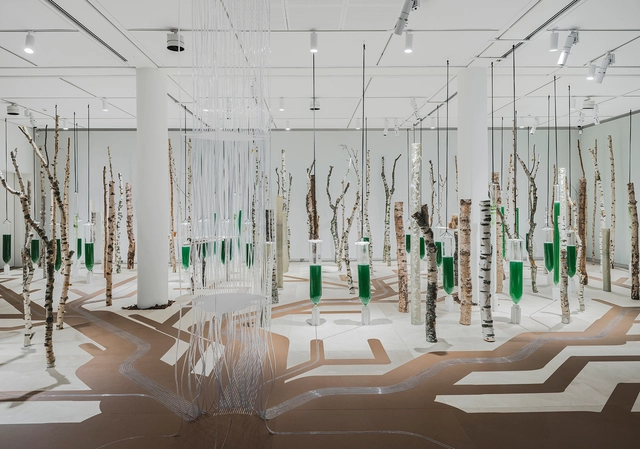
The Louisiana Museum of Modern Art's "Living Structures" exhibition, running from November 8th, 2024, to March 23rd, 2025, features Deep Forest, a new installation by Prof Claudia Pasquero and Dr. Marco Poletto founders of architecture and design innovation firm ecoLogicStudio, together with academic partner Innsbruck University. This immersive work challenges traditional architectural paradigms by embracing the naturalization of architecture and technology, a direct counterpoint to modernist attempts to mechanize nature. The exhibition represents the culmination of twenty years of research in bio-digital design, showcasing the potential of symbiotic relationships between technology and the natural world within built environments.
Nature has continually played muse to architects. Colors and forms from the natural world find themselves embedded in artificial edifices. Buildings are also shaped by patterns of the wind and sun, topography, and vegetation. While architecture is informed by the effects of nature, buildings have been proposed as inert objects that remain static in a biologically evolving world. Anthropocentric concrete “jungles” are devoid of life, separating humans from natural environments and causing imbalances that have manifested as pandemics. What would cities look like if there were no boundaries between humans and ecosystems?
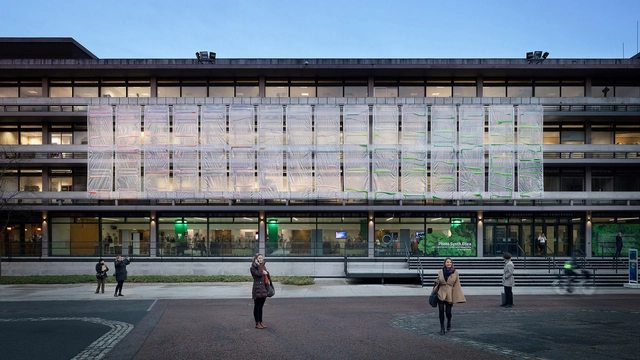
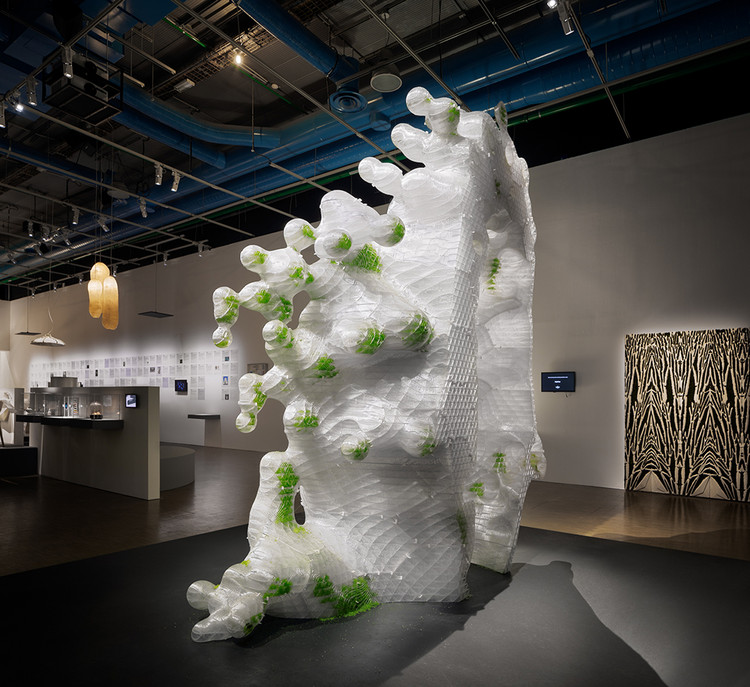
The renowned Centre Pompidou in Paris is to open its doors to two living sculptures, embodying the future forms of spatial intelligence. The exhibition, titled “La Fabrique du vivant” [The Fabric of the Living], will feature “H.O.R.T.U.S. XL Astaxanthin.g” by ecoLogicStudio in collaboration with Innsbruck University - Synthetic Landscape Lab, CREATE Group / WASP Hub Denmark - University of Southern Denmark, and "XenoDerma" by Urban Morphogenesis Lab directed by Claudia Pasquero at The Bartlett UCL.
Running from February 20th to April 15th, the exhibition will examine the notion of “living” in a digital era, where new interactions are emerging between the fields of life science, neuroscience, and synthetic biology. Permeating the entire urbanscape, this global, digital apparatus “encompasses miniaturization, distribution, and intelligence of manmade urban networks of in-human complexity, engendering evolving processes of synthetic life on Earth.”
The Tallinn Architecture Biennale have announced Claudia Pasquero, Director of ecoLogicStudio, as the Head Curator of the 2017 edition, "bioTallinn". According to the organizers, a programme of exhibitions and symposia will "engage various architectural offices, artists, and scientists on the topic of biotechnology in architecture," examining in particular "the relationship between nature and the city in the Anthropocene age."
https://www.archdaily.com/876734/claudia-pasquero-announced-as-head-curator-of-the-2017-tallinn-architecture-biennale-which-will-explore-the-anthropoceneAD Editorial Team
The exhibition "Project Solana Ulcinj," co-curated by Lootsma and Katharina Weinberger and commissioned by Dijana Vucinic and the Ministry of Sustainable Development and Tourism, features four proposals for the re-use/re-purposing/re-programming of a former industrial site in Montenegro. With an eye on not only sustainability, but also natural and economic viability, four firms proposed different spatial strategies to transform what Lootsma calls an "unreal man-made artificial and abstract landscape."
https://www.archdaily.com/791477/ad-interviews-bart-lootsma-curator-of-montenegro-pavilionAD Editorial Team
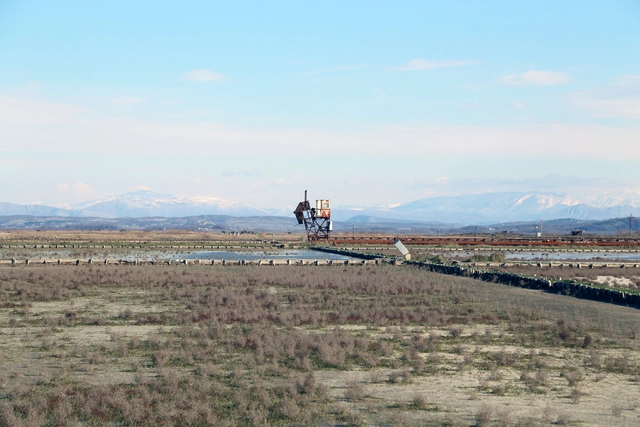
Near Montenegro's most southern town Ulcinj sits the former saline "Bajo Sekulic," a completely artificial, man-made biotope which has taken on almost global importance as a crucial node in the migratory patterns of birds. As such, the Solana Ulcinj is the front line of all kinds of conflicts: between nature and culture; the local and the global; economy and environmental awareness.
The Project Solana Ulcinj, commissioned by Dijana Vucinic and the Ministry of sustainable development and tourism and curated by Bart Lootsma and Katharina Weinberger, is the Montenegrin contribution to the 15th International Architecture Exhibition of the Biennale di Architettura. The Montenegrin pavilion hosts four projects outlining four different sustainable futures for the Solana Ulcinj, developed specially for the Biennale by four practices: ecoLogicStudio from London, LOLA form Rotterdam and LAAC from Innsbruck, while a fourth project will be decided following a national competition in Montenegro. The project is accompanied by a series of three symposia in Montenegro and in Venice.
https://www.archdaily.com/784971/montenegro-pavilion-at-2016-venice-biennale-to-investigate-one-of-europes-largest-post-industrial-landscapesBart Lootsma and Katharina Weinberger
After meeting Claudia Pasquero and Marco Poletto, founders of ecoLogicStudio at the Beyond Media Festival in Florence, they talked to us about one of their latest projects, the STEMcloud v2.0 that now we want to share here, as is a really new and avant-garde vision about parametric and genetic architecture and the way that human interaction can bring new life to architecture projects:
The STEMcloud v2.0 project proposes the development and testing of an architectural prototype operating as an oxygen making machine. The project has been presented and designed for the SEVILLE ART and ARCHITECTURAL BIENNALE 2008.

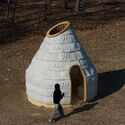
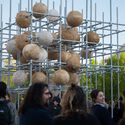
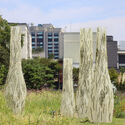










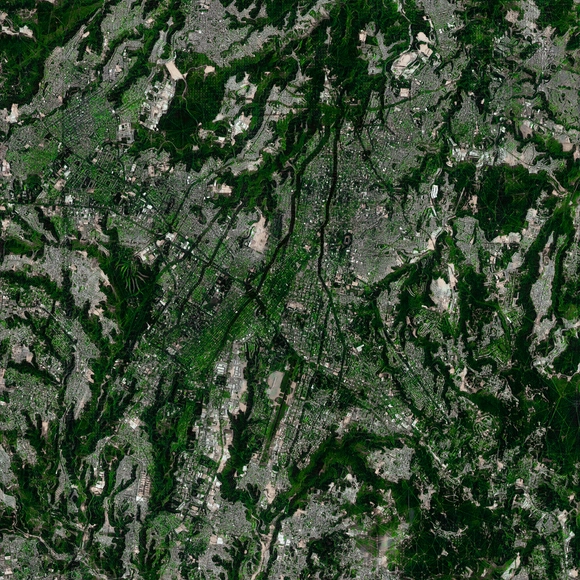



.jpg?1501328525 "Anthropocene Island. Sludge of waste material of the Wastewater Treatment Plant, 2017. Image Courtesy of ecoLogicStudio")
.jpg?1501328487 "Anthropocene Island. Waste material of the Wastewater Treatment Plant, 2017. Image Courtesy of ecoLogicStudio")
.jpg?1501328451 "Anthropocene Island. Ornitological Park and Wastewater Treatment Plant, 2017. Image Courtesy of ecoLogicStudio")
.jpg?1501328697 "Anthropocene Island. Air, clusters of inhabitable bioreactor cells (1x1km @0.5m/res), 2017. Image Courtesy of ecoLogicStudio")
.jpg?1501328685)