1. ArchDaily
  2. Bartlett School of Architecture

Bartlett School of Architecture: The Latest Architecture and News

The Top 200 Universities in the World for Architecture 2017

Global higher education analysis firm Quacquarelli Symonds (QS) has released in 2017 rankings of the world’s top universities for the study of Architecture & Built Environment. This year, for the seventh edition of the survey, QS has expanded the ranking to list the world’s top 200 schools, including institutions across all six inhabited continents.

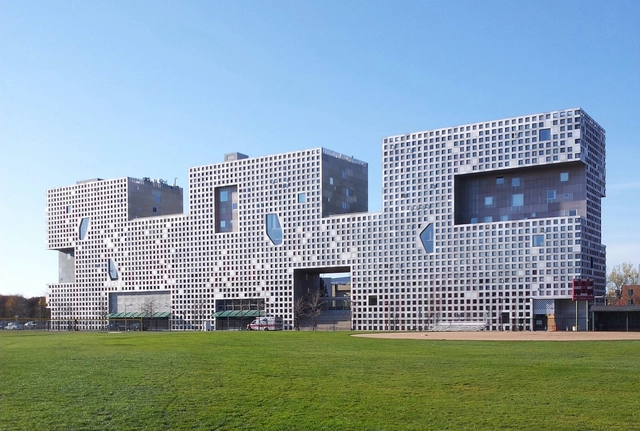
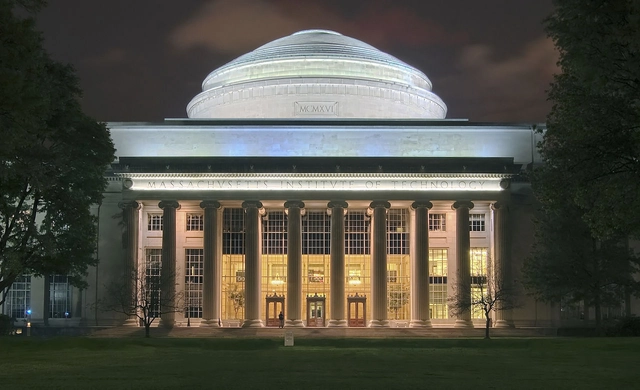
For the third year in a row, MIT has topped the list, finishing ahead of the Bartlett School of Architecture and the Delft University of Technology (TU Delft). Read on for the full rankings.

80 at 80 Exhibition to Celebrate the Architectural Career of Sir Peter Cook

80 at 80 Exhibition to Celebrate the Architectural Career of Sir Peter Cook - Image 1 of 4
Courtesy of Bartlett School of Architecture

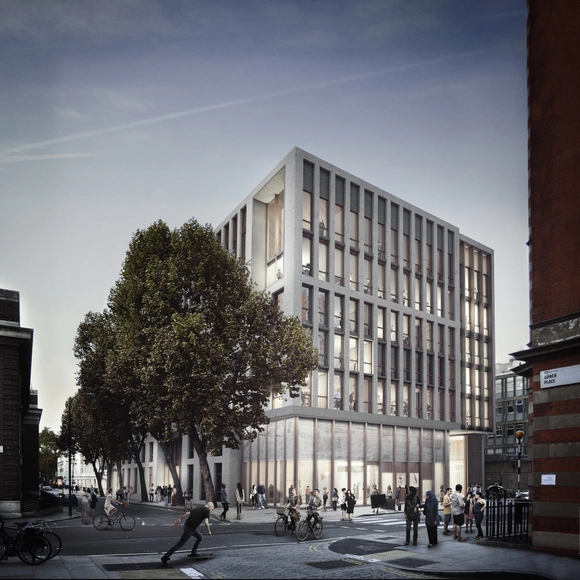
The Bartlett School of Architecture, UCL, is celebrating the opening of its new building at 22 Gordon Street with an exhibition of work by visionary architect Sir Peter Cook. Running from 23 February to 10 March 2017, the exhibition marks Sir Peter’s 80th year with a celebration of 80 of his inspired and pioneering projects.

Experience the "Brutal Faith" of Gottfried Böhm's Pilgrimage Church in Neviges

Subscriber Access | 

This exclusive photo essay by Laurian Ghinitoiu was originally commissioned for the fifth issue of LOBBY. Available later this month, the latest issue of the London-based magazine—published in cooperation with the Bartlett School of Architecture—examines the theme of Faith as "a fervent drive, a dangerous doctrine, a beautifully fragile yet enduring construct, an unapologetic excuse, a desperate call for attention and a timely consideration on architectural responsibility."

In 1986 the Pritzker Architecture Prize announced their first German laureate. In a speech at the ceremony in London’s Goldsmiths’ Hall, the Duke of Gloucester suggested that the prize “may not guarantee immorality,” inferring, perhaps, that not even the most prestigious award in architecture could compete with an œuvre so compact, focussed and enduring as that of Gottfried Böhm – a “son, grandson, husband, and father of architects.”

Experience the "Brutal Faith" of Gottfried Böhm's Pilgrimage Church in Neviges - Image 1 of 4Experience the "Brutal Faith" of Gottfried Böhm's Pilgrimage Church in Neviges - Image 2 of 4Experience the "Brutal Faith" of Gottfried Böhm's Pilgrimage Church in Neviges - Image 3 of 4Experience the "Brutal Faith" of Gottfried Böhm's Pilgrimage Church in Neviges - Image 4 of 4Experience the Brutal Faith of Gottfried Böhm's Pilgrimage Church in Neviges - More Images+ 19

Call for Submissions: LOBBY No.5 – "Faith"

For centuries, faith has been a source of immeasurable blessings as well as uncountable catastrophes. People, no matter how different, have always felt protected under the aegis of a common belief and united to accomplish the unthinkable. But its fruitful potentials are only equal to its destructive dangers. Faith can be the most untameable of fires, and with the promise for righteousness or virtue it can tear families apart, close down borders, promote genocide, foster war.

The Top 100 Universities in the World for Architecture 2016

QS has released its 2016 rankings of the top 100 schools for architecture in the world. The company has produced an annual survey of universities since 2011, now comparing including over 800 universities worldwide across 42 subjects, and rating the top universities based on academic reputation, employer reputation and research impact. As they did last year, MIT came out top of the list in architecture. Read on for the full rankings list for architecture, and be sure to visit QS's site for the full rankings list which is sortable by subject, country or continent.

This Intricate Chair is Made Entirely from Fabric

Subscriber Access | 

Fabric is viewed as a material which is flat and two-dimensional and thus, until recent times, it has been used in architecture as a surface sheet. However the material has not been fully exploited.

Developed by four Masters students from the Bartlett School of Architecture in London, FaBrick is a prototype for creating sturdy structures out of textile-based materials. So far consisting of a stool made from a fabric impregnated with cement and a chair made of a felt composite, the project aims to develop a "technique of designing fabric to become the new brick, the new concrete in the invention of architecture."

Bartlett Students Develop New Method for 3D Printing Concrete

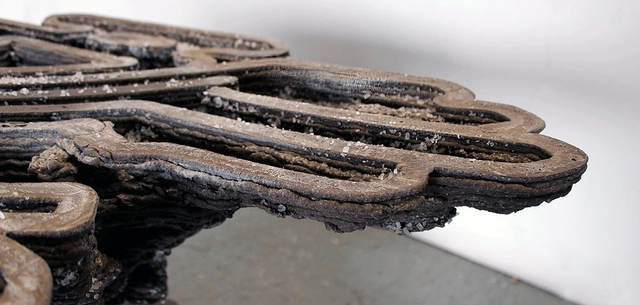
Four Masters students from Bartlett School of Architecture - Francesca Camilleri, Nadia Doukhi, Alvaro Lopez Rodriguez and Roman Strukov - have developed a new method for 3D printing large-scale, self-supporting concrete structures. With their project Fossilised, the team, known as Amalgamma, combined two existing concrete 3D printing methods - the extrusion printing method and the powder printing method - to create a form of supported extrusion that allows for "more volumetric" concrete structures.

"The supported extrusion method has therefore presented the opportunity to design forms that are more varied and more volumetric, as opposed to the very straight vertical forms so far achieved in 3D concrete practice," says Amalgamma. 

LOBBY #3: Meaningful Defiance in a Disengaged Culture

LOBBY #3: Meaningful Defiance in a Disengaged Culture - Featured Image
© Anna Andersen / Regner Ramos

'Defiance' manifests itself in many forms: riots in Baltimore, makeshift housing in Rwanda, Pink Floyd in Venice and plants growing where they ought not sprout. To defy the norm is an act of rebellion and in architecture, doubly so. In the third issue of LOBBY, the burgeoning magazine from London's Bartlett School of Architecture, the notion of defiance and its incarnations are investigated in a collection of essays, interviews and discussions with leading and emerging thinkers in urbanism and architecture. From Swiss master Mario Botta to Carme Pinós, former partner to Enric Miralles, this latest LOBBY investigates the act of defiance as a core tenet of architectural practice.

LOBBY #3: Meaningful Defiance in a Disengaged Culture - Image 1 of 4LOBBY #3: Meaningful Defiance in a Disengaged Culture - Image 2 of 4LOBBY #3: Meaningful Defiance in a Disengaged Culture - Image 3 of 4LOBBY #3: Meaningful Defiance in a Disengaged Culture - Image 4 of 4LOBBY #3: Meaningful Defiance in a Disengaged Culture - More Images+ 10

A Future Vision for the 'American Dream'

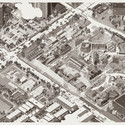
Marcin Chmura, a recent graduate from London's Bartlett School of Architecture, has developed a project which attempts to imagine a new future for the 'American Dream'. The United Suburbs of AmeriKa, named after Franz Kafka’s novel in which—despite never having visited America—he depicts the United States as a utopia offering eternal wealth and happiness for his foreign protagonist.

Stay In Airbnb's Floating Cottage On London's River Thames

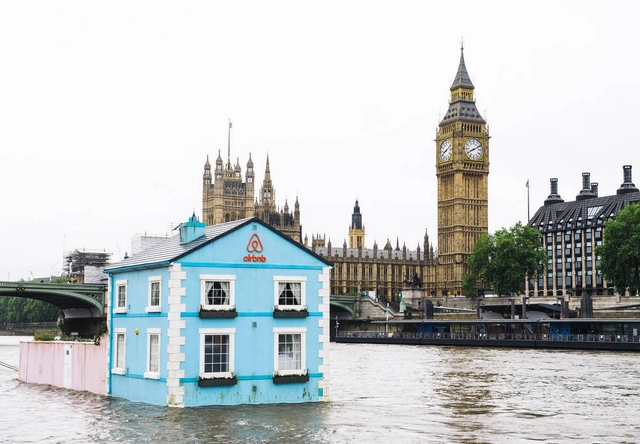
Have you ever dreamed of dozing off as you sail along one of the UK's busiest water highways in an eclectic bright blue cottage replete with a lawn, wisteria over the door and an apple tree? For five days and nights, between the 18th and 23rd May, this dream will come to life in the shape of Nick and Steve Tidball's floating residence for Airbnb.

Stay In Airbnb's Floating Cottage On London's River Thames - Image 1 of 4Stay In Airbnb's Floating Cottage On London's River Thames - Image 2 of 4Stay In Airbnb's Floating Cottage On London's River Thames - Image 3 of 4Stay In Airbnb's Floating Cottage On London's River Thames - Image 4 of 4Stay In Airbnb's Floating Cottage On London's River Thames - More Images+ 4

LOBBY #2: Projecting Forward, Looking Back

From Vitruvius to Le Corbusier, words and writing have always played an essential role in architectural discourse. One could argue that crafting words is akin to orchestrating space: indeed, history’s most notable architects and designers are often remembered for their written philosophies as much as they are for their built works.

With the exception of a few of architecture’s biggest names, the majority of practicing architects no longer exploit the inherent value writing offers as a means for spatial and theoretical communication. This trend is exacerbated by the fact that many architectural schools place little emphasis on the once-primary subjects of history and literature, resulting in a generation of architects who struggle to articulate their ideas in words, resulting in an ever-growing proliferation of ill-defined “archispeak.”

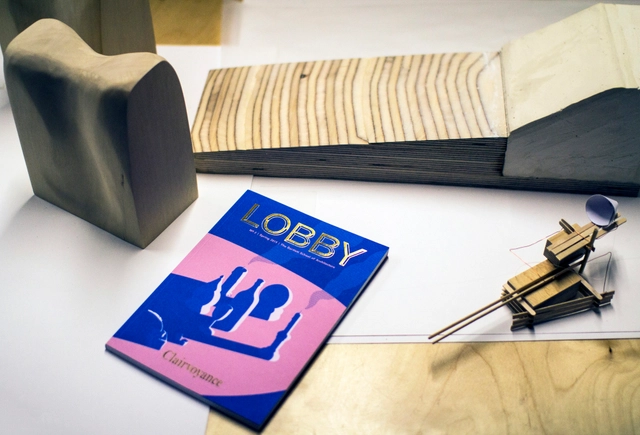
LOBBY is an attempt from students of London’s Bartlett School of Architecture to reclaim the potency of the written word, presenting in their second issue an ambitious array of in-house research and external contributions. The theme is Clairvoyance, and the journal seeks to investigate the ways in which architects are forced to constantly grapple with the possibilities and uncertainties of designing spaces that exist in the intangible realm of the world-to-be.

LOBBY #2: Projecting Forward, Looking Back - Image 1 of 4LOBBY #2: Projecting Forward, Looking Back - Image 2 of 4LOBBY #2: Projecting Forward, Looking Back - Image 3 of 4LOBBY #2: Projecting Forward, Looking Back - Image 4 of 4LOBBY #2: Projecting Forward, Looking Back - More Images+ 6

2014 RIBA President's Medals Winners Announced

The Royal Institute of British Architects (RIBA) have announced the President’s Medals Student Awards at a special event today in London. The awards, recognised as the world’s most prestigious set of awards in architectural education, were inaugurated in 1836 (making them the institutes oldest award, including the RIBA Gold Medal). Three medals in particular – the Bronze for a Part I student, the Silver for a Part II student, and the Dissertation Medal – are awarded to “promote excellence in the study of architecture [and] to reward talent and to encourage architectural debate worldwide.” In addition to these, the winners of the Serjeant Award for Excellence in Drawing and the SOM Foundation Fellowships are also announced.

317 schools of architecture from over 61 countries were invited to nominate design projects and dissertations by their students. This year saw the majority of winners come from London schools, including the Bartlett School of Architecture (UCL), Kingston University, the University of Westminster, London Metropolitan University (the CASS), the Royal College of Art, the University of East London, and the University of Greenwich. University College Dublin (Ireland) and the University of Brighton (UK) also saw their students commended, alongside the University of Sydney (two students) and the University of Hong Kong (one student).

See drawings from all the winning and commended students after the break.

2014 RIBA President's Medals Winners Announced - Image 19 of 42014 RIBA President's Medals Winners Announced - Image 22 of 42014 RIBA President's Medals Winners Announced - Image 40 of 42014 RIBA President's Medals Winners Announced - Image 45 of 42014 RIBA President's Medals Winners Announced - Image 51 of 42014 RIBA President's Medals Winners Announced - Image 57 of 42014 RIBA President's Medals Winners Announced - Image 61 of 42014 RIBA President's Medals Winners Announced - Image 71 of 42014 RIBA President's Medals Winners Announced - More Images+ 76

Bartlett Students Invent Skeleton-Inspired Structural Material for Lightweight Construction

A team of graduates from the Bartlett School of Architecture at University College London have developed a new hybrid building material designed for use in uniquely challenging construction environments. "Augmented Skin" combines a regimented structural core with a flexible opaque skin, which is coated in PVA to serve as casting formwork for concrete. Inspired by biological skeletal frameworks, the material can be assembled quickly at a minimal cost with maximum flexibility. The project was designed by architecture graduate students Kazushi Miyamoto, Youngseok Doo, and Theodora Maria Moudatsou, and was exhibited at The Bartlett's 2014 graduation exhibition B-Pro.

Read more about the flexibility of Augmented Skin after the break

Bartlett Students Invent Skeleton-Inspired Structural Material for Lightweight Construction  - Image 1 of 4Bartlett Students Invent Skeleton-Inspired Structural Material for Lightweight Construction  - Image 2 of 4Bartlett Students Invent Skeleton-Inspired Structural Material for Lightweight Construction  - Image 3 of 4Bartlett Students Invent Skeleton-Inspired Structural Material for Lightweight Construction  - Image 4 of 4Bartlett Students Invent Skeleton-Inspired Structural Material for Lightweight Construction  - More Images+ 7

Bartlett Students Invent Skeleton-Inspired Structural Material for Lightweight Construction  - Image 10 of 4

Bartlett Professor CJ Lim to Launch "Food City" Book at Ravensbourne

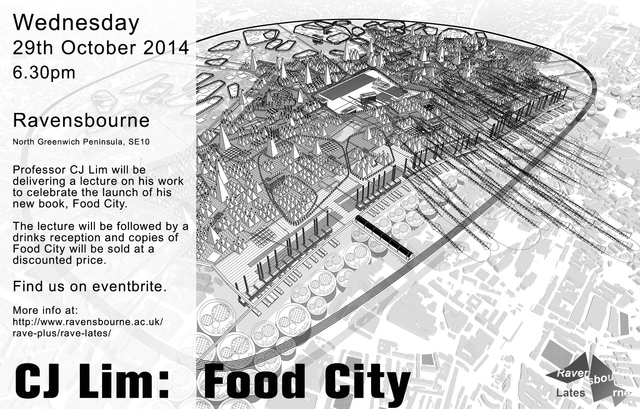
As part of the launch of his latest book, Food City, Professor CJ Lim of the Bartlett School of Architecture will present a lecture at Ravensbourne in Greenwich, London. Food City follows on from professor Lim's previous book, Smartcities and Eco-Warriors, exploring the role that food production and distribution has historically played in day-to-day life, and how we might once again reinstate it as an integral part of our cities through essays on 25 cities around the globe.

The Legacy of Hydraulic Fracturing in Blackpool

Subscriber Access | 

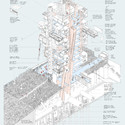
Jason Lamb, a recent graduate from London's Bartlett School of Architecture, has developed a project which centres around the legacy of hydraulic fracturing in the British coastal city of Blackpool. The theoretical thesis, which employs the possibility of Chinese investment prompting the transitory integration of hydraulic fracturing within the city for the exploitation of shale gas, features a number of interesting explanatory illustrations.

Hawkins\Brown Reveal Plans for Bartlett School Revamp

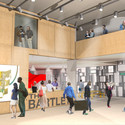
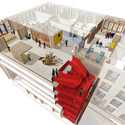
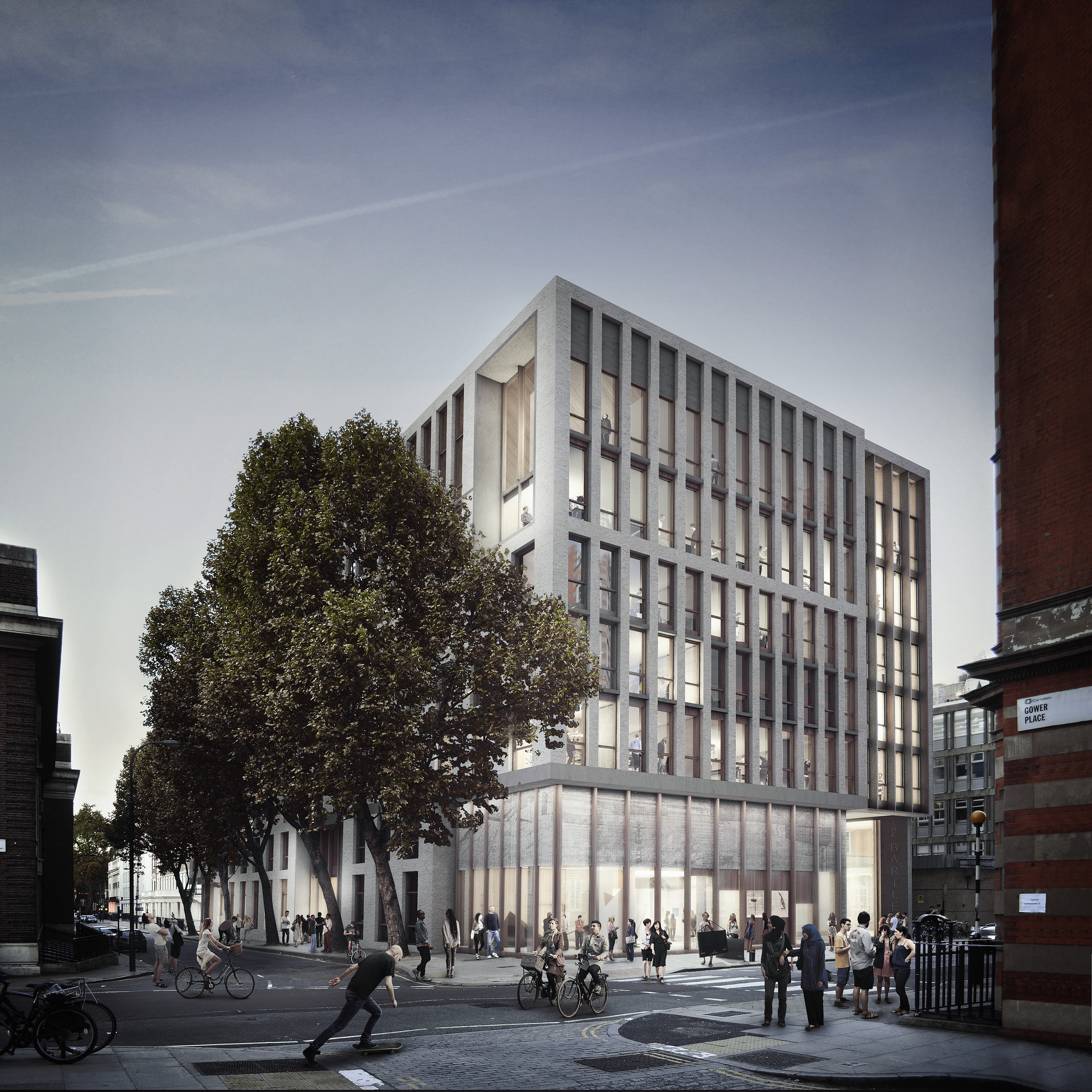
Hawkins\Brown have revealed plans for a £30 million revamp of Wates House in London, home to the Bartlett School of Architecture. The alterations will retain the structure of the 1970s building, opening up the facade to reveal the building's internal activities to the street, as well as adding a new entrance and converting some of the ground floor into an exhibition space. The project strikes a balance between the requirements of working within one of London's conservation areas, and retrofitting an outdated 1970s building to meet the needs of a constantly changing program.

Read on after the break for more project images and info

Hawkins\Brown Reveal Plans for Bartlett School Revamp - University, Facade, CityscapeHawkins\Brown Reveal Plans for Bartlett School Revamp - UniversityHawkins\Brown Reveal Plans for Bartlett School Revamp - University, FacadeHawkins\Brown Reveal Plans for Bartlett School Revamp - University, FacadeHawkins\Brown Reveal Plans for Bartlett School Revamp - More Images+ 9

2013 RIBA President's Medals Winners Announced

2013 RIBA President's Medals Winners Announced - Featured Image
RIBA Silver Medal: Ben Hayes. Image Courtesy of RIBA

The Royal Institute of British Architects (RIBA) has announced the President’s Medals Student Awards at a special event in London. The awards, known to be the world's most prestigious awards in architectural education, were inaugurated in 1836 and are therefore the institutes oldest award (even older than the RIBA Gold Medal). Three medals - the Bronze for a Part I student, the Silver for a Part II student, and the Dissertation Medal - are awarded to "promote excellence in the study of architecture [and] to reward talent and to encourage architectural debate worldwide."

Around 300 schools of architecture from over 60 countries were invited to nominate design projects and dissertations by their students, of which students of the Bartlett School of Architecture at University College London won all of this year's primary awards.

Winners of the First Old Doha Competition Announced

Alicja Borkowska and Iris Papadatou from you&me architects have been announced as the UK winners of the inaugural Old Doha Prize, a competition to redesign part of the old city of Doha in Qatar.

Four teams of architects have "worked intensively to develop contextual design responses to address the challenge of regenerating and maintaining the heritage of the city" as part of a British-Qatari collaborative project to "reimagine the urban landscape of old Doha." As a city defined by its strong heritage, coupled with ambitious plans for the future, the competition aimed to discover ways of regenerating parts of the city centre in a sustainable, yet vibrant, way.