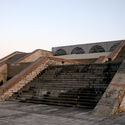
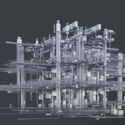
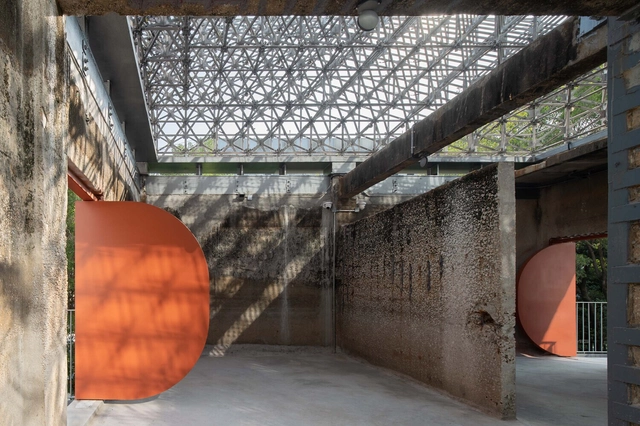
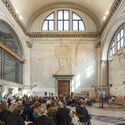
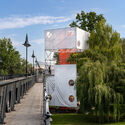
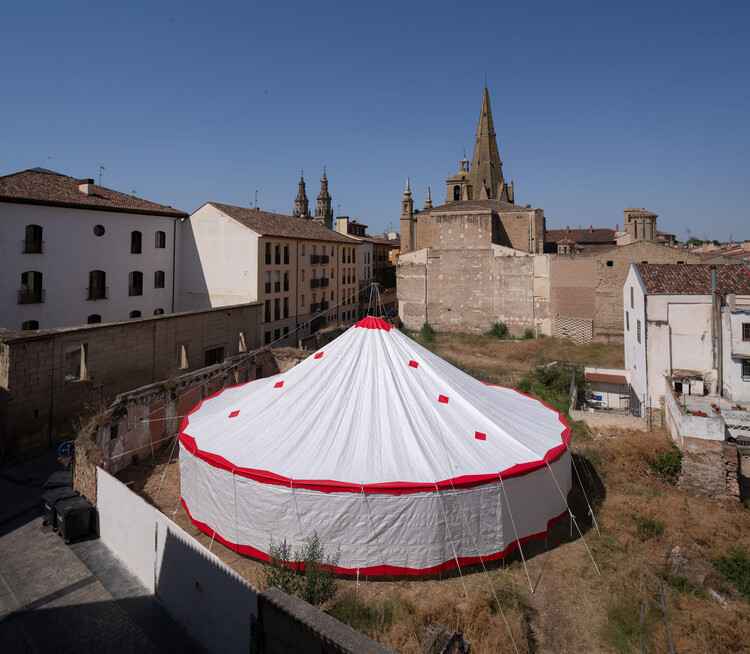
2025 marks the 60th anniversary of Singapore's independence, commemorating its separation from Malaysia on August 9, 1965. The occasion is celebrated in the country's national pavilion at the 19th Venice Architecture Biennale with a multisensory installation that honors Singapore's diversity and reimagines city-making through food, culture, and collective design. Titled RASA–TABULA–SINGAPURA, the installation invites visitors to take a seat at the Table of Superdiversity: an enticing reimagining of city-making and nation-building through the universal act of dining. According to the curatorial team from the Singapore University of Technology and Design (SUTD), the purpose of the installation is to showcase how the convergence of multicultural differences, collective histories, design, and new technology creates opportunities for more inclusive and adaptive urban futures.
Domestic workers in Hong Kong and Singapore are the city's quiet infrastructure. In Hong Kong alone, there are a total of roughly 300,000 domestic workers, serving a portion of the approximate 2.7 million households. Their care labor sustains dual-income family routines: childcare, eldercare, cooking, cleaning, and the everyday logistics that make professional life possible. Yet the people who hold this balance together remain largely invisible in policy—and, crucially, in space.
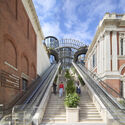
On Sundays in Hong Kong's financial district, that invisibility becomes visible. Elevated walkways and podium forecourts—underused on weekends—turn into ad-hoc commons. With cardboard mats, small tents, towels, food and water, and a music speaker or two, domestic workers assemble places to sit, rest, and socialize. These improvised rooms in the city are often their only chance to exercise spatial agency—something they rarely have in the homes they maintain or in formal public infrastructure. In the absence of sanctioned, serviced places for rest, quieter bridges and passages become practical stand-ins.
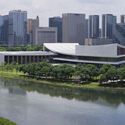
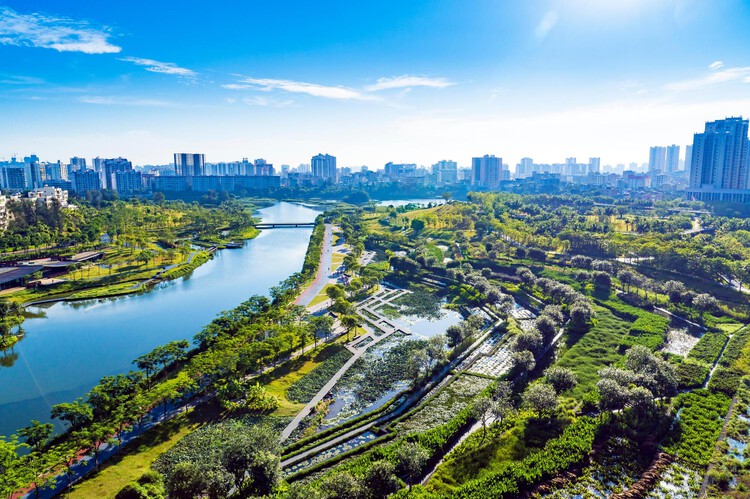
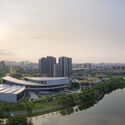
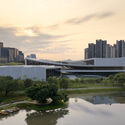
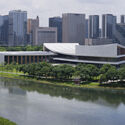
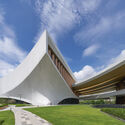
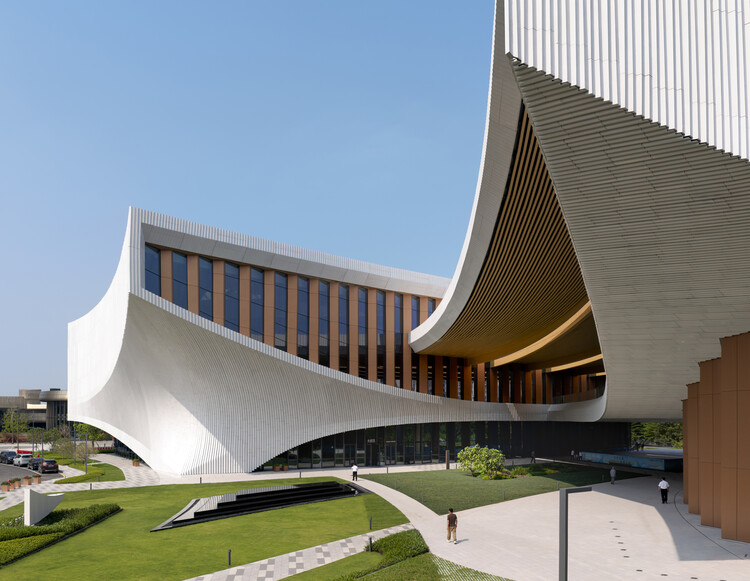
Shenzhen is China's first Special Economic Zone(SEZ), serving as a window for China's Reform and Opening-up and an emerging immigrant city. It has evolved into an influential, modern, and international metropolis, creating the world-renowned "Shenzhen Speed" and earning the reputation of the "City of Design." Architectural design stands as the most intuitive expression of Shenzhen's spirit of integration and innovation. Over the past decade (2015-2025), the development of urban architecture in Shenzhen has closely integrated with its open and inclusive urban character, ecological advantages of being nestled between mountains and the sea, and the local spirit of blending traditional culture with innovative technology, showcasing Shenzhen's unique charm and robust vitality across multiple dimensions.
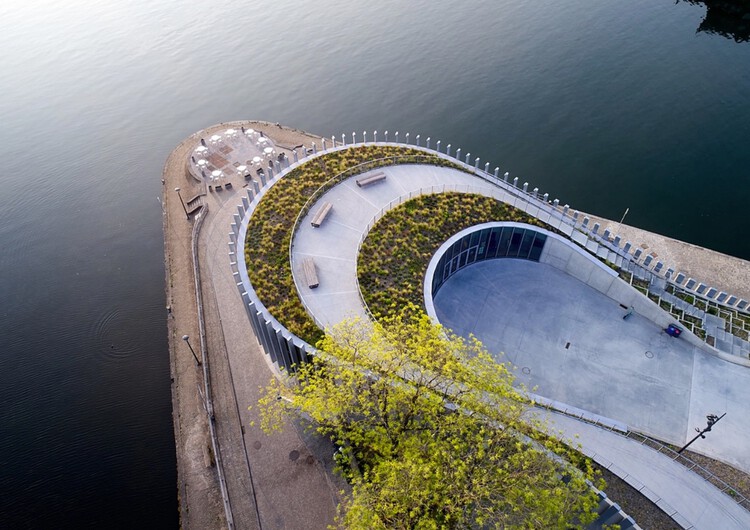
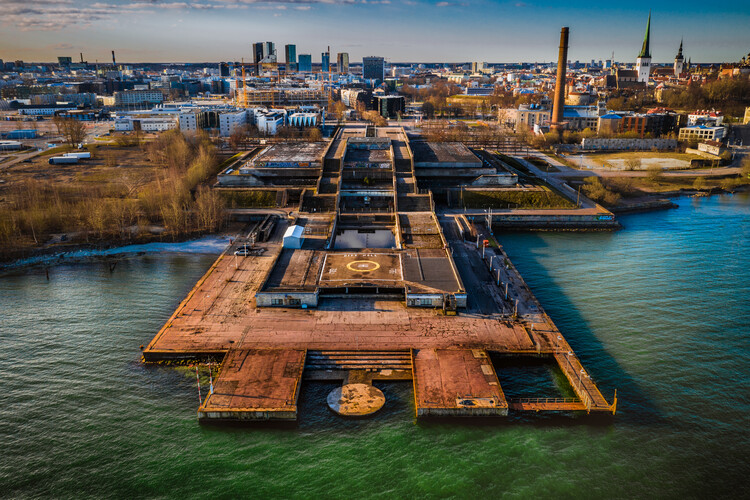
The Tallinn Architecture Biennale (TAB) has been organized by the Estonian Centre for Architecture (ECA) since 2011. Since its founding, it has become Estonia's leading international festival dedicated to architecture and the built environment. The ECA recently announced that the upcoming edition will be curated by Stuudio TÄNA and Mark Aleksander Fischer, winners of the Curatorial Competition for the 8th International Tallinn Architecture Biennale (TAB 2026). Their winning proposal, titled "How Much?", poses the question of what affordability truly means in architecture today. The event, which in previous editions has included exhibitions, lectures, seminars, tours, satellite events, and installations across Tallinn, seeks to open a space for reflection on how architecture and design can be genuinely cost-effective, addressing the broader implications of cost and consumption. TAB 2026 will take place in the Estonian capital from 9 September to 30 November 2026.
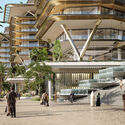
As cities continue to expand upward, the office tower remains one of the most visible symbols of architectural ambition and urban evolution. No longer defined solely by efficiency or corporate image, contemporary workplace architecture is being reimagined as a hybrid ecosystem, one that balances density with daylight, productivity with well-being, and technology with material and spatial integrity. The following unbuilt projects, submitted by the ArchDaily community, reveal how architects across continents are rethinking the typology of the tower, turning verticality into an opportunity for connection, adaptability, and sustainability.
From India's Shivalik Curv and Embassy Zenith, where form and movement are combined to redefine skyline identity, to Dungen in Sweden, a low-rise timber office that mirrors the calm of a forest grove, each project explores how workplaces can become more flexible, humane, and environmentally conscious. In Kyiv, APEX Business Center positions itself as a catalyst for urban vitality, while Jakarta's BNI Tower PIK 2 transforms the corporate tower into a crystalline symbol of growth. In Munich and Ankara, mixed-use concepts like Highrise Hufelandmark and Rhythm Ankara explore the office as part of a broader civic landscape, where work, leisure, and public life intersect.
When architects are still students, a moment often marks a turning point: their first encounter with software. It's not just about learning a tool but discovering a space where ideas transcend physical models, taking shape in a digital environment and beginning a relationship many will carry throughout their careers. What happens next? Software keeps evolving, and with it, the design experience. In recent years, this evolution has accelerated—machine learning, AI, prompts, and integrated workflows have moved from the periphery to the core of design practice, becoming part of the shared language between software and users. As these tools take hold, a key question emerges: How will this reshape our experience of designing architecture in the future?
Rapid urbanization, driven by population growth, is among the powerful megatrends transforming how cities are built. The world is adding a city the size of Madrid every single week — and will do so for decades to come. To meet this demand sustainably, a collaborative, systems-thinking approach to construction is needed.
This week's architectural developments highlighted how design operates as a form of social and culturalinfrastructure, linking care, community, and context across scales. From London's reinterpretation of the almshouse model to the transformation of urban gateways in Phnom Penh and Tirana, architecture reflected a shared interest in spaces that foster connection and adaptability. Parallel to these urban and infrastructural works, new cultural projects in Paris and Hanoi explored how museums and performance spaces can renew public institutions through material experimentation and spatial flexibility.
The Busan Slope Housing project by OMA addresses urban redevelopment on the steep hillsides of Busan, South Korea, drawing on the city's topographical complexity and historical settlement patterns. Developed in collaboration with the BusanArchitecture Festival and the Department of Housing and Architecture, the project explores strategies to rethink hillside neighborhoods while responding to both contemporaryhousing needs and the social and spatial legacies of these areas. Rather than replacing these areas with conventional high-rise estates, OMA envisions a flexible, context-responsive framework that integrates contemporaryhousing typologies with the site's inherited structure.
Oricon Tower project by Eduardo Souto de Moura and OODA. Exterior render. Image Courtesy of Plomp
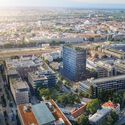
Eduardo Souto de Moura and OODA have unveiled the design of the Oricon Tower, a 180-meter mixed-use skyscraper planned for Tirana, Albania. Located near OODA's recently completed Bond Tower, the project is part of the city's ongoing transformation under the Tirana 2030 Masterplan, which envisions a denser and more connected urban core. The tower will house offices, residences, retail areas, and a hotel, contributing to the city's evolving skyline and serving as a new urban gateway between Tirana's historic center and its expanding western districts.
Montreal, the second largest city in Canada is home to a wide array of heritage residential architecture, most of it dating to the 19th and early 20th-century. These are particularly abundant in some of its central neighborhoods like the Plateau Mont-Royal. Interestingly, their preservation is not accidental; it is the result of decades of advocacy by influential figures who recognized the value of the city's built environment, such as Phyllis Lambert and Blanche Lemco Van Ginkel. Efforts like theirs were instrumental in landmark preservation battles that helped to ensure current municipal support. Today, the city has implemented a set of comprehensive heritage protection laws designed to safeguard the integrity of the city's historic neighborhoods.
It's no exaggeration to say that Renzo Piano is one of the most unanimously respected architects in the world of architecture. With an oeuvre that blends respect for context, lightness and technology to create environmentally conscious and aesthetically pleasing structures, his approach combines advanced materials with traditional techniques. In projects of various scales, the Genoese architect maintains an essential thread: the implementation of passive architectural strategies, highlighting the importance of these methods for sustainability and energy efficiency. This is often made explicit in his sketches, as an initial concern, and clearly comes through in the finished works. Here are some examples of iconic projects developed by his office in recent decades.
Videos
First Prize Winner: Nest. Image Courtesy of Buildner
Buildner has announced the results of its Kinderspace Edition #2 Competition and launched the third annual Kinderspace Edition #3 with an upcoming registration deadline of 26 November 2025. Following its inaugural launch, this annual international competition once again invited architects, designers, and educators to explore new possibilities for early childhood learning environments.
Participants were tasked with envisioning spaces that inspire discovery, foster imagination, and support the emotional and cognitive development of young children. The aim was to move beyond standardized classroom design and propose innovative, flexible, and nature-connected spaces that reflect a deeper understanding of how children interact with their surroundings.
Foster + Partners has completed the Techo International Airport in Phnom Penh, Cambodia, marking a new chapter in the nation's vision for sustainable growth and improved regional connectivity. Situated 20 kilometers south of the city center, the airport's terminal building spans 235,500 square meters and forms the centerpiece of a 24-square-kilometer master plan. Drawing inspiration from Cambodia's vernacular architecture and tropical landscape, the design integrates cultural references and environmental responsiveness to create a contemporary yet contextually rooted gateway for internationaltravel. The first phase, including the head house and northern pier, opened to the public in 2025, while the southern pier is scheduled for completion by 2030.