


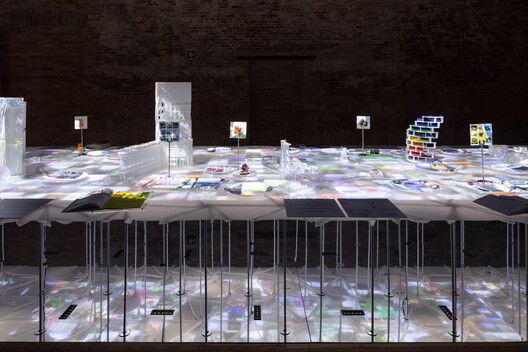
2025 marks the 60th anniversary of Singapore's independence, commemorating its separation from Malaysia on August 9, 1965. The occasion is celebrated in the country's national pavilion at the 19th Venice Architecture Biennale with a multisensory installation that honors Singapore's diversity and reimagines city-making through food, culture, and collective design. Titled RASA–TABULA–SINGAPURA, the installation invites visitors to take a seat at the Table of Superdiversity: an enticing reimagining of city-making and nation-building through the universal act of dining. According to the curatorial team from the Singapore University of Technology and Design (SUTD), the purpose of the installation is to showcase how the convergence of multicultural differences, collective histories, design, and new technology creates opportunities for more inclusive and adaptive urban futures.
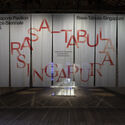
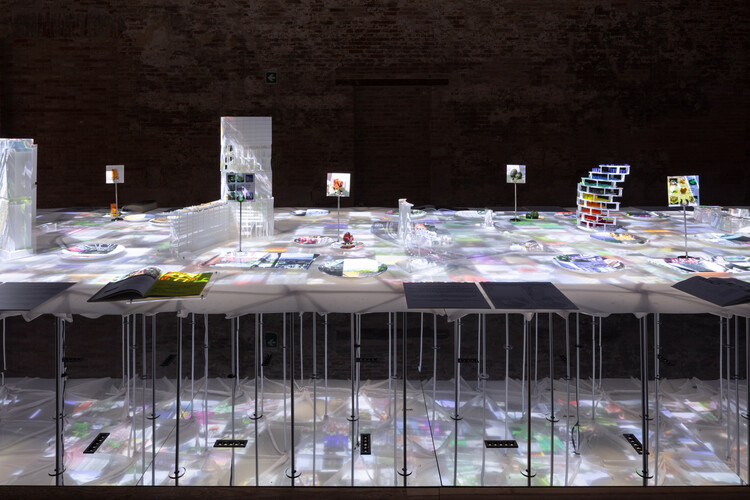
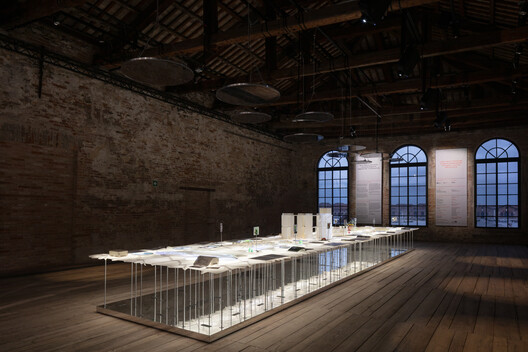
Commissioned by the Urban Redevelopment Authority of Singapore (URA) and the DesignSingapore Council (Dsg), the Singapore Pavilion is organized by the Singapore University of Technology and Design (SUTD). A multidisciplinary team curated the pavilion: Prof. Tai Lee Siang, Prof. Khoo Peng Beng, Prof. Dr. Erwin Viray, Dr. Jason Lim, Asst. Prof. Dr. Immanuel Koh, and Assoc. Prof. Dr. Sam Conrad Joyce. The name of the exhibition reinterprets the Latin notion of tabula rasa (a blank slate) as a multisensory experience. The terms RASA (taste in Malay), TABULA (table in Latin), and SINGAPURA (Lion City in Sanskrit) form a metaphor for Singapore's identity, shaped by centuries of movement, exchange, and reinvention.The Pavilion uses the act of dining as a curatorial lens to explore how architecture, policy, and participatory design intersect in the everyday lives of Singaporeans.
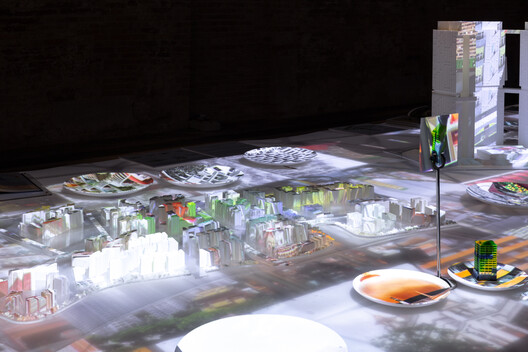
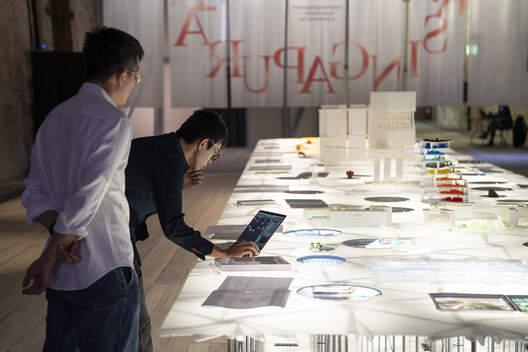
Through a "menu" of architectural and urban planning projects, RASA–TABULA–SINGAPURA offers visitors a "taste" of Singapore by representing key ingredients of its environment. The Pavilion's "tablescape" responds to the theme of Biennale curator Carlo Ratti, Intelligens: Natural. Artificial. Collective., by building on the word "intelligence" and the Latin gens ("people") to illustrate how the convergence of global and local influences, complex data, and myriad flows of people, goods, ideas, and innovations collectively shape the country's identity and the way we think about the built environment. The design of the installation extends the dining metaphor, presenting a variety of courses and discourses to be consumed, contemplated, and discussed within a setting that reinterprets the social ritual of sharing and enjoying food together. The curatorial team plays with the tropes of dining, the table, chairs, and chandelier, subverting conventional aesthetics.
Related Article
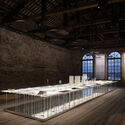
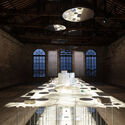
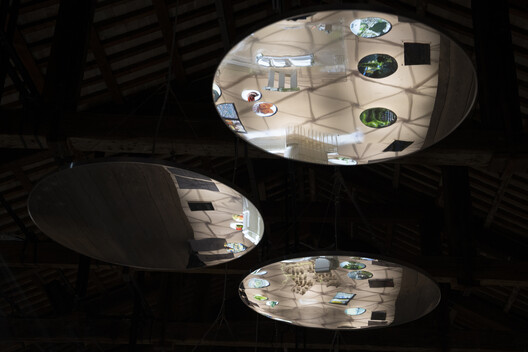
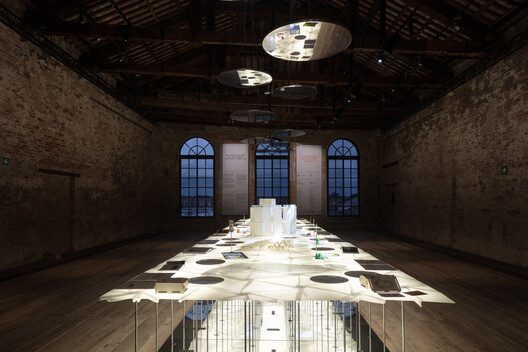
One Month Until Closing: 10 Must-See National Pavilions at the 2025 Venice Architecture BiennaleAt the heart of the installation is a monumental cloth sculpted into the form of a conventional table. Measuring 12 by 2.4 meters, it is inspired by the material experiments of Frei Otto and Heinz Isler, shaped by applying forces at points of support that produce a wrinkling pattern settling into equilibrium. Surrounding the table are six Neural Monobloc chairs, products of applied machine intelligence, that act as counterpoints to the human craftsmanship embodied in the table. Above, mirrored disc lights reinterpret the chandelier, reflecting the table below and amplifying the space between. Suspended cameras and projectors observe and respond to the table scene. Within this sensory system, the table becomes an active participant in the performance of dining. Embedded sensors register visitors' presence, prompting shifts in lighting, projection, and atmosphere.
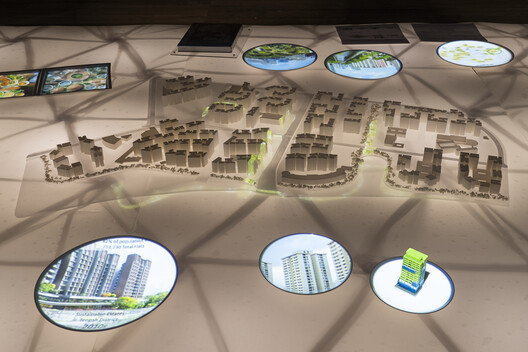
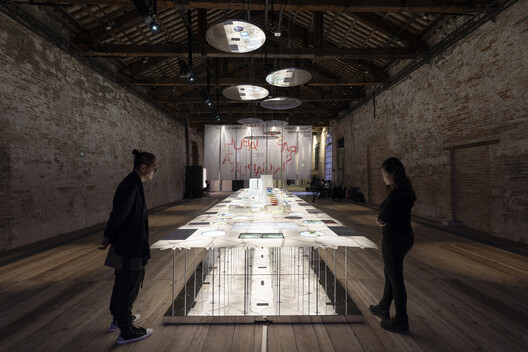
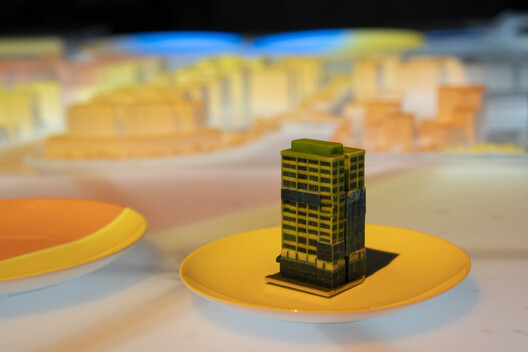
The exhibition's "tablescape" is organized around "main courses" and "side dishes." Main courses highlight key developments and districts, while side dishes showcase innovations in design, policy, and community-building. The objective is to transform the table into a living forum where visitors can explore the design, data, and diversity that define Singapore's cityscape. The seven "main courses" offer "a taste" of how Singapore plans for life at different scales: Singapore's statutory land use plan for medium-term development over the next 10 to 15 years; the Pinnacle@Duxton public housing development, which exemplifies high-density vertical living; Tengah, the green new town; Marina Bay, a 360-hectare district on reclaimed land; Punggol Digital District (PDD), Singapore's first enterprise district; Changi Airport; and CapitaSpring, a 280-meter-tall tropical high-rise integrating over 80,000 plants into its fabric. "Side dishes" complement the main exhibition models, presented in various forms ranging from AI-generated videos to demonstrations of prototype systems, offering a layered perspective of Singapore's current urban planning approach.
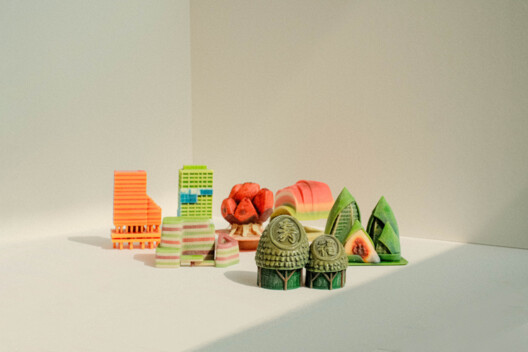
Among the objects on the table are Neural Palate Kueh, a reinterpretation of traditional Singaporean kuehs (bite-sized snacks or desserts) inspired by architectural form, 3D-printed, and placed in dialogue with existing Singapore buildings. Traditional kuehs are edible cultural artifacts and material records of ritual, memory, and geometry, not unlike buildings. The project thus becomes a playful fusion of nostalgic food heritage and the familiar built environment, mediated by artificial intelligence. Using multimodal large language models, the process begins with AI's deconstruction of each kueh along three axes: conceptual underpinnings (rituals of eating and cultural symbolism), design operatives (geometric form and culinary construction), and materiality (ingredients and textures). These insights serve as design principles for speculative architecture mirroring existing built forms. Beyond formal resemblance, a series of accompanying AI-generated videos reinterprets footage of local dining experiences, each one displayed in sync beside its AI-generated, dining-inspired architectural planning sequence.
Through thoughtful urban planning and design, we create environments that inspire and support how we live, work, play, and connect. In a land-scarce city like Singapore, we need to balance density, diversity, and design. Planning policies, cultural values, environmental priorities, and community needs are considered and integrated to create and shape spaces that are inclusive, resilient, and adaptable. RASA-TABULA-SINGAPURA offers a sensory map of that approach, inviting visitors to experience the thoughtful processes that have shaped our nation's transformation in the last 60 years. It is not just a showcase of what we have built, but also a reflection of how we imagine—and continue to reimagine— our future — Yap Lay Bee, Co-Commissioner of the Singapore Pavilion and Group Director (Architecture & Urban Design) of URA
The 19th Venice Architecture Biennale will run until November 23, 2025, marking the largest edition to date. Other national pavilions explore themes such as the relationship between land and food, weather and agricultural infrastructure, ancestral techniques, and the land itself. The Republic of Kosovo presents a sensorial exploration of the nation's agricultural landscapes and fieldwork; the Philippines Pavilion challenges conventional architectural paradigms by shifting the focus from structure to soil as a living force with agency, history, and power; the Mexican Pavilion explores the ecological potential of chinampas, an ancestral floating agricultural system; and the Lebanese Pavilion examines ecocide and environmental healing, transforming the space into a fictional institution dedicated to confronting environmental devastation and proposing strategies for ecological restoration.


