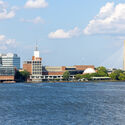
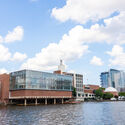
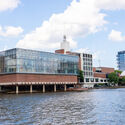
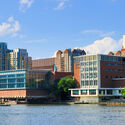
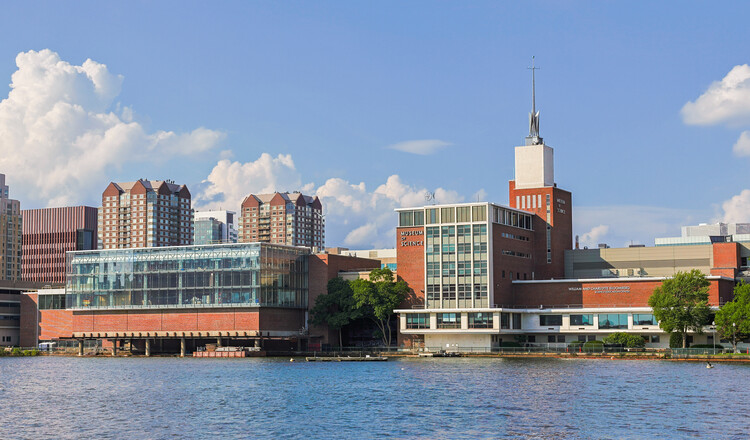
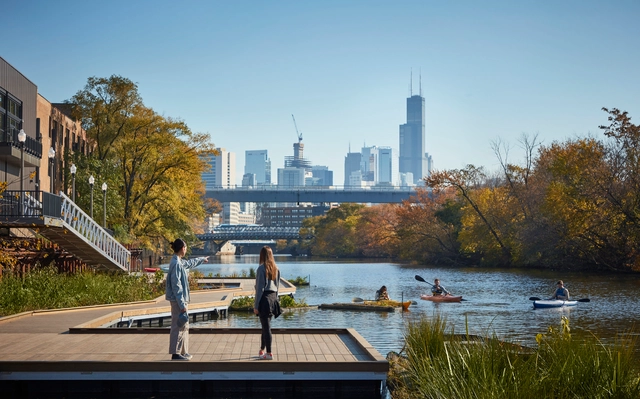
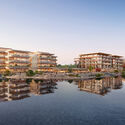
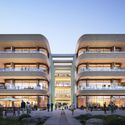
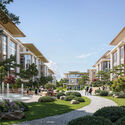
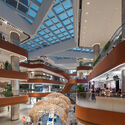
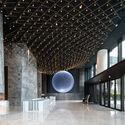
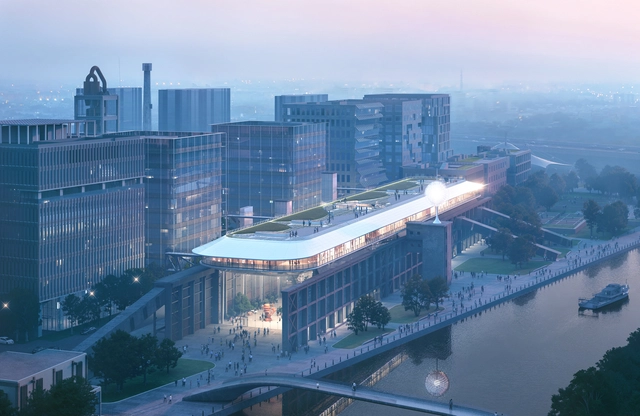
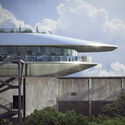
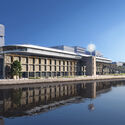
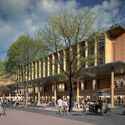
The construction of the William and Charlotte Bloomberg Public Science Common, the new venue at Boston's Museum of Science, one of the United States' oldest science institutions, is nearing completion. The 929 m² (10,000-square-foot) building, designed by William Rawn Associates, Architects, Inc., is expected to open to the public on October 10, 2026, followed by a celebratory event on October 28. The new glazed civic venue overlooks the Charles River with views of the Boston skyline, and features movable walls and retractable seating to shift between functions and programs. The space is designed to support public dialogue around the sciences, using immersive media, production, and livestreaming technology to reach audiences beyond the city.
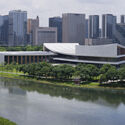
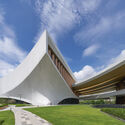
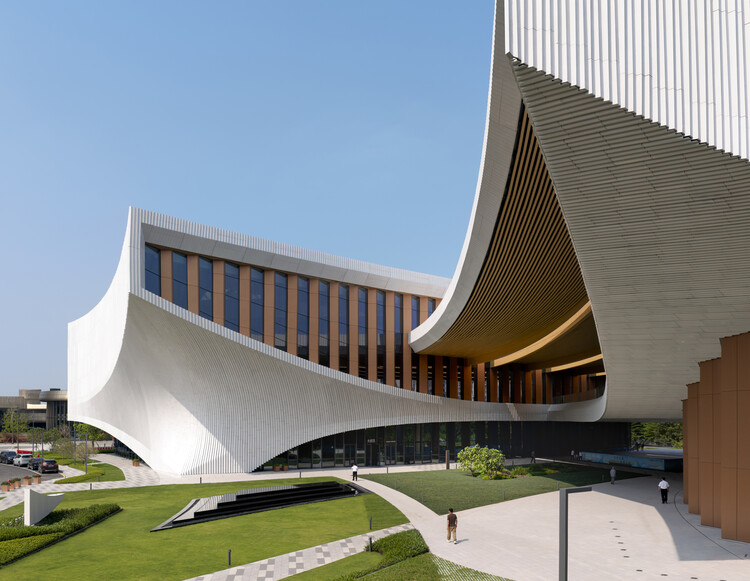
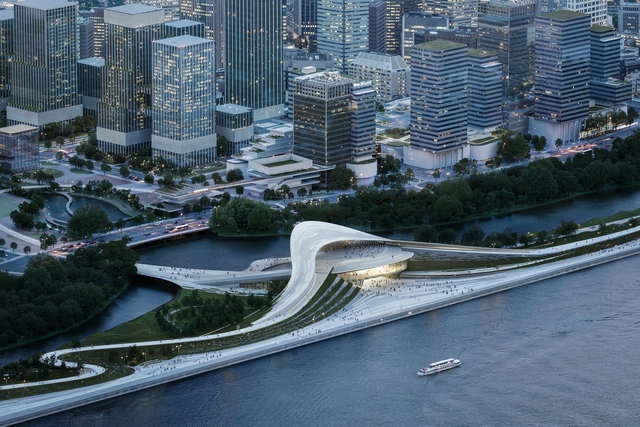
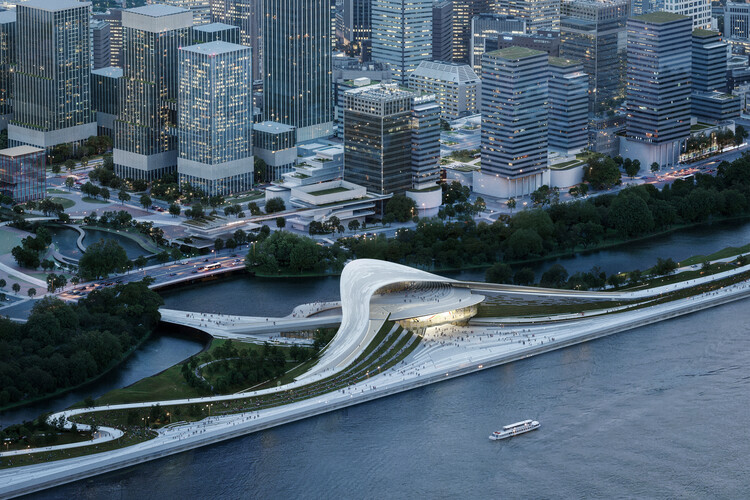
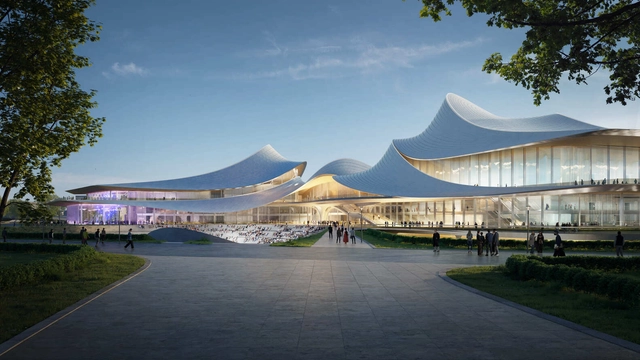
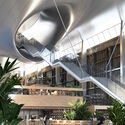
The Songshan Lake Exhibition and Performance Center, designed by ZHA in collaboration with the Beijing Institute of Architectural Design, is a new cultural and sports facility in Dongguan City, China. It's located in the city's High-Tech Industrial Development Zone, a technological innovation and science city established in 2001 as a hub for research, development, and high-tech manufacturing. Covering a total floor area of 45,000 square metres, the new cultural centre was designed to be a civic and cultural anchor for the Guangdong-Hong Kong-Macao Greater Bay Area (GBA). The construction of the riverside building started in 2021, and the complex was officially opened on March 30, 2026.
Qiantang Bay Art Museum design by Snøhetta. Render. Image Courtesy of Snøhetta
Snøhetta has been selected to design the Qiantang Bay Art Museum, a new cultural landmark within the Qiantang Bay Future Headquarters development in Xiaoshan District, Hangzhou, China. Conceived in collaboration with the Architectural Design & Research Institute of Zhejiang University Co., Ltd. and Buro Happold, the project encompasses architecture, landscape architecture, and interior design over 18,000 square meters. The museum will form part of Hangzhou's expanding downtown area along the Qiantang River, serving as an important destination for art, culture, and public life.
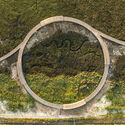
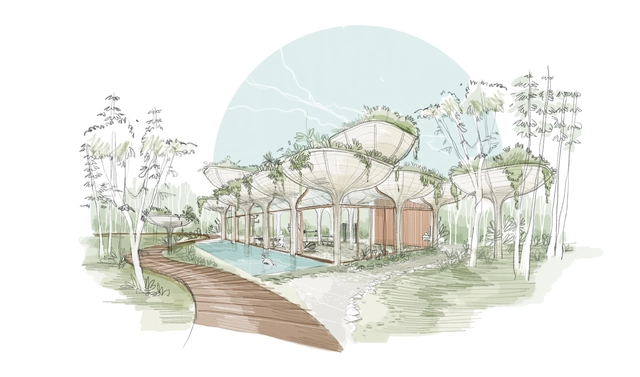
At a time when architectural practice is increasingly tied to climate and context, the boundary between the built and the natural has become a critical site of experimentation. This month's unbuilt selection gathers eight conceptual projects that work with the edges of landscape. In Ramia by João Teles Atelier, the architecture draws directly from the metaphor of a seed breaking through soil, using wood, concrete, and water to create a sensorial route through Tulum's ecology. Meanwhile, Mobius Pier by X Atelier loops gently over the river edge, becoming both infrastructure and observation point. Similarly, Il mare degli Umbri approaches the threshold differently, restoring the historic shoreline of Lake Trasimeno and reintroducing local wetland ecologies. Each project in this collection reflects a unique position: some treat the edge as a spatial experience, others as a regulatory line, and others still as a point of cultural or ecological return.
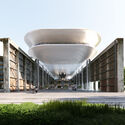
Zaha Hadid Architects has been selected to design the Zhejiang Shaoxing Shangyu District Cao'e River Culture and Art Center, located within a newly planned cultural district in Shaoxing's Shangyu area in Zhejiang province, China. The project is situated along the Cao'e River, a location with historical significance, and is envisioned to serve as a key cultural and artistic space for both the local community and visitors. Its design seeks to integrate contemporary functionality with the architectural and cultural traditions of the region.
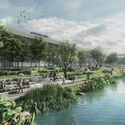
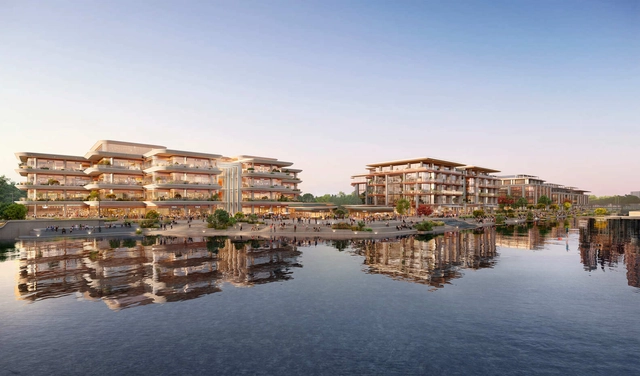
Construction has just begun on a new mixed-use project within the Sanlin Riverside development in Shanghai, designed by Foster + Partners. A recent groundbreaking ceremony marked the start of work on the site, which is envisioned to serve as a significant addition to the larger area. The development is designed to include modern office spaces in the northern section, with retail facilities and additional workspaces situated in the south. These components are connected by landscaped plazas, gardens, courtyards, and a park designed to host community markets, festivals, and waterfront activities. The site will also feature a colonnade along the river, aiming to appeal as a community gathering space.
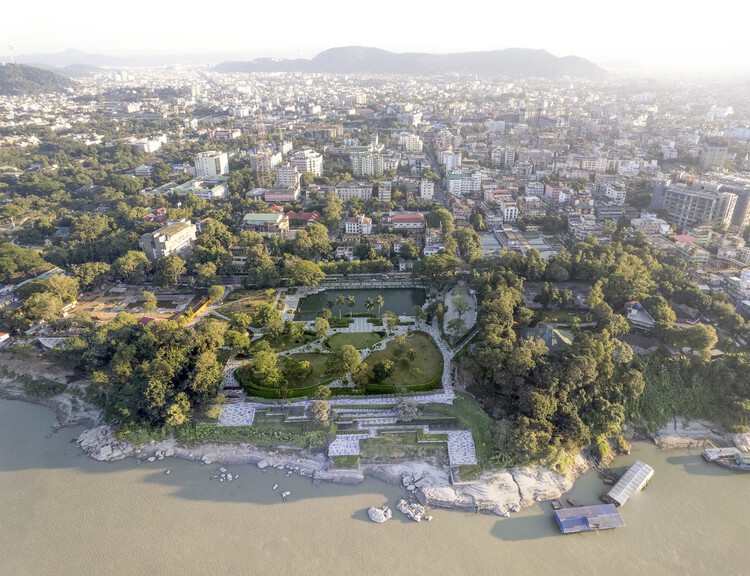
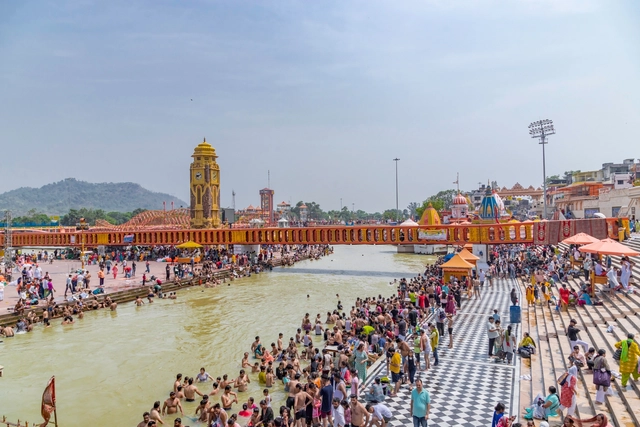
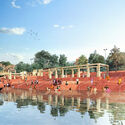
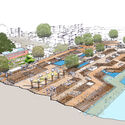
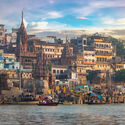
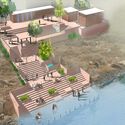
Ancient Indian civilizations once thrived along the banks of the country's many rivers, solidifying a connection between water and culture that endures to the present. Rivers have been integral to India's diverse communities, serving as essential resources for daily life and spiritual practice. Historically, these water bodies experienced an entrenched sense of custodianship; being cared for collectively by the communities that depended on them. Today, responsibility for the rivers shifts between the hands of multiple stakeholders, calling for a joint endeavor that acknowledges their cultural significance.
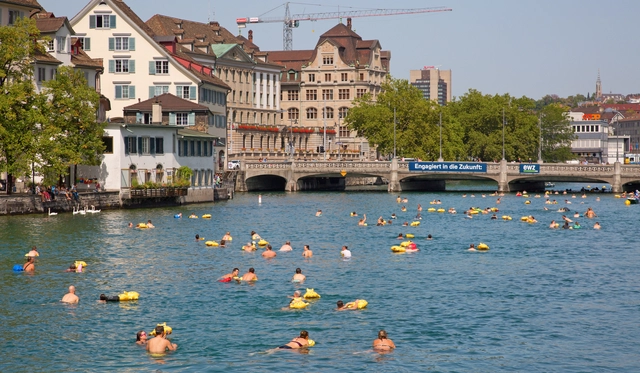
Throughout history, rivers played a crucial role in the social structures of cities. Along riverbanks, communities often congregated for socializing, swimming, and fishing. Swimming in rivers was a popular summertime activity enjoyed by people of all ages. Whether it was the Thames in London or the Seine in Paris, rivers were bustling with swimmers; integrated into urban lifestyles.
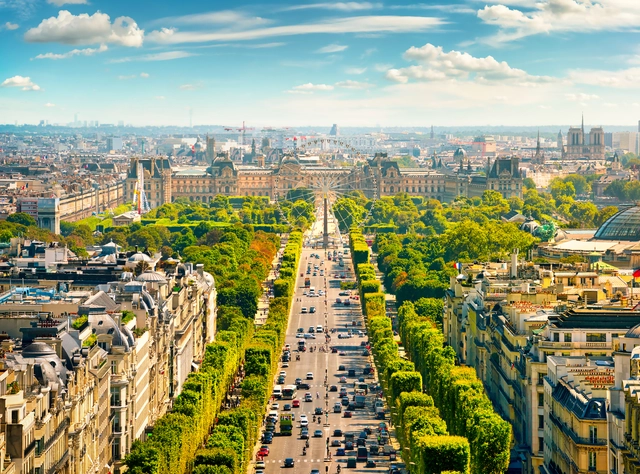
via Shutterstock | givaga | View on Avenue des Champs Elysses
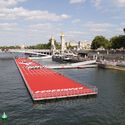
As the countdown to the XXXIII Olympic Games in Paris ticks away, the city is making preparations that will completely shift its urban landscape and infrastructure. Set to be the largest event ever organized in France, the games will start on 26 July and continue till 11 August 2024. With only 200 days left, the Paris City Council has approved around 43 new initiatives acting as a catalyst for the city's transformation – aiming for a greener, healthier, and mobile Paris. From cleaning the Seine River to building a cycling lane, activating a transit line, and banning non-essential city traffic, the heart of the French capital is on a mission against time to revitalize its historic urban core.
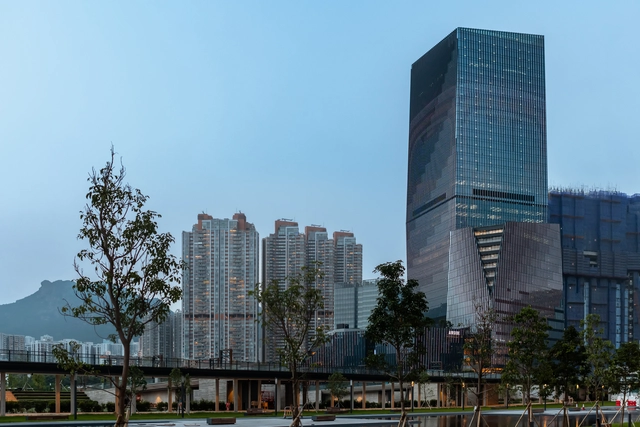
Built on a former airport site in Hong Kong, Snøhetta Asia has unveiled its latest project in Hong Kong, Airside. This mixed-use landmark was actually Snøhetta’s first project in the country and serves as a central hub in a redeveloped business district. The project boasts ample public areas and gardens, including outdoor plazas and rooftop gardens that may be used for events, dining, urban farming, and leisure. As the first project in Hong Kong to obtain five of the highest green building certifications, this development integrates several sustainable practices.
MAD Architects has unveiled the project for the renovation of the "Wanmicang" warehouse on the southside of the Shanghai Zhangjiang CementFactory. The building is set to be transformed into a multifunctional public waterfront space for culture, creativity, and commerce. The project maintains the character of the former industrial site but introduces a new addition in the form of an ark-like metal 'floating' volume, creating a stark contrast between the old and new structures. The project is scheduled for completion by 2026.
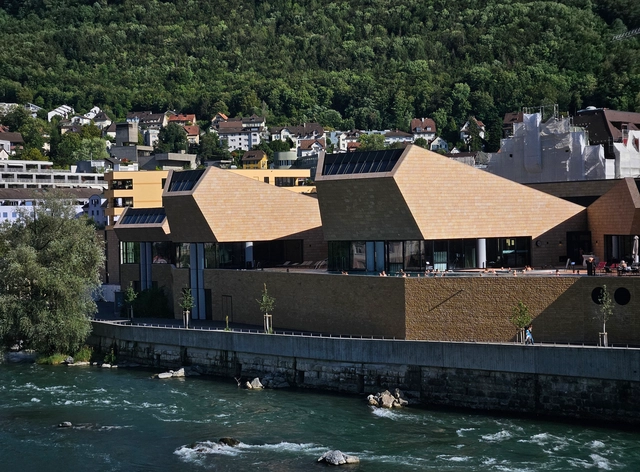
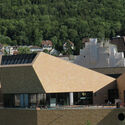
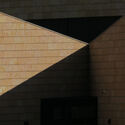
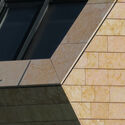
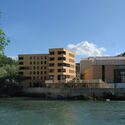
Fortyseven is a novel thermal wellness spa designed by the architect Mario Botta, nestled alongside the Limmat River in Baden, Switzerland. Baden, renowned for its rich cultural and wellness offerings, boasts a spa heritage that extends over thousands of years. The Fortyseven Thermal Wellness Spa has revitalized this historical legacy by presenting wellness culture through a modern lens. Designed by Mario Botta, this project offers an immersive encounter for the body, mind, and soul. The essence of the site and its design is captured by the lens of architectural photographer Paul Clemence, in his latest series.
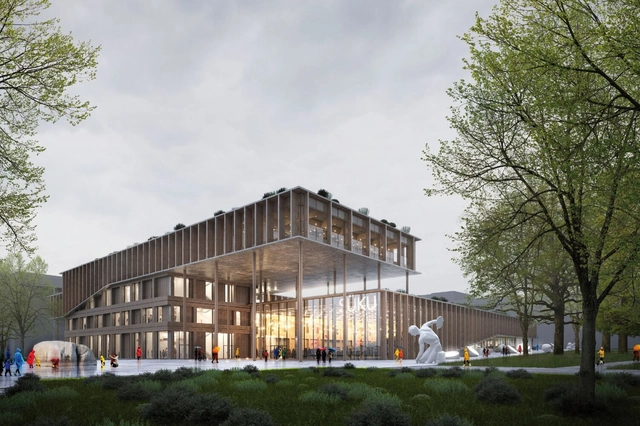
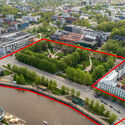
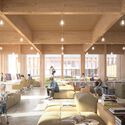
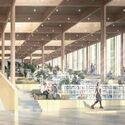
Estonian studio OÜ Kolm Pluss Üks won the international architecture competition for the Tartu Cultural Center. Selected out of a total of 107 proposals, the winning project titled “Paabel” is set to become the cultural heart of the city center, capturing the competition's main goal and developing an outdoor space solution. Kadarik Tüür Arhitektid OÜ took the second position for their design of “Tarte Tatin”, while the third place went to Denmark-based architectural studio Atelier Lorentzen Langkilde Aps.