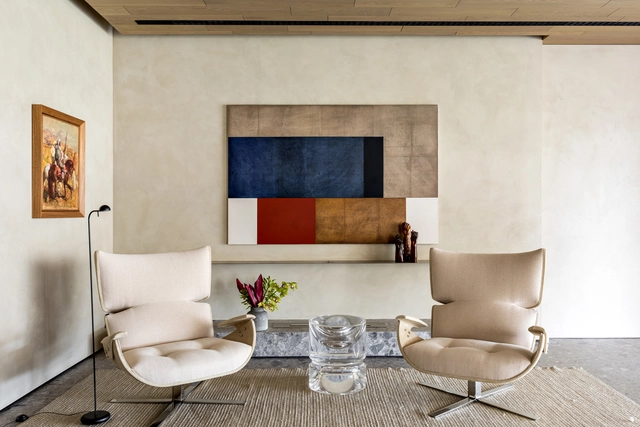
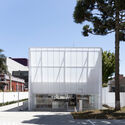
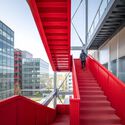
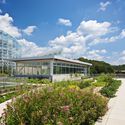
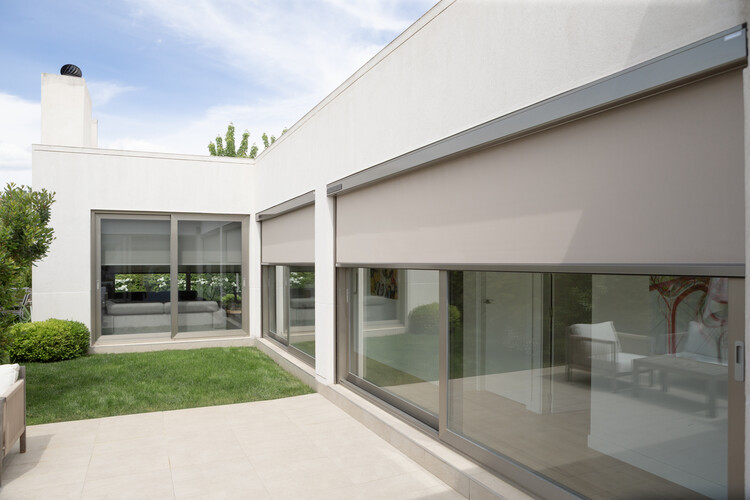
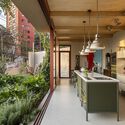
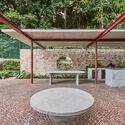
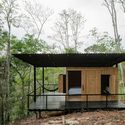
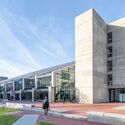
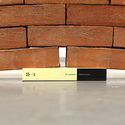
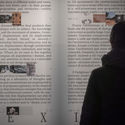
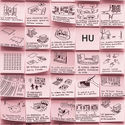
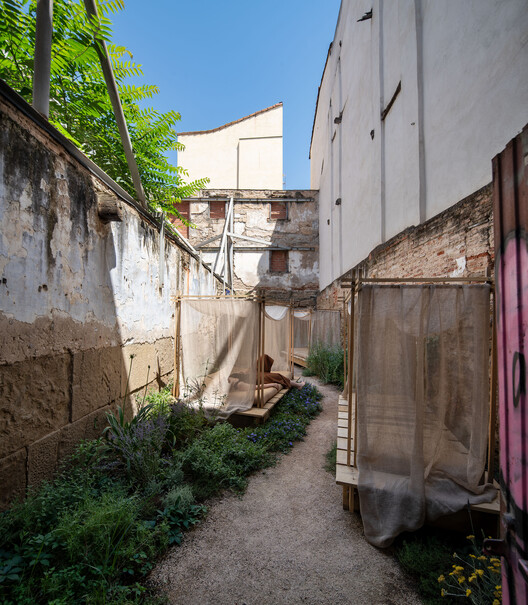
The determination of focal points in the environments offers dynamism, personality and activates internal and external environments from the enhancement of decorative objects or construction elements. Here are some examples for you to understand what it is and how to use it in the design and decoration of your home.
The built environment has historically served humans as a mechanism of environmental control. Through our intellectual capacities and ability to organize, we have used buildings to actively influence and terraform the immediate context in which they are inserted, often treating geography, water, and ecosystems as resources to be extracted and managed. However, more and more, architecture is transitioning from exploiting physical and biological matter to actively collaborating with it. This shift demands that architects explore how buildings and their materials grow, transform, decay, and persist beyond human timelines. This thinking also serves as a starting point for the profession to reflect on how it influences the natural world, as well as the non-human species around it, creating networks and connections between humans, buildings, living organisms, and natural environments.
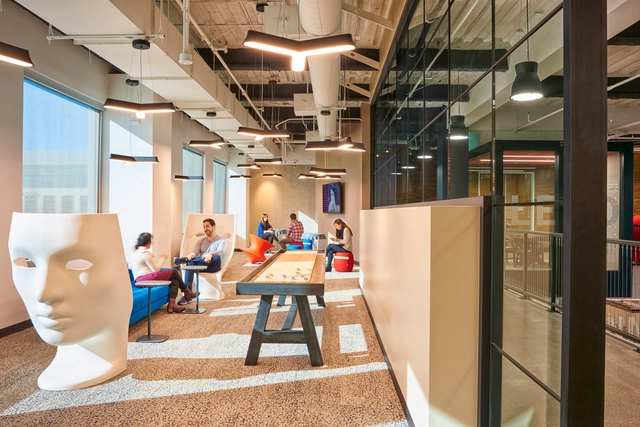
Sede da Symantec. Certificado por WELL. Imagem Cortesia de Little
Na teoria, a sensação de bem-estar pode ser definida como um estado de satisfação plena das exigências do corpo e do espírito, evocando sentimentos de segurança, conforto e tranquilidade. Na prática, a sensação de bem-estar pode ser fomentada por diferentes estratégias, desde hábitos individuais até a forma como o ambiente é construído.
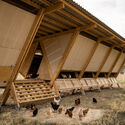
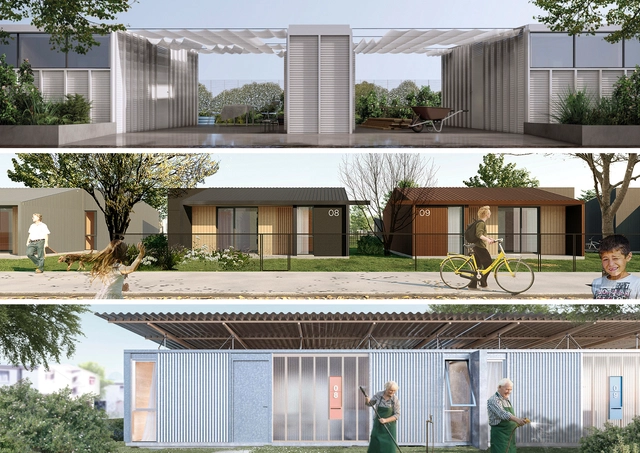
Organized by the Ministry of Housing and Territorial Planning of Uruguay (MVOT) and MEVIR, with the support of the Inter-American Development Bank (BID), the International Architecture Competition "Wood: Innovating Social Interest Architecture" involved submitting proposals for new types of wooden housing extensions. These could be either paired or standalone single-level structures, to be built by MEVIR in a demonstration set of 20 social interest houses within the town of Tranqueras, Rivera Department, Uruguay.
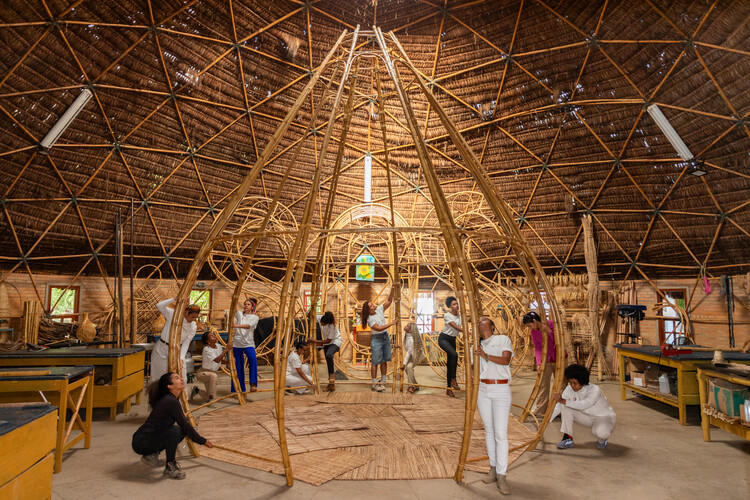
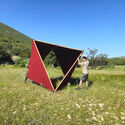
A bamboo structure rises as a space of convergence between technique, ancestry, and collective practice. OCO is the first work by Cambará Instituto, an organization that grew out of the Arquitetas Negras Project. Conceived during an artistic residency at Cerbambu, in Ravena (Minas Gerais), with support from re:arc institute, the project brought together ten black women architects who, over seven days of immersion in July this year, worked alongside master builder Lúcio Ventania to explore the constructive and symbolic potential of bamboo. The process culminated in the presentation of the work at the 14th International Architecture Biennial of São Paulo.
The experience sought to reconnect architectural practice with knowledges rooted in the body and the earth. The process encompassed every stage of production—from selecting and cutting the bamboo to curing and assembling it—resulting in a structure six meters high and five meters in diameter. Its design draws inspiration from the xossas of Benin and features straw from the African country at its top. The installation was also “clothed” with 220,000 beads, known as Our Lady’s Tears, handcrafted by forty elderly women in situations of social vulnerability who live in the same region where the residency took place—strengthening both community and economic bonds.
Taking a deeper look at the interplay of light and shadow in architecture seems to be a recurring topic on the agenda of many professionals in the field. Spaces of light and darkness are conceived to enhance circulation and spatial directionality, as well as to highlight the colors, textures, and forms of specific architectural elements. That said, the impact of natural light on building facades reveals the need to develop strategies that support energy savings, improve the thermal and visual comfort of interior spaces, and promote the reduction of carbon emissions. Considering light as another material in architecture, in what ways could its power contribute to the architectural experience?
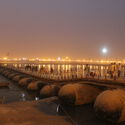
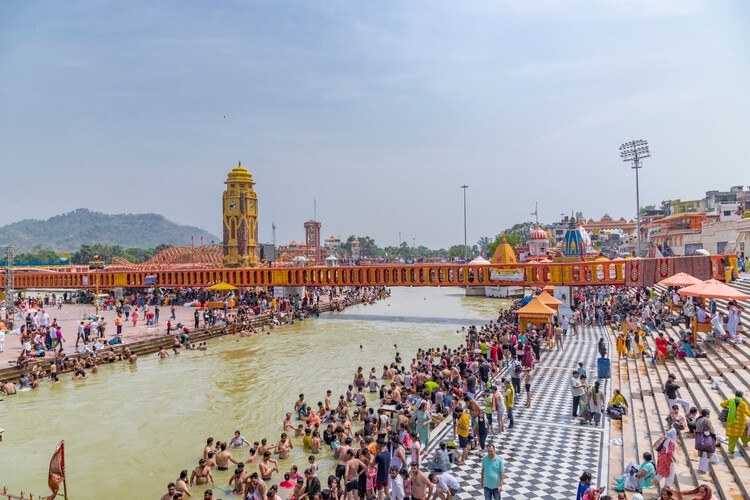
At the helm of architectural discourse on sacred architecture, attention almost always settles on the monument. Temples, mosques, monasteries, and churches dominate architectural histories, design criticism, and photography alike, becoming the physical symbols through which faith is understood. For millions of pilgrims across India, the most consequential architectural experience begins long before the shrine comes into view. It unfolds across mountain roads, river ghats, shaded streets, temporary camps, queue systems, bridges, water kiosks, medical stations, and countless ordinary pieces of infrastructure through which pilgrimage actually takes place. The architectural work of pilgrimage may lie less in the shrine itself than in the environments that allow millions of people to reach it.
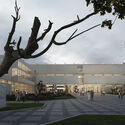
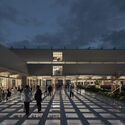
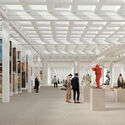
Turin's Civic Gallery of Modern and Contemporary Art. Image Courtesy of MVRDV
MVRDV and Balance Architettura have unveiled their proposal for the renovation of the Civic Gallery of Modern and Contemporary Art (GAM) in Turin, Italy, following their selection through a public competition in December 2025. The project seeks to restore the spatial qualities of the museum's 1959 building while introducing new exhibition strategies, publicly accessible storage, and flexible display systems designed to accommodate evolving curatorial needs. Conceived as both an architectural restoration and an institutional transformation, the proposal aims to reconnect the museum with the surrounding city while adapting it to contemporary approaches to exhibition-making and public engagement. The project is supported by Fondazione Torino Musei and funded by Fondazione Compagnia di San Paolo, and the construction is expected to begin during the second half of 2027.
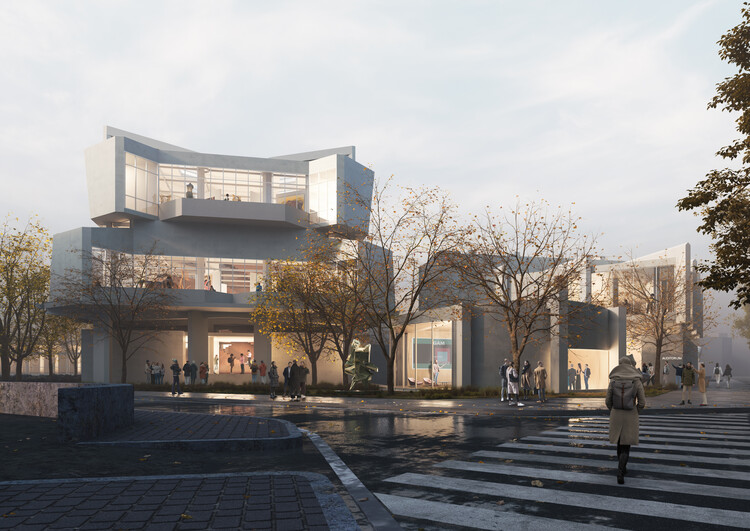
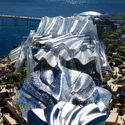
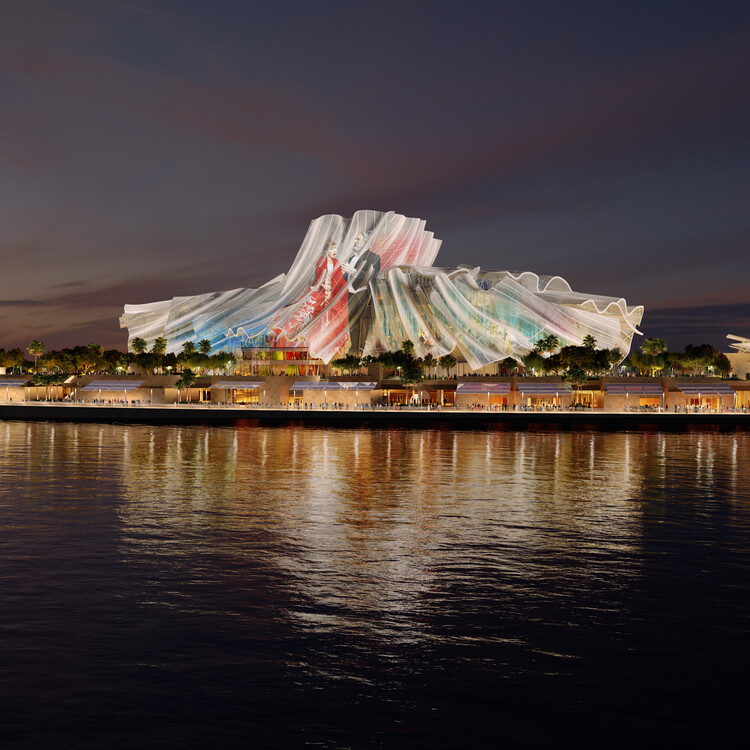
Dar al Funoon Abu Dhabi project by Frank Gehry. Image Courtesy of Department of Culture and Tourism Abu Dhabi
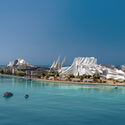
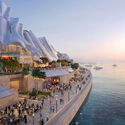
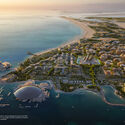
Dar al Funoon Abu Dhabi, the new performing arts institution designed by the late architect Frank Gehry, is among his final works. Translating to "House of the Arts," the landmark building, commissioned by Abu Dhabi's Department of Culture and Tourism, was designed as a global hub for the performing arts and is expected to open in 2030. The project adds to Gehry's work in the emirate, which also includes the upcoming Guggenheim Abu Dhabi, and follows the city's designation as a UNESCO Creative City of Music in 2021.
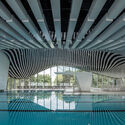
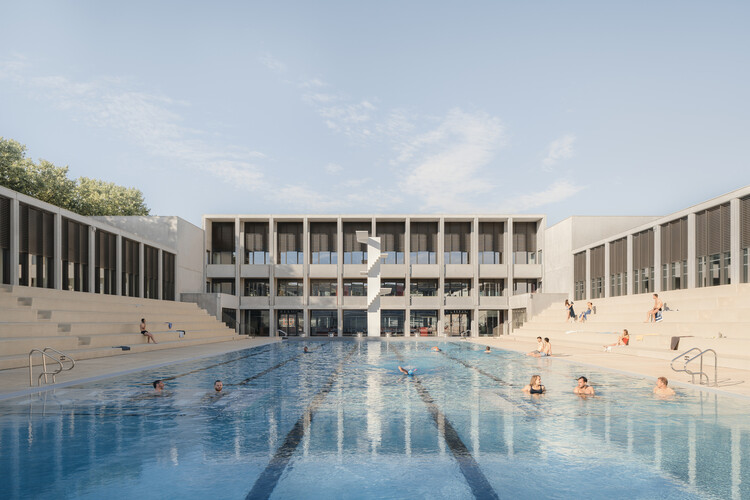
Almost certainly, everyone has their own ritual when entering a pool. There are those who dive in without hesitation, those who start with their toes, those who swim for sport, and those who submerge themselves for pure pleasure. Private or shared, intense or contemplative, every experience with water takes place within an environment carefully constructed to receive it.
Architecture and water are of opposing natures. While one delimits and contains, the other insists on spreading, and it is from this tension between solid and liquid that aquatic centers emerge. In these buildings, the presence of water transforms everything around it. Light fragments into shimmering reflections, sound acquires a distinct reverberation, and temperature and humidity define the atmosphere of the spaces, while materials and structural systems are constantly put to the test. Yet their uniqueness is not merely technical.
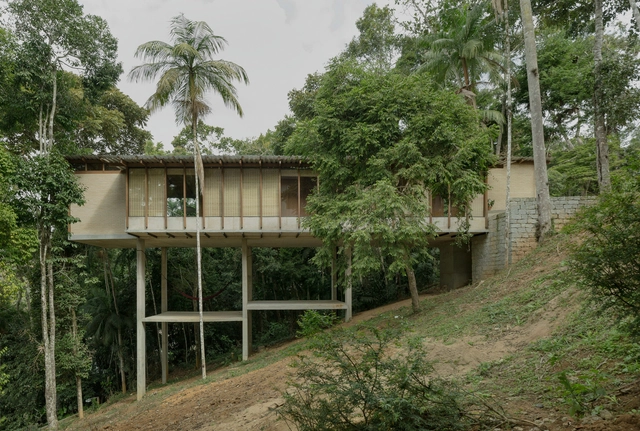
A cada ano, a equipe de Curadoria de Projetos do ArchDaily rememora a vasta gama de obras publicadas ao longo desse período, apresentando retrospectivas que permitem não apenas identificar tendências e variações na produção arquitetônica, mas também reconhecer de que forma impactam a nossa audiência. No ArchDaily Brasil, a seleção anual de melhores casas – que ano após ano, segue permanecendo como nossa categoria de projeto mais popular – representa uma amostra das variadas soluções, estratégias, técnicas e materiais encontrados na arquitetura residencial dos países de língua portuguesa.
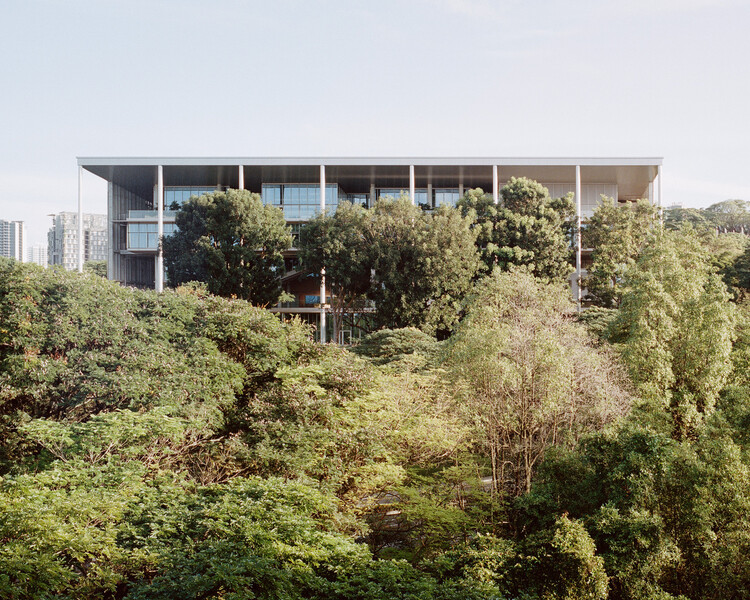
NUS School of Design & Environment / Serie Architects + Multiply Architects + Surbana Jurong. Image Courtesy of Serie Architects + Multiply Architects + Surbana Jurong
This article is part of our new Opinion section, a format for argument-driven essays on critical questions shaping our field.
Before architecture students become authors of space, they are subjected to one. For years, they work inside a building that teaches without announcing itself as a teacher. It organizes their exhaustion, their ambition, their visibility, their solitude, their friendships, their sense of scale, and their relationship to judgment. Long before a student can articulate a position on architecture, the school has already offered one in its implicit built environment.
This is not to suggest that buildings determine architects. The influence is slower and less complete than that. A school building operates more like a hidden curriculum: a spatial discipline that works alongside faculty, syllabi, institutional culture, and student life. It teaches through access and obstruction, program adjacencies, daylight exposures, and scale. It produces habits of attention before it produces explicit beliefs.
During the last decade we have witnessed how the profession has diversified to work from different trenches, yes out of curiosity, but mainly due to economic factors related to the economic and environmental crises that have hit in recent years. I think that one of the great myths that is lived in architecture universities is to think that, when they graduate, that entire generation will dedicate themselves to building great buildings. The reality is that it is not like that and over the years, it is very common that according to the specific interests of each person, the opportunities are diversified to make them participate in other areas that make up the architecture in an integral way.
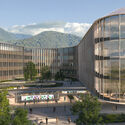
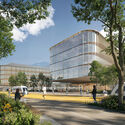
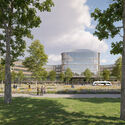
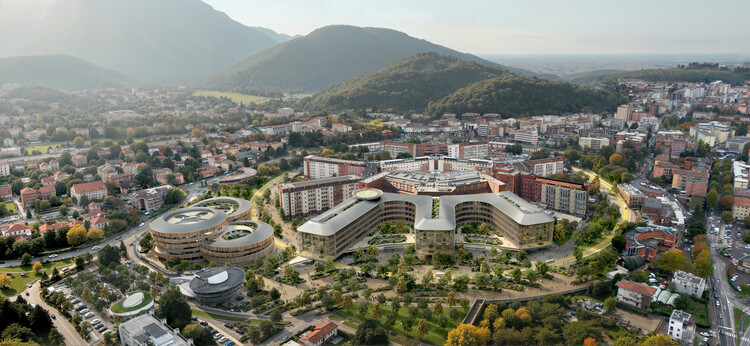
The project developed by CRA-Carlo Ratti Associati, Park Associati, Politecnica Building for Humans, Openfabric, DOTDOTDOT, Studio Mattioli, and Eckersley O'Callaghan has been selected to design the new Main Hospital and Children's Hospital in Brescia, Italy. The international competition mandate was to redevelop an existing hospital, preserving and extending a radial plan conceived by engineer Angelo Bordoni in the early twentieth century. The existing healthcare complex, Spedali Civili di Brescia, follows a hexagonal masterplan and radial layout that informs the new design for the premises. The geometry is reinterpreted to update the campus for future models of care, drawing a new CareRing around it that connects people, nature, and healthcare through the principles of One Health, the idea that human health, environmental health, and social wellbeing are inseparable.
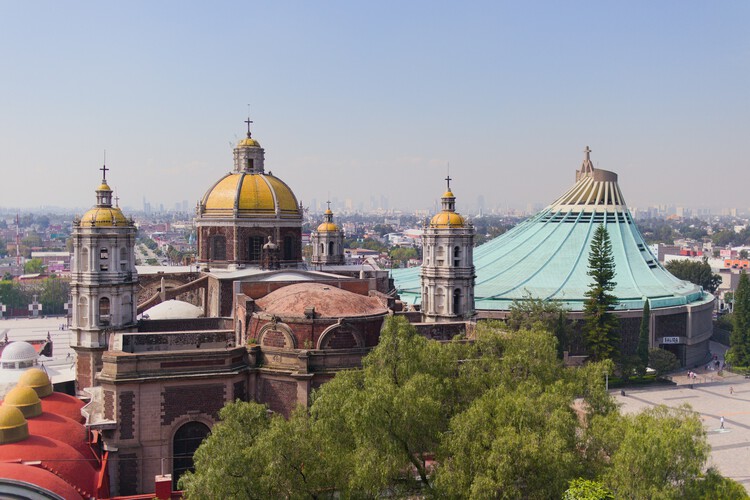
Mexico City. Image by Eduardo Enriquez, via Unsplash
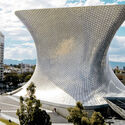
Mexico City is a sprawling metropolis of layered temporalities, where architecture operates as a continuous negotiation between deep-seated history and intense urban mutation. Built over the aquatic traces of Tenochtitlan, the city's fabric is an ongoing dialogue between eras: the monumental scale of the Pre-Hispanic Templo Mayor and the Viceroyalty architecture of the Catedral Metropolitana coexist with the modern and contemporary impulses that define its skyline. This dense juxtaposition creates a unique urban canvas where sacred geography, colonial imposition, and 20th-century ambition intersect.
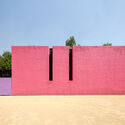
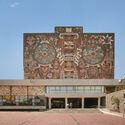
The mid-century marked a definitive era of experimentation, forging a Mexican Modernism that masterfully synthesized international structural rationalism with local identity and materiality. This synthesis is epitomized by the sweeping, plastic integration of art and architecture at the Ciudad Universitaria, the structural poetry of Félix Candela's hyper-parabolic shells, and the raw, monumental brutalism of Teodoro González de León and Abraham Zabludovsky. Parallel to this, the intimate, introspective mastery of Luis Barragán and Juan O'Gorman redefined domestic space, experimenting with light, vernacular color, and tectonic honesty to create spaces of profound spatial stillness.
Recent events highlighted the many ways architecture responds to changing environmental, social, and cultural conditions. Major earthquakes in Venezuela, Japan, and Northern California renewed attention to the role of planning, infrastructure, and building practices in shaping resilience to natural hazards. As these questions continue to inform the built environment, the opening of the 2026 UIA World Congress of Architects in Barcelona brought together practitioners and researchers to discuss climate, housing, public space, and the future of the profession. Recent project announcements, preservation initiatives, completed works, and new design tools further reflected the range of approaches shaping architectural practice today, from heritage conservation and adaptive reuse to environmental performance and long-term planning.