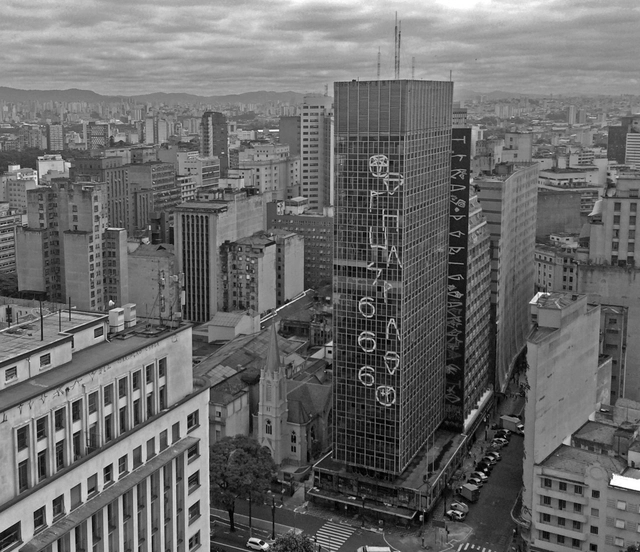
The 12th São Paulo International Architecture Biennial, on view at the Centro Cultural São Paulo until December 8, includes in its program the screening of two documentaries and a performance that reveal the struggle for housing in São Paulo, focusing particularly on the history and tragic fate of the Wilton Paes de Almeida Building, which collapsed after a fire on May 1, 2018.
The results of the international student competition to design the Czech Republic Embassy in Addis Ababa, the capital of Ethiopia, organized through a partnership between the Ministry of Foreign Affairs of the Czech Republic and the Department of Architecture at CTU (Czech Technical University) in Prague, were recently announced. The Brazilian team, comprising Augusto Longarine, Luiz Sakata, and Teo Butenas Santos from FAU USP, was named a finalist among 281 proposals from 38 different countries.
Cortesia de Bruno Cabral Arquitetura, RGB Estudio e Jakelyne Martins Arquitetura
The firms Bruno Cabral Arquitetura, RGB Estudio and Jakelyne Martins Arquitetura were awarded second place in the national competition for the new headquarters of the Association of Engineers and Architects of Sorocaba (AEAS). Discover the proposal below, accompanied by the project description.
In celebration of Ibirapuera Park's 65th anniversary, the Fundação Bienal de São Paulo invites the public to explore the Ciccillo Matarazzo Pavilion, designed by Oscar Niemeyer, through the Open Pavilion.
The United Nations Human Settlements Programme (UN-Habitat) has opened applications for events taking place this October across Brazil, organized by institutions interested in participating in Circuito Urbano 2019, under the theme "Innovative and Inclusive Cities."
Japan House SP, the City of São Paulo, and FAB LAB LIVRE SP have partnered to launch the competition New Perspectives, New Scales: Your Design for Dog Houses, which will select fifteen architecture and design projects for dog houses.
The initiative complements the exhibition currently on display, Architecture for Dogs, which brought dog house designs developed by Kazuyo Sejima, Toyo Ito, Sou Fujimoto, and FGMF, among other firms, to Japan House São Paulo.
Portuguese firm MASS lab, led by architects Diogo Rocha, Duarte Fontes, and Lourenço Rodrigues, has been announced as the winner of the Ideas Competition for the Former Monte Pedral Barracks, organized by the Porto City Council, Portugal. The winning design combines a new network of public spaces with a variety of housing typologies, forming a sort of archipelago in the middle of the city: a set of urban islands that structure the urban fabric, where the relationship of proximity prioritizes the space in-between—a space that will be filled by time and people.
Developed by researchers from the Federal Universities of Rio de Janeiro (UFRJ) and Bahia (UFBA), Cronologia do Pensamento Urbanísticois an online platform active since 2003 that brings together historical events, projects, key facts, and publications related to the history of urbanism in Brazil and worldwide.
The magazine Solidarity Housing Production: An International Overview was launched on Monday, November 25, at the opening of the National Seminar on Technical Assistance for Social Interest Housing. The publication compiles the main contributions from the event of the same name, held in July 2018. Organized by architects and urban planners Luciana Ximenes and Thais Velasco, the magazine was produced by CAU/RJ and the Observatório das Metrópoles (Ippur/UFRJ).
The second edition of the award, a partnership between the Tomie Ohtake Institute and Leroy Merlin, has extended its registration deadline. Until October 15, university students from any field can submit design projects related to product, furniture, fashion, interiors, landscape, web, graphic, and service design, among others, under the theme CIRCULAR.
The gradual transition from CAD to BIM in architecture firms worldwide, and particularly in Brazil, brings numerous benefits to the design process, from reducing the working hours spent on each project to facilitating the coordination of different disciplines.
However, to fully leverage these benefits, it is essential to have access to BIM families that meet specific design requirements. To simplify the search for this content, the online platform Família BIM offers over 800 families for free download upon registering on the website.
The Federal Senate has made a free e-book on the design of sustainable public buildings available on its official website. Written by Mário Hermes Stanziona Viggiano, the book presents a cultural, economic, environmental, and architectural approach to the conception and design of public-use buildings.
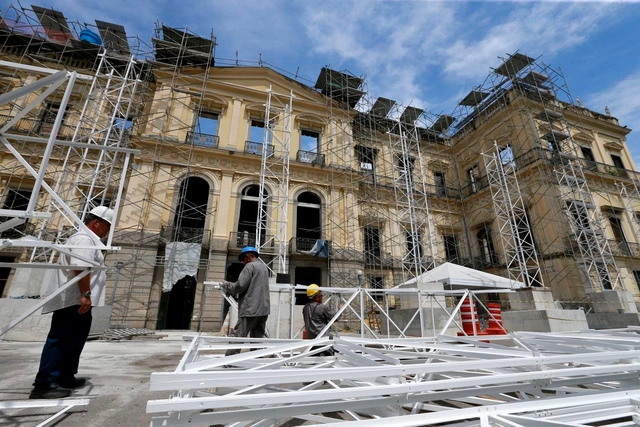
A short circuit in the museum's air conditioning unit caused the fire. Photo: Tania Rego/Agência Brasil
One year ago, on September 2, 2018, the National Museum in Rio de Janeiro, one of Latin America's most important cultural institutions, was engulfed by flames. A fire caused by a short circuit in the building's electrical wiring destroyed at least 80% of its collection, which focused on natural history and anthropology. One year later, efforts to recover artifacts and clear the debris suggest that some galleries could reopen as early as 2022, three years before the full restoration is completed in 2025.
Rio de Janeiro - Samba schools from the Special Group perform at the Marquês de Sapucaí Sambadrome on the second day of parades (Fernando Frazão/Agência Brasil) - [CC BY 3.0 br (https://creativecommons.org/licenses/by/3.0/br/deed.en)]
The Unidos da Tijuca samba school has announced the theme for its 2020 Carnival parade at Marquês de Sapucaí: "Architecture and Urbanism." The choice was inspired by Rio de Janeiro's designation as the first World Capital of Architecture by UNESCO, as well as the city's selection to host the World Congress of Architects, an event organized by the International Union of Architects (UIA) that is expected to attract around 15,000 professionals and will take place in July next year.
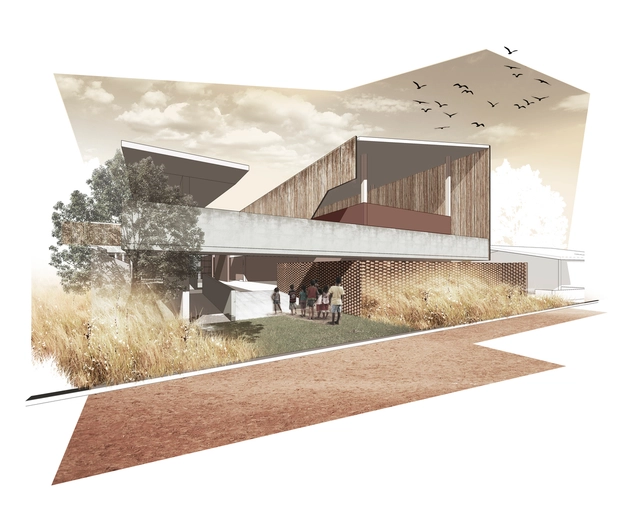
Vista a partir da rua em direção ao acesso de alunos. Image Cortesia de Coletivo de Arquitetos + Gustavo Fontes + C.U.A.C
The Pedra Furada School project responds to a demand from an institute operating in Sergipe with the goal of developing integrated solutions between technology and human processes, prioritizing education, public health, and creative economies. The school's mission is to improve educational and economic indicators in the village of Pedra Furada and its surroundings.
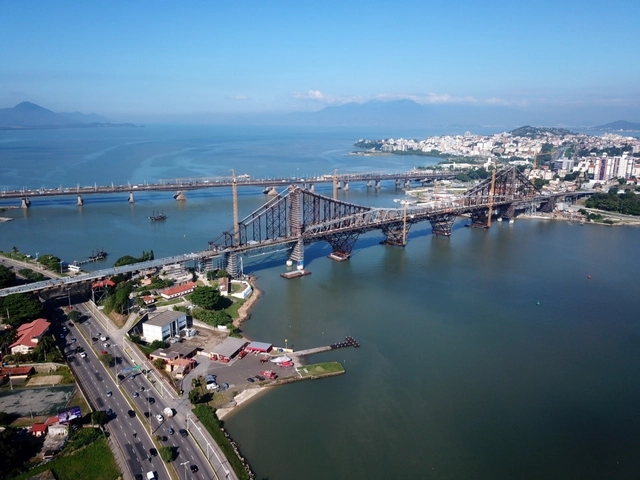
Ponte Hercílio Luz. Image Cortesia de Prefeitura Municipal de Florianópolis / Divulgação
The City of Florianópolis and the Santa Catarina State Government plan to inaugurate the first phase of the urban redevelopment project for the famous Hercílio Luz Bridge and its surroundings by the end of the year. Named Ponte Viva: Hercílio Luz Para as Pessoas (Living Bridge: Hercílio Luz for People), the project encompasses not only the restructuring of the iconic landmark as road infrastructure, but also its activation for other uses, such as sports, leisure, and culture.
The Reasons Offsite, an exhibition on modular and prefabricated architecture, was created in Portugal by the studio SUMMARY and is traveling around the world. The exhibition has been shown in Albania (at Tirana Architecture Week, in September 2018) and in the United States (at the Salt Gallery of the Boston Society of Architects, in March 2019). It now has two more editions confirmed for this year, in Edinburgh and Weimar, the latter as part of the Bauhaus centenary celebrations.
https://www.archdaily.com/1121352/the-reasons-offsite-an-immersive-virtual-reality-experience-developed-by-summaryPedro Vada
For the fourth time, we are giving our readers the responsibility of recognizing and awarding the projects that have had the greatest impact on the profession through the ArchDaily Brasil Building of the Year 2020 Award. By voting, you become part of an unbiased network of jurors recognizing the most relevant projects of the past year.
Over the next three weeks, the collective intelligence of our readers will filter through hundreds of projects from Portuguese-speaking countries—Brazil, Portugal, Mozambique, Angola, Guinea-Bissau, East Timor, Equatorial Guinea, Macau, Cape Verde, and São Tomé and Príncipe—published in 2019, selecting the best built works in Portuguese-speaking territories.
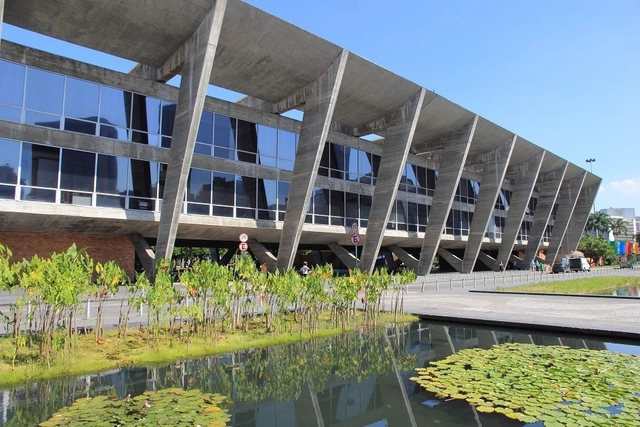
Museum of Modern Art. Designed by Rio de Janeiro architect Affonso Eduardo Reidy. Image courtesy of CAU/BR
Rio is the World Capital of Architecture. The title was awarded by the United Nations Educational, Scientific and Cultural Organization (UNESCO) on Friday morning, January 18, during a ceremony held at the organization's headquarters in Paris, and stems from the hosting of the World Congress of Architects in Rio in 2020. This is the first time a city has received this designation—established last year through a partnership between UNESCO and the International Union of Architects (UIA).
On Wednesday, October 9, the 21st Brazilian Congress of Architects (CBA) began. Organized by the Institute of Architects of Brazil (IAB) since 1945, this year's edition runs through October 12 in Porto Alegre, inviting professionals and the public to discuss its theme, Space and Democracy, through events held across various locations in the city's Historic Center.
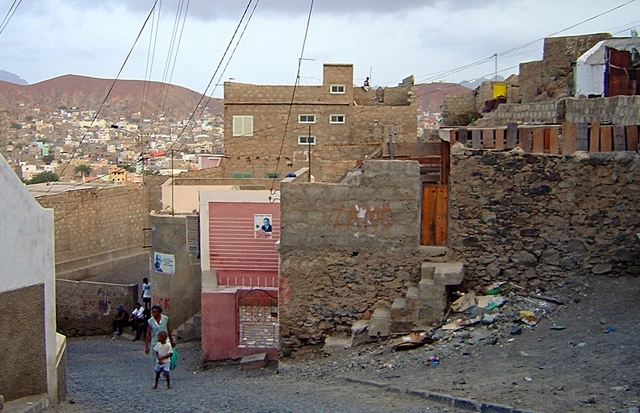
Slums in Mindelo, the city in Cape Verde that will receive the urbanization project. Photo: Francisco Santos
Architect Manoel Ribeiro, author of several projects for Rio de Janeiro's Favela-Bairro favela-upgrading program, was invited by the government of Cape Verde to develop a pilot plan for informal settlements in the country. The project aims to overcome Cape Verde's urban, social, and economic challenges and will be developed in the city of Mindelo, the main urban center on São Vicente Island.
The Brazilian delegation from the Special Secretariat for Culture of the Ministry of Citizenship and the National Institute of Historic and Artistic Heritage (Iphan) on a mission to Portugal has brought updates regarding Cultural Heritage. In May 2019, the European country will host an exchange mission with Brazilian city managers, mayors, and tourism trade representatives. The goal is to study benchmarks in Portuguese Interpretation Centers to bring models to the 13 Brazilian cities that host World Heritage cultural sites.
Conceived by Tatiane Gonzalez from Ateliê Digital Analógico, "Incerteza Invisível" is a large-scale technological urban intervention in the form of projection mapping, created by an all-female group.


.jpg?1549372143&format=webp&width=640&height=580)




.jpg?1563299864&format=webp&width=640&height=580)


.jpg?1570815954&format=webp&width=640&height=580)