1. ArchDaily
  2. Marina Tabassum

Marina Tabassum: The Latest Architecture and News

Lina Ghotmeh Named to TIME100 Next 2025 as One of the World’s Most Influential Rising Stars

French-Lebanese architect Lina Ghotmeh has been recognized on the TIME100 Next 2025 list, an annual ranking of emerging leaders and innovators across disciplines. Known for her sensitive approach to context and materiality, Ghotmeh has built an international portfolio that bridges tradition and modernity. In her TIME profile, written by Danish architect Bjarke Ingels, Ghotmeh is praised for combining historical awareness with forward-looking experimentation. The acknowledgment positions her as the only architect on this year's list, highlighting the continued presence of design voices in a ranking that typically spans entertainment, politics, science, and business.

Lina Ghotmeh Named to TIME100 Next 2025 as One of the World’s Most Influential Rising Stars - Image 1 of 4Lina Ghotmeh Named to TIME100 Next 2025 as One of the World’s Most Influential Rising Stars - Image 2 of 4Lina Ghotmeh Named to TIME100 Next 2025 as One of the World’s Most Influential Rising Stars - Image 3 of 4Lina Ghotmeh Named to TIME100 Next 2025 as One of the World’s Most Influential Rising Stars - Image 4 of 4Lina Ghotmeh Named to TIME100 Next 2025 as One of the World’s Most Influential Rising Stars - More Images+ 11

“Our Message This Time Was Optimism”: In Conversation with Farrokh Derakhshani, Director of the Aga Khan Award for Architecture

Today, September 2, the seven winners of the 16th Cycle (2023–2025) of the Aga Khan Award for Architecture were announced, following on-site reviews of the 19 shortlisted projects revealed in June. Established in 1977, the Award seeks to identify and encourage building concepts that respond to the physical, social, and economic needs of communities with a significant Muslim presence, while also addressing their cultural aspirations. To understand the vision behind this cycle's winners, ArchDaily's Editor-in-Chief, Christele Harrouk, spoke with Farrokh Derakhshani, who has been with the award for over four decades. He described the initiative as "a curated message to the world," a message that evolves with the times.

“Our Message This Time Was Optimism”: In Conversation with Farrokh Derakhshani, Director of the Aga Khan Award for Architecture - Imagen 1 de 4“Our Message This Time Was Optimism”: In Conversation with Farrokh Derakhshani, Director of the Aga Khan Award for Architecture - Imagen 2 de 4“Our Message This Time Was Optimism”: In Conversation with Farrokh Derakhshani, Director of the Aga Khan Award for Architecture - Imagen 3 de 4“Our Message This Time Was Optimism”: In Conversation with Farrokh Derakhshani, Director of the Aga Khan Award for Architecture - Imagen 4 de 4“Our Message This Time Was Optimism”: In Conversation with Farrokh Derakhshani, Director of the Aga Khan Award for Architecture - More Images+ 4

Graham Foundation Reveals 2025 Grants for 39 Organizations Worldwide

The Graham Foundation for Advanced Studies in the Fine Arts has announced $573,300 in grants to 39 organizations worldwide. Chosen from more than 200 submissions, the 2025 awards support a broad range of initiatives, including exhibitions, installations, publications, podcasts, student-led journals, international architecture events, and public programs that contribute to advancing architectural discourse and design experimentation. Over nearly seven decades, the Graham Foundation has provided more than $45 million in direct support to over 5,200 projects. With the addition of the 2025 grantees, the Foundation aims to continue to strengthen its international network of individuals and organizations advancing architectural ideas and public engagement around the world.

Graham Foundation Reveals 2025 Grants for 39 Organizations Worldwide - Image 6 of 4Graham Foundation Reveals 2025 Grants for 39 Organizations Worldwide - Image 7 of 4Graham Foundation Reveals 2025 Grants for 39 Organizations Worldwide - Image 3 of 4Graham Foundation Reveals 2025 Grants for 39 Organizations Worldwide - Image 10 of 4Graham Foundation Reveals 2025 Grants for 39 Organizations Worldwide - More Images+ 9

Aga Khan Award for Architecture 2025 Announces 19 Shortlisted Projects from 15 Countries

The Aga Khan Award for Architecture (AKAA) has announced the 19 shortlisted projects for its 2025 cycle. Selected from a pool of 369 nominations, these projects will compete for a share of the USD 1 million prize, one of the most significant awards in the field. The shortlist was determined by an independent Master Jury composed of nine members: Azra Akšamija, Noura Al Sayeh-Holtrop, Lucia Allais, David Basulto, Yvonne Farrell, Kabage Karanja, Yacouba Konaté, Hassan Radoine, and Mun Summ Wong. The Jury will meet later this summer to review on-site evaluations and select the final recipients of the 16th Award Cycle (2023–2025).

Aga Khan Award for Architecture 2025 Announces 19 Shortlisted Projects from 15 Countries - Imagen 1 de 4Aga Khan Award for Architecture 2025 Announces 19 Shortlisted Projects from 15 Countries - Imagen 2 de 4Aga Khan Award for Architecture 2025 Announces 19 Shortlisted Projects from 15 Countries - Imagen 3 de 4Aga Khan Award for Architecture 2025 Announces 19 Shortlisted Projects from 15 Countries - Imagen 4 de 4Aga Khan Award for Architecture 2025 Announces 19 Shortlisted Projects from 15 Countries - More Images+ 16

Do We Still Need Architecture Awards? Highlights from the "Beyond the Prize" Discussion Forum in Venice, Italy

During the opening week of the 19th Venice Architecture Biennale, a consortium of six major architecture awards, including the Aga Khan Award for Architecture, the Holcim Foundation Awards, the EUmies Awards, the Mies Crown Hall Americas Prize, the OBEL Award, and the Ammodo Architecture Award, convened at TBA21–Academy's Ocean Space for a critical discussion titled "Beyond the Prize." This forum aimed to reflect on the role, relevance, and future potential of architecture awards amidst pressing social and environmental challenges. ArchDaily attended the public event and took the opportunity to ask the participants: What would the field of architecture look like if we stopped organizing architecture awards?

Do We Still Need Architecture Awards? Highlights from the "Beyond the Prize" Discussion Forum in Venice, Italy - Imagem 1 de 4Do We Still Need Architecture Awards? Highlights from the "Beyond the Prize" Discussion Forum in Venice, Italy - Imagem 2 de 4Do We Still Need Architecture Awards? Highlights from the "Beyond the Prize" Discussion Forum in Venice, Italy - Imagem 3 de 4Do We Still Need Architecture Awards? Highlights from the "Beyond the Prize" Discussion Forum in Venice, Italy - Imagem 4 de 4Do We Still Need Architecture Awards? Highlights from the Beyond the Prize Discussion Forum in Venice, Italy - More Images+ 7

Discover the Full List of Special Projects and Participants of the 2025 Venice Architecture Biennale

The 19th International Architecture Exhibition, organised by La Biennale di Venezia under Carlo Ratti's curatorship and the theme "Intelligens. Natural. Artificial. Collective," is set to transform Venice into a "Living Laboratory" of experimentation and collaboration. This year's special projects extend beyond the exhibition grounds, integrating into various city locations and Forte Marghera in Mestre, providing an alternative perspective that expands the reach of architectural discourse.

The Biennale promises to be a dynamic platform uniting over 750 participants from diverse backgrounds, including architects, engineers, mathematicians, climate scientists, and artists. Such a broad coalition of over 280 projects underlines the Exhibition's focus on inclusivity and interdisciplinary collaboration, an essential aspect for adaptation. The selection process proposed a bottom-up, open call approach through the Space for Ideas initiative, which ran between May and June 2024. It encouraged participation from global teams, from Pritzker Prize winners and Nobel laureates to emerging architects and scientists.

Discover the Full List of Special Projects and Participants of the 2025 Venice Architecture Biennale - Image 1 of 4Discover the Full List of Special Projects and Participants of the 2025 Venice Architecture Biennale - Image 2 of 4Discover the Full List of Special Projects and Participants of the 2025 Venice Architecture Biennale - Image 3 of 4Discover the Full List of Special Projects and Participants of the 2025 Venice Architecture Biennale - Image 4 of 4Discover the Full List of Special Projects and Participants of the 2025 Venice Architecture Biennale - More Images+ 16

Beyond the Prize: Set in Venice, a New Discussion Forum Explores the Meaningful Impact of Architecture Awards

A moderated discussion hosted by the Aga Khan Award for Architecture, the Holcim Foundation Awards, the EUmies Awards, the Mies Crown Hall Americas Prize, the OBEL Award, and the Ammodo Architecture Award will take place in Venice during the opening week of the 19th Architecture Biennale. This consortium of six architecture awards, alongside international architects associated with the prizes, will gather on Friday, May 9, 2025, at TBA21–Academy's Ocean Space to discuss the overarching impact of architecture awards and their potential to promote meaningful change. Titled "Beyond the Prize," the event aims to critically reflect on these awards' purpose, trajectory, and potential in the face of contemporary social and environmental challenges.

Beyond the Prize: Set in Venice, a New Discussion Forum Explores the Meaningful Impact of Architecture Awards - Imagen 1 de 4Beyond the Prize: Set in Venice, a New Discussion Forum Explores the Meaningful Impact of Architecture Awards - Imagen 2 de 4Beyond the Prize: Set in Venice, a New Discussion Forum Explores the Meaningful Impact of Architecture Awards - Imagen 3 de 4Beyond the Prize: Set in Venice, a New Discussion Forum Explores the Meaningful Impact of Architecture Awards - Imagen 4 de 4Beyond the Prize: Set in Venice, a New Discussion Forum Explores the Meaningful Impact of Architecture Awards - More Images

Designing for All: Exploring Empathy, Inclusivity, Accessibility and Spatial Equity in Architecture

The concept of inclusive architecture has gained prominence as the built environment evolves to reflect and address the diverse needs of humanity. This approach prioritizes empathy, accessibility, and equity, striving to create spaces that resonate with individuals across a spectrum of demographics, abilities, and cultural contexts. It moves beyond merely meeting accessibility standards or incorporating universal design elements; instead, it embodies a paradigm shift that humanizes architecture and aligns it with fundamental social values. Through this lens, inclusive architecture fosters connections, embraces diversity, and ensures that physical spaces contribute to collective well-being.

This article explores four interrelated themes — Empathy, Inclusive Architecture, and Spatial Equity and Accessibility— through selected articles published in 2024. Together, these themes reveal how architecture can respond to societal challenges and aspirations, illustrating its potential as a catalyst for social change. From designing for emotional connection to addressing spatial inequalities, the lessons of 2024 emphasize the responsibility of architects to create spaces that transcend functionality, champion inclusivity at every scale, and foster environments where everyone feels seen, valued, and empowered.

Designing for All: Exploring Empathy, Inclusivity, Accessibility and Spatial Equity in Architecture - Image 1 of 4Designing for All: Exploring Empathy, Inclusivity, Accessibility and Spatial Equity in Architecture - Image 2 of 4Designing for All: Exploring Empathy, Inclusivity, Accessibility and Spatial Equity in Architecture - Image 3 of 4Designing for All: Exploring Empathy, Inclusivity, Accessibility and Spatial Equity in Architecture - Image 4 of 4Designing for All: Exploring Empathy, Inclusivity, Accessibility and Spatial Equity in Architecture - More Images+ 11

Light, Empathy, and Silence: The Architecture of Marina Tabassum

This article was originally published on Common Edge.

In her Dhaka, Bangladesh–based practice, Marina Tabassum seeks to create a language of architecture that’s simultaneously contemporary yet rooted to its place. One of the first buildings she undertook after establishing her own practice in 2005—the Bait Ur Rouf Mosque in her own city—won an Aga Khan Award for Architecture, which recognizes design that addresses the needs and aspirations of Muslim societies.

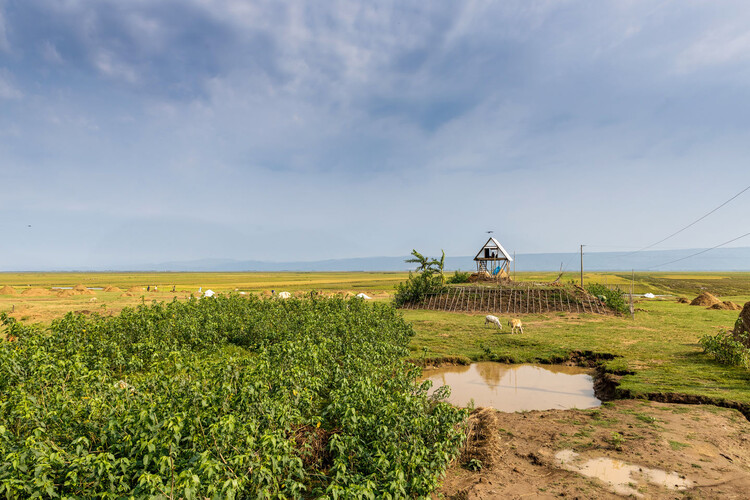
Bangladesh’s Museum of Independence, which she designed with her former partner, Kashef Mahboob Chowdhury of the practice URBANA, has become a national landmark. But Tabassum also works at the intimate scale of housing, pursuing innovative modular space-frame designs constructed of bamboo. She’s taught at architecture schools around the globe. Recently, she was recognized with an award from the Architecture, Culture, and Spirituality Forum and identified by Time magazine as one of the 100 most influential people for 2024 for her work in sustainable, socially responsible design.

Light, Empathy, and Silence: The Architecture of Marina Tabassum - Image 1 of 4Light, Empathy, and Silence: The Architecture of Marina Tabassum - Image 2 of 4Light, Empathy, and Silence: The Architecture of Marina Tabassum - Image 3 of 4Light, Empathy, and Silence: The Architecture of Marina Tabassum - Featured ImageLight, Empathy, and Silence: The Architecture of Marina Tabassum - More Images

Lesley Lokko and Marina Tabassum Recognized in TIME's 2024 List of Most Influential People

Architects Lesley Lokko and Marina Tabassum have been selected in TIME Magazine’s ‘100 Most Influential People of 2024.’ Known as the TIME 100, the list is an annual compilation of individuals who have made significant impacts on the world in various fields such as politics, technology, entertainment, and more. Each person on the list is profiled by a guest writer, often someone who is also prominent in their field. Selected by Sarah M. Whiting, Dean of the Harvard Graduate School of Design, Marina Tabassum features in the Innovators chapter, while Lesley Lokko, selected by filmmaker Ava DuVernay, is recognized as a Pioneer.

Lesley Lokko and Marina Tabassum Recognized in TIME's 2024 List of Most Influential People - Image 1 of 4Lesley Lokko and Marina Tabassum Recognized in TIME's 2024 List of Most Influential People - Image 2 of 4Lesley Lokko and Marina Tabassum Recognized in TIME's 2024 List of Most Influential People - Image 3 of 4Lesley Lokko and Marina Tabassum Recognized in TIME's 2024 List of Most Influential People - Image 4 of 4Lesley Lokko and Marina Tabassum Recognized in TIME's 2024 List of Most Influential People - More Images

Projects by Female Architects from the Global South for Women's Day 2024

Subscriber Access | 

In our exploration of architectural endeavors, it is essential to recognize the persistent influence of women, particularly from the Global South, in shaping our built environment, especially the contributions of women who serve as catalysts for social change and cultural celebration. As we delve further into their narratives, it becomes evident that the architects’ lived experiences inform their creative processes, resulting in spaces that resonate with their users and surroundings. Architects like Sumaya Dabbagh, Mariam Issoufou, Tosin Oshinowo, and Marina Tabassum embody this enduring spirit of innovation and resilience.

This curated collection unfolds the narratives of some of the most compelling architectural projects by women from the Global South. From the unique streets of Dubai to the rural landscapes of Niger, each project serves as a testament to the power of architecture to transcend gender boundaries and create meaningful designs that connect people and their surroundings.

Projects by Female Architects from the Global South for Women's Day 2024 - Image 1 of 4Projects by Female Architects from the Global South for Women's Day 2024 - Image 2 of 4Projects by Female Architects from the Global South for Women's Day 2024 - Image 3 of 4Projects by Female Architects from the Global South for Women's Day 2024 - Image 4 of 4Projects by Female Architects from the Global South for Women's Day 2024 - More Images

Marina Tabassum Architecture: My Journey

MARINA TABASSUM ARCHITECTURE: MY JOURNEY is the first book devoted to the Bangladeshi architect Marina Tabassum and her multifaceted architectural oeuvre.

Marina Tabassum’s exploratory approach makes her architectural practice one of the outstanding contemporary positions internationally. Her diverse oeuvre spans from governmental projects to housing and has brought her numerous honors and accolades in the international field of architecture.

ArchDaily’s Readers Select Who Should Win the 2023 Pritzker Prize

As part of our yearly tradition, we have asked our readers who should win the 2023 Pritzker Prize, the most important award in the field of architecture.

For those who don't know, the Pritzker Prize is funded by Jay Pritzker through the Hyatt Foundation in the United States and has been awarded to living architects, regardless of their nationality, whose built work "has produced consistent and significant contributions to humanity through the art of architecture."