Architect, urbanist, and Content Editor at ArchDaily, covering news and developments in architecture and the built environment. Editorial work focuses on the Gulf region and the Middle East, exploring contemporary regional architectural languages and their relationship to local contexts.
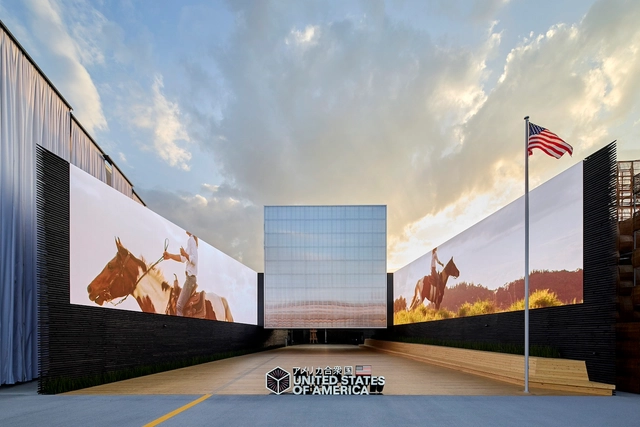
Trahan Architects has just completed the USA Pavilion for Expo 2025 Osaka-Kansai in Japan. As the public opening date, April 13, approaches, the USA Pavilion is finalizing preparations to host visitors. During the six-month expo, the proposal aims to showcase American architecture, innovation, culture, and industry. The display will be focused on celebrating contemporary American achievements in various fields, featuring exhibitions focused on sustainability, space exploration, education, and entrepreneurship.
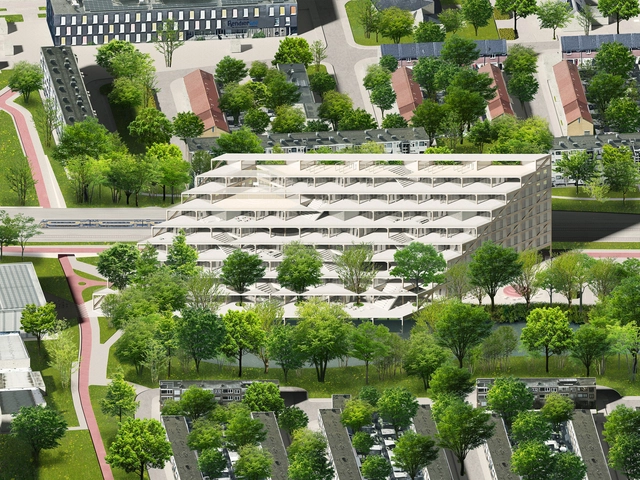
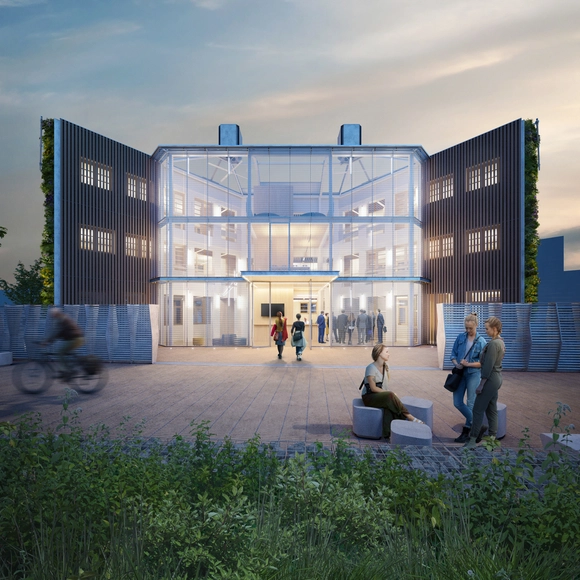
Symbiosis, a Prototype for Living and Working. Image Courtesy of contexo
The future of urban life is increasingly being imagined as collective, layered, and adaptable. As cities grow denser and the boundaries between work, home, and leisure blur, architects are rethinking the traditional notion of residential living, shifting from isolated units to integrated, community-driven environments. This collection of unbuilt projects, submitted by the ArchDaily community, reflects this shift: a global exploration into how design can shape more resilient, inclusive, and connected ways of living.
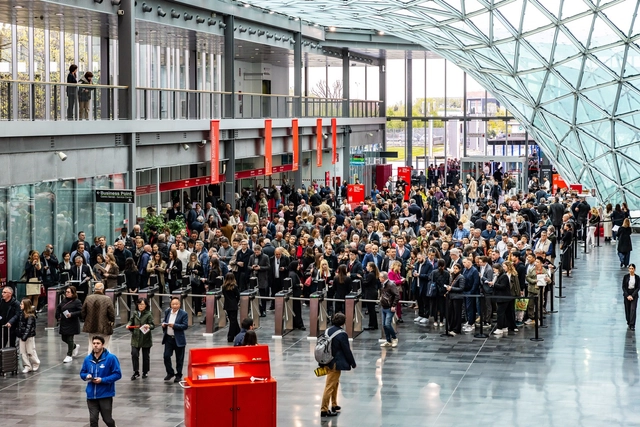
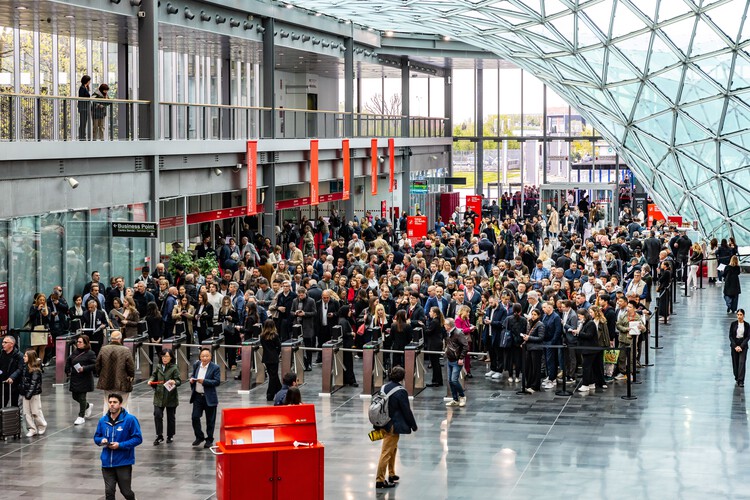
This week, Milan once again becomes the global center of the design industry as the 63rd edition of Salone del Mobile.Milano unfolds at Fiera Milano, Rho. Running from April 8 to 13, the event welcomes over 2,100 exhibitors from 37 countries across 169,000 square meters of sold-out exhibition space. With a focus on sustainability, global outreach, and cultural programming, Salone del Mobile.Milano 2025 continues to evolve as both a marketplace and a space for critical reflection on the future of design. Featuring a notable number of first-time participants, 168 new brands, and a return of 91 previous exhibitors, the Salone continues to act as a key platform for international dialogue, innovation, and industry exchange. The ArchDaily team is on site to follow this year's highlights and share updates throughout the week.
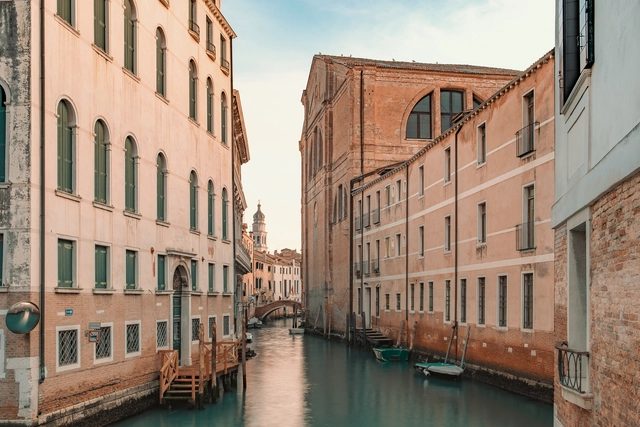
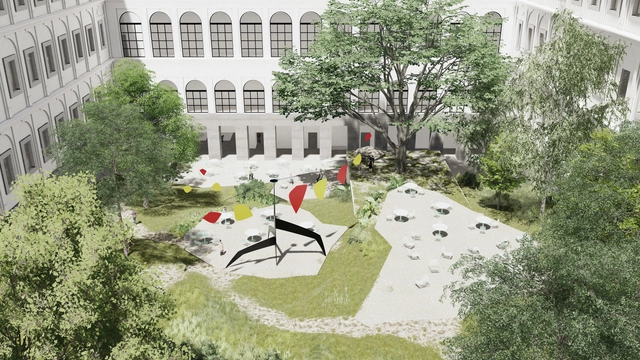
This month's architecture news spotlights a global wave of adaptive reuse, large-scale infrastructure, and public realm transformation. From airport expansions to museum reconfigurations, architects worldwide are rethinking how civic spaces serve communities in the 21st century. Notable developments include Sasaki, SLA, and MVVA being shortlisted to reimagine Toronto's Downsview Airport into a pedestrian-oriented public corridor, and HOK's 2.8 million-square-foot expansion of Dulles International Airport to accommodate future growth while honoring Saarinen's original vision. In Melbourne, Fraser & Partners received planning approval for a heritage-led redevelopment of the Boiler House precinct, while COLL-BARREU ARQUITECTOS completed a subtle reconfiguration of public access at Madrid's Reina Sofía Museum. Finally, in Canada, Knight Architects revealed the "Motion" design for the Alexandra Bridge replacement, an arching structure shaped by ecological references and inclusive public space. Read on for the latest updates shaping architecture today.
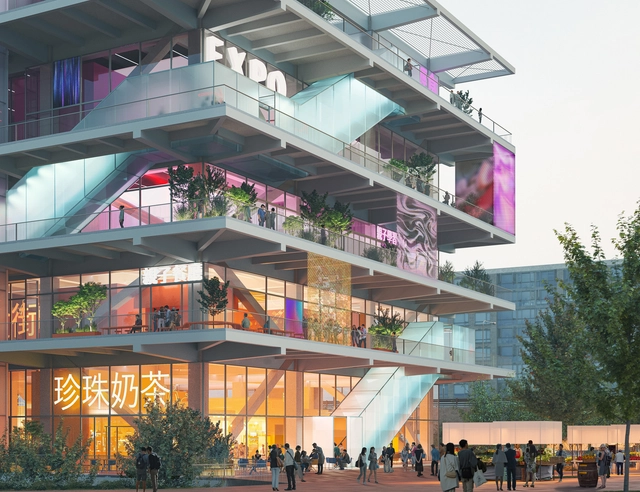
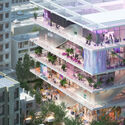
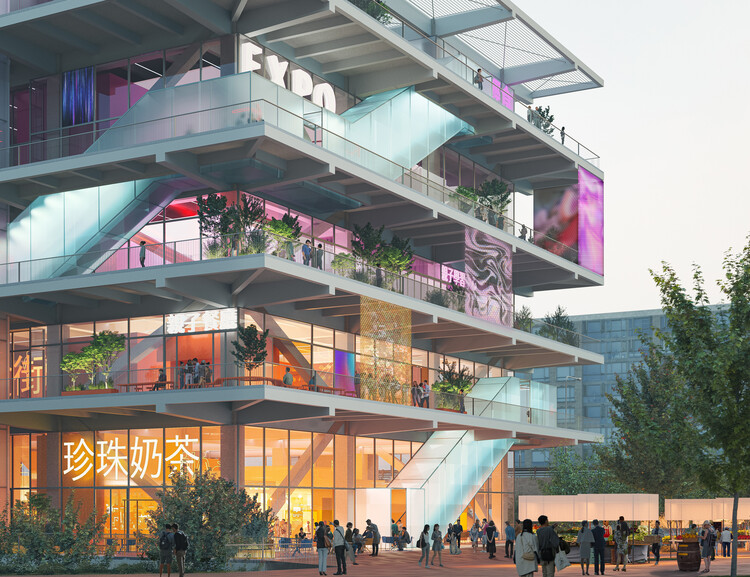
Dutch architecture firm MVRDV has won the competition to design a new multifunctional market and food hall in Zhubei, Taiwan. Developed in collaboration with local firm EKUO, the project, referred to as the "Market Cube" or "River Bank 1," aims to redefine the traditional market building through a vertically layered, highly adaptable structure. Positioned along the Touqian River at a prominent gateway between Zhubei and neighboring Hsinchu, the building is set to become a major civic destination.
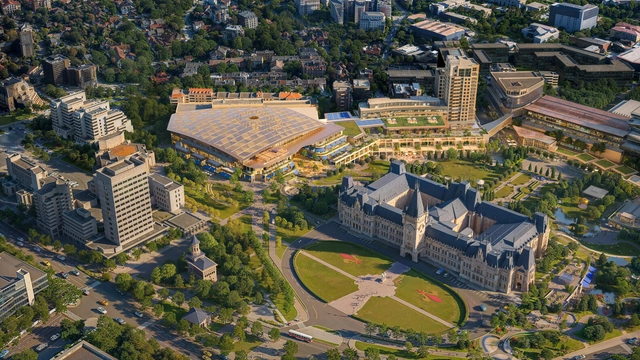
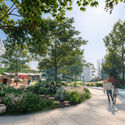
Foster + Partners has just released the design for the redevelopment of Palas Iași, a major mixed-use development in Iași, a city in eastern Romania. The proposal includes a new masterplan centered around the historic Palace of Culture and aims to improve urban connectivity, enhance public green spaces, and upgrade the existing commercial infrastructure. Developed in collaboration with Romanian developer IULIUS, the project aims to bring together retail, cultural, and landscape elements within a unified and accessible framework.
As educational institutions around the world adapt to shifting societal needs, the architecture of learning is also evolving. This curated selection brings together projects submitted by the global ArchDaily community, highlighting how architects are rethinking the future of schools and universities through design. These proposals reflect pressing global concerns: the importance of community-centerededucation, the revitalization of historical buildings and neighborhoods, the integration of natural systems, and the search for spatial expressions that accommodate both formal instruction and informal exchange. Whether situated in dense urban centers, rural villages, or coastal landscapes, these projects respond to specific cultural and environmental contexts while engaging with broader architectural questions about sustainability, access, and identity.
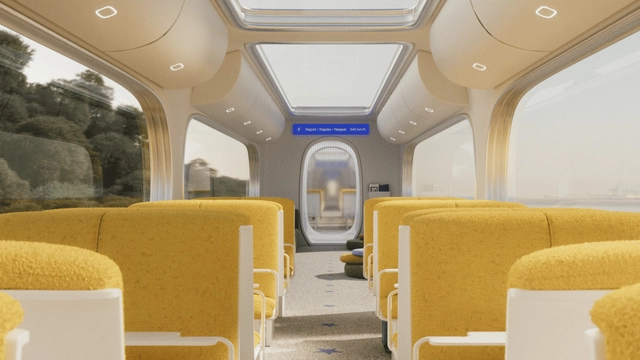
21st Europe, a new design-led think tank founded by former SPACE10 creative director Kaave Pour focused on shaping the future of the continent, has just unveiled Starline: a blueprint for a high-speed rail system that aims to connect Europe as seamlessly as a city metro. Revealed at the think tank's inaugural summit in Barcelona and developed in collaboration with creative technology studio Bakken & Bæck, Starline combines infrastructure, digital tools, and visual identity into one integrated vision for movement across the continent.
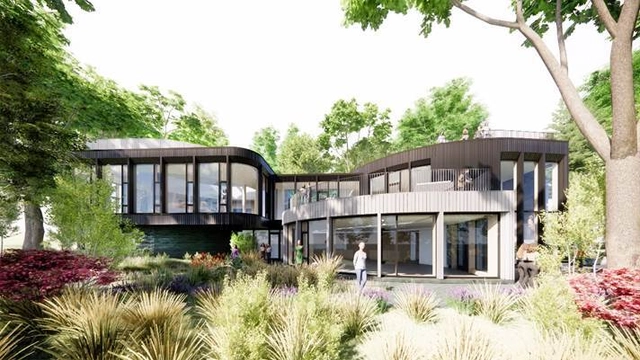
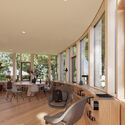
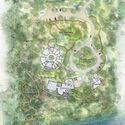
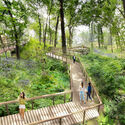
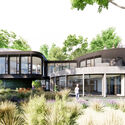
Studio Gang, led by Jeanne Gang, in collaboration with Lincoln Road Enterprises, a philanthropic organization advancing women's leadership, has unveiled the design for the forthcoming Women's Leadership Center at Williams Bay. Located on an 8.6-acre site overlooking Geneva Lake in southeastern Wisconsin, the 24,000-square-foot retreat center is designed to support innovation, collaboration, and leadership programming for professional women's groups. The project broke ground in July 2024 and is scheduled for completion in 2026.
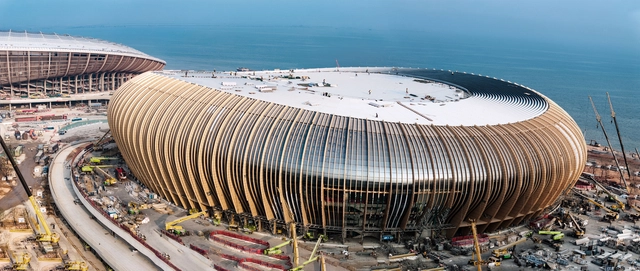
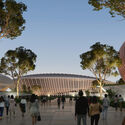
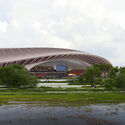
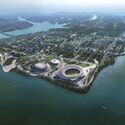
Designed by Zaha Hadid Architects in collaboration with the Guangdong Architectural Design & Research Institute, the Greater Bay Area Sports Centre in Nansha, China, is approaching completion. Construction began in August 2023, with the main structures of the stadium and arena topping out in February 2024. Roofing and curtain wall installations were finalized in February 2025, and the project has now entered its final phase of interior finishing and landscaping. The center is set for handover in June 2025, ahead of its role as a key venue for the China National Games in November.
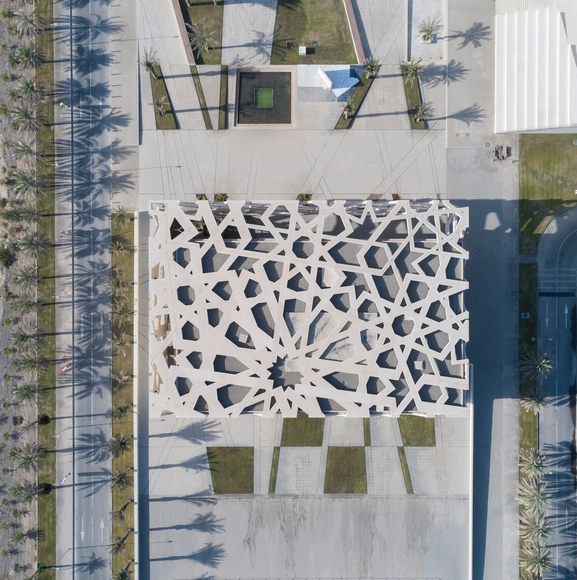
A previous exploration of cultural landmarks in the Middle East designed by international architects highlighted recurring themes such as architecture as an extension of the landscape, climate-responsive design, and abstraction of traditional forms. These projects often introduced high-tech environmental solutions, used monumental forms to reinterpret local identity, or positioned themselves as landmarks within the broader urban or desert landscape. While these approaches have defined many of the region's most recognizable cultural institutions, they represent just one side of the architectural discourse. An equally significant yet distinct trajectory emerges from local architects, who work within existing structures, historical contexts, and lived environments to create institutions that feel deeply embedded in their surroundings. This approach prioritizes continuity, transformation, and accessibility, ensuring that architecture remains an evolving part of the cultural fabric rather than a self-contained object.
In recent weeks, a series of notable architectural projects have been announced, reflecting a broad spectrum of design approaches aimed at enhancing urban life, infrastructure, and environmental sustainability. From cultural venues to large-scale masterplans and infrastructural advancements, these developments highlight how architecture continues to shape cities and communities. Among them, Knight Architects' Kruunusillat Bridge in Helsinki marks a milestone as Finland's tallest and longest bridge, designed to support sustainable mobility. Meanwhile, Unibail-Rodamco-Westfield's masterplan for Croydon sets out a vision for a vibrant mixed-use district, integrating historic preservation with contemporary urban renewal. At Kew Gardens, Mizzi Studio's Carbon Garden introduces a new permanent installation that explores carbon cycles through landscape design. This collection of recent announcements underscores the evolving priorities in architecture, from connectivity and urban regeneration to climate-conscious interventions.
Thomas Heatherwick has been appointed as the General Director and curator of the 2025 Seoul Biennale of Architecture and Urbanism. In its fifth edition, the Seoul Biennale serves as a platform for addressing urban challenges faced by major global cities, fostering innovative solutions and public discussions around architecture and urbanism. As Asia's largest architecture biennale, scheduled to take place from September 1 to October 31, 2025, the exhibition will focus on making cities more joyful, engaging, and radically human-centered. At the heart of this mission is an ambitious public engagement program that directly involves citizens in shaping the Biennale. Through an open call, ten multidisciplinary teams, comprising architects, urban planners, sculptors, community organizers, metalworkers, and textile designers, have been selected to collaborate with local communities. These projects will respond to two central questions: How do buildings make people feel? And how can they be transformed to foster a deeper sense of connection?
Heatherwick Studio has been selected to lead the redesign of the Coex Convention Centre in Seoul, following a competition aimed at reimagining the building's purpose and facade. In collaboration with the Korea International Trade Association (KITA), the studio's proposal seeks to transform the convention centre into a more open and inviting public space that reflects Seoul's evolving identity.
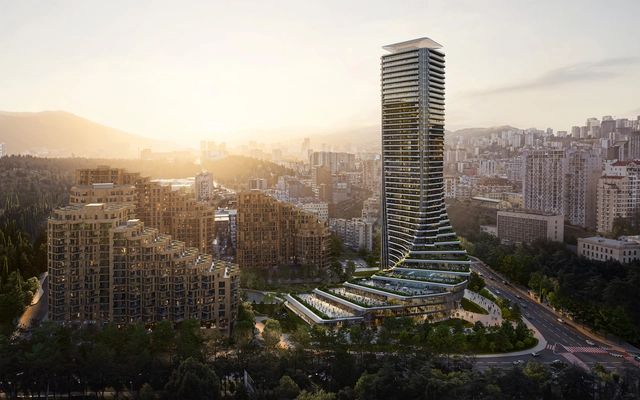
Zaha Hadid Architects has just revealed the design for Cityzen Tower, a 42-story high-rise set to become a landmark in Tbilisi, Georgia. Positioned in the Saburtalo district, the tower is part of the Cityzen development, a new civic hub integrating residential, commercial, and public spaces. Designed as a vertical extension of Tbilisi's new Central Park, the tower will bring together urban living and nature through cascading terraces and green spaces.