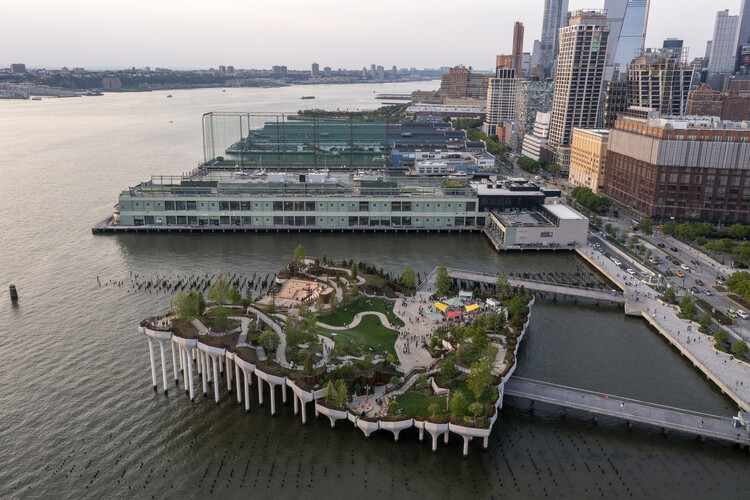
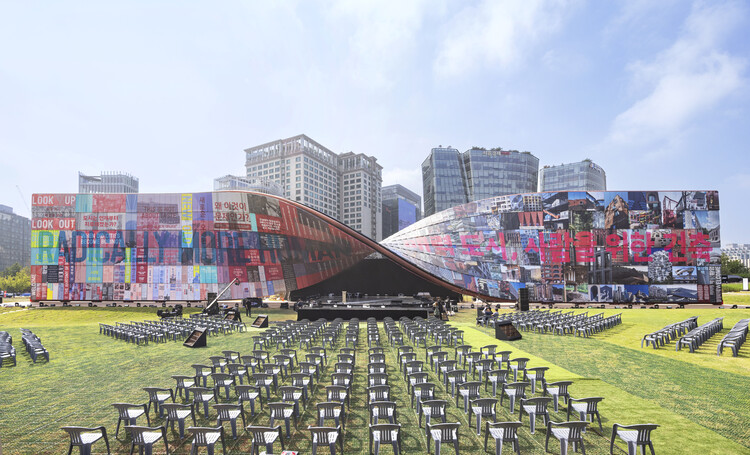
This week's stories explore how architecture engages with questions of culture, access, and collective life, from new cultural institutions and exhibitions to public spaces and housing. This week, the 2026 NCARB by the Numbers report provided a broader perspective on the profession itself, showing that people of color accounted for 49% of licensure candidates in 2025 and women for 47%, compared with 21% and 28% among the overall architect population. The report offers one perspective on access within the profession, while projects and cultural initiatives further examine how architecture responds to different forms of public and collective life.
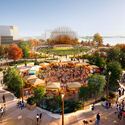
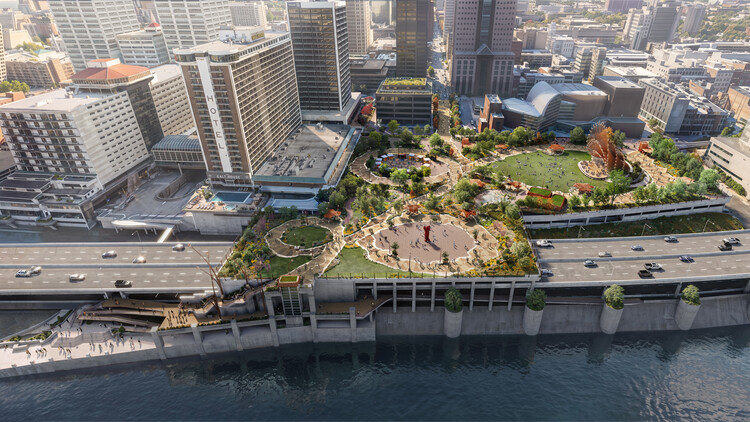
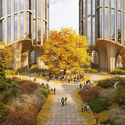
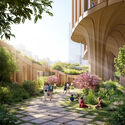
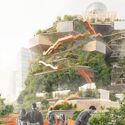
Louisville's Belvedere in Kentucky is a 53-year-old gathering place for concerts, festivals, and community events. The elevated concrete plaza was built on top of the city's largest parking structure and stands over a major highway overpass. Since 1973, it has functioned as a riverfront civic space for events and large gatherings, but its use as a casual public space is in evident decline. In its current state, the space lacks shade, greenery, and amenities, while the concrete deck has worn over the years. In February 2025, Heatherwick Studio unveiled the first images of its vision to transform the Belvedere, a project commissioned by the city's mayor and the Louisville Metro Government. This week, the firm released new images of the redesign as an open, green, and flexible space connected to downtown Louisville.
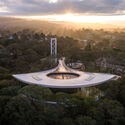
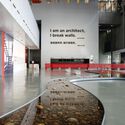
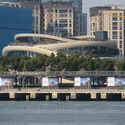
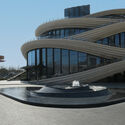
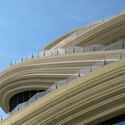
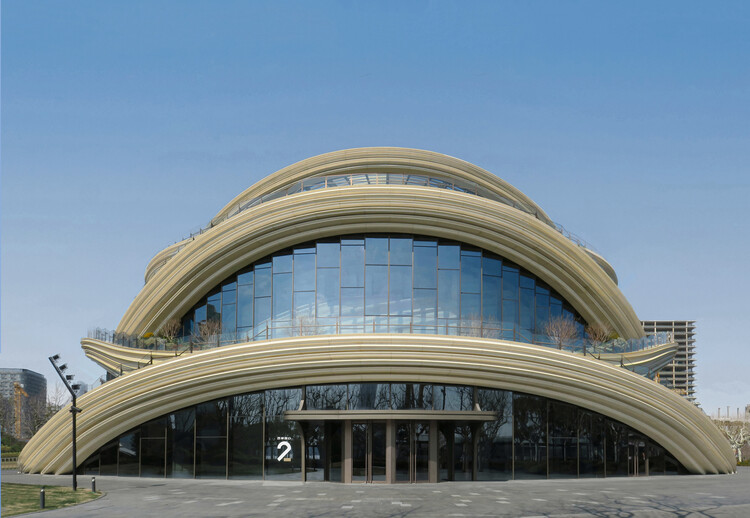
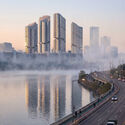
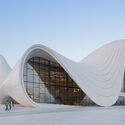
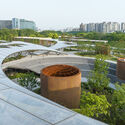
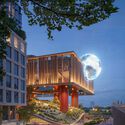
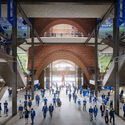
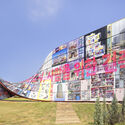
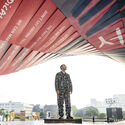
Photographer Paul Clemence has documented West Bund Orbit, Heatherwick Studio's public exhibition hall on Shanghai's West Bund waterfront, in a photo series exploring the project's evolving architectural identity. Located in Xuhui District along the Huangpu River, the building was conceived as a cultural destination within the area's emerging Financial Hub while extending the network of public spaces that define the redeveloped riverfront. Rather than focusing solely on the building as an object, Clemence's photographs examine the relationship between architecture, circulation, and landscape, revealing how the project's interconnected pathways and layered form engage both the waterfront and the surrounding city.
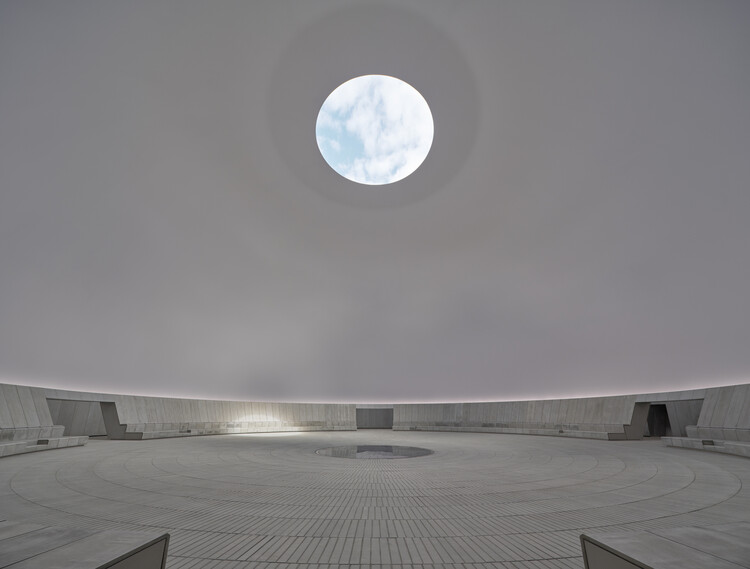
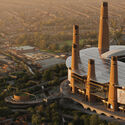
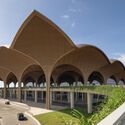
From projects and institutions that reinforce the relationship between art and architecture to initiatives seeking new approaches to persistent urban and ecological challenges, this week's developments reflect a broader effort to reconsider established frameworks and expand the role of design in contemporary society. Whether through adaptive reuse, policy innovation, artistic experimentation, or critical research, architects and cultural organizations are exploring how existing systems can be transformed to address emerging realities. These questions resonate across new architectural projects that translate environmental conditions and civic aspirations into built form. In Chicago, the completion of the Obama Presidential Center positions architecture as a vehicle for public memory, while in Albania, OODA's Lighthouse reinterprets local landscapes and traditions through a tower overlooking the Adriatic coast. Meanwhile, Heatherwick Studio's proposed AlUla Manara visitor centre responds to the conditions of Saudi Arabia's desert landscape, combining scientific research and tourism within a destination dedicated to observing the night sky.
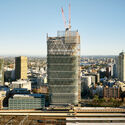
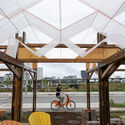
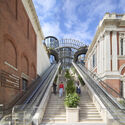
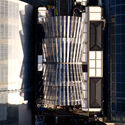
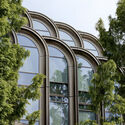
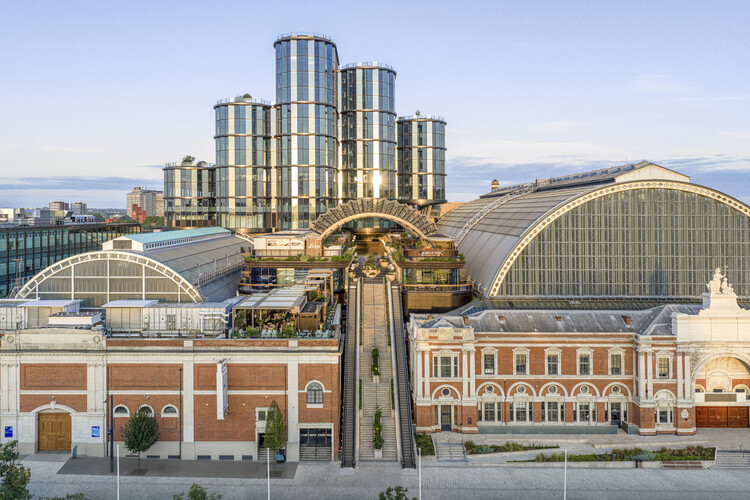
Heatherwick Studio and SPPARC have unveiled the first phase of the transformation of Olympia, a historic exhibition complex in West London, into a mixed-use cultural destination. Originally opened in 1886, the Victorian landmark is undergoing a large-scale redevelopment that aims to reconnect the 14-acre site with the surrounding city through new public spaces, cultural venues, hospitality programs, and commercial facilities. The opening is marked by the completion of a new public canopy, which introduces elevated pedestrian circulation and serves as a gateway into the broader master plan while framing new views across Olympia's historic roofscape. The intervention forms part of a broader master plan that will be implemented through 2026 and 2027.
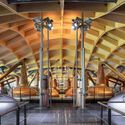
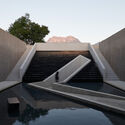
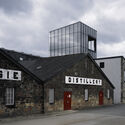
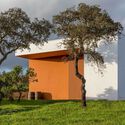
Unlike many industrial programs traditionally concealed behind neutral facades and hermetic spaces, contemporary distilleries often showcase their production processes as an essential part of the architectural experience. The heat of the stills, the vapors of distillation, or the path of the raw materials cease to be mere technical operations, instead taking center stage within the space.
While they produce different beverages, the projects selected below share similar architectural challenges. All must organize industrial workflows, control specific temperature, ventilation, and storage conditions, and reconcile technical areas with visitor routes. At the same time, each distillery establishes its own response to its territory, revealing different ways of connecting production and landscape.
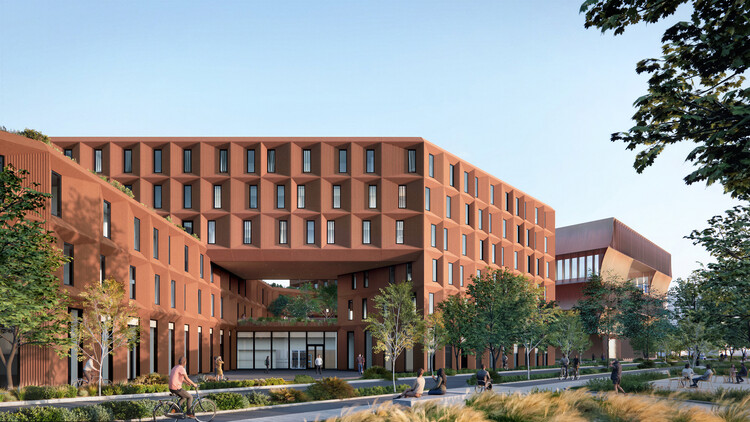
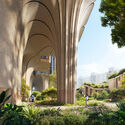
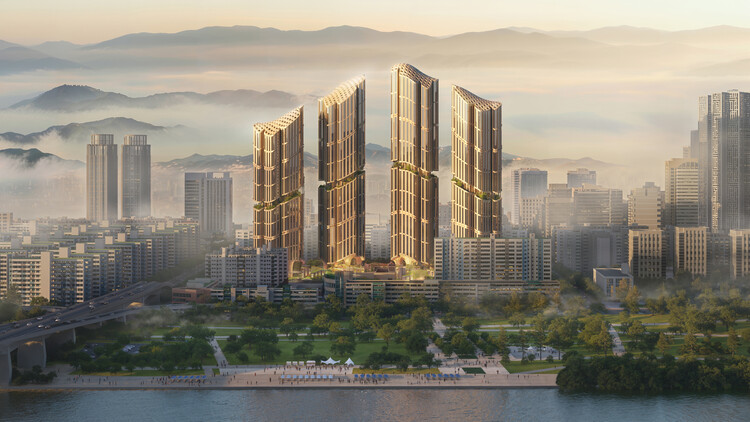
Heatherwick Studio has unveiled the first images of the design for the transformation of the Daegyo Apartments in Yeouido, Seoul. The project, the firm's first residential project in South Korea, was presented by Thomas Heatherwick to the Yeouido Daegyo Residents' Union at a meeting of their General Assembly on February 28, 2026. The development was first announced in mid-2025 as a community-led residential redevelopment, with the studio remaining involved throughout all phases of the project from concept to completion. The design is set to transform four residential buildings from 1975, aiming to establish a distinctive and appealing character, distinct from the average apartment building in Seoul.
Architecture this week reflects the intersections of legacy, authorship, and social responsibility, as practices navigate questions of identity, recognition, and public engagement. Legal rulings, major competition shortlists, and large-scale urban proposals illustrate how architecture continues to operate across cultural, institutional, and environmental arenas. From sustainability-driven landmarks and transformative waterfront developments to iconic commercial towers, projects demonstrate approaches to ecological strategies and public programming. At the same time, global observances such as World Hearing Day highlight how spatial design shapes inclusion and accessibility, reminding the profession that the built environment can influence participation, learning, and well-being for diverse communities.
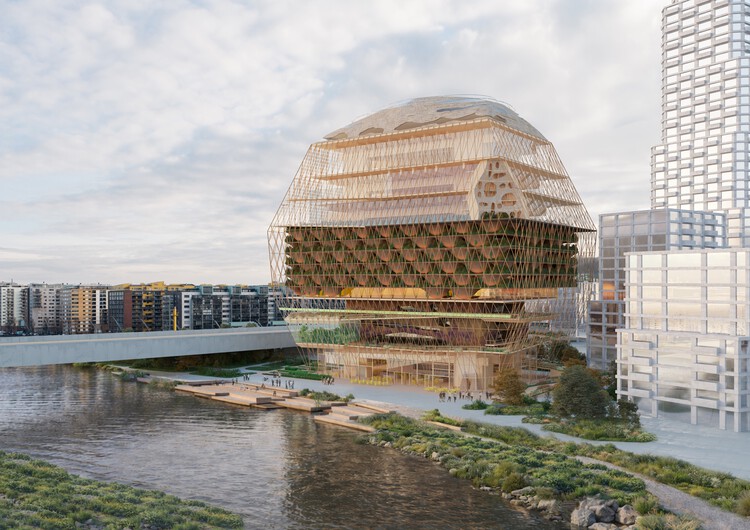
MVRDV's shortlisted design for the Shift Landmark competition, 2026. Image Courtesy of MVRDV
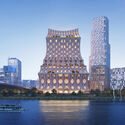
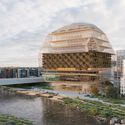
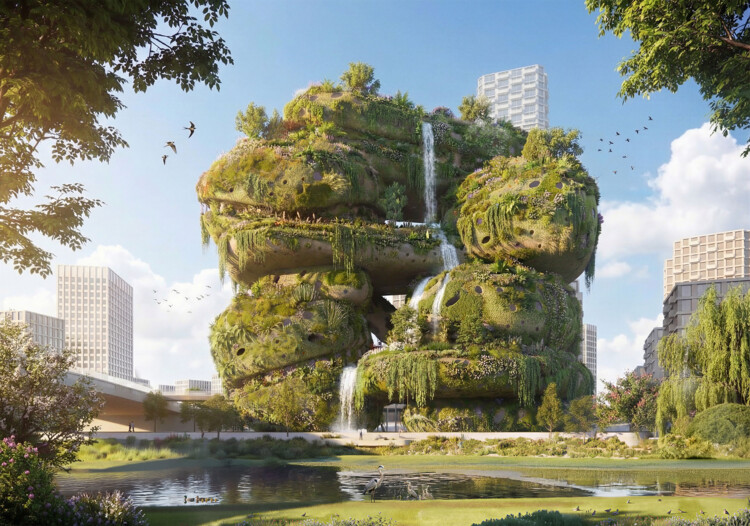
Shift, a company offering digital programs to reduce carbon emissions through individual behavior change, has announced the five finalist teams advancing to Stage Two of its international architecture competition. Launched in January 2025, the Shift International Architecture Competition called for proposals to design "the Shift Landmark": a 25,000 to 30,000 m² building in Waterkant, a new waterfront district in southern Rotterdam. The project includes a hotel, a conference and meeting center, and a sustainable food court. Its objective is to set a new standard for a purpose-driven destination that turns circular living into "something individuals, companies, and organisations can feel, experience, and act on." The five shortlisted design concepts reflect different visions of sustainability and climate action, developed by teams led by the European offices of MVRDV (Netherlands), Heatherwick Studio (United Kingdom), Office for Political Innovation (Spain), Mecanoo (Netherlands), and Ecosistema Urbano (Spain).
Coastal development in major cities has long been a terrain of opportunity and contention—shaped at once by the pursuit of capital (premium views, scarce land, and the promise of reclamation), by civic demands for public access and collective waterfront life, and by contemporary aspirations for sustainability and place-defining urban identity. Precisely because these agendas rarely align, extracting the full potential of waterfront sites is never straightforward.
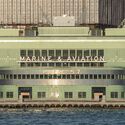
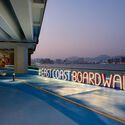
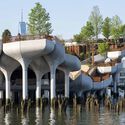
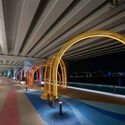
Yet in New York City and Hong Kong, we can trace each city's ambitions—despite differing strategies, priorities, and political logics—through a set of keystone projects that anchor their coastlines. Read together, these projects reveal not only what each city chooses to value, but also what it is willing to trade off in order to build at the edge.
Spanning multiple geographies and scales, this week's architecture news reflects ongoing discussions around long-term planning, institutional frameworks, and the public role of architecture. National-scale urban initiatives and large civic developments point to how planning and infrastructure are being used to reorganize cities and territorial systems, while parallel attention to stadiums, cultural facilities, and mixed-use projects highlights the expanding civic ambitions of large-scale architecture. Alongside these, interviews and heritage-focused projects foreground participatory practices and the careful reuse of existing structures, highlighting architecture's capacity to operate within complex social and political conditions. Recognition platforms and professional programs further situate these practices within a broader architectural discourse, offering insight into how contemporary work is evaluated and shared across regions.
New Manchester United Stadium aerial render. Image Courtesy of Foster + Partners
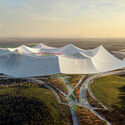
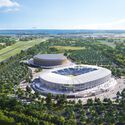
During 2025, several sports infrastructure projects were announced that remain on our radar, most of which are scheduled for completion between 2028 and 2030. Located across Asia, Europe, Africa, the Middle East, and North America, these projects reflect contemporary masterplan strategies for the transformation of large sports venues within their urban contexts. Many of the stadiums are planned as part of broader redevelopment frameworks that include new public spaces, mixed-use programs, event facilities, and mobility upgrades, rather than as isolated structures. Designs led by international offices such as Populous, Foster + Partners, Heatherwick Studio, OMA, Gensler, AFL Architects, and VUILD illustrate a range of architectural, urban, and infrastructural responses to the evolving role of large sports facilities.
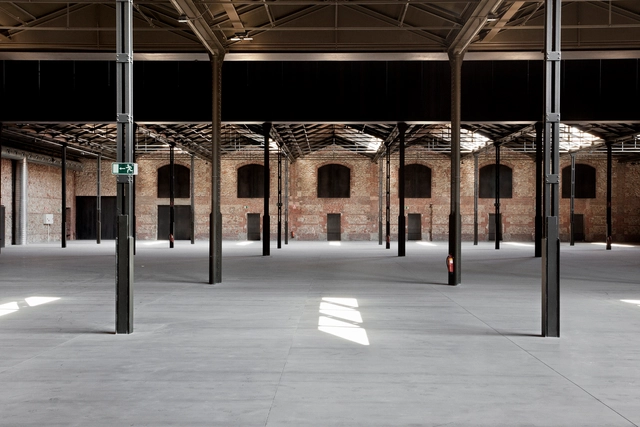
In cities across the world, the relics of industrial production have become the laboratories of a new urban condition. Warehouses, power plants, and shipyards, once symbols of labor and progress, now stand as vast empty shells, waiting to be reimagined. Rather than erasing these structures, architects are finding creative ways to adapt them to contemporary needs, transforming spaces of manufacture into spaces of culture, education, and community life.
This shift reflects a broader change in architectural priorities: building less and reusing more. The practice of adaptive reuse responds simultaneously to environmental urgency and to the need for cultural continuity in urban environments.
Biblioteca dos Saberes by Kéré Architecture. Aerial view. Render. Image Courtesy of Kéré Architecture
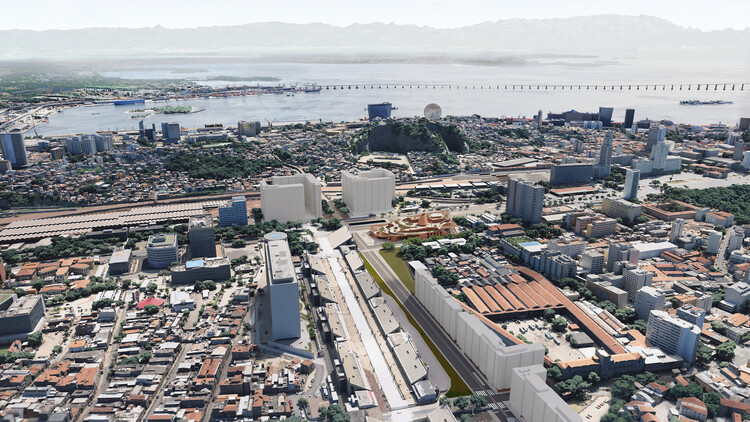
Amid ongoing global discussions on climate adaptation and resilient urban development brought into sharper focus by the outcomes of COP30, this week's architecture news illustrates how cities worldwide are rethinking their built environments. From Venice, where the 19th Architecture Biennale concluded with debates on material use and long-term cultural impact, to international awards foregrounding regenerative and socially responsive design, the conversation around architecture is increasingly intertwined with planetary priorities. Major urban interventions, from Thessaloniki's seafront redevelopment and Rio de Janeiro's new public library, to Abu Dhabi's Natural History Museum and a civic stadium in Birmingham, demonstrate how multiple cities are addressing mobility, heritage, density, and climate resilience. Additional plans, such as Mantua's ecological urban strategy, Utrecht's elevated landscape above transport networks, and Amsterdam Airport Schiphol's redesigned landside mobility system, further reflect a transition toward integrated, people-centred urban frameworks that prioritize environmental performance, public space, and long-term territorial stewardship.
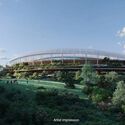
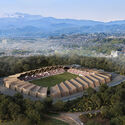
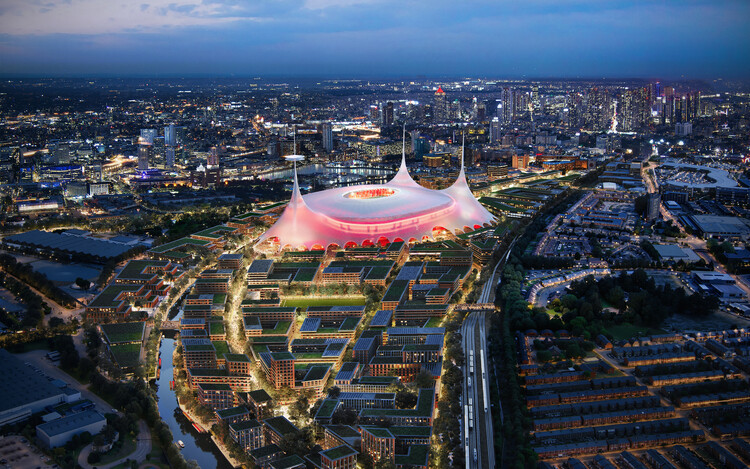
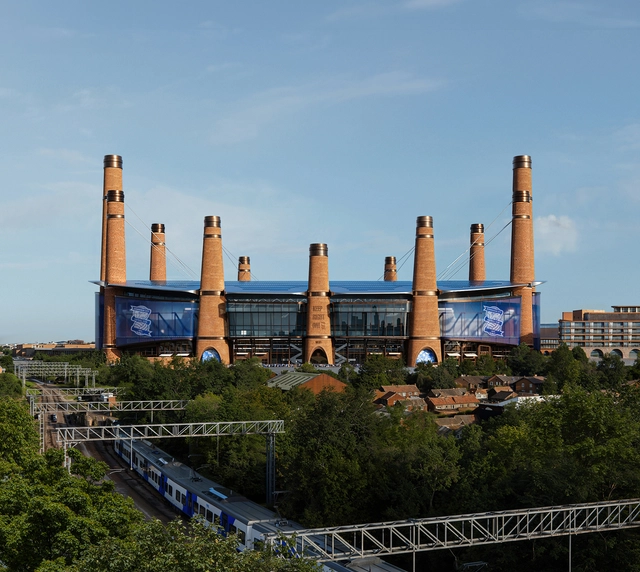
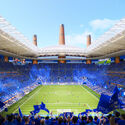
Heatherwick Studio and MANICA Architecture have released the design for Birmingham City Football Club's new stadium, set to anchor the forthcoming BirminghamSports Quarter in East Birmingham, England. The 62,000-seat venue, planned for Bordesley Green, forms part of a wider redevelopment strategy and coincides with the club's 150th anniversary. Developed through a competition led by filmmaker Steven Knight, the project aims to introduce a multifunctional sports and cultural venue integrated into its urban context.
This week's architectural developments highlighted how design operates as a form of social and culturalinfrastructure, linking care, community, and context across scales. From London's reinterpretation of the almshouse model to the transformation of urban gateways in Phnom Penh and Tirana, architecture reflected a shared interest in spaces that foster connection and adaptability. Parallel to these urban and infrastructural works, new cultural projects in Paris and Hanoi explored how museums and performance spaces can renew public institutions through material experimentation and spatial flexibility.