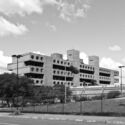
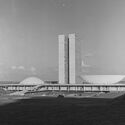
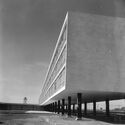
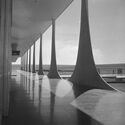
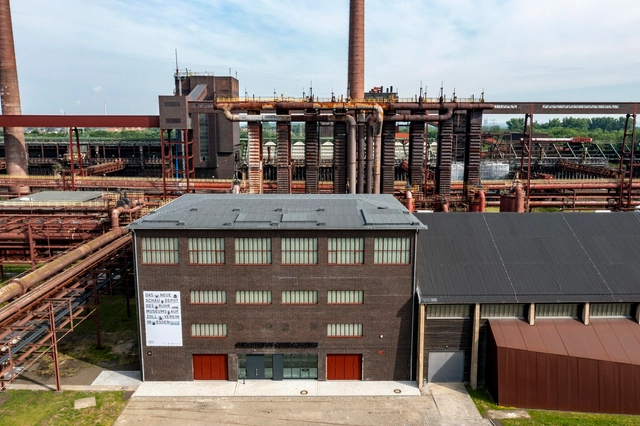
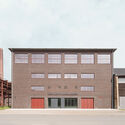
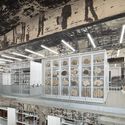
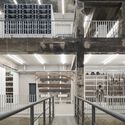
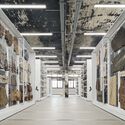
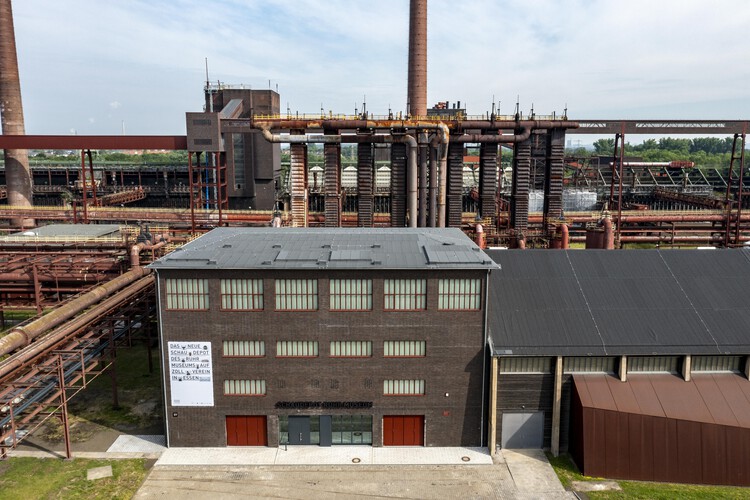
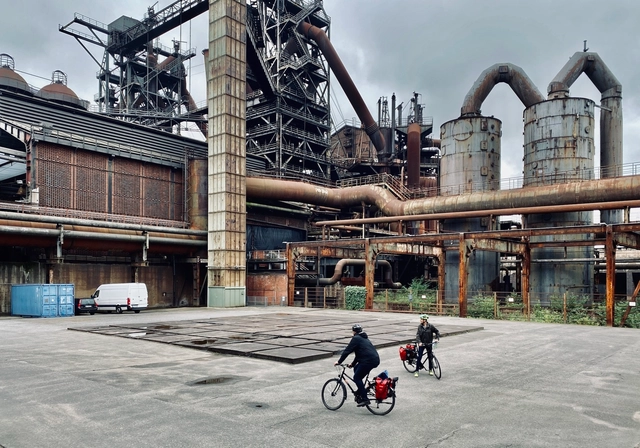
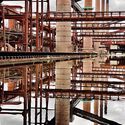
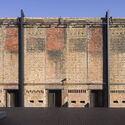
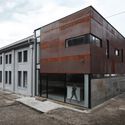
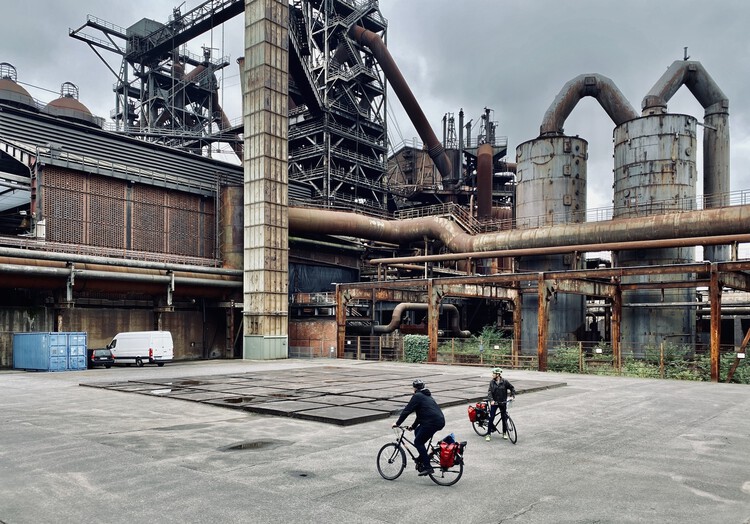
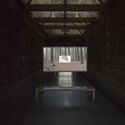
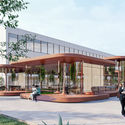
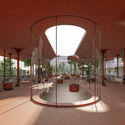
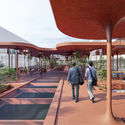
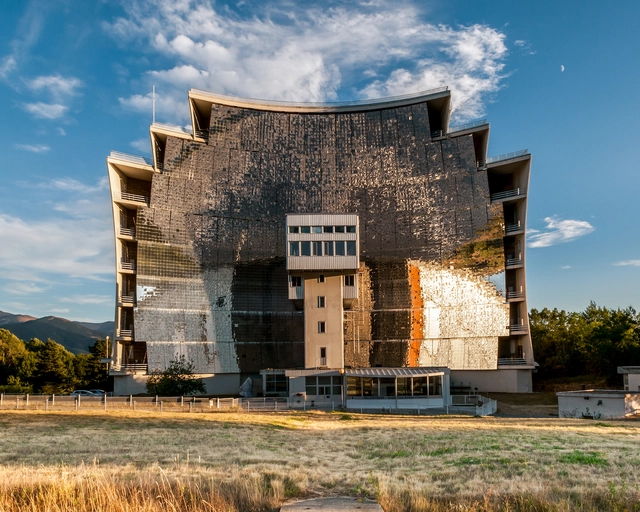
Once the largest coal mine in Europe, the Zollverein complex in Essen, Germany, has undergone a remarkable transformation over the past twenty-five years. What was once a landscape of abandoned industrial facilities is now a laboratory of contemporary architecture, featuring works by Rem Koolhaas, Norman Foster, and SANAA. Their interventions bridge the site’s industrial past with its imagined future. Spanning 100 hectares, the UNESCO World Heritage site has become a global model of adaptive reuse, redefining what it means to preserve industrial heritage. Within this context stands the Ruhr Museum and its enigmatic art repository, the Schaudepot. Located in the complex’s former salt factory, the museum impresses not only with its collection but also with its architecture, which transforms a 1960s industrial building into a vibrant cultural venue.
Because of its historical and architectural relevance, the project is featured in the 2025 edition of Open House Essen, under the theme “Future Heritage.” The initiative explores which spaces might shape our future architectural legacy and asks pressing questions: What should we preserve? What should we adapt? And how can we design a future that is both livable and fair?
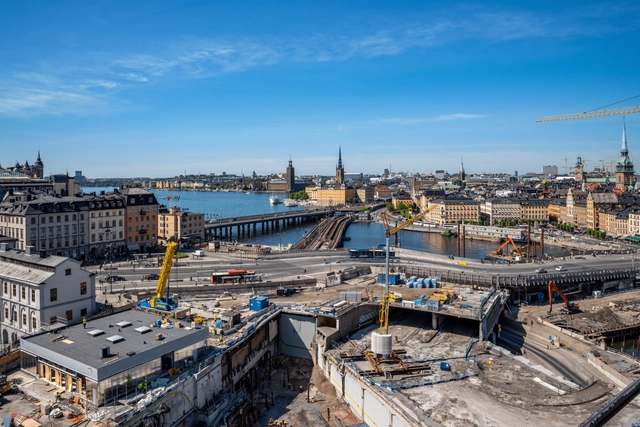
STOCKHOLM, SWEDEN - MAY 26, 2018: Cityscape view from above of large contruction site at the Old Town and Slussen in Stockholm Sweden May 26, 2018.. Image via Shutterstock | Per-Boge
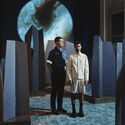
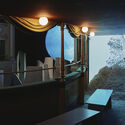
Simone Farresin is the co-founder of Formafantasma, a research-driven design studio exploring the ecological, historical, political, and social influences that shape the design industry. Most recently, the studio participated in Milan Design Week 2024 and Salone del Mobile.Milano with various products and exhibitions. Onsite in Milan, ArchDaily had the chance to speak to Simon Farresin about the studio’s installation for Cosentino at the historic Teatro Gerolamo, and the broader Formafantasma design practice.
Dismantling the system of slave and child labor in the architecture and construction industry does not seem like a simple task, especially on a global scale. However, this is precisely the mission of the Design for Freedom (DFF) initiative, created by CEO and founder of the Grace Farms Foundation, Sharon Prince, along with Bill Menking, professor and editor-in-chief of The Architect's Newspaper.
Through events and freely available tools, Design for Freedom seeks to "raise awareness and inspire responses to halt forced labor in the construction materials supply chain," offering paths to ensure transparency and ethics in the architectural production process.
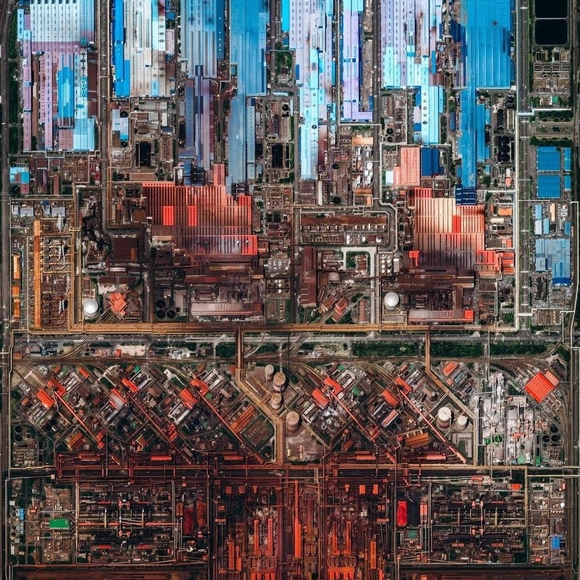
Created by @overview Source imagery @maxartechnologies
Historically, industrialization means a process of economic change that transforms an agrarian society, with mostly handicraft techniques, into an industrial society to increase productivity and economic growth. This mechanization and mass production leads to deep social transformations, but the most significant consequence is an enormous change in the urban landscape.
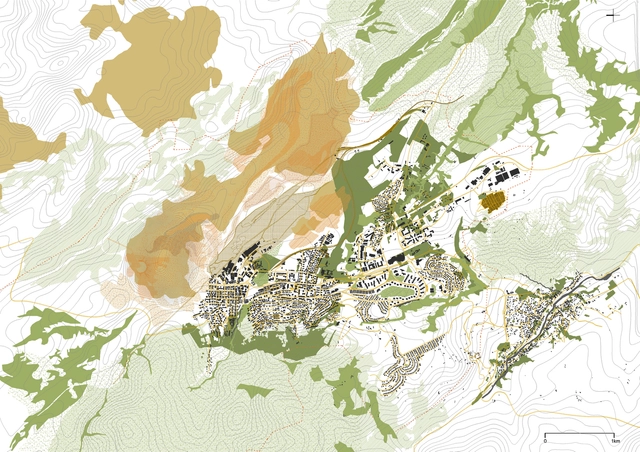
The Serbian contribution to the 17th Venice Architecture Biennale explores the connection between a city's economy and its urban structure -that the curatorial team defines as the life-work relationship- investigating the prospective futures of mono-functional industrial cities. Titled 8th Kilometer and developed by MuBGD, the exhibition uses the mining town of Bor, located in eastern Serbia, as a study case for how economic activities have not only shaped the urban environment but the forms of collectivity connected to it.
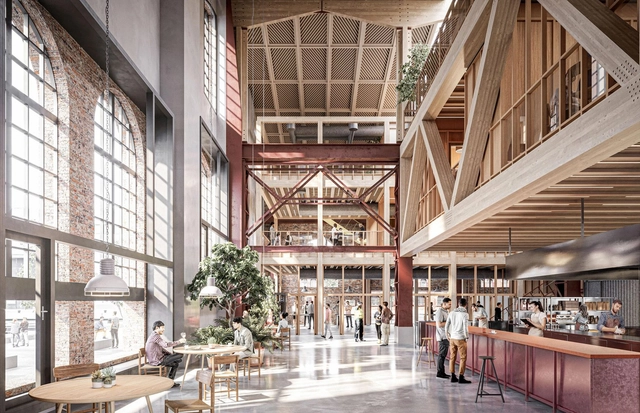
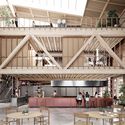
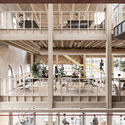
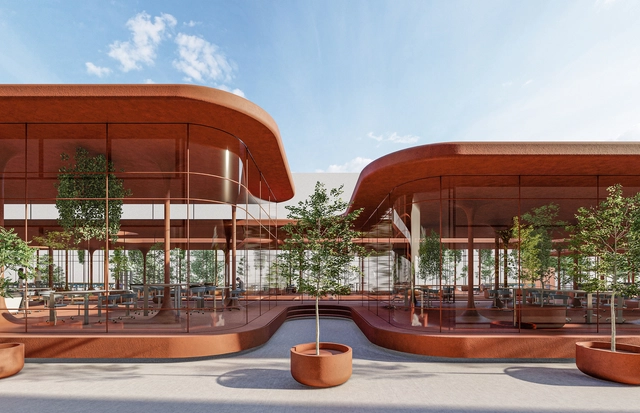
Kjellander Sjoberg has revealed plans to transform the historical building Gjuteriet into an innovative, open public meeting place. Located in the Varvstaden district, a new sustainable neighborhood in Malmö, Sweden, the project will become a contemporary and versatile work environment. Fitting 300 workspaces across 4,600 sq. m., the building also includes meeting rooms, open lounges, conference rooms, a conservatory, studios, exhibition spaces, a test kitchen, and wellness facilities.
Salon has created a new type of campus building, bringing together education and industry. Located between two buildings of the Yıldız Technical University in Istanbul, the textile academy and a teaching block, Ecotone includes learning, flexible co-working, and meeting spaces.
RIBA presents Forms of Industry, an exhibition of contemporary photographs by Alastair Philip Wiper (1980) and archival images by Eric de Maré (1910-2002) from the RIBA Collections. Separated by more than 50 years, the two photographers share a common interest in industrial buildings and landscapes, yet their differing approaches create a commentary on changing attitudes towards industrialisation and sustainability.
Eric de Maré was one of Britain’s most influential architectural photographers, responsible for raising awareness of the value and beauty of Britain’s overlooked industrial heritage via photographs taken for the Architectural Review in the 1950s and 1960s. A selection from RIBA’s extensive
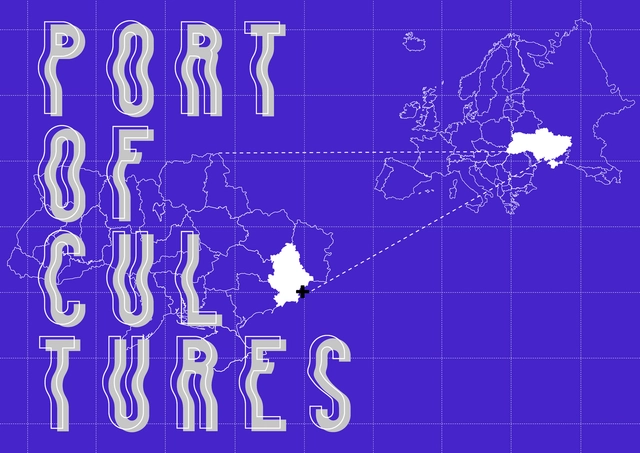
Municipality of Mariupol (UA) invites architects, designers and interdisciplinary teams to submit architectural ideas for a new multifunctional center that will be devoted to the subject of migration, a process that has shaped the city throughout the centuries, becoming an integral part of its identity. The Port of Culture will uncover and explore the less known traits of Mariupol city, and contextualize its local history within larger regional and global processes related to migration.
We are looking for bold and authentic architectural idea for the Port of Culture, that will represent the values and the main themes of the new center,
Winter World Campus Masters Selective Graduation Design Program 2019
SUMMARY World Campus Masters Selective Graduation Design Program (short for "WCM Program”) is launched by an international design competition platform Young Bird Plan, and it is committed to recognizing the fresh blood of contemporary design through evaluating graduation designs from global young designers in different regions and cultures. It encourages original design and design thinking in campus to conduct a positive dialogue with global design industry and industrial development, bringing young designers and their graduation works to one of the world's most influential design platform and the cutting-edge design ecosystem.
Designers who graduated between 2015 and 2019 and major in Architecture, Urban
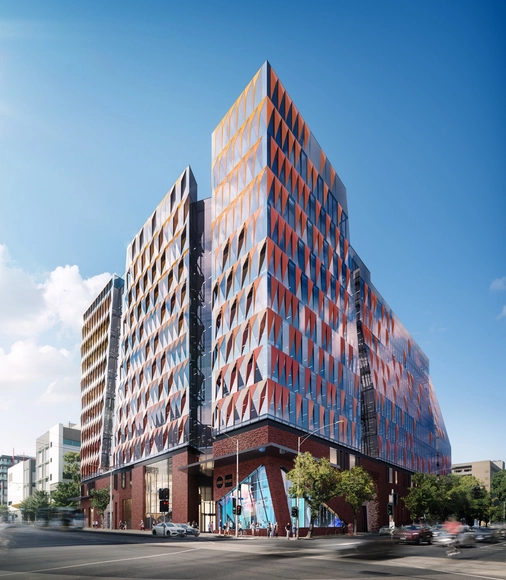
In partnership with Lendlease and the University of Melboure, Woods Bagot designed an architectural reflection of the university itself. Named the Carlton Connect Initiative, this masterplan will be a mixed-use precinct where not only university students and staff, but also international business professionals, researchers, and start-ups can come participate in idea exchange. In order to attract the best and brightest for the university, Woods Bagot is pursuing the highest standard of cutting-edge, sustainable design.
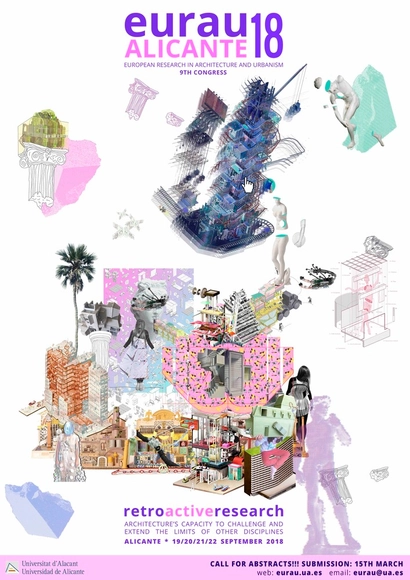
The School of Architecture at Alicante University organizes EURAU18 with the theme RETROACTIVE RESEARCH: Architecture’s capacity to challenge and extend the limits of other disciplines.
Retroactive Research: Architecture's capacity to challenge and extend the limits of other disciplines.
Felipe Correa’s latest book “Beyond the City: Resource Extraction Urbanism in South America” takes us to a region that architects and urban designers typically have neglected—the hinterland. The South American hinterland provides a unique subject of analysis as it has typically been urbanized for its natural resources, which are tethered back to the coastal cities where these resources are either consumed or distributed to global markets. Within this context, the hinterland is viewed as a frontier whose wilderness is to be tamed, put to work, and territorialized through infrastructure and urban design. Beyond the City provides an insightful look into these processes and the unique urban experiments that emerged in South America. Organized by five case studies, Beyond the City is tied together by what Correa has termed “resource extraction urbanism,” which he links to “new and experimental urban identities in the context of government-sponsored resource extraction frontiers.” Written as a lucid historical account that anchors the discussion within the political, economic, and social context, as well as within global design discourse, the book is also projective—setting the table for a series of questions on how design can act in these landscapes.
Late last month the AIA released a report indicating that nonresidential construction is projected to increase by approximately 5% this year. While the recovery of both residential and nonresidential construction markets continues to grow slowly, the indication that it is steadily increasing marks a sense of security or stability that owners are beginning to identify in the economy. In the commercial / industrial sectors, hotels are seeing the largest projected growth at 15.7%, with retail and office buildings hovering between a 7 to 8% growth rate. In the institutional sector, construction growth is projected to be highest in health care facilities, which is expected to rise by 4.4%, while public safety spending is expected to decline in 2013.