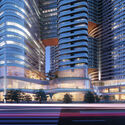
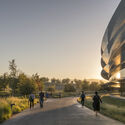
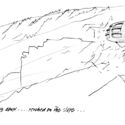
Foster + Partners, led by Norman Foster, has revealed designs for a new “vertical creative office” campus on Sunset Boulevard in Los Angeles, overlooking Hollywood. Developed by real estate firm The Star LLC, the tower is wrapped in spiraling gardens, giving the project its distinctive image and introducing generous outdoor areas throughout. Dubbed “The Star,” the project strives to use active and passive design strategies to bring a welcoming and comfortable space for all future users.
The Pritzker Prize is the most important award in the field of architecture, awarded to a living architect whose built work "has produced consistent and significant contributions to humanity through the art of architecture." The Prize rewards individuals, not entire offices, as took place in 2000 (when the jury selected Rem Koolhaas instead of his firm OMA) or in 2016 (with Alejandro Aravena selected instead of Elemental); however, the prize can also be awarded to multiple individuals working together, as took place in 2001 (Herzog & de Meuron), 2010 (Kazuyo Sejima and Ryue Nishizawa of SANAA), and 2017 (Rafael Aranda, Carme Pigem, and Ramon Vilalta of RCR Arquitectes).
As cities grow and evolve, the question of preserving, rehabilitating, or adapting historic sites arises. The intervention in such buildings requires a delicate balance between honoring their heritage and meeting contemporary demands. Often, the most innovative and radical solutions emerge when architects attempt to renew a building while maintaining its original footprint and as many features as possible. They then create modern extensions that either harmonize or contrast with the original structure. This approach not only revitalizes the building but also celebrates the synergy between the past and present, including materials, construction technology, architectural movements, stories, and overall building quality. The layering of both old and new elements through harmony or contrast requires an intelligent and sensitive approach that gives the building a unique aesthetic and a new meaning.
The Pritzker Architecture Prize has released the ceremony video to honor of the 2023 Laureate of the prestigious Pritzker Prize, Sir David Chipperfield. Following the announcement from earlier this year, the ceremony was held on November 14th at the Ancient Agora of Athens, presented and sponsored by the Hyatt Foundation. It included the 2023 Laureate Lecture and Panel Discussion, where David Alan Chipperfield was joined by Francis Kéré, the 2022 Laureate, and Anne Lacaton and Jean-Philippe Vassal, the 2021 Laureates.
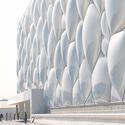
Chris Bosse started LAVA, Laboratory for Visionary Architecture, with his partners Tobias Wallisser and Alexander Rieck the year Watercube, the Aquatics Centre for the 2008 Beijing Summer Olympics was completed. Bosse was one of the leading designers of Watercube when he worked at PTW Architects in Sydney. Now LAVA employs about 100 people in four offices in Ho Chi Minh City,Sydney, Stuttgart, and Berlin. There are also two satellite offices in Honduras and Parma, Italy, led by former associates. Projects range from furniture to houses and hotels to master plans, urban centers, and airports in the Middle East, Central America, Europe, Australia, and Vietnam.
Landscape architecture is having a moment. The latest proof: last week, the US Department of Homeland Security decided to accredit the field with its prestigious STEM designation. As part of the science, technology, engineering, and mathematics (STEM) educational disciplines that fall under this category, landscape architecture students can now spend an additional 24 months seeking employment and training post-graduation in the United States after an initial period of a year granted to all graduates. The title also promises more prestige, higher entry salaries, and additional career flexibility. Torey Carter-Conneen, CEO of the American Society of Landscape Architects (ASLA), calls the development a significant advancement for 'landscape architecture education and practice, and that is great for America and the global community.'
The news corresponds to a growing emphasis on landscape architecture as a pivotal practice around the globe in recent years – one that is closely connected to notions of public health, environmental design, biophilia, sustainability, and re-wilding. It also underlines the intimate relationship between technology and the discipline. Landscape proposals increasingly rely on advanced science and technology to predict how ecological interventions might alter an existing terrain and determine what measures will yield the highest benefit for both humans and nature. The contemporary ideal of wild meadows and biodiverse forests may exist free from external influence, but the path to get there requires assistance.
In a 2007 conference, Norman Foster stated: “As an architect you design for the present, with an awareness of the past, for a future which is essentially unknown." That talk was about the green agenda, which he termed the most important issue of the day, affirming that it is “not about fashion but about survival.” Admittedly, the rise in public interest in contemporary architecture that followed the creation of the Pritzker Prize in 1979 (Foster was the 1999 winner) has been focused on forms and personalities more than on substance. Philip Johnson, the first winner of the shiny award, made his view clear: “Architecture is art, nothing else.” Essays, magazines, and books have delighted in the foibles, verbal and sartorial, of celebrated architects, the hats, and eyeglasses of genius. Of course, figures like Frank Lloyd Wright and Le Corbusier did not wait for a prize to be famous, and it seems fitting that Wright’s literary alter-ego, Howard Roarke, would say: “Art is a selective re-creation of reality according to an artist’s metaphysical value judgments." The modern architect/artist as demiurge, responsible for fashioning and maintaining the universe: “…how like an Angel in apprehension, how like a God?”
The largest exhibition of Norman Foster’s work to date, hosted by the Centre Pompidou, explores six decades of the architect’s illustrious career through a host of revealing sketchbooks, drawings, images, original models, and videos. The exhibition was designed by Norman Foster and executed with Foster + Partners and the Norman Foster Foundation. A custom-made series of modular display cases was designed by Norman Foster and a team from the Norman Foster Foundation and engineered by Goppion, world leader in the manufacture and installation of museum display cases, to display the architect’s sketchbooks and transparencies.
With a career spanning across continents and over six decades, the work of the renowned architect Norman Foster is nothing short of extraordinary. His creative innovation and holistic approach have made him one of the world’s most influential and well-known architects. From the Apple Park campus in Cupertino, California, to the Reichstag in Berlin, the enclosed court of the British Museum in London to the Millau Viaduct in France, with his practice of Foster + Partners, he has created celebrated landmarks that stand out for their inventive modernity and for what he calls “a sustainable approach to the design of the built environment.”
Christophe Levy, Scientific Director at Holcim and Lord Norman Foster. Image Courtesy of Holcim & Norman Foster Foundation
During the 2023 Architectural Biennale in Venice, Holcim and the Norman Foster Foundation will announce the start of their Essential Houses Research Project. Through this collaboration, the Norman Foster Foundation created necessary housing to give displaced communities safety, comfort, and welfare while allowing them to live in temporary settlements for over 20 years. To make sustainable buildings accessible to everyone, Holcim constructed these necessary homes using various green products, such as Elevate Insulation Boards and ECOPact low-carbon concrete.
While the city of Berlin has a long history, dating back to the 13th century, its architecture and urban fabric has undergone the most significant changes during the last century, reflecting the impact of major historical events that took place in the German capital. During the early 20th century, Berlin transformed into a modern metropolis, marked through the construction of grand buildings and imposing structures to demonstrate the city’s growing economic and political power. The 1920s and 1930s saw the emergence of the Modernist movement, which, together with the Bauhaus school of architecture founded in 1919, influenced the image and urban fabric of Berlin.
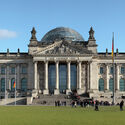
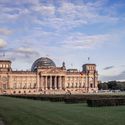
During the Second World War the city was heavily bombed, resulting in the destruction of many historical buildings. During the post-war period, reconstruction efforts focused on rebuilding infrastructure and housing, while the city remained divided until 1989, with the fall of the Berlin wall. After this period, Berlin witnessed a renewed interest in architecture and urban design. Interventions such as David Chipperfield’s Neues Museum aimed to rebuild historical monuments without erasing the markings of their difficult past. Other projects such as the renovation of the Reichstag had a different purpose. Norman Foster’s intervention intended to keep the image of this building but change its symbolism from a structure representative for the Nazi regime to one embracing the ideals of democracy and equality.
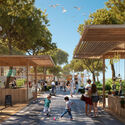
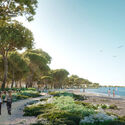
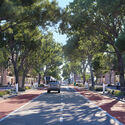
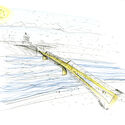
Foster + Partners, working in collaboration with Petrolina Group, has revealed the design of a new master plan to transform the seafront of Larnaca, Cyprus, into a sustainable and enjoyable area for the city residents, future generations, and new visitors. The resort town of Larnaca aims to redesign one of its main arteries, the Larnaca-Dhekelia Road, to become more pedestrian-friendly, along with its seafront. Foster’s proposal aims to enhance the land’s ecological value and to double the length of the waterfront accessible to the public.
Newport School. Image Courtesy of The Norman Foster Foundation
In May this year, The Centre Pompidou in Paris will debut the largest retrospective of Norman Foster's work from the past six decades. The exhibition spans nearly 2,200 square meters, exploring the various phases of the renowned architect’s career. Essential works including the Hong Kong and Shanghai Baking Corporation's headquarters (Hong Kong, 1979–1986), the Carré d'Art (Nîmes, 1984–1993), the Hong Kong International Airport (1992–1998), and the Apple Park (Cupertino, United States, 2009-2017) will be on display.
Foster + Partners, the Norman Foster Foundation, and Norman Foster are working to develop and execute the full retrospective. Through the lenses of the seven chosen themes: Nature and Urbanity, Skin and Bones, Vertical City, History and Tradition, Planning and Location, Networks and Mobility, and Future, the exhibition is set to become a full compilation of the architect’s work.
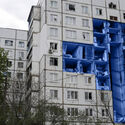
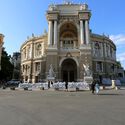
On 24 February 2022, Russia invaded Ukraine, a major escalation of the conflict dating since 2014. Now, a year later, the war is still ongoing. Both soldiers and civilians have fallen victim, while millions of others have become refugees, fleeing to safer areas across Europe or within Ukraine. What was instilled was a severe humanitarian and refugee crisis. The hostilities have also threatened Ukraine’s cultural and architectural heritage, as museums, monuments, and historical landmarks have become targets.
The implications are also reaching Europe and globally, as energy resources and food supplies become scarcer, damaging some economies. Still, Western countries remained unified in their support of Ukraine, as reported by international news outlets. Despite the economic difficulties, international support was mobilized through various initiatives in hopes of helping displaced people, protecting cultural heritage, and mapping a plan for reconstruction.
Somewhere between 1914 and 1915, Le Corbusier designed the Maison Dom-Ino, a groundbreaking modular structure that replaced the heavy load-bearing walls with reinforced concrete columns and slabs. The open floor plan with minimal thin elements, coupled with large glass facades, would ensure healthy natural daylight for the interior spaces as well as desirable architectural transparency that could blur the boundaries between interior and exterior —at least metaphorically.
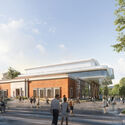
The Bilbao Fine Arts Museum remodeling and expansion project was attributed to Foster + Partners following an international competition in 2019. Now the construction phase was initiated with a breaking ground ceremony on November 17th. The project includes the restoration of the existing 20th-century building and the expansion of the currently available spaces with a new public atrium and a contemporary art gallery organized in a floating pavilion. The design also highlights the relationship between the city and the museum by creating a new pedestrian path that runs from north to south. The path connects the original 1945 building, the 1970s extension, and a new visitor center while making the site more permeable at the street level.
Kharkiv, Kharkiv oblast, Ukraine. Image via Shutterstock
Norman Foster Foundation and Arup office in Berlin schemed a master plan for Kharkiv, Ukraine, to guide future urban regulations and prepare professionals for the city's reconstruction. In collaboration with a local advisory board, the outline is defined by a series of pilot projects to develop aspects such as heritage, infrastructure, and rivers. The initiative follows a request from the Kharkiv Mayor to the Foster Foundation through the United Nations Economic Commission for Europe, weeks after the Ukraine War started in February 2022.
Foster + Partners has revealed the design for a new mixed-use development in the northern end of the central London high street. The building is located on Queensway, opposite the Whitley, the famous department store, which is also being transformed by Foster + Partners as part of a larger redevelopment scheme. Named The William, after William Whiteley, the eponymous founder of the famous Whiteleys, the project includes six floors of office space, shops, and 32 new homes, 11 of which will be affordable.