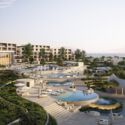
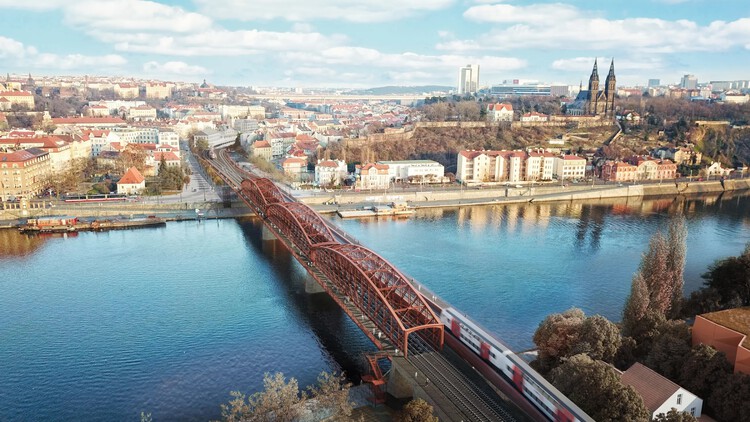
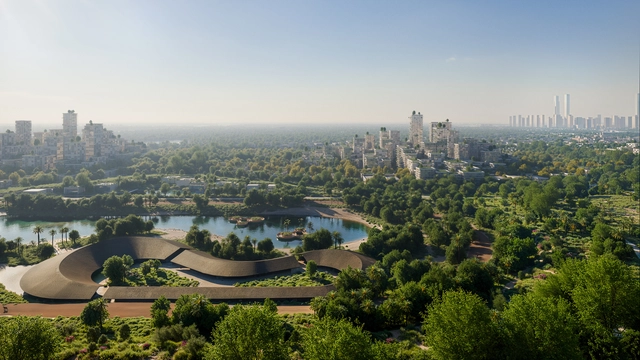
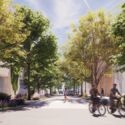
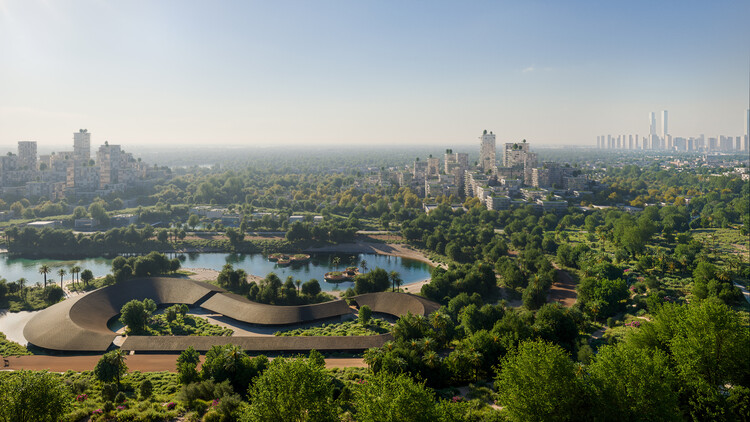
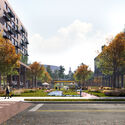
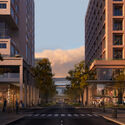
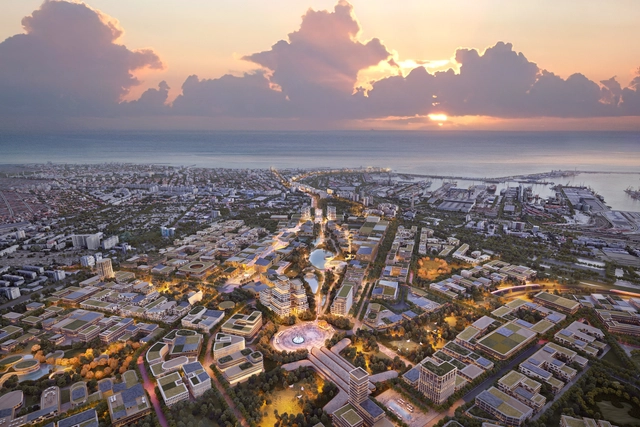
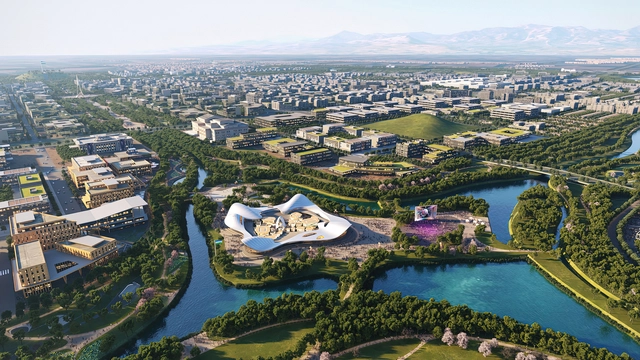
BIG–Bjarke Ingels Group was commissioned by A.R.M. Holding to design the transformation of Dubai's Jebel Ali Racecourse into a new urban district measuring 5 square kilometers. The design aligns with the Dubai 2040 Urban Master Plan, which focuses on enhancing pedestrian mobility as a pillar for promoting sustainable urban development. The master plan is anchored by a central park, reconnecting the racecourse site to the city.
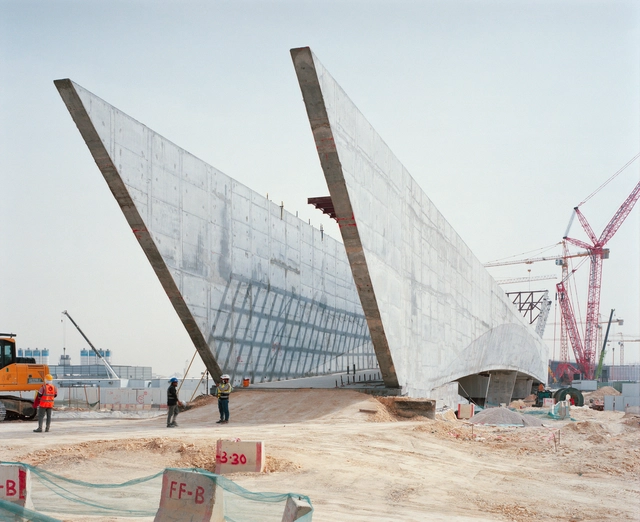
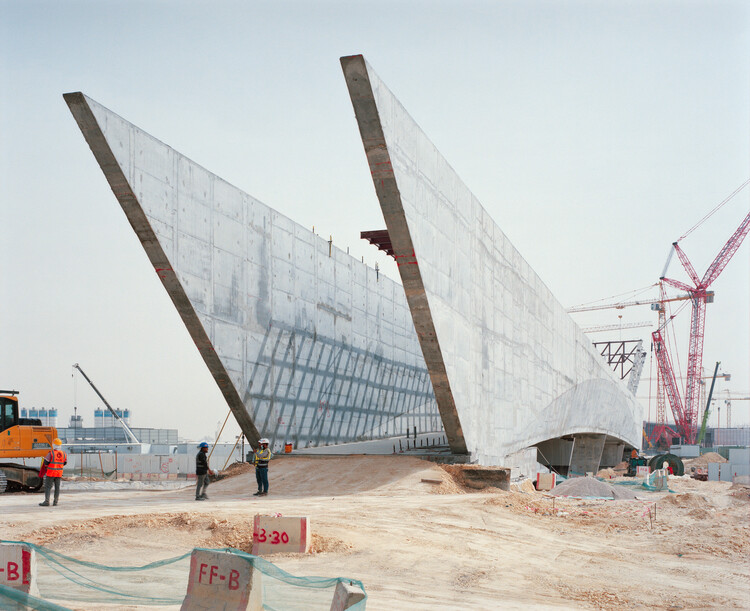
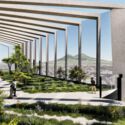
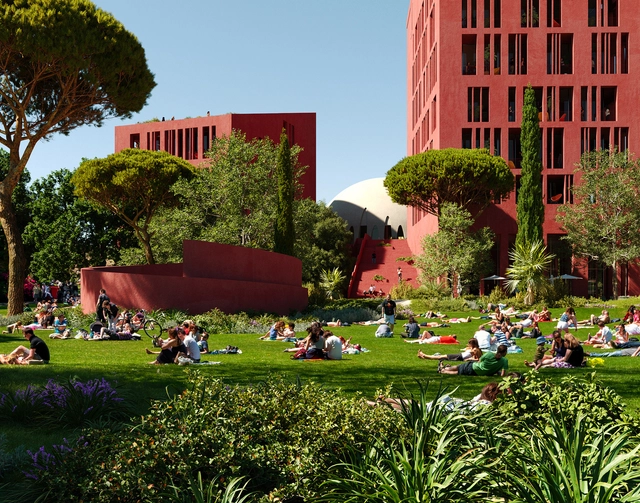
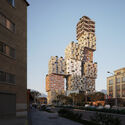
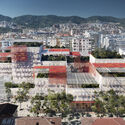
Barcelona-based architecture studio Bofill Taller de Arquitectura was commissioned to design the Royal Arts Complex (RAC) by the Royal Commission for Riyadh City in 2019. Currently under construction, the 320,000-square-meter building complex comprises thirteen structures, each contributing to the promotion of artistic expression. The project is located within King Salman Park, a 13.3-square-kilometer park being developed on the site of Riyadh's former airport. The broader development includes mixed-use projects to transform the area into a major recreational district. The overall masterplan also features a stadium by Populous, planned for the FIFA 2034 World Cup.
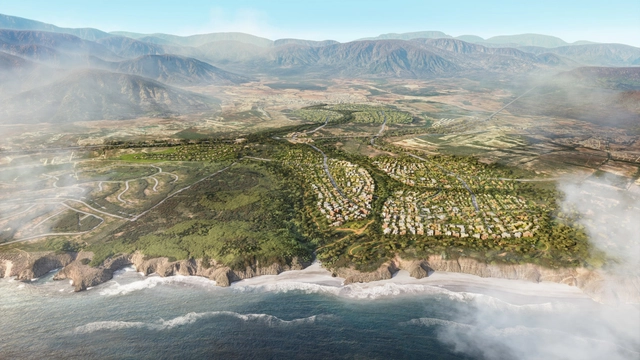
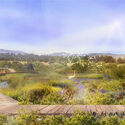
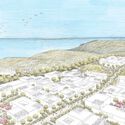
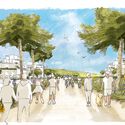
Foster + Partners is developing a comprehensive masterplan for Maratué, a 1,045-hectare site located along the Puchuncaví coast in Chile. Developed for Inmobiliaria Maratué, the project seeks to reconnect the existing town of Puchuncaví with its coastal edge, while conserving and enhancing the region's diverse natural landscapes. The masterplan aims to create a sustainable framework for long-term development, balancing residential growth with environmental protection.
In recent weeks, a number of architecture firms have unveiled new projects that reflect an ongoing shift toward integrated, environmentally responsive urban planning. From Europe to the Middle East and North America, these proposals balance spatial innovation with long-term sustainability, whether through car-free living, passive performance strategies, or adaptive modular construction. While some projects reimagine infrastructure and public institutions, others explore how urban density can coexist with natural ecosystems. This edition of Architecture Now highlights a selection of recently announced masterplans, cultural buildings, and residential communities that offer new models for ecological and social resilience in the built environment.
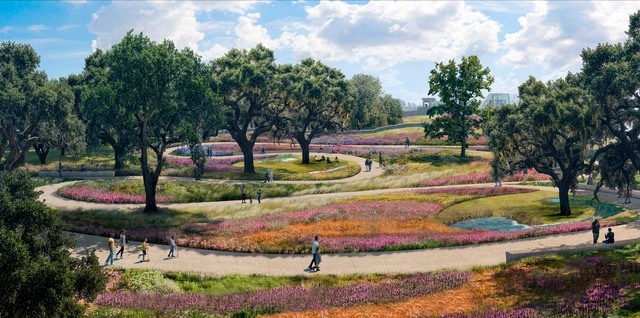
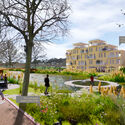
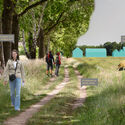
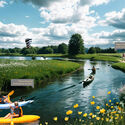
Pollinator Garden and Meadow. Image Courtesy of San Antonio Botanical Garden and Reed Hilderbrand
Reed Hilderbrand Landscape Architecture firm has unveiled images of its strategic master plan for Texas' San Antonio Botanical Garden, in the United States. The plan is designed to guide the future of this public landscape, reflecting long-term objectives focused on accessibility, conservation, and horticultural education. The vision includes a new horticultural campus and a public greenhouse for the site, designed by SO-IL, an architectural design firm based in New York whose 450 Warren housing project in Brooklyn was selected by ArchDaily's audience as the Building of the Year 2024 in the Housing category. The master plan aims at a more ecologically sustainable environment while enhancing the visitor experience across the garden's 38-acre landscape.
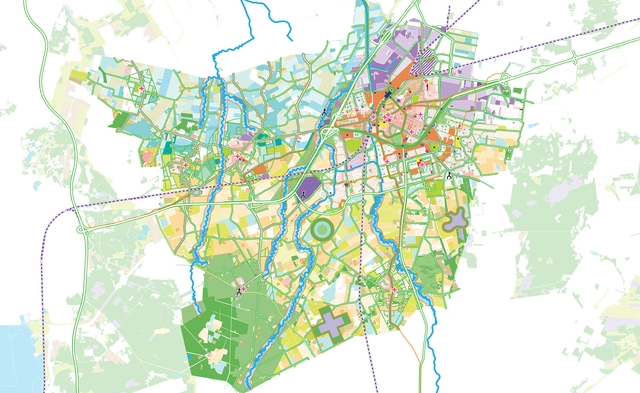
In 2021, the Municipality of Roosendaal began collaborating with MVRDV as an urban development consultant. The firm's partner, Winy Maas, was subsequently appointed as urban advisor, conforming a team that included MVRDV, Rebel Group, Transitiefocus, and other experts. Their task was to consolidate existing projects and initiatives into a unified strategic vision, seeking a mix of bottom-up and top-down planning approaches. The vision, also called "The Mosaic", was developed through a participatory process involving residents. It provides insight at multiple scales, from land-use adjustments across the municipality to over 40 potential projects aimed at harnessing the potential of specific locations. Published as a series of seven interconnected documents, the vision aims to provide Roosendaal with strategies to accommodate growth.
In recent weeks, a series of notable architectural projects have been announced, reflecting a broad spectrum of design approaches aimed at enhancing urban life, infrastructure, and environmental sustainability. From cultural venues to large-scale masterplans and infrastructural advancements, these developments highlight how architecture continues to shape cities and communities. Among them, Knight Architects' Kruunusillat Bridge in Helsinki marks a milestone as Finland's tallest and longest bridge, designed to support sustainable mobility. Meanwhile, Unibail-Rodamco-Westfield's masterplan for Croydon sets out a vision for a vibrant mixed-use district, integrating historic preservation with contemporary urban renewal. At Kew Gardens, Mizzi Studio's Carbon Garden introduces a new permanent installation that explores carbon cycles through landscape design. This collection of recent announcements underscores the evolving priorities in architecture, from connectivity and urban regeneration to climate-conscious interventions.
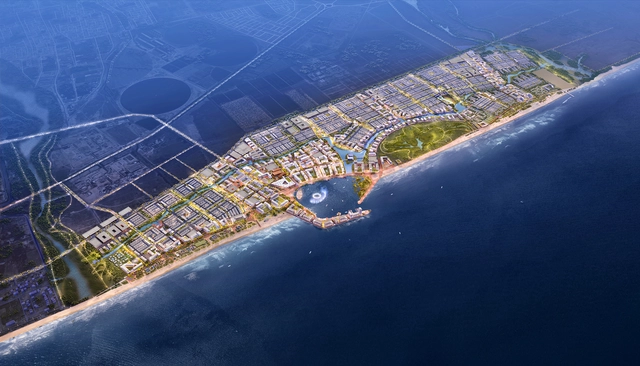
Overall Framework Render. Image Courtesy of Sasaki
Salalah is Oman's largest logistics port and its second-largest city. Located within a two-hour flight from Dubai and a 90-minute flight from Muscat, the city attracted over one million tourists in 2024. As part of the Oman Vision 2040 investment plan, Oman's Ministry of Housing and Urban Planning has commissioned Sasaki to develop a master plan for redesigning the city's waterfront. The plan includes renovating the city's coastal public spaces and constructing new housing and infrastructure to accommodate projected growth. The project is part of a broader initiative to double tourism's contribution to the nation's GDP by 2030, with on-site construction set to begin later this year, in 2025.
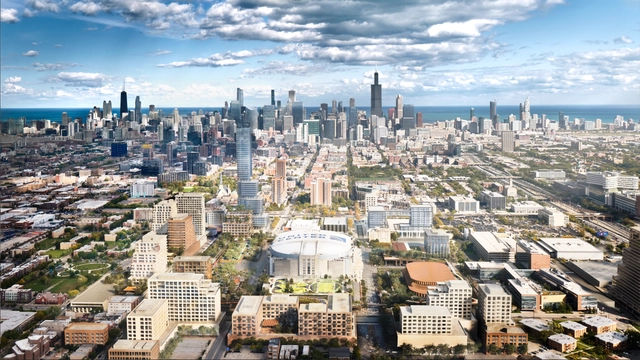
The United Center arena in Chicago, designed by HOK Sport (now Populous), Marmon Mok, and W.E. Simpson Company, was built between 1992 and 1994. With a capacity of over 20,000 seats for sports and general events, it includes more than 6,000 parking spaces in lots surrounding the arena. These parking lots span approximately 55 acres (over 22 hectares) in Chicago's West Side (1901 W. Madison Street). A new master plan, named the 1901 Project, aims to transform this space into a mixed-use neighborhood. Led by design collective RIOS, with contributions from landscape architecture studio Field Operations, this long-term, multi-phase project aims to connect neighborhoods by creating new public spaces and infrastructure on a metropolitan scale. The proposal recently received approval from the Chicago Plan Commission.
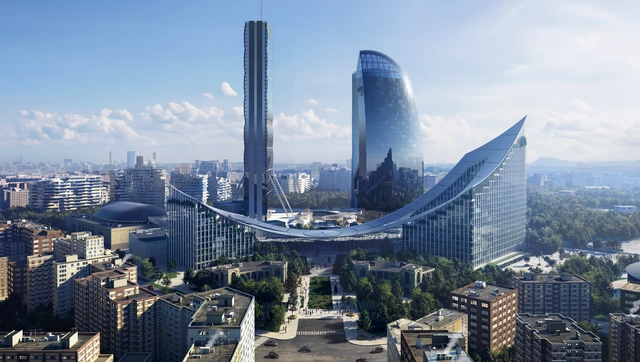
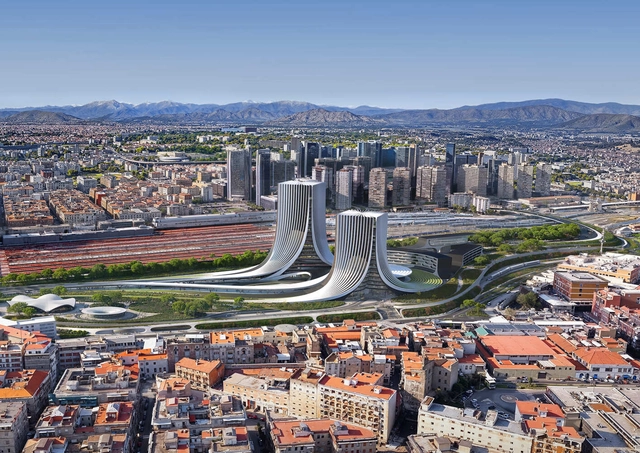
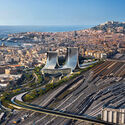
Zaha Hadid Architects (ZHA) has been announced as the winner of the international design competition for the Napoli Porta Est masterplan, a large-scale urban regeneration project in Naples, Italy. The project, which includes the new Campania Region headquarters, aims to reconnect fragmented urban areas and revitalize a district that has long been considered isolated and unsafe due to inadequate public spaces and physical barriers.
Foster + Partners has developed a masterplan for a 38-hectare former industrial site in the heart of Constanța, a port city in Romania's Dobrogea region. The design transforms the site into a "city within a city," incorporating cultural and educational buildings, retail, entertainment, sports and leisure facilities, public parks, and botanical gardens. The project aims to reconnect the urban landscape and enhance the city's experience. The proposal is rooted in Constanța's history, from its Greek and Roman origins to its more recent industrial heritage.
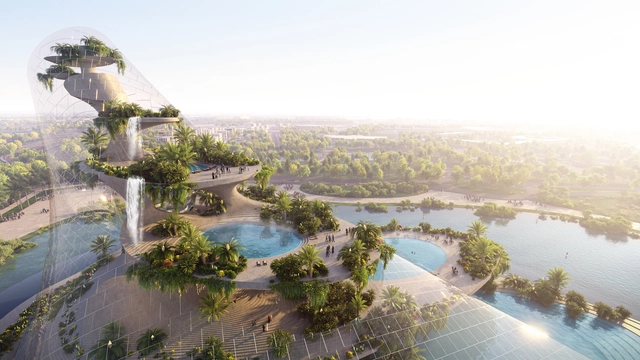
Diller Scofidio + Renfro has unveiled the design for Therme Dubai – Islands in the Sky, a new urban wellbeing destination set to be developed in Zabeel Park, United Arab Emirates. The project, created in collaboration with Therme Group and Dubai Municipality, has been approved as part of Dubai's Quality of Life Strategy 2033, which aims to enhance the city's landscape through innovative and sustainable infrastructure.
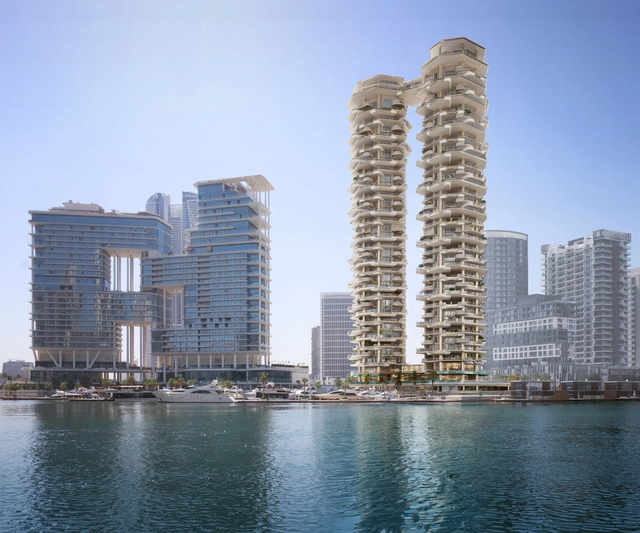
In recent weeks, a series of significant architectural developments have been unveiled, highlighting the work of diverse architecture studios across the globe. These projects, announced between late September 2024 and early 2025, focus on transformative masterplans, housing solutions, and public spaces. Prominent firms such as Foster + Partners, ACPV ARCHITECTS Antonio Citterio Patricia Viel, and fjcstudio are at the forefront of these initiatives. In Dubai, Foster + Partners revealed the Regent Residences, a pair of residential waterfront towers. Meanwhile, ACPV ARCHITECTS announced three projects in Taichung, Taiwan, combining Italian design with Eastern philosophies to create green, community-focused urban spaces. In Sydney, fjcstudio's masterplan for Midtown aims to reshape the city's urban core with two 80-storey mixed-use towers, enhancing connectivity and public engagement. These projects demonstrate the diverse scales and contexts in which architects continue to innovate, shaping cities and communities worldwide.
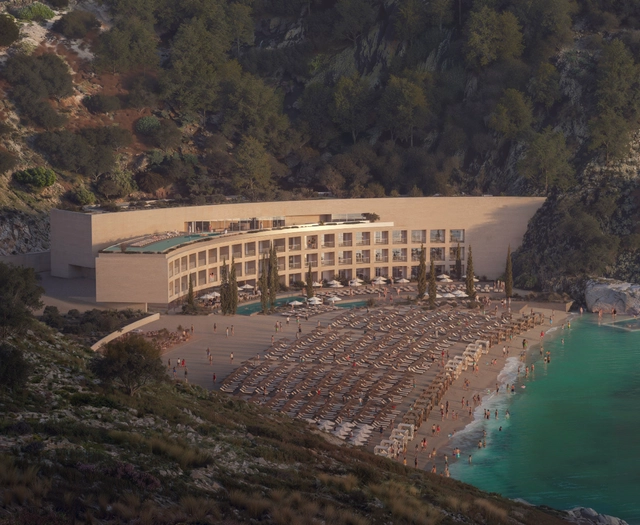
College of Europe's Tirana Campus . Image Courtesy of MIR, Designed by Oppenheim Architects
Tirana, the capital of Albania, is undergoing a remarkable transformation fueled by an ambitious vision for the future outlined in the Tirana 2030 (TR030) Master Plan. This plan, devised by renowned Italian architect Stefano Boeri, aims to reshape the city into a sustainable, green, and inclusive urban hub, with a focus on increasing density while enhancing the quality of life for its residents. Central to this vision are projects such as the creation of an "orbital forest" with two million trees, the revitalization of rivers with green corridors, and the redesign of public spaces like Skanderbeg Square, which has become the largest pedestrian area in the Balkans. According to The Guardian, these initiatives aim to reverse the sprawling urban chaos that followed the fall of communism and accommodate a population that has quadrupled since 1992, while prioritizing quality of life and accessibility.
At the heart of Tirana's transformation is a renewed focus on architecture as a tool for connection, combining cultural identity with contemporary design to create spaces that invite public interaction and engagement. Recent projects announced by renowned architects and international firms including Coldefy, OODA, Oppenheim Architecture, and CHYBIK + KRISTOF showcase a common thread of reimagining the rejuvinated city for the public. These designs emphasize social sustainability, cultural references, and accessible public spaces, redefining how residents and visitors experience Tirana's urban fabric. From mixed-use vertical villages and pedestrian-friendly streets to eco-conscious campuses and civic hubs, these new developments collectively highlight the city's ambition to position itself as a progressive model for urban renewal in the Balkans.
Cross Works just unveiled the plans for New Tashkent, a large-scale expansion of Uzbekistan's capital, Tashkent. The project covers 25,000 hectares to the east of the existing city, located between the Chirchiq and Karasu Rivers. Designed to accommodate an estimated 2.5 million people in the coming decades, the development aims to address population growth in a sustainable manner. The initiative follows an international design competition held in early 2023, which was won by London-based design and technology firm Cross Works. Following their selection, the firm has taken the lead on masterplanning, digital twin development, and coordination of a multidisciplinary team.
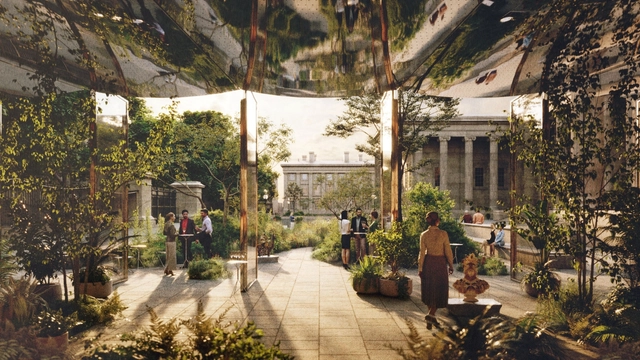
The British Museum has revealed Studio Weave as the lead team selected to design its new visitor welcome pavilions and forecourt as part of a larger redevelopment initiative. The project is one of the Museum's key steps in its extensive Masterplan, which aims to modernize the iconic central London site while preserving its historical significance. The winning proposal was chosen through a competition organized under the Greater London Authority's Architecture + Urbanism framework, which prioritizes diversity and sustainability in design.
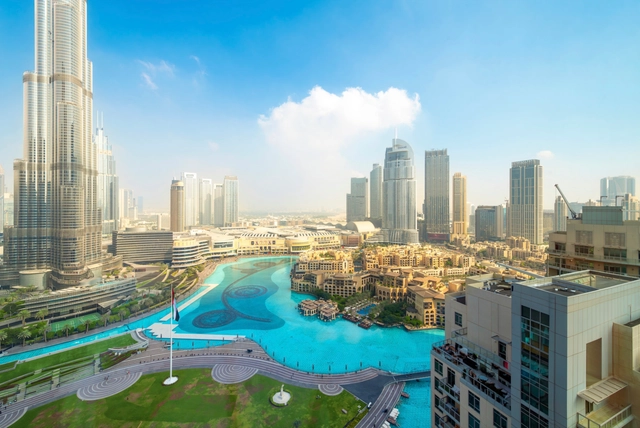
Dubai has just unveiled an ambitious initiative aimed at enhancing pedestrian mobility in the city and promoting sustainable urban development. Announced by Sheikh Mohammed bin Rashid Al Maktoum, Vice President and Ruler of Dubai, the "Dubai Walk Master Plan" envisions transforming the city into a pedestrian-friendly hub by 2040.