1. ArchDaily
  2. Masterplan

Masterplan: The Latest Architecture and News

UNS Designs a 10-Minute Walkable City Master Plan for Multigenerational Living in Seoul, South Korea

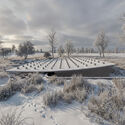
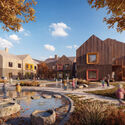
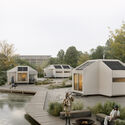
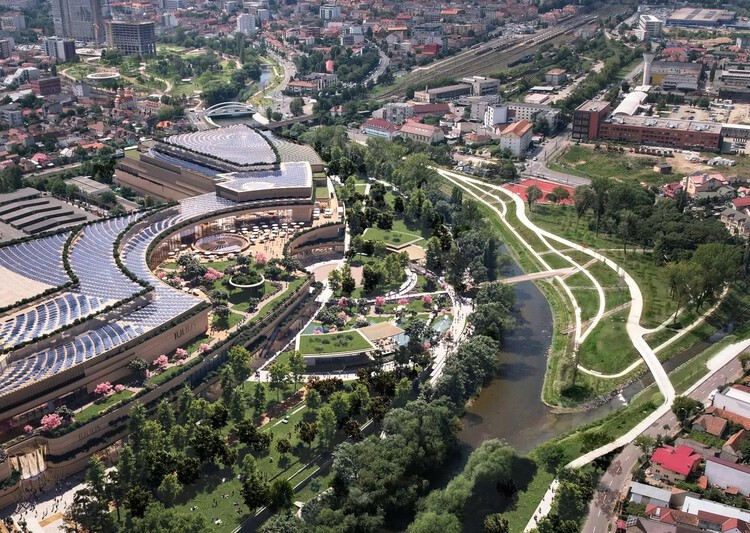
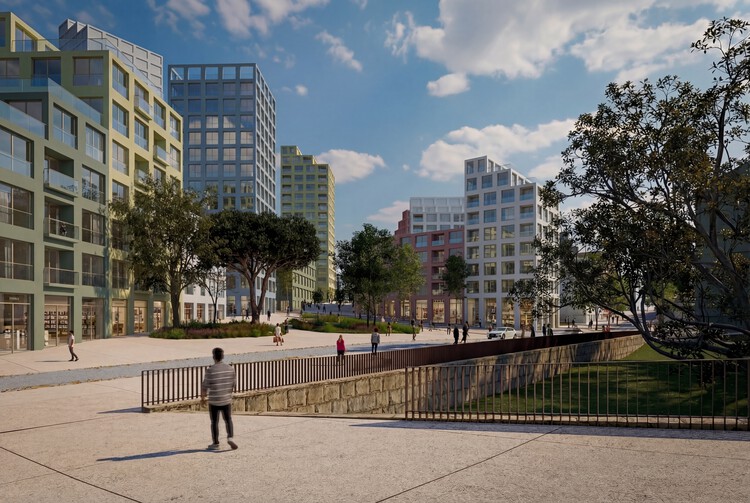
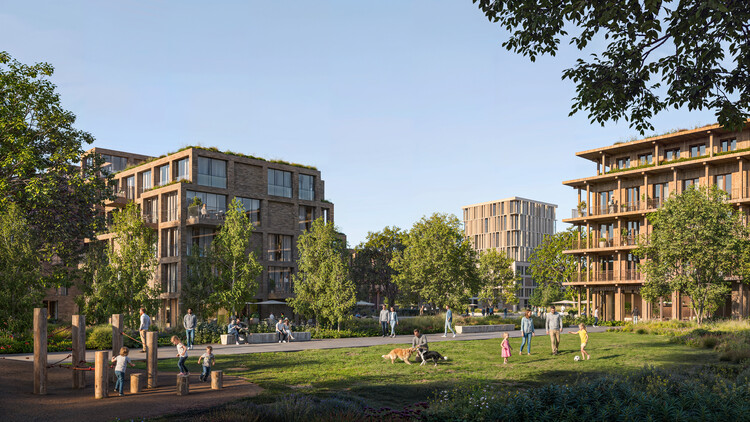
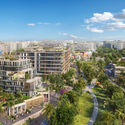
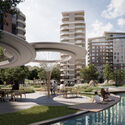
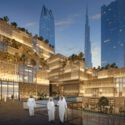
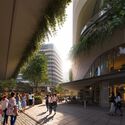
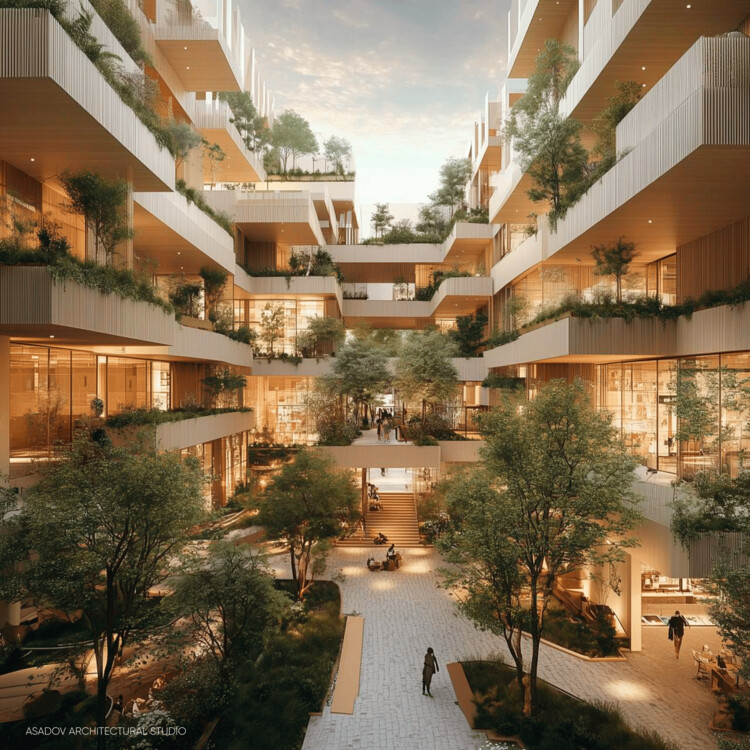
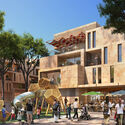
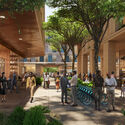
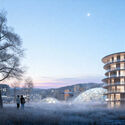
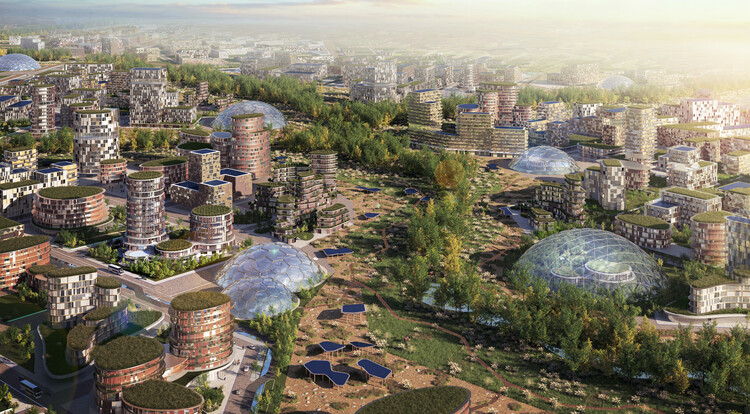
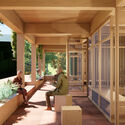
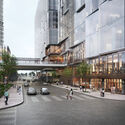
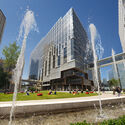
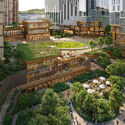
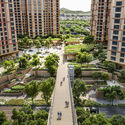
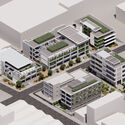
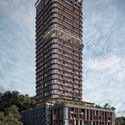
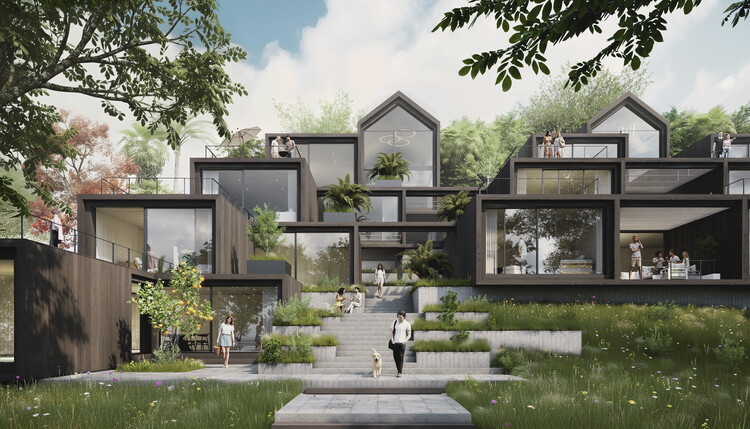
UNS has revealed images of SeoulOne, a master plan designed for Hyundai Development Company (HDC) in Seoul, South Korea, intended as a new model for multigenerational living. The project, already under construction on a brownfield site in the northeast of the city, reimagines an existing industrial site and railway area as a 405,000 m² car-free neighborhood for a multigenerational community. A never-sleeping, green master plan for Seoul, SeoulOne is envisioned as a mixed-use mini-city where all essential services for people of all ages are available within a 10-minute walk. The design includes 24/7 residential towers, retail spaces, offices, a hotel, sports facilities, daycare centers, senior living facilities, and a medical center, offering permanent services within walking distance. More than 30% of the site is dedicated to vegetation, including pocket parks, roof gardens, water gardens, and a forest walk, creating a year-round green village.

UNS Designs a 10-Minute Walkable City Master Plan for Multigenerational Living in Seoul, South Korea - 1 的图像 4UNS Designs a 10-Minute Walkable City Master Plan for Multigenerational Living in Seoul, South Korea - 2 的图像 4UNS Designs a 10-Minute Walkable City Master Plan for Multigenerational Living in Seoul, South Korea - 3 的图像 4UNS Designs a 10-Minute Walkable City Master Plan for Multigenerational Living in Seoul, South Korea - 4 的图像 4UNS Designs a 10-Minute Walkable City Master Plan for Multigenerational Living in Seoul, South Korea - More Images+ 6

From Tirana to Monterrey: 8 Unbuilt Housing Projects Reimagining Collective Living

Subscriber Access | 

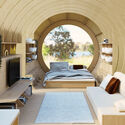
Collective housing remains one of the most active areas for unbuilt architectural exploration, revealing how architects are rethinking domestic life, density, and shared living across different cultural and environmental contexts. In this curated Unbuilt edition, submitted by the ArchDaily community, the selected proposals investigate new forms of dwelling that span mobile units, vertical developments, adaptive reuse, and landscape-driven residential clusters. Rather than treating housing as a purely functional container, these projects position it as a social and spatial framework that shapes everyday life, community ties, and long-term urban resilience.

Across varied geographies, from Tirana and Athens to Monterrey, Chaloos, Roatán, Bhola, and the DRC, these proposals explore multiple approaches to collective living: transforming industrial shells into residential structures, extending existing masterplans through landscape integration, reimagining verticality in dense urban centers, and developing modular prototypes that can adapt to changing climates or patterns of mobility. Some projects prioritize ecological strategies and local materials, while others test new models for accessibility, community well-being, or incremental urban growth. Together, they reflect a broad spectrum of architectural responses to contemporary housing pressures.

From Tirana to Monterrey: 8 Unbuilt Housing Projects Reimagining Collective Living - Image 7 of 4From Tirana to Monterrey: 8 Unbuilt Housing Projects Reimagining Collective Living - Image 17 of 4From Tirana to Monterrey: 8 Unbuilt Housing Projects Reimagining Collective Living - Image 37 of 4From Tirana to Monterrey: 8 Unbuilt Housing Projects Reimagining Collective Living - Image 10 of 4From Tirana to Monterrey: 8 Unbuilt Housing Projects Reimagining Collective Living - More Images+ 44

Barangaroo South Masterplan by RSHP and Lendlease Completes a 15-Year Transformation of Sydney’s Western Waterfront

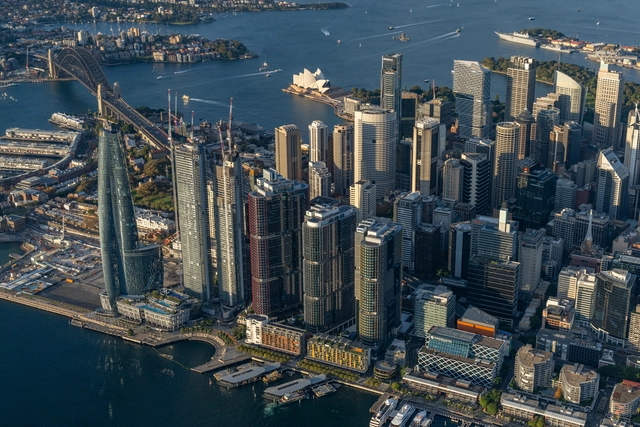
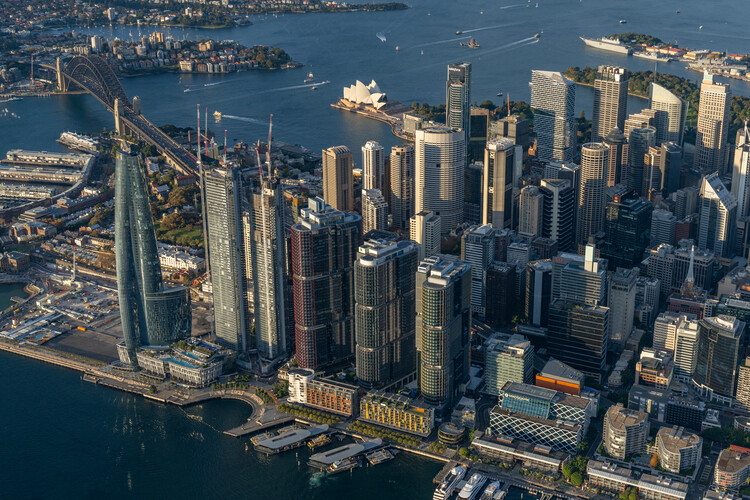
RSHP has announced the completion of the Barangaroo South Masterplan in Sydney, marking the realization of a 15-year redevelopment that has reconnected the city's north-western harbour edge to its urban core. Once a disused container port, the 22-hectare site has been transformed into a mixed-use, carbon-neutral precinct, integrating commercial, residential, and public spaces along the waterfront. Developed in collaboration with Lendlease following an international design competition, the masterplan is organized into three zones: Barangaroo South, a high-density extension of the Central Business District; Barangaroo Reserve, a reconstructed natural headland that reintroduces native landscapes to the harbour; and Barangaroo Central, a low-density residential area linking the northern and southern ends of the development.

Barangaroo South Masterplan by RSHP and Lendlease Completes a 15-Year Transformation of Sydney’s Western Waterfront - Imagem 1 de 4Barangaroo South Masterplan by RSHP and Lendlease Completes a 15-Year Transformation of Sydney’s Western Waterfront - Imagem 2 de 4Barangaroo South Masterplan by RSHP and Lendlease Completes a 15-Year Transformation of Sydney’s Western Waterfront - Imagem 3 de 4Barangaroo South Masterplan by RSHP and Lendlease Completes a 15-Year Transformation of Sydney’s Western Waterfront - Imagem 4 de 4Barangaroo South Masterplan by RSHP and Lendlease Completes a 15-Year Transformation of Sydney’s Western Waterfront - More Images+ 10

Foster + Partners and MANICA to Design New Stadium as Milan Approves Sale of San Siro

On September 30, 2025, AC Milan and Internazionale Milano football clubs announced that the Milan City Council had given preliminary approval for the sale of San Siro Stadium, officially named the Giuseppe Meazza Stadium, one of the city's most recognized sports venues. Located about six kilometers from central Milan, the stadium is among the largest in Europe and was spared from demolition in 2023 after the Regional Commission for the Cultural Heritage of Lombardy recognized its cultural significance.

According to the clubs' joint statement, the City Government's latest decision will enable the design of a new international-standard stadium alongside an urban regeneration project for the surrounding area, reportedly led by Foster + Partners and MANICA. The announcement comes only months before the Milano-Cortina 2026 Winter Olympics, an event that will initiate the farewell period for San Siro as an active venue.

Foster + Partners and MANICA to Design New Stadium as Milan Approves Sale of San Siro - Image 1 of 4Foster + Partners and MANICA to Design New Stadium as Milan Approves Sale of San Siro - Image 2 of 4Foster + Partners and MANICA to Design New Stadium as Milan Approves Sale of San Siro - Image 3 of 4Foster + Partners and MANICA to Design New Stadium as Milan Approves Sale of San Siro - Image 4 of 4Foster + Partners and MANICA to Design New Stadium as Milan Approves Sale of San Siro - More Images

From India to Brazil: 6 Unbuilt Sports and Wellness Spaces Connecting Community and Well-Being

Subscriber Access | 

As cities and landscapes evolve, architecture is increasingly asked to support well-being, performance, and collective experience. From stadiums that honor deep cultural memory to intimate wellness spaces that foster restoration and connection, sports and wellness typologies are expanding beyond mere functionality. They create environments where movement and health intersect with design quality, sustainability, and social meaning. Today, these spaces range from elite training grounds and recreational clubs to contemplative retreats and inclusive public amenities, shaping how communities gather, heal, and celebrate shared identity.

This selection of unbuilt proposals submitted by the ArchDaily community illustrates that diversity. In São Paulo, Luiz Volpato Arquitetura reinvents the historic Santos Futebol Clube stadium with a geometry that preserves fans' memory while introducing new commercial and social uses. In Hanoi, Van Aelst I Nguyen and Partners bring filtered light and fresh air to a dense urban sports complex. In Dubai, RSP proposes Haven, a residential development anchored in holistic wellness and nature-driven experiences, while India's Tropic Responses imagines Aira Club as a climate-conscious leisure hub. High in the Himalayas, Gadasu + Partners carve a meditative spa into mountain stone, and in Isfahan, Arsh4d Studio rethinks segregated women's parks to create inclusive, future-oriented civic space.

From India to Brazil: 6 Unbuilt Sports and Wellness Spaces Connecting Community and Well-Being - Image 14 of 4From India to Brazil: 6 Unbuilt Sports and Wellness Spaces Connecting Community and Well-Being - Image 15 of 4From India to Brazil: 6 Unbuilt Sports and Wellness Spaces Connecting Community and Well-Being - Image 35 of 4From India to Brazil: 6 Unbuilt Sports and Wellness Spaces Connecting Community and Well-Being - Image 27 of 4From India to Brazil: 6 Unbuilt Sports and Wellness Spaces Connecting Community and Well-Being - More Images+ 34

MVRDV Designs Masterplan with Rock-Inspired Tourist Facilities for Jialeshui, Taiwan

MVRDV revealed the design of rock-like tourist facilities and infrastructure for the Taiwanese coastal area of Jialeshui, a scenic destination in the southernmost part of Taiwan. The Pingtung County Government recently selected the design proposal submitted by MVRDV in collaboration with HWC Architects for the transformation of an area known for its rock formations shaped by wind and water, including a series of structures inspired by these natural forms. The project, a masterplan titled Nature Rocks, introduces a network of new pathways and public spaces and adds small-scale buildings, including a central visitor centre and three lookout points, within the existing built footprint.

MVRDV Designs Masterplan with Rock-Inspired Tourist Facilities for Jialeshui, Taiwan - Imagen 1 de 4MVRDV Designs Masterplan with Rock-Inspired Tourist Facilities for Jialeshui, Taiwan - Imagen 2 de 4MVRDV Designs Masterplan with Rock-Inspired Tourist Facilities for Jialeshui, Taiwan - Imagen 3 de 4MVRDV Designs Masterplan with Rock-Inspired Tourist Facilities for Jialeshui, Taiwan - Imagen 4 de 4MVRDV Designs Masterplan with Rock-Inspired Tourist Facilities for Jialeshui, Taiwan - More Images+ 16

AFL Architects’ All-Electric Stadium in Oxford Receives Planning Approval

Oxford United Football Club's planning application for a new all-electric football stadium has been approved by Cherwell District Council. The scheme was developed by a team that includes AFL Architects, Mott Macdonald engineering services, Fabrik landscape design, and Ridge and Partners built environment consultants. Designed for a capacity of 16,000 spectators, the master plan also proposes a 1,000-person events space, a 180-bed hotel, a restaurant, a health and wellbeing centre, and a new public plaza with gardens.

AFL Architects’ All-Electric Stadium in Oxford Receives Planning Approval - Image 1 of 4AFL Architects’ All-Electric Stadium in Oxford Receives Planning Approval - Image 2 of 4AFL Architects’ All-Electric Stadium in Oxford Receives Planning Approval - Image 3 of 4AFL Architects’ All-Electric Stadium in Oxford Receives Planning Approval - Image 4 of 4AFL Architects’ All-Electric Stadium in Oxford Receives Planning Approval - More Images+ 1

From Thessaloniki to Augsburg: Architecture Now and New Project Announcements by Populous, HENN, SLA, and More

Subscriber Access | 

As cities worldwide navigate evolving social, environmental, and cultural priorities, recent project announcements showcase how architecture is increasingly conceived as both civic infrastructure and a catalyst for collective identity. From Populous' new stadium design in Thessaloniki that blurs the lines between sport and urban life, to HENN's transparent cultural stage in Augsburg that invites community participation, these projects illustrate architecture's expanding role beyond its immediate function. In Luxembourg, Schmidt Hammer Lassen's work for the European Investment Bank reimagines institutional spaces through sustainability and heritage, while SLA and GHD's new island community in Toronto pushes forward nature-based, climate-adaptive urbanism. This edition of Architecture Now brings together diverse yet interconnected efforts to shape how architecture can support long-term ecological, cultural, and civic impact.

From Thessaloniki to Augsburg: Architecture Now and New Project Announcements by Populous, HENN, SLA, and More - Image 1 of 4From Thessaloniki to Augsburg: Architecture Now and New Project Announcements by Populous, HENN, SLA, and More - Image 2 of 4From Thessaloniki to Augsburg: Architecture Now and New Project Announcements by Populous, HENN, SLA, and More - Image 3 of 4From Thessaloniki to Augsburg: Architecture Now and New Project Announcements by Populous, HENN, SLA, and More - Image 4 of 4From Thessaloniki to Augsburg: Architecture Now and New Project Announcements by Populous, HENN, SLA, and More - More Images+ 8

Foster+Partners Unveils Urban Regeneration Masterplan for Shanghai’s Putuo District

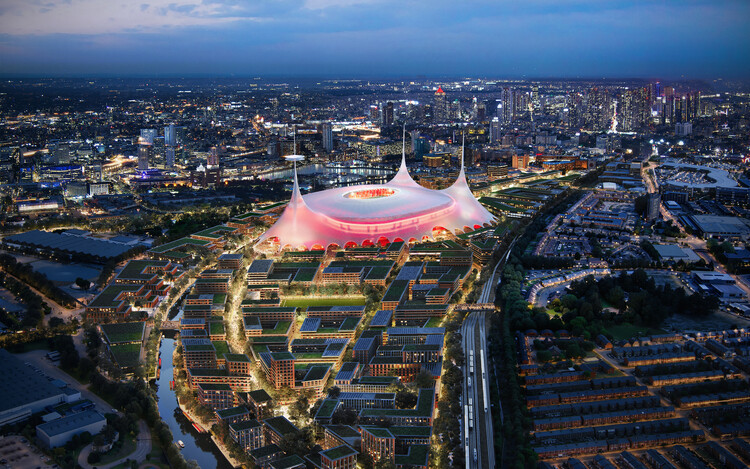
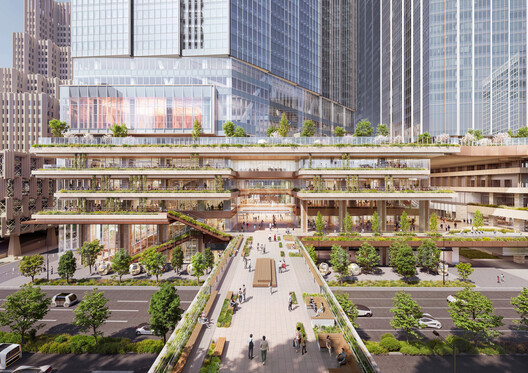
Foster + Partners has won a competition to transform Shanghai's Putuo District. The 3.2-square-kilometre masterplan focuses on the urban regeneration of the area surrounding Shanghai West Railway Station, creating a new gateway to China's most populous city. Structured around key transportation modes, the project includes two parallel pedestrian corridors that connect the station to Zhenru Temple and a new urban center planned on a currently undeveloped site. The masterplan follows the 2024 proposals for the Changfeng mixed-use development within Putuo District's Shanghai Science and Technology Finance cluster, part of the broader Shanghai 2035 Masterplan.

Foster+Partners Unveils Urban Regeneration Masterplan for Shanghai’s Putuo District - Image 1 of 4Foster+Partners Unveils Urban Regeneration Masterplan for Shanghai’s Putuo District - Image 2 of 4Foster+Partners Unveils Urban Regeneration Masterplan for Shanghai’s Putuo District - Image 3 of 4Foster+Partners Unveils Urban Regeneration Masterplan for Shanghai’s Putuo District - Image 4 of 4Foster+Partners Unveils Urban Regeneration Masterplan for Shanghai’s Putuo District - More Images

Zaha Hadid Architects Wins Competition for New Arrivals Terminal at Vilnius Airport, Lithuania

Lithuanian Airports has announced Zaha Hadid Architects as the winner of the international competition to design the new arrivals terminal at Vilnius Airport. Conceived as an integral part of the airport's evolving infrastructure, the new terminal will complement the recently completed departure terminal, enabling Vilnius Airport to accommodate up to 10.6 million passengers annually. The project marks a significant step in the airport's long-term development strategy, addressing future growth in passenger demand while enhancing Lithuania's role as a key gateway in the Baltic region.
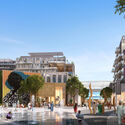
Zaha Hadid Architects Wins Competition for New Arrivals Terminal at Vilnius Airport, Lithuania - Imagen 1 de 4Zaha Hadid Architects Wins Competition for New Arrivals Terminal at Vilnius Airport, Lithuania - Imagen 2 de 4Zaha Hadid Architects Wins Competition for New Arrivals Terminal at Vilnius Airport, Lithuania - Imagen 3 de 4Zaha Hadid Architects Wins Competition for New Arrivals Terminal at Vilnius Airport, Lithuania - Imagen 4 de 4Zaha Hadid Architects Wins Competition for New Arrivals Terminal at Vilnius Airport, Lithuania - More Images+ 3

Living Together: 8 Conceptual Projects Rethinking Collective Housing in Sites from Tehran to Tirana

Subscriber Access | 

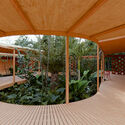
Collective living continues to be a central theme in contemporary housing discourse, one that extends beyond questions of density or typology to engage broader concerns of land use, social cohesion, and spatial identity. This selection of conceptual unbuilt projects, submitted by the ArchDaily community, explores the potentials of shared living environments, not only as functional housing solutions but as frameworks for interaction, environmental integration, and cultural continuity. Whether in urban or remote settings, they reflect a growing interest in rethinking how domestic space can support both individual privacy and communal life.

Expo 2030 Riyadh Unveils First Details of Its Masterplan

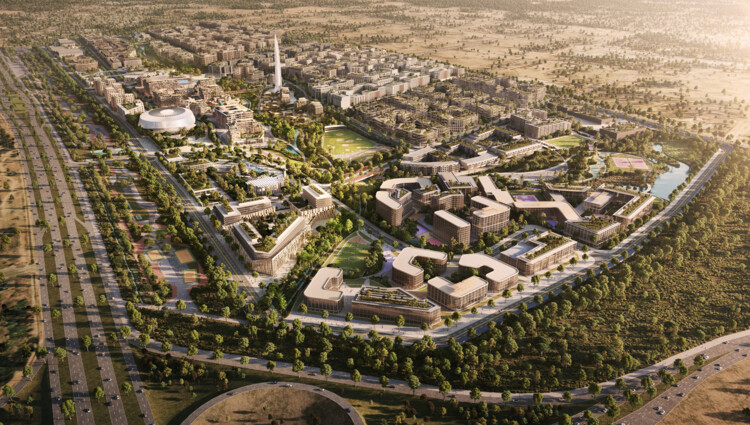
The Bureau International des Expositions (BIE) General Assembly in Paris has officially approved the Registration Dossier for Expo 2030 Riyadh, formally confirming Saudi Arabia as the host of the upcoming World Expo. With this milestone, the next phase of preparations will begin, including the official invitation of participating countries through diplomatic channels. Coinciding with the approval, the initial masterplan for the Expo site designed by LAVA, the Laboratory for Visionary Architecture, has been unveiled. Scheduled to take place from October 1, 2030, to March 31, 2031, the event will be held on a site in Riyadh, designed to accommodate more than 40 million visits and host over 195 participating nations.

Expo 2030 Riyadh Unveils First Details of Its Masterplan - Image 1 of 4Expo 2030 Riyadh Unveils First Details of Its Masterplan - Image 2 of 4Expo 2030 Riyadh Unveils First Details of Its Masterplan - Image 3 of 4Expo 2030 Riyadh Unveils First Details of Its Masterplan - Image 4 of 4Expo 2030 Riyadh Unveils First Details of Its Masterplan - More Images

HWKN Develops AI-Planned Commercial District in Central Sharjah, UAE

Architecture firm HWKN has been commissioned by Al Marwan Real Estate Development to design eleven distinct buildings for a new commercial neighborhood in central Sharjah, the third most populous city in the United Arab Emirates. The district, featuring offices, retail spaces, cafés, childcare and healthcare facilities, specialized institutes, and a mosque, has been fully researched, conceptualized, and planned using Artificial Intelligence (AI).

HWKN Develops AI-Planned Commercial District in Central Sharjah, UAE - Imagem 1 de 4HWKN Develops AI-Planned Commercial District in Central Sharjah, UAE - Imagem 2 de 4HWKN Develops AI-Planned Commercial District in Central Sharjah, UAE - Imagem 3 de 4HWKN Develops AI-Planned Commercial District in Central Sharjah, UAE - Imagem 4 de 4HWKN Develops AI-Planned Commercial District in Central Sharjah, UAE - More Images+ 1

Populous Reveals Designs for Shah Alam Sports Complex Redevelopment in Malaysia

Populous, in collaboration with Malaysian practice HIJJAS Architects + Planners, has released the design for the new Shah Alam Sports Complex in Selangor, Malaysia. Anchoring the Kompleks Sukan Shah Alam (KSSA) masterplan, the stadium sits at the heart of a 188-acre redevelopment led by Populous that aims to transform the site into a major public and civic destination. Originally opened over 25 years ago, the existing Shah Alam Stadium has been a significant venue in the country's sporting history. The new proposal retains the original stadium's silhouette while introducing contemporary architectural and technical upgrades to support current and future needs. Redevelopment works, including the demolition of the aging structure, are planned over 48 months, with completion targeted for 2029.
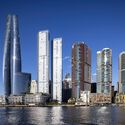
Populous Reveals Designs for Shah Alam Sports Complex Redevelopment in Malaysia - Image 1 of 4Populous Reveals Designs for Shah Alam Sports Complex Redevelopment in Malaysia - Image 2 of 4Populous Reveals Designs for Shah Alam Sports Complex Redevelopment in Malaysia - Image 3 of 4Populous Reveals Designs for Shah Alam Sports Complex Redevelopment in Malaysia - Image 4 of 4Populous Reveals Designs for Shah Alam Sports Complex Redevelopment in Malaysia - More Images+ 3

Architecture Now: Designing Future-Ready Spaces for Work, Culture, and Public Life

Subscriber Access | 

From Bangkok to Billund, a new wave of architectural project announcements is reshaping how spaces for work, culture, mobility, and public life are conceived. Across Norway, Thailand, the United States, Denmark, Australia, and Thailand, these projects reflect an increasing emphasis on technological integration, sustainable construction, and flexible, future-ready environments. Whether designing production hubs for digital creators, adaptable media campuses, or civic landscapes layered with history and ecological intent, each scheme offers insight into how architecture is evolving to support emerging industries, cultural programming, and new forms of public engagement. This edition of Architecture Now brings together a selection of recently announced projects that highlight the intersection of design, technology, and innovation in a global context.

Architecture Now: Designing Future-Ready Spaces for Work, Culture, and Public Life - Image 1 of 4Architecture Now: Designing Future-Ready Spaces for Work, Culture, and Public Life - Image 2 of 4Architecture Now: Designing Future-Ready Spaces for Work, Culture, and Public Life - Image 3 of 4Architecture Now: Designing Future-Ready Spaces for Work, Culture, and Public Life - Image 4 of 4Architecture Now: Designing Future-Ready Spaces for Work, Culture, and Public Life - More Images+ 10