Hotels are increasingly being designed as more than just places for accommodation. As expectations around travel shift, architects are approaching hospitality projects as opportunities to explore ideas of context, experience, and identity. Whether integrated into remote landscapes or inserted into dense urban environments, these proposals examine how architecture can shape the guest experience through spatial organization, material selection, and connection to place. The hotel becomes a framework not only for rest, but for interaction with the surroundings, with others, and with the design itself.
Each month, ArchDaily's editors curate a selection of unbuilt projects around a shared typology or theme. Submitted by firms of all scales from around the world, these proposals represent the diversity of approaches within our global architecture community. This month's selection focuses on hotels, ranging from the sculptural Pistachio Villas in Ubud to the modular Dubai Edition Hotel and the vineyard-rooted Terra Dionysia in Santorini. Together, they reflect a wide spectrum of architectural thinking around hospitality, from landscape integration and cultural references to questions of density and public space. Submissions are open to everyone.
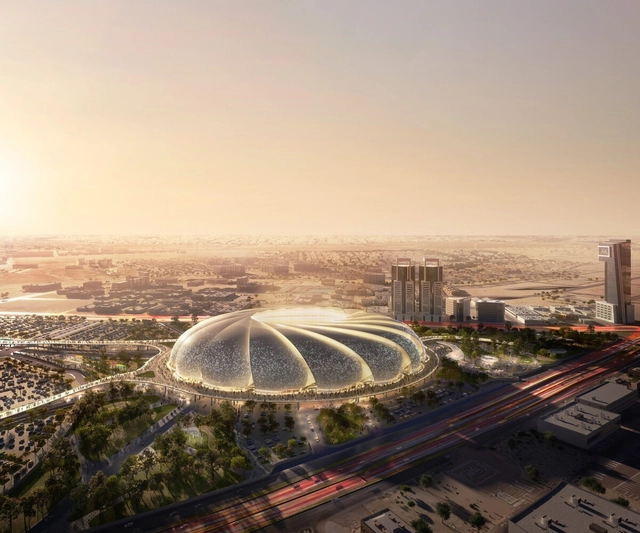
Aramco Stadium / Populous (Al Khobar). Image Courtesy of FIFA / Saudi Arabia 2024 Bid
Saudi Arabia was officially announced as the 2034 FIFA World Cup host. The country plans to build 11 new stadiums and refurbish four of its existing venues. The proposed host cities include Riyadh, Jeddah, Al Khobar, Abha, and the yet-unbuilt Neom, a 170-kilometer-long linear city proposed to be built on the Red Sea coast. Additionally, the plan involves 134 training sites across the country, with 73 newly built facilities.
Released on December 11, 2024, the announcement came as no surprise, given that only one bid was submitted for each of the 2030 and 2034 World Cup tournaments. Spain, Portugal, and Morocco have been confirmed as joint hosts for the 2030 event, while Saudi Arabia has been chosen to host the 2034 edition.
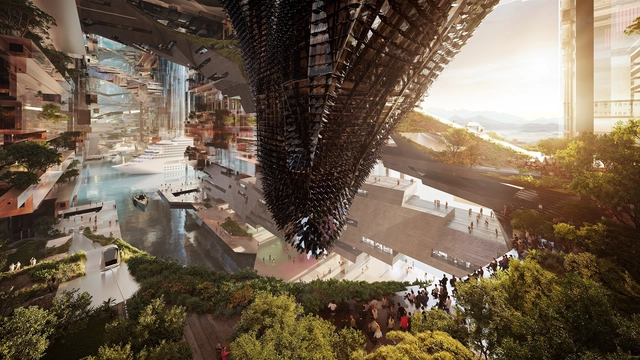
THE LINE, Phase One Strategic Partners. Image Courtesy of NEOM
NEOM has announced the appointment of new partners to advance the city planning, design, and engineering for the initial phase of THE LINE, a core component of its region in northwest Saudi Arabia. The collaboration brings together Delugan Meissl Associate Architects (DMAA), Gensler, and Mott MacDonald, who will work alongside THE LINE's design and development teams to shape the urban landscape, offering expertise in urban design, planning consultancy, and infrastructure development.
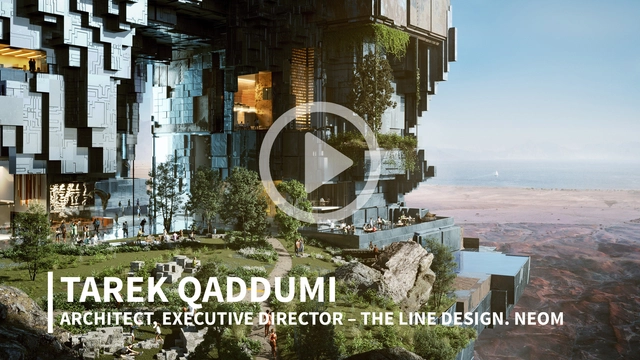
On October 23, 2023, during the closing of the Line Exhibition in Riyadh, Saudi Arabia, ArchDaily’s Editor in Chief, Christele Harrouk spoke to Tarek Qaddumi, Executive Director of The Line Design at NEOM, asking questions that probe into both the conceptual aspects and the technicalities of The Line project. In this video interview, the conversation addresses notions such as accessibility, transportation, and sustainability, while also exploring the concept of Cognitive Cities and the intended phasing of the project.
https://www.archdaily.com/1019840/building-the-line-as-a-three-dimensional-city-in-conversation-with-tarek-qaddumi-executive-director-of-the-line-design-of-neomArchDaily Team
This curated selection of the Best Unbuilt Architecture highlights projects submitted by the ArchDaily community that demonstrate the use of organic shapes in various forms of architecture and program use. Many times, organic architecture stands as a testament to what we are able to make in 2024, innovating in structural and material technology. From Vincent Callebaut’s HospiWood to Zomorrodi & Associates’ Cadence Art Center, these instances showcase this shift in desigin thinking. Whether its a residential villa in the United States or a resort centered around a curved pool in the Netherlands, organic architecture has been trending globally.
Courtesy of New Murabba Development Company | Riyadh
Saudi Arabia, a country going through a tremendous transition, is not only changing its skyline but also redefining its identity on a global level. As part of their 2030 Vision serving as the compass, the kingdom is moving toward new developments, aiming to revive culture and diversify the economy. In fact, the capital, Riyadh, is leading the transformation by hosting the 2030 World Expo. Representing the country’s dedication to advancement, several mega projects are taking place and transforming the kingdom's fabric.
Amidst the various projects, many world-renowned firms are working on these mega projects at many different scales. For example, the cultural renaissance is shown through Snøhetta’s Opera House in Diriyah, while the Jeddah Tower is on a trajectory that will overtake the Burj Khalifa. In the meantime, Heatherwick Studio’s conversion of a Jeddah desalination plant into a thriving cultural center showcases their repurposing of industrial spaces. From coastal projects by Foster + Partners to city center skyscrapers that are redefining the skyline, the country is undergoing significant transformations in its built environment.
NEOM - or "new life" in a blend of Greek and Arabic- is a new urban development planned by the Kingdom of Saudi Arabia. Imagined as a cross-border city located in the northwest of the country, it aims to diversify the economy and reduce its dependence on oil. With promises of sustainability and innovation, the mega development has grabbed global attention with its 10 distinct regions.
It is conceptualized as a cutting-edge metropolis, aspiring to emerge as a worldwide epicenter for groundbreaking advancements and an exemplar of eco-friendly lifestyles. Since its announcement in 2017, NEOM has revealed the plans for 10 central regions, featuring a 170km long skyscraper, a futuristic ski resort, an upside coastal hotel, a tourism destination in a mountainous valley, and many more.
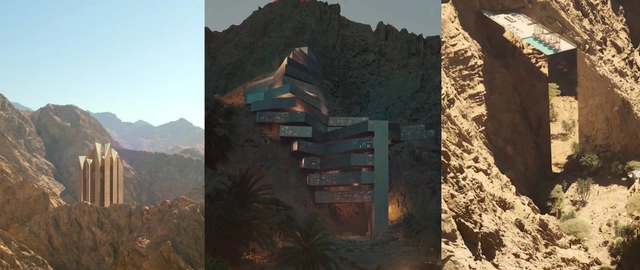
NEOM has just unveiled “Leyja” as a new tourism destination in Northwest Saudi Arabia. Featuring three different hotels by world-renowned architects, the Leyja region is located in an ancient valley overhung by mountains 400 m tall. The project includes a staggering hotel by Chris van Duijn, a mirrored hotel by Shaun Killa, and a vertical rock hotel by Mario Cucinella. In an attempt to support sustainable tourism, the destination is part of the Saudi Vision 2030.
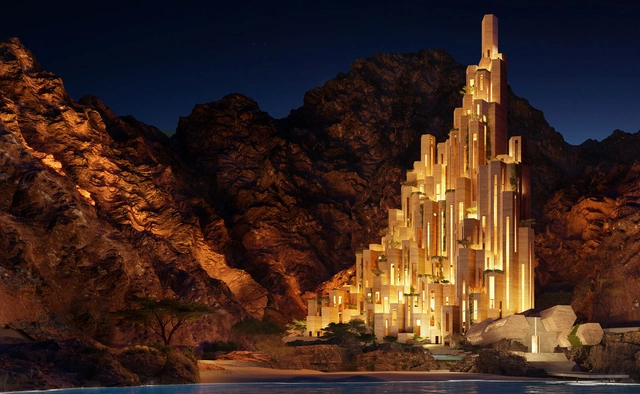
NEOM has just introduced “Siranna,” a new tourism destination within the new sustainable regional development evolving in Northwest Saudi Arabia. Aiming to blend innovation and refinement, while integrating with the coastal terrain, the design seeks to offer a luxury escape, with a 65-key hotel and 35 residences. Prioritizing minimal intervention in nature, Siranna’s development utilizes specific techniques to preserve the local landscape. The architecture pays tribute to the area’s heritage while blending into the mountains and wadi. The initiative aligns with NEOM’s dedication to creating sustainable spaces in nature.
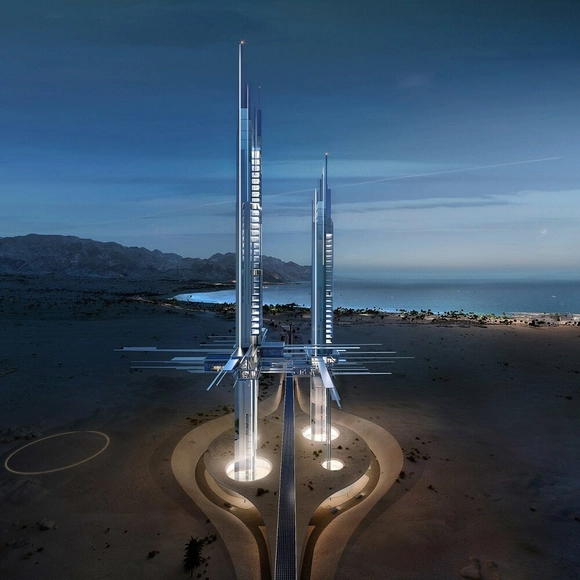
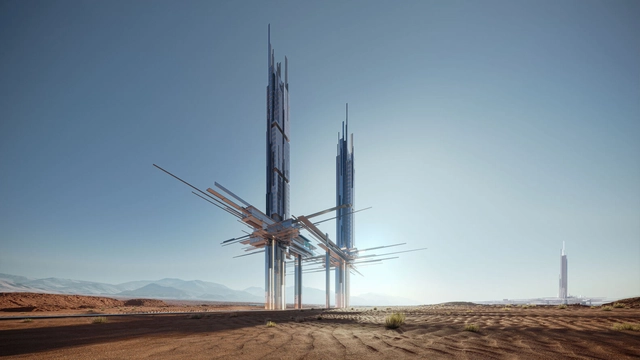
NEOM, Saudi Arabia’s Mega Project, has just announced a new upscale coastal destination within the sustainable regional development in northwest Saudi Arabia. Positioned along the Gulf of Aqaba, Epicon aims to redefine hospitality and architecture standards. Featuring two pointed skyscrapers, it features a prominent hotel and luxury apartments.
The scheme compromises two towers at 225 meters and 275 meters, respectively, housing a premium 41-key hotel and 14 suites and apartments. Nearby, the Epicon resort includes 120 rooms and 45 beach villas, blending coastal living with luxury amenities. Epicon is designed to be a haven from everyday life, providing experiences varying from high-end cuisine to water sports.
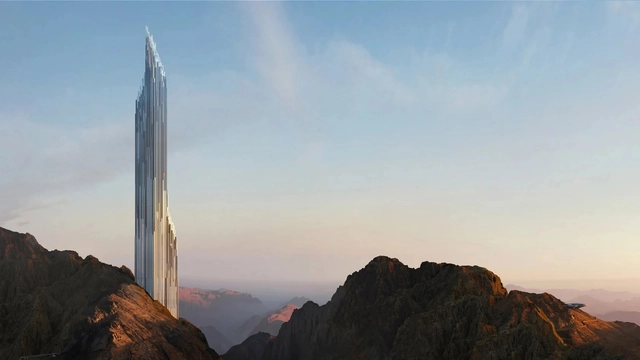
Zaha Hadid Architects has unveiled plans for a striking 330-meter-tall skyscraper within the Trojena ski resort, situated in the Neom development in Saudi Arabia. The design was first presented at the Cityscape Conference in Riyadh as part of an exhibition focused on the Neom project. The new crystal-like skyscraper will be located on a mountain overlooking a central artificial lake, as it is planned to become an integral element of the Trojena, a region allegedly master-planned by LAVA architects. Zaha Hadid Architects have also revealed the design of a second structure within Trojena, a lookout pavilion located next to the skyscraper.
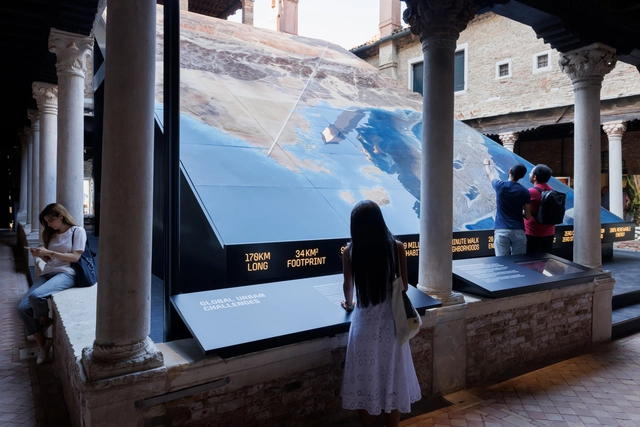
At the 18th International Architecture Exhibition of La Biennale di Venezia, NEOM has unveiled the “Zero Gravity Urbanism- Principles for a New Livability” exhibition to present the concept and standards guiding the design of the Line, their proposed 170-kilometer-long linear city in north-west Saudi Arabia. The event aims to introduce to the public an alternative vision for urban planning whose compact configuration strives to become a model for the development of more efficient and sustainable cities. Prior to the opening of the exhibition, more than 20 internationally recognized architects and designers joined the design team, including Sir Peter Cook, Massimiliano Fuksas, Jean Nouvel, and Ben van Berkel. The exhibition is open from 20 May to 24 September 2023 at Abbazia di San Gregorio, Venice.
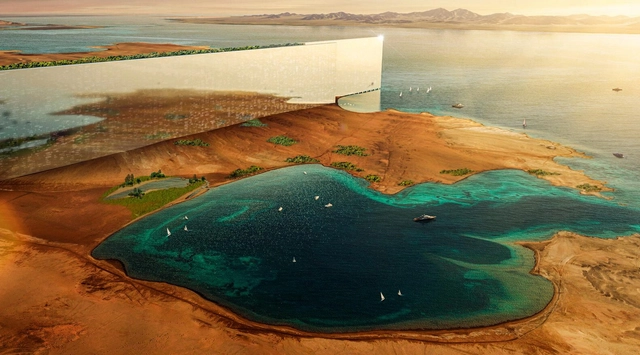
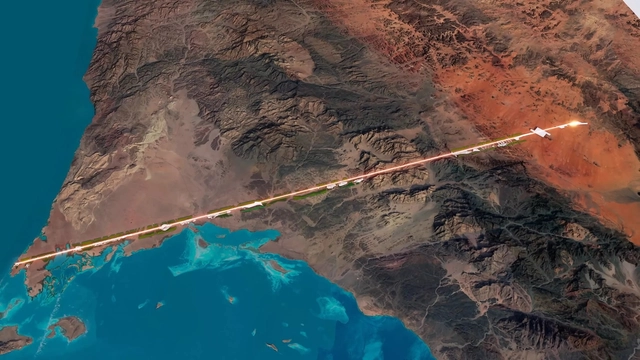
The Saudi Arabian government has released visuals of a 170-kilometer-long skyscraper as part of the NEOM project. Announced by crown prince Mohammed bin Salman, The Line is a reimagined urban development linking the coast of the Red Sea to the mountains and upper valleys of northwest Saudi Arabia. The compact structure, 200 meters wide, represents a social and economic experiment. The city aims to be zero-carbon, through the elimination of carbon-intensive infrastructures like cars and roads, and will operate on 100% renewable energy, including the operations of its industries.
Imagine having a blank canvas on which to master-plan a brand new city; drawing its roads, homes, commerces, and public spaces on a fresh slate and crafting its unique urban identity. Every urban planner has fantasized about designing a city from scratch and luckily for some, this dream is morphing into concrete opportunities.
Over the last two decades, new, master-planned cities have emerged from the ground up at an unprecedented scale, the majority of which have been created in Asia, the Middle East, Africa, and Latin America, with currently over 150 new cities in the making. This new type of urban development has shown to be particularly seductive in emerging markets, where they are sold as key parts of the strategy to leapfrog from agriculture and resource-based systems to knowledge economies by attracting foreign capital and boosting economic growth.
Mohammed bin Salman, Crown Prince of Saudi Arabia, has unveiled plans for a 100-mile long linear city called The Line. Announcing the project in a new video, the city would include a series of walkable communities for a million people with no cars or streets. The project locates essential facilities within a five-minute walk of housing, connected "modules" linking the Red Sea coast with north-west Saudi Arabia as part of the NEOM city-state.
Following the October 2017 unveiling of NEOM, Saudi Arabia’s $500-billion futuristic city billed as a “startup the size of a country,” details of the project's progression have been scarce. Situated close to the border with Jordan and the Red Sea, the remote area has been sealed off to visitors, leaving onlookers to speculate with minimal details, such as the announcement by Japan’s Softbank that they were investing in the megacity.
However, news carried by Reuters suggests that the project may be far more advanced than originally expected, reporting that Saudi Arabia’s King Salman has arrived in NEOM for a holiday. The news marks a break in tradition from the King’s holiday choices, typically a villa in Morocco or the South of France. Reuters also detail a design document revealed to them offering the first descriptions of what the architecture of NEOM may contain.
https://www.archdaily.com/899430/insight-into-secretive-unbuilt-neom-megacity-ahead-of-saudi-royal-visitNiall Patrick Walsh