1. ArchDaily
  2. Architecture Exhibitions

Architecture Exhibitions: The Latest Architecture and News

Slow Pavilions, Chapel Retold, and More: 6 Key Highlights From the First Copenhagen Architecture Biennial

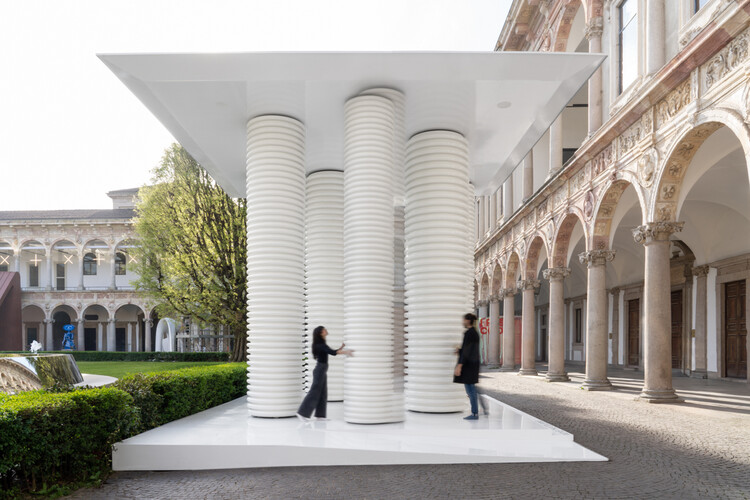
The first edition of the Copenhagen Architecture Biennial opened on September 18 and will run until October 19, under the theme "Slow Down." Organized by CAFx (Copenhagen Architecture Forum), the new platform evolves from the city's previous annual festival into a broader international biennial for architectural dialogue and exchange. Led by Josephine Michau, the event seeks to create space for reflection on architecture's role in shaping societies and the environment. The chosen theme, Slow Down, invites participants to reconsider the pace of transformation in the built environment in response to global pressures such as rapid urbanization, resource consumption, and climate change.

During the opening days, ArchDaily announced the 2025 Next Practices Awards, and throughout the month, the Biennial presents more than 250 events, ranging from exhibitions and talks to performances and guided tours. Highlights include contributions from Danish practices such as Adept with Fast City/Slow Architecture and Lendager with Living Lab, alongside international participants like Atelier Bow-Wow and Rem Koolhaas.

Slow Pavilions, Chapel Retold, and More: 6 Key Highlights From the First Copenhagen Architecture Biennial - 1 的图像 4Slow Pavilions, Chapel Retold, and More: 6 Key Highlights From the First Copenhagen Architecture Biennial - 2 的图像 4Slow Pavilions, Chapel Retold, and More: 6 Key Highlights From the First Copenhagen Architecture Biennial - 3 的图像 4Slow Pavilions, Chapel Retold, and More: 6 Key Highlights From the First Copenhagen Architecture Biennial - 4 的图像 4Slow Pavilions, Chapel Retold, and More: 6 Key Highlights From the First Copenhagen Architecture Biennial - More Images+ 55

The Korean Pavilion at the 2025 Venice Biennale Marks 30 Years with “Little Toad, Little Toad: Unbuilding Pavilion”

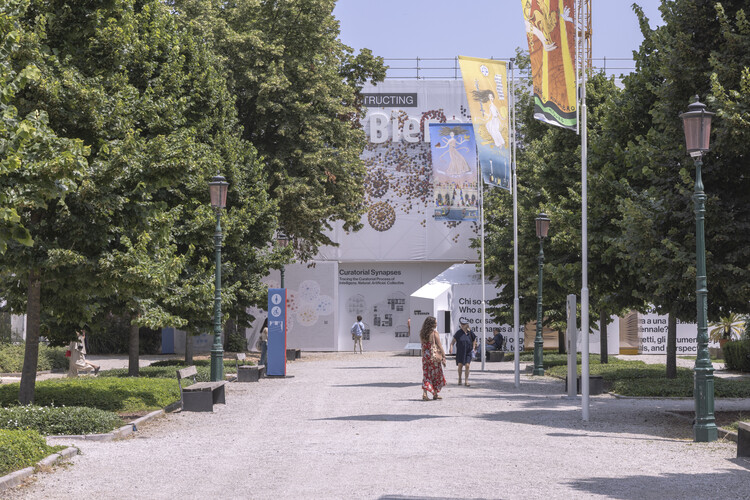
The Korean Pavilion at the 19th International Architecture Exhibition - La Biennale di Venezia marks its 30th anniversary with "Little Toad, Little Toad: Unbuilding Pavilion," an exhibition commissioned by Arts Council Korea (ARKO) and curated by Curating Architecture Collective (CAC), composed of Chung Dahyoung, Kim Heejung, and Jung Sungkyu. Bringing together architects and artists Kim Hyunjong, Heechan Park, Young Yena, and Lee Dammy, the exhibition critically revisits the pavilion as both a physical structure and a symbolic space, tracing its trajectory since its completion in 1995 while speculating on its possible futures.

The Korean Pavilion at the 2025 Venice Biennale Marks 30 Years with “Little Toad, Little Toad: Unbuilding Pavilion” - Image 1 of 4The Korean Pavilion at the 2025 Venice Biennale Marks 30 Years with “Little Toad, Little Toad: Unbuilding Pavilion” - Image 2 of 4The Korean Pavilion at the 2025 Venice Biennale Marks 30 Years with “Little Toad, Little Toad: Unbuilding Pavilion” - Image 3 of 4The Korean Pavilion at the 2025 Venice Biennale Marks 30 Years with “Little Toad, Little Toad: Unbuilding Pavilion” - Image 4 of 4The Korean Pavilion at the 2025 Venice Biennale Marks 30 Years with “Little Toad, Little Toad: Unbuilding Pavilion” - More Images+ 27

Aedes Architecture Forum in Berlin Presents Exhibition on Helin & Co’s Helsinki Urban Projects

From September 6 to October 15, 2025, the Aedes Architecture Forum in Berlin will host an exhibition on the Finnish architectural firm Helin & Co. The show aims to examine the firm's role in shaping Helsinki over the past two decades. Titled Heart and Horizon, it reflects the practice's approach of combining the human scale ("Heart") with an engagement with urban space along the waterfront ("Horizon"). A central focus is placed on three projects that have been fundamental to Helsinki's transformation: the Kamppi Centre, a networked urban quarter with mobility hubs, cultural and residential areas; the Kalasatama Centre, a new district on the former harbour that combines urban density with views of the sea; and the Sello District Centre in Espoo, a multifunctional complex with a library, music school and concert hall.

Aedes Architecture Forum in Berlin Presents Exhibition on Helin & Co’s Helsinki Urban Projects - Image 1 of 4Aedes Architecture Forum in Berlin Presents Exhibition on Helin & Co’s Helsinki Urban Projects - Image 2 of 4Aedes Architecture Forum in Berlin Presents Exhibition on Helin & Co’s Helsinki Urban Projects - Image 3 of 4Aedes Architecture Forum in Berlin Presents Exhibition on Helin & Co’s Helsinki Urban Projects - Image 4 of 4Aedes Architecture Forum in Berlin Presents Exhibition on Helin & Co’s Helsinki Urban Projects - More Images+ 35

The European Cultural Centre Announces 21 Shortlisted Projects for the 2025 ECC Awards

The European Cultural Centre Italy has organized the ECC Awards since 2010 to recognize artists, architects, designers, and academics in their respective fields. The Awards highlight projects featured in the Time Space Existence exhibition, which runs in parallel with the Venice Architecture Biennale and showcases tangible approaches to building more sustainably, aiming to position architecture as a force for environmental and social repair. The seventh edition of Time Space Existence is a group exhibition spanning three Venetian venues: Palazzo Bembo, Palazzo Mora, and the Marinaressa Gardens. This year, the exhibition focuses on the themes of Repair, Regenerate, and Reuse, emphasizing the essential role of architects and designers as agents of positive change in shaping sustainable, inclusive, and regenerative ways of living.

The European Cultural Centre Announces 21 Shortlisted Projects for the 2025 ECC Awards - Imagen 1 de 4The European Cultural Centre Announces 21 Shortlisted Projects for the 2025 ECC Awards - Imagen 2 de 4The European Cultural Centre Announces 21 Shortlisted Projects for the 2025 ECC Awards - Imagen 3 de 4The European Cultural Centre Announces 21 Shortlisted Projects for the 2025 ECC Awards - Imagen 4 de 4The European Cultural Centre Announces 21 Shortlisted Projects for the 2025 ECC Awards - More Images+ 22

The Philippine Pavilion at the 2025 Venice Biennale Reimagines the Relationship Between Architecture and Soil

The Philippines' Pavilion at the 19th International Architecture Exhibition – La Biennale di Venezia presents Soil-beings (Lamánlupa), an exhibition curated by artistic director Renan Laru-an. Through interdisciplinary collaborations, the Pavilion brings together architects, technical experts, indigenous leaders, artists, policymakers, and local communities to explore the cultural, ecological, and technological dimensions of soil. Its objective is to challenge conventional architectural paradigms by shifting the focus from structure to soil, not as a passive material, but as a living force with agency, history, and power.

The Philippine Pavilion at the 2025 Venice Biennale Reimagines the Relationship Between Architecture and Soil - Imagen 1 de 4The Philippine Pavilion at the 2025 Venice Biennale Reimagines the Relationship Between Architecture and Soil - Imagen 2 de 4The Philippine Pavilion at the 2025 Venice Biennale Reimagines the Relationship Between Architecture and Soil - Imagen 3 de 4The Philippine Pavilion at the 2025 Venice Biennale Reimagines the Relationship Between Architecture and Soil - Imagen 4 de 4The Philippine Pavilion at the 2025 Venice Biennale Reimagines the Relationship Between Architecture and Soil - More Images+ 28

Exhibition at Paul Rudolph’s Modulightor Building in New York Unites Works of Architectural Art from Gehry, Rossi, and More

An exhibition of architectural drawings and photographs, titled "Architecture = Art: The Susan Grant Lewin Collection," is now on view at Paul Rudolph's Modulightor Building in Manhattan, New York. Hosted by the Paul Rudolph Institute for Modern Architecture (PRIMA), the collection brings together works by prominent architects, including Eileen Gray, Daniel Arsham, Frank Gehry, Jesse Reiser, Hani Rashid, Steven Holl, Aldo Rossi, Michael Graves, James Wines, Stanley Tigerman, John Hejduk, among others. The drawings are accompanied by a selection of photographs by architectural photographers such as Ezra Stoller, Robin Hill, Norman McGrath, Paul Clemence, and others. The exhibition opened on July 2 and will remain on view until September 20, 2025.

Exhibition at Paul Rudolph’s Modulightor Building in New York Unites Works of Architectural Art from Gehry, Rossi, and More - 1 的图像 4Exhibition at Paul Rudolph’s Modulightor Building in New York Unites Works of Architectural Art from Gehry, Rossi, and More - 2 的图像 4Exhibition at Paul Rudolph’s Modulightor Building in New York Unites Works of Architectural Art from Gehry, Rossi, and More - 3 的图像 4Exhibition at Paul Rudolph’s Modulightor Building in New York Unites Works of Architectural Art from Gehry, Rossi, and More - 4 的图像 4Exhibition at Paul Rudolph’s Modulightor Building in New York Unites Works of Architectural Art from Gehry, Rossi, and More - More Images+ 16

North Macedonia Pavilion at the Venice Architecture Biennale Revisits the Brutalist Architecture of Skopje

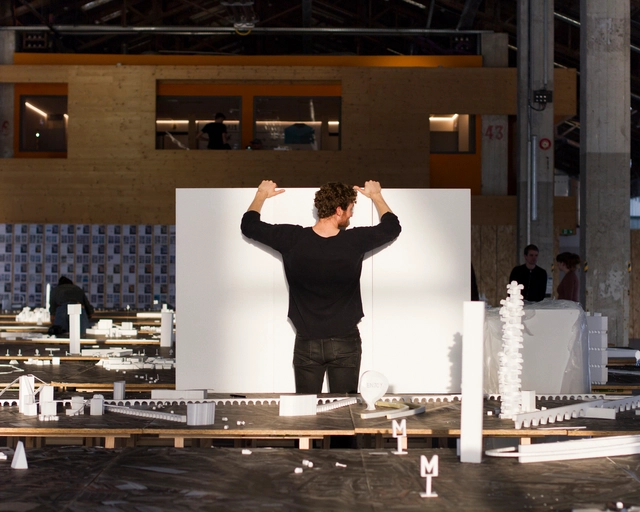
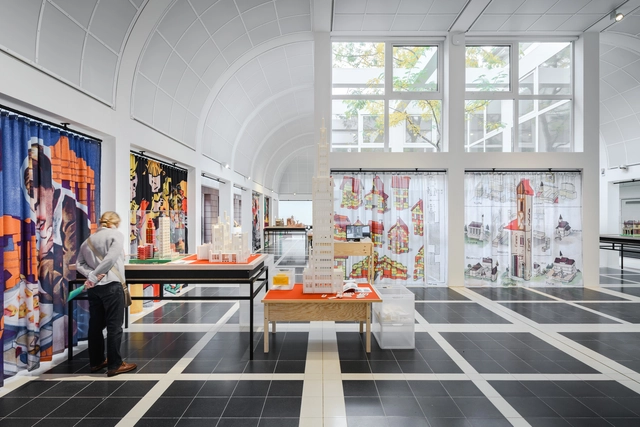
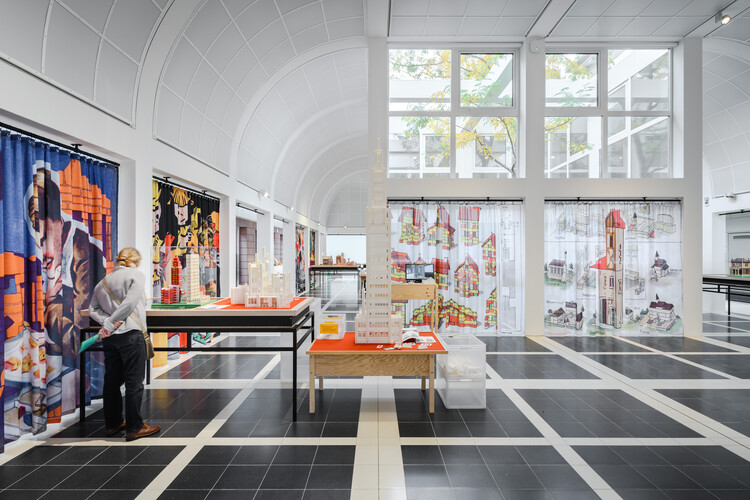
The Republic of North Macedonia Pavilion at the 19th Venice Architecture Biennale is dedicated to the Brutalist architecture of its capital city, Skopje. This architectural movement has given the city a distinctive identity following the earthquake that struck in 1963. According to pavilion curator, architect Blagoja Bajkovski, in the aftermath of the disaster, Skopje embraced Brutalism from a variety of sources. One of the most prominent of these was Kenzo Tange's reconstruction plan, developed after an international competition organized by the United Nations in 1965. The exhibition, titled Strada Brutalissima, recounts this identity, the events that shaped it, and the buildings that continue to represent it through a series of architectural models. Inspired by the 1980 Venice Architecture Biennale's Strada Novissima, the project reinterprets the concept of a curated "street," this time centered on Skopje's Brutalist heritage.

North Macedonia Pavilion at the Venice Architecture Biennale Revisits the Brutalist Architecture of Skopje - Image 1 of 4North Macedonia Pavilion at the Venice Architecture Biennale Revisits the Brutalist Architecture of Skopje - Image 2 of 4North Macedonia Pavilion at the Venice Architecture Biennale Revisits the Brutalist Architecture of Skopje - Image 3 of 4North Macedonia Pavilion at the Venice Architecture Biennale Revisits the Brutalist Architecture of Skopje - Image 4 of 4North Macedonia Pavilion at the Venice Architecture Biennale Revisits the Brutalist Architecture of Skopje - More Images+ 20

Kosovo Pavilion at the Venice Architecture Biennale Explores Shifting Agricultural Landscapes Through Soil and Scent

The Republic of Kosovo brings this year to the 19th Venice Architecture Biennale an exhibition titled Lulebora nuk çel më. Emerging Assemblages. The exhibit was commissioned by the National Gallery of Kosovo and curated by the architect, interdisciplinary designer, and researcher Erzë Dinarama. Reflecting on the country's shifting agricultural landscapes in the context of ecological uprooting and embodied knowledge systems under climate pressure, the installation offers a sensorial exploration of Kosovan fieldwork. Combining a range of local soil materials with a hanging olfactory calendar, the Pavilion invites visitors to imagine through touch and smell.

Kosovo Pavilion at the Venice Architecture Biennale Explores Shifting Agricultural Landscapes Through Soil and Scent - Featured ImageKosovo Pavilion at the Venice Architecture Biennale Explores Shifting Agricultural Landscapes Through Soil and Scent - Imagem 1 de 4Kosovo Pavilion at the Venice Architecture Biennale Explores Shifting Agricultural Landscapes Through Soil and Scent - Imagem 2 de 4Kosovo Pavilion at the Venice Architecture Biennale Explores Shifting Agricultural Landscapes Through Soil and Scent - Imagem 3 de 4Kosovo Pavilion at the Venice Architecture Biennale Explores Shifting Agricultural Landscapes Through Soil and Scent - More Images+ 14

Albania Pavilion Explores the Intersections of Architecture, History, and Identity at the 2025 Venice Biennale

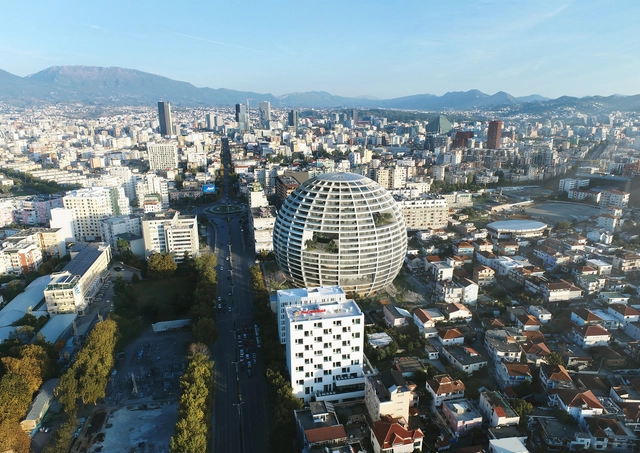
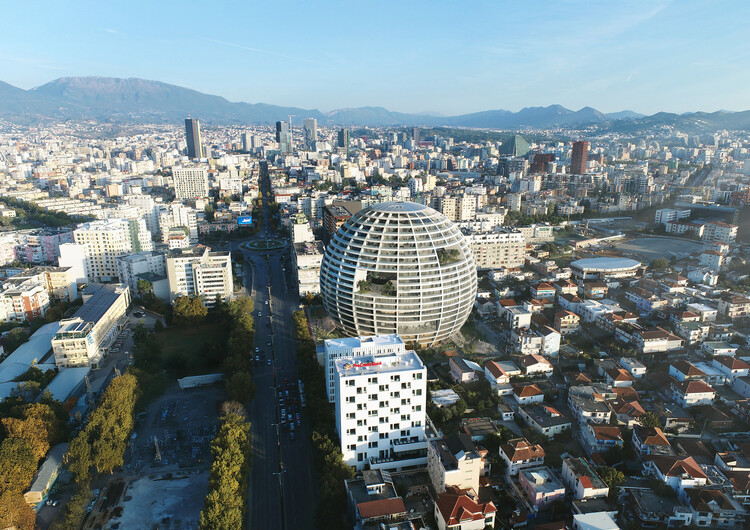
Curated by Anneke Abhelakh, the Albania Pavilion at the 2025 Venice Architecture Biennale, titled "Building Architecture Culture", explores how the country's architecture embodies its political, cultural, and social transformations. Albania's built environment reflects a layered history, from Ottoman and Italian rule to communist isolation and post-socialist transformation, each leaving visible marks on its cities and public spaces. The pavilion examines how architecture both responds to and shapes collective memory, public space, and civic engagement, framing these questions through past, present, and future perspectives.

Albania Pavilion Explores the Intersections of Architecture, History, and Identity at the 2025 Venice Biennale - Image 1 of 4Albania Pavilion Explores the Intersections of Architecture, History, and Identity at the 2025 Venice Biennale - Image 2 of 4Albania Pavilion Explores the Intersections of Architecture, History, and Identity at the 2025 Venice Biennale - Image 3 of 4Albania Pavilion Explores the Intersections of Architecture, History, and Identity at the 2025 Venice Biennale - Image 4 of 4Albania Pavilion Explores the Intersections of Architecture, History, and Identity at the 2025 Venice Biennale - More Images+ 25

Halfway Through Expo 2025 Osaka: 10 Must-Visit Pavilions

As Expo 2025 Osaka passes the midpoint of its six-month duration on July 13, the international exposition continues to serve as a global platform for architectural experimentation, cultural exchange, and technological innovation. Officially opened on April 13 on the reclaimed island of Yumeshima, the event is organized under the theme "Designing Future Society for Our Lives," and has already welcomed more than 13 million visitors as of late July. Conceived as a space for collaboration across disciplines and borders, the Expo brings together more than 150 national, thematic, and corporate pavilions.

Halfway Through Expo 2025 Osaka: 10 Must-Visit Pavilions - Image 1 of 4Halfway Through Expo 2025 Osaka: 10 Must-Visit Pavilions - Image 2 of 4Halfway Through Expo 2025 Osaka: 10 Must-Visit Pavilions - Image 3 of 4Halfway Through Expo 2025 Osaka: 10 Must-Visit Pavilions - Image 4 of 4Halfway Through Expo 2025 Osaka: 10 Must-Visit Pavilions - More Images+ 6

Works by TAKK and ecoLogicStudio on Display at the Second Edition of the Solar Biennale at Lausanne's Mudac Museum

Soleil·s, the second edition of the Solar Biennale, is currently open at mudac, the Museum of Contemporary Design and Applied Arts in Lausanne, Switzerland. Following the first edition hosted at Het Nieuwe Instituut in Rotterdam in 2022, this exhibition explores how design can drive the adoption of solar innovations toward a sun-powered future. The event is initiated by The Solar Movement, founded by designers Marjan van Aubel and Pauline van Dongen, an initiative dedicated to making solar energy the default power source by combining design, technology, and advocacy. This year's exhibition is curated by mudac and offers an immersive experience featuring new and existing projects by TAKK, ecoLogicStudio, Olafur Elíasson, and Andreas Gursky.

Works by TAKK and ecoLogicStudio on Display at the Second Edition of the Solar Biennale at Lausanne's Mudac Museum - Imagem 1 de 4Works by TAKK and ecoLogicStudio on Display at the Second Edition of the Solar Biennale at Lausanne's Mudac Museum - Imagem 2 de 4Works by TAKK and ecoLogicStudio on Display at the Second Edition of the Solar Biennale at Lausanne's Mudac Museum - Imagem 3 de 4Works by TAKK and ecoLogicStudio on Display at the Second Edition of the Solar Biennale at Lausanne's Mudac Museum - Imagem 4 de 4Works by TAKK and ecoLogicStudio on Display at the Second Edition of the Solar Biennale at Lausanne's Mudac Museum - More Images+ 36

Moroccan Pavilion at the Venice Architecture Biennale Showcases Earth as a Sustainable Building Material

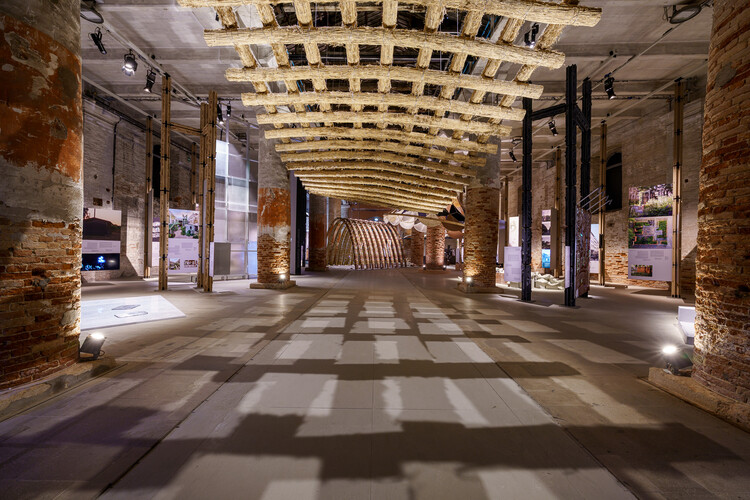
The Kingdom of Morocco's exhibition at the 19th International Architecture Exhibition – La Biennale di Venezia highlights Moroccan earth architecture and traditional construction techniques. The exhibition, titled Materiae Palimpsest, was curated by architects Khalil Morad El Ghilali and El Mehdi Belyasmine. In an exploration that blends ancient techniques with digital technologies, the exhibit features textile works by architect and artist Soumyia Jalal, along with holograms of artisans and tactile installations. The narrative presents earth as a renewable resource and sustainable material, and earth construction as a key to both preserving architectural heritage and addressing contemporary ecological and social challenges. Materiae Palimpsest offers an invitation to rethink architecture's current relationship with building materials, opening the way to locally rooted construction methods.

Moroccan Pavilion at the Venice Architecture Biennale Showcases Earth as a Sustainable Building Material - 1 的图像 4Moroccan Pavilion at the Venice Architecture Biennale Showcases Earth as a Sustainable Building Material - 2 的图像 4Moroccan Pavilion at the Venice Architecture Biennale Showcases Earth as a Sustainable Building Material - 3 的图像 4Moroccan Pavilion at the Venice Architecture Biennale Showcases Earth as a Sustainable Building Material - 4 的图像 4Moroccan Pavilion at the Venice Architecture Biennale Showcases Earth as a Sustainable Building Material - More Images+ 17

A Restored Module from Tokyo’s Nakagin Capsule Tower Goes on Year-Long Display at MoMA

The Museum of Modern Art (MoMA) in New York is hosting an exhibition dedicated to Japanese architect Kisho Kurokawa's Nakagin Capsule Tower from July 10, 2025, through July 12, 2026. Titled The Many Lives of the Nakagin Capsule Tower, the exhibition offers a retrospective on the building's 50-year lifespan. Constructed in Tokyo's Ginza district in 1972 and dismantled in 2022, the tower is presented through contextual materials, original drawings, archival recordings, and a fully restored capsule. The exhibition invites reflection on how cities address aging buildings and the rapid transformation of urban areas. The diverse materials documenting the tower's continuous evolution over five decades encourage viewers to consider how architecture might endure by taking on new roles and functions beyond its original purpose.

A Restored Module from Tokyo’s Nakagin Capsule Tower Goes on Year-Long Display at MoMA - Imagen 1 de 4A Restored Module from Tokyo’s Nakagin Capsule Tower Goes on Year-Long Display at MoMA - Imagen 2 de 4A Restored Module from Tokyo’s Nakagin Capsule Tower Goes on Year-Long Display at MoMA - Imagen 3 de 4A Restored Module from Tokyo’s Nakagin Capsule Tower Goes on Year-Long Display at MoMA - Imagen 4 de 4A Restored Module from Tokyo’s Nakagin Capsule Tower Goes on Year-Long Display at MoMA - More Images+ 11

Studio Gang Projects Exhibition Inspired by Horticultural Grafting Opens at Aedes Berlin

Studio Gang is an architecture and urban design practice founded in 1997 by Jeanne Gang and based in Chicago, with additional offices in New York, San Francisco, and Paris. Comprised of over 100 professionals, including architects, designers, and planners, the studio is known for its research-driven approach to design. On Friday, July 11, the Aedes Architecture Forum in Berlin will inaugurate an exhibition on Studio Gang's work, organized in collaboration with AW Architektur & Wohnen magazine. Titled Studio Gang: The Art of Architectural Grafting, the exhibition explores the studio's design methodology through six recent projects.

Studio Gang Projects Exhibition Inspired by Horticultural Grafting Opens at Aedes Berlin - Imagen 1 de 4Studio Gang Projects Exhibition Inspired by Horticultural Grafting Opens at Aedes Berlin - Imagen 2 de 4Studio Gang Projects Exhibition Inspired by Horticultural Grafting Opens at Aedes Berlin - Imagen 3 de 4Studio Gang Projects Exhibition Inspired by Horticultural Grafting Opens at Aedes Berlin - Imagen 4 de 4Studio Gang Projects Exhibition Inspired by Horticultural Grafting Opens at Aedes Berlin - More Images+ 11

The Spanish Biennial of Architecture and Urbanism 2025 Addresses the Challenges of Hyperconnectivity

The seventeenth edition of the Spanish Biennial of Architecture and Urbanism (BEAU) will take place in December 2025. The event consists of an exhibition hosted in a former thermal power station repurposed as a cultural center in Ponferrada, in northeastern Spain. This edition will be curated by architects Ander Bados Sesma, from Atelier Ander Bados, and Miguel Ramón López, a Ponferrada native and architect at Estudio Lamela, under the curatorial proposal titled flujos comun.es ("common flows"). Their curatorial proposal responds to the theme of the open call: Architecture as a Policy for Change, an invitation to reflect on the role of the discipline in processes of social, economic, and environmental transformation. Within this framework, flujos comun.es presents a critical perspective on the challenges associated with hyperconnectivity. The call for proposals and project submissions is currently open, and will be until the end of July, depending on the category.

The Spanish Biennial of Architecture and Urbanism 2025 Addresses the Challenges of Hyperconnectivity - Imagen 4 de 4The Spanish Biennial of Architecture and Urbanism 2025 Addresses the Challenges of Hyperconnectivity - Featured ImageThe Spanish Biennial of Architecture and Urbanism 2025 Addresses the Challenges of Hyperconnectivity - Imagen 1 de 4The Spanish Biennial of Architecture and Urbanism 2025 Addresses the Challenges of Hyperconnectivity - Imagen 2 de 4The Spanish Biennial of Architecture and Urbanism 2025 Addresses the Challenges of Hyperconnectivity - More Images