1. ArchDaily
  2. Italian

Italian: The Latest Architecture and News

The Italian Pavilion at the Venice Architecture Biennale Urges a Rethink of the Relationship Between Land and Sea

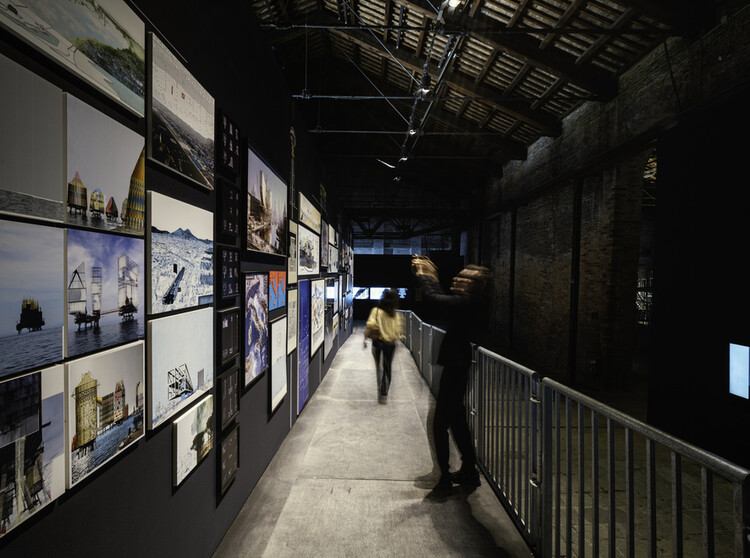
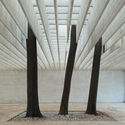
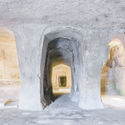
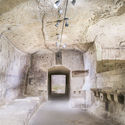
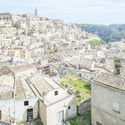
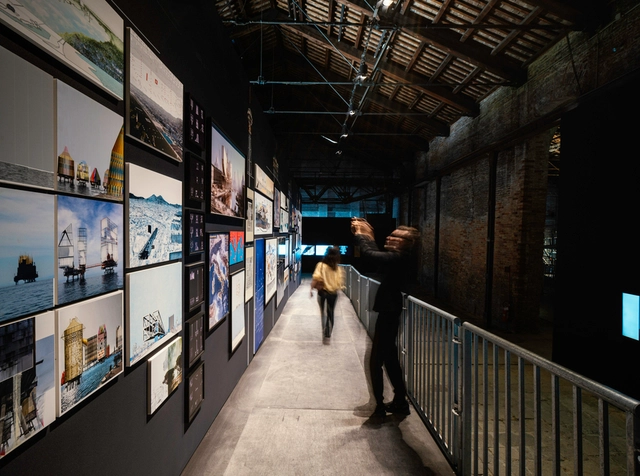
The Italian Pavilion at the 19th International Architecture Exhibition – La Biennale di Venezia is situated in the Tese delle Vergini of the Arsenale and is promoted by the Directorate-General for Contemporary Creativity of the Italian Ministry of Culture. This year, the Pavilion hosts architectural, scientific, and cultural reflections on the Mediterranean Sea and its neighboring oceans, in an exhibition titled "Terrae Aquae. Italy and the Intelligence of the Sea", curated by Architect and Professor Guendalina Salimei. The exhibition brings together projects from diverse actors in Italian society through an open call, whose objective was to rethink the boundary between land and water as an integrated system of architecture, infrastructure, and landscape. In response to the Biennale's central theme, the exhibition aims to stimulate the awakening of a collective intelligence capable of triggering a renewal in that relationship, starting from the Italian coast and expanding globally.

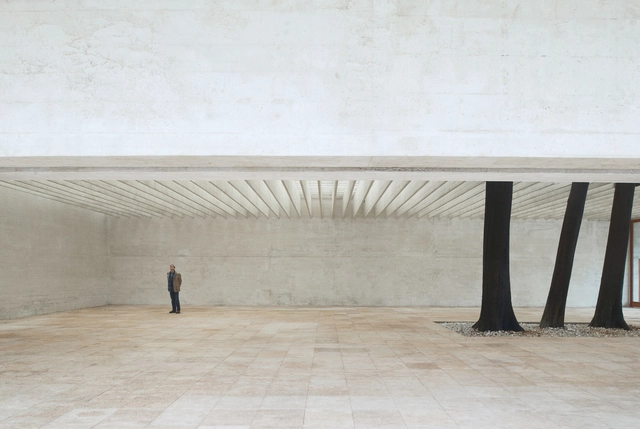
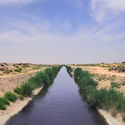
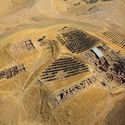
The Italian Pavilion at the Venice Architecture Biennale Urges a Rethink of the Relationship Between Land and Sea - Featured ImageThe Italian Pavilion at the Venice Architecture Biennale Urges a Rethink of the Relationship Between Land and Sea - Image 1 of 4The Italian Pavilion at the Venice Architecture Biennale Urges a Rethink of the Relationship Between Land and Sea - Image 2 of 4The Italian Pavilion at the Venice Architecture Biennale Urges a Rethink of the Relationship Between Land and Sea - Image 3 of 4The Italian Pavilion at the Venice Architecture Biennale Urges a Rethink of the Relationship Between Land and Sea - More Images+ 45

Marble Quarrying Looks Even More Awesome Than You Imagined

Subscriber Access | 

In this video from NOWNESS, an excerpt from Yuri Ancarani's documentary "Il Capo" (The Chief), the filmmaker captures the mesmerizing business of Marble extraction in the hills of Northwest Italy. The prized delicacy of the Carrara stone's surface is juxtaposed against the dramatic size and weight of the blocks they are removing, which eventually fall with an earth-shattering thud. Similarly the rugged power of the excavators is in marked contrast to the precise, understated gestures of the chief himself, who directs his workers with a complex series of predetermined hand signals.

"Marble quarries are places so unbelievable and striking, they almost feel like they are big theaters or sets," explains Yuri Ancarani. "I was so taken by the chief, watching him work. How he can move gigantic marble blocks using enormous excavators, but his own movements are light, precise and determined."

This article was originally published on February 25, 2015.

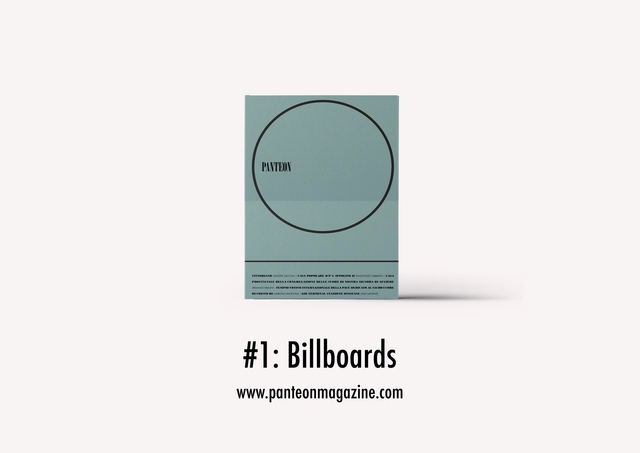
Call for Papers: Panteon #1 - Billboards

The topic of the call is "Billboards”

Panteon is an anachronistic venture: anachronistic is the content, anachronistic is the product, anachronistic is its use.

The protagonist is the architecture of the city of Rome, all built between 1911 and 1989 within the GRA, our contemporary city wall, whose analogies are arbitrary and questionable.

Panteon aims to be a platform for architectural debate using the city of Rome as a pretext, as an infinite warehouse from which to draw answers to a potentially infinite number of questions.

AD Classics: Venice Hospital / Le Corbusier

This article was originally published on August 15, 2016. To read the stories behind other celebrated architecture projects, visit our AD Classics section.

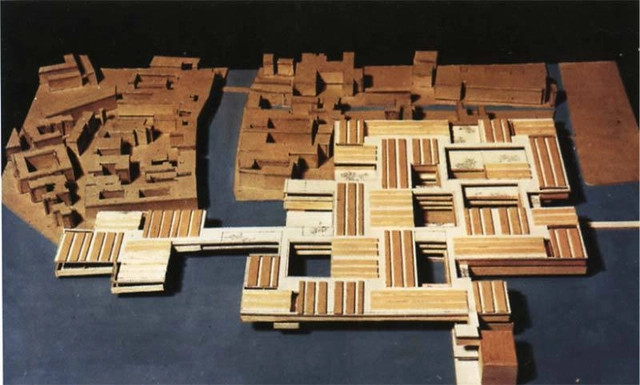
Le Corbusier made an indelible mark on Modernist architecture when he declared “une maison est une machine-à-habiter” (“a house is a machine for living”). His belief that architecture should be as efficient as machinery resulted in such proposals such as the Plan Voisin, a proposal to transform the Second Empire boulevards of Paris into a series of cruciform skyscrapers rising from a grid of freeways and open parks.[1] Not all of Le Corbusier’s concepts, however, were geared toward such radical urban transformation. His 1965 proposal for a hospital in Venice, Italy, was notable in its attempt at seeking aesthetic harmony with its unique surroundings: an attempt not to eradicate history, but to translate it.

AD Classics: Venice Hospital / Le Corbusier - Hospital , FacadeAD Classics: Venice Hospital / Le Corbusier - Hospital AD Classics: Venice Hospital / Le Corbusier - Hospital AD Classics: Venice Hospital / Le Corbusier - Hospital AD Classics: Venice Hospital / Le Corbusier - More Images+ 2

Drawing on the Road: The Story of a Young Le Corbusier's Travels Through Europe

Subscriber Access | 

Voyage Le Corbusier, by Jacob Brillhart, collects for the first time a compendium of sketchbook drawings and watercolors of Charles-Edouard Jeanneret—a young student who would go onto become the singularly influential modernist architect, Le Corbusier. Between 1907 and 1911, he traveled throughout Europe and the Mediterranean carrying an array of drawing supplies and documenting all that he saw: classical ruins, details of interiors, vibrant landscapes, and the people and objects that populated them.

Le Corbusier was a deeply radical progressive architect, a futurist who was equally and fundamentally rooted in history and tradition. He was intensely curious, constantly traveling, drawing, painting, and writing, all in the pursuit of becoming a better designer. As a result, he found intellectual ways to connect his historical foundations with what he learned from his contemporaries. He grew from drawing nature to copying fourteenth-century Italian painting to leading the Purist movement that greatly influenced French painting and architecture in the early 1920s. All the while, he was making connections between nature, art, culture, and architecture that eventually gave him a foundation for thinking about design.

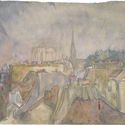
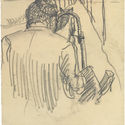
Drawing on the Road: The Story of a Young Le Corbusier's Travels Through Europe - Image 1 of 4Drawing on the Road: The Story of a Young Le Corbusier's Travels Through Europe - Image 2 of 4Drawing on the Road: The Story of a Young Le Corbusier's Travels Through Europe - Image 3 of 4Drawing on the Road: The Story of a Young Le Corbusier's Travels Through Europe - Image 4 of 4Drawing on the Road: The Story of a Young Le Corbusier's Travels Through Europe - More Images+ 10

"Unfolding Pavilion / Little Italy" at the 2018 Venice Biennale

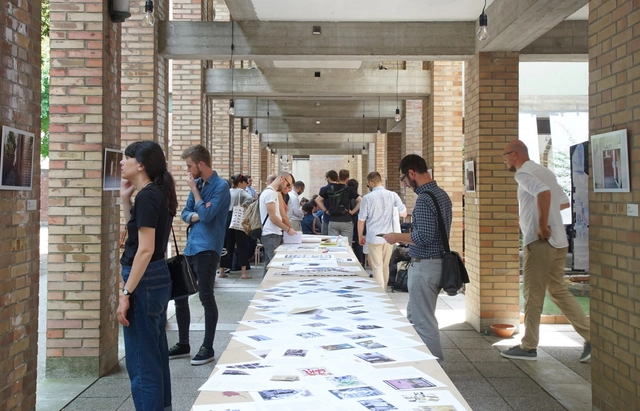
As part of our 2018 Venice Architecture Biennale coverage, we present the Unfolding Pavilion. Below, curators Daniel Tudor Munteanu, Davide Tommaso Ferrando, Sara Favargiotti describe the exhibition in their own words.

The ‘Unfolding Pavilion’ is an exhibition and editorial project that pops up at major architecture events in previously inaccessible but architecturally significant buildings.

On each occasion the ‘Unfolding Pavilion’ features a different theme inspired by the space it occupies, by means of commissioned original works that react to it and to its wider cultural-historic background. The ‘Unfolding Pavilion’ doesnt necessarily care about the hosting events theme. It lets its occupied space inspire its own theme. Without a good exhibition space (of the finest architectural making), the 'Unfolding Pavilion’ doesn’t have any reason to exist.

"Unfolding Pavilion / Little Italy" at the 2018 Venice Biennale - Image 1 of 4"Unfolding Pavilion / Little Italy" at the 2018 Venice Biennale - Image 2 of 4"Unfolding Pavilion / Little Italy" at the 2018 Venice Biennale - Image 3 of 4"Unfolding Pavilion / Little Italy" at the 2018 Venice Biennale - Image 4 of 4Unfolding Pavilion / Little Italy at the 2018 Venice Biennale - More Images+ 37

New Forms of Industry: Shed #19 by Andrea Oliva Architetto

New Forms of Industry: Shed #19 by Andrea Oliva Architetto - Image 1 of 4New Forms of Industry: Shed #19 by Andrea Oliva Architetto - Image 2 of 4New Forms of Industry: Shed #19 by Andrea Oliva Architetto - Image 3 of 4New Forms of Industry: Shed #19 by Andrea Oliva Architetto - Image 4 of 4New Forms of Industry: Shed #19 by Andrea Oliva Architetto - More Images+ 18

Research is the key to Andrea Oliva’s project for Shed #19—not only because this old factory was turned into a technopole for industrial investigation, but also because the architect’s proposal used research as a way of identifying the building’s possible transformations. In this case, the rich industrial history of the plant and the area is deemed essential for its refurbishment; its recovery depends on understanding its significance.

2018 Venice Biennale Reveals Further Details About This Year's Theme, "Freespace"

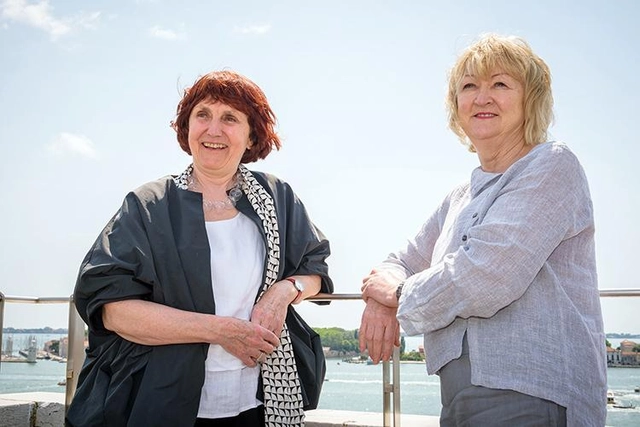
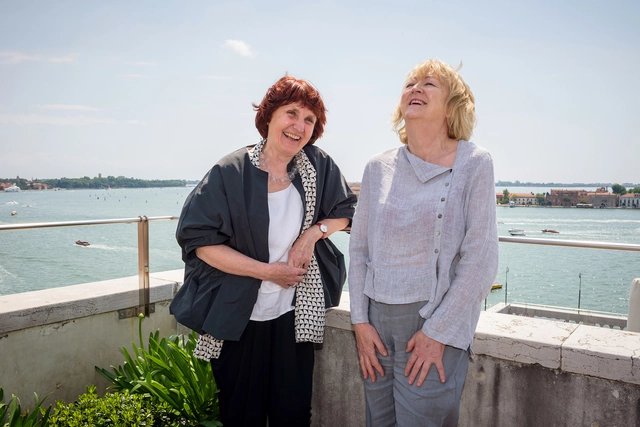
At a press conference earlier today, curators of the 2018 Venice Biennale Yvonne Farrell and Shelley McNamara of Grafton Architects revealed more information about this year's upcoming event, to be hosted from May 26th to November 25th. Building on the thematic concept the duo presented last June—“Freespace”—the event will feature a main exhibition in the Central Pavilion of the Giardini and the Arsenale featuring work by 71 participants, while two Special Sections will feature a total of 29 further participants. Elsewhere, 65 national pavilions will present contributions from around the world, including 7 first-time participants: Antigua & Barbuda, Saudi Arabia, Guatemala, Lebanon, Mongolia, Pakistan and the Holy See.

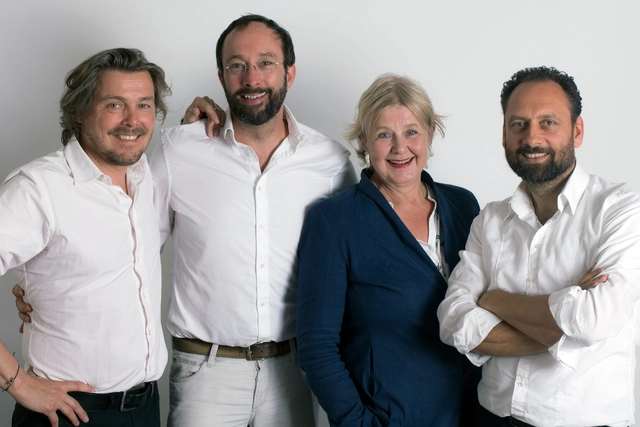
A “Christmas Tale of a Post-Quake Reconstruction”: Stefano Boeri Architetti’s Community Rebuilding in Amatrice

Subscriber Access | 

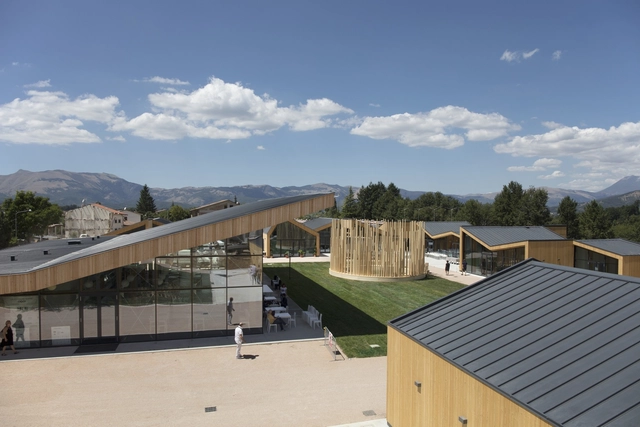
In August 2016, a powerful 6.2-magnitude earthquake struck central Italy, resulting in the loss of nearly 300 lives and the destruction of centuries-worth of historic architecture. At the center of the destruction was Amatrice, a beautiful hill town set in the Latium Apennines, which was reduced to mere rubble, leaving hundreds dead or injured and the survivors homeless.

But the community could not be held down. Shortly after the disaster, rebuilding efforts began, with the assistance of some of Italy’s top architects, including Renzo Piano and Stefano Boeri Architetti, who were able to construct a brand new canteen in just a few weeks time.

A “Christmas Tale of a Post-Quake Reconstruction”: Stefano Boeri Architetti’s Community Rebuilding in Amatrice - Image 1 of 4A “Christmas Tale of a Post-Quake Reconstruction”: Stefano Boeri Architetti’s Community Rebuilding in Amatrice - Image 2 of 4A “Christmas Tale of a Post-Quake Reconstruction”: Stefano Boeri Architetti’s Community Rebuilding in Amatrice - Image 3 of 4A “Christmas Tale of a Post-Quake Reconstruction”: Stefano Boeri Architetti’s Community Rebuilding in Amatrice - Image 4 of 4A “Christmas Tale of a Post-Quake Reconstruction”: Stefano Boeri Architetti’s Community Rebuilding in Amatrice - More Images+ 10

German Pavilion at the 2018 Venice Biennale Will Respond to Debates on Nations, Protectionism and Division

In 2018, Germany will be reunified for 28 years, the precise amount of time that the inner German border wall—which was active from between 1961 and 1989—stood between "East" and "West". With this in mind, the German State have announced "Unbuilding Walls" as the theme of the German Pavilion at the 2018 Venice Architecture Biennale. Curated by GRAFT with Marianne Birthler, the exhibition will be designed to "respond to current debates on nations, protectionism, and division."

Freespace: Grafton's 2018 Venice Biennale to Celebrate Generosity, Thoughtfulness, and a Desire to Engage

At a meeting convened today at the Biennale's headquarters at Ca’ Giustinian in Venice, Italy, Grafton ArchitectsYvonne Farrell and Shelley McNamara—revealed the theme and outline for the 2018 Venice Architecture Biennale, which they have titled Freespace. According to the Directors, the forthcoming Biennale will celebrate "generosity and thoughtfulness," and "a desire to engage."

We believe that everyone has the right to benefit from architecture. The role of architecture is to give shelter to our bodies, but also to lift our spirits. A beautiful wall forming a street edge gives pleasure to the passer-by, even if they never go inside.

Freespace will "reveal diversity, specificity, and continuity in architecture. Together," they proposed, "we can reveal the capacity of architecture to connect with history, time, place, and people. These qualities sustain the fundamental capacity of architecture to nurture and support a meaningful impact between people and place." In their closing statement, Farrell and McNamara chose to quote an Ancient Greek proverb: a society grows great when old men plant trees whose shade they know they will never sit in.

Call for Submissions: Six Sites Another Landscape, Design Workshop on Contemporary Landscape

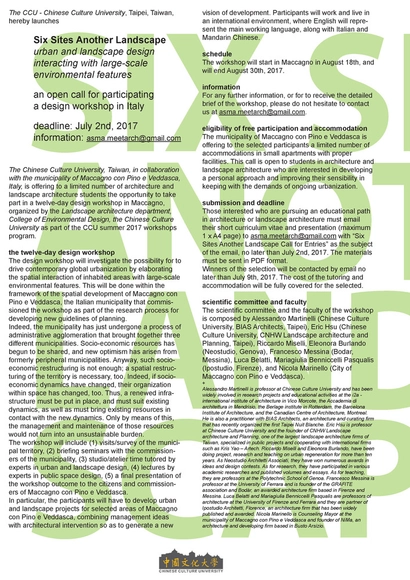
The Chinese Culture University, Taiwan, in collaboration with the municipality of Maccagno con Pino e Veddasca, Italy, is offering to a limited number of architecture and landscape architecture students the opportunity to take part in a twelve-day design workshop in Maccagno, organized by the Landscape Architecture Department, College of Environmental Design, the Chinese Culture University as part of the CCU summer 2017 workshops program.

Six of the Best Spatial Installations at Salone del Mobile 2017

With the 2017 Salone del Mobile now behind us, photographer Laurian Ghinitoiu has shared a collection of photographs from Milan Design Week. From housing prototypes to immersive "digital installations", the annual design show—which is often touted to be the fourth largest of any kind in the world—this year brought together a wide range of practitioners and design companies. In Milan, unusual collaborations are the order of the day.

Six of the Best Spatial Installations at Salone del Mobile 2017 - Image 1 of 4Six of the Best Spatial Installations at Salone del Mobile 2017 - Image 2 of 4Six of the Best Spatial Installations at Salone del Mobile 2017 - Image 3 of 4Six of the Best Spatial Installations at Salone del Mobile 2017 - Image 4 of 4Six of the Best Spatial Installations at Salone del Mobile 2017 - More Images+ 53

Nomadic Bookstore in Milan / AA Museum Lab & Lars Müller Publishers

Nomadic Bookstore in Milan / AA Museum Lab & Lars Müller Publishers - Temporary Stores, Beam, Column, HandrailNomadic Bookstore in Milan / AA Museum Lab & Lars Müller Publishers - Temporary Stores, ChairNomadic Bookstore in Milan / AA Museum Lab & Lars Müller Publishers - Temporary Stores, Table, BenchNomadic Bookstore in Milan / AA Museum Lab & Lars Müller Publishers - Temporary Stores, Facade, ArchNomadic Bookstore in Milan / AA Museum Lab & Lars Müller Publishers - More Images+ 11

Zaha Hadid Architects Creates Immersive Digital Installation for Samsung at Milan Design Week 2017

Zaha Hadid Architects has collaborated with Samsung and digital art and design collective Universal Everything to create an immersive technology installation at the 2017 Milan Design Week, taking place this week in the Italian city. Named ‘Unconfined,’ the pavilion will showcase Samsung’s new Galaxy S8 smartphone by leading visitors through an immersive environment inspired by the device.

Zaha Hadid Architects Creates Immersive Digital Installation for Samsung at Milan Design Week 2017 - Featured ImageZaha Hadid Architects Creates Immersive Digital Installation for Samsung at Milan Design Week 2017 - Image 1 of 4Zaha Hadid Architects Creates Immersive Digital Installation for Samsung at Milan Design Week 2017 - Image 2 of 4Zaha Hadid Architects Creates Immersive Digital Installation for Samsung at Milan Design Week 2017 - Image 3 of 4Zaha Hadid Architects Creates Immersive Digital Installation for Samsung at Milan Design Week 2017 - More Images

Introducing GSAPP Conversations' Inaugural Episode: "Exhibition Models"

We are pleased to announce a new content partnership between ArchDaily and Columbia University's Graduate School of Architecture, Planning and Preservation (GSAPP) in New York City.

GSAPP Conversations is a podcast series designed to offer a window onto the expanding field of contemporary architectural practice. Each episode pivots around discussions on current projects, research, and obsessions of a diverse group of invited guests at Columbia, from both emerging and well-established practices. Usually hosted by the Dean of the GSAPP, Amale Andraos, the conversations also feature the school's influential faculty and alumni and give students the opportunity to engage architects on issues of concern to the next generation.

Introducing GSAPP Conversations' Inaugural Episode: "Exhibition Models" - Imagem 1 de 4

Tirana 2030: Watch How Nature and Urbanism Will Co-Exist in the Albanian Capital

In 1925, Italian designer Armando Brasini created a sweeping masterplan to transform the Albanian capital city of Tirana. Almost one hundred years later, the Tirana 2030 (TR030) Local Plan by Italian firm Stefano Boeri Architetti has been approved by Tirana City Council. Collaborating with UNLAB and IND, Boeri seeks to define a new era in the country’s capital, incorporating controlled development, advanced infrastructure, green corridors, and an enhancement of the city’s architectural heritage.

Tirana 2030: Watch How Nature and Urbanism Will Co-Exist in the Albanian Capital - Image 1 of 4Tirana 2030: Watch How Nature and Urbanism Will Co-Exist in the Albanian Capital - Image 2 of 4Tirana 2030: Watch How Nature and Urbanism Will Co-Exist in the Albanian Capital - FacadeTirana 2030: Watch How Nature and Urbanism Will Co-Exist in the Albanian Capital - Image 4 of 4Tirana 2030: Watch How Nature and Urbanism Will Co-Exist in the Albanian Capital - More Images+ 14