Courtesy of Flickr user Phil Whitehouse (licensed under CC BY 2.0)
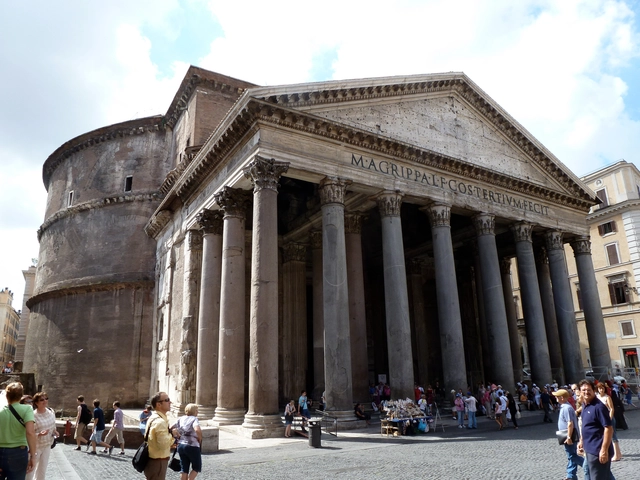
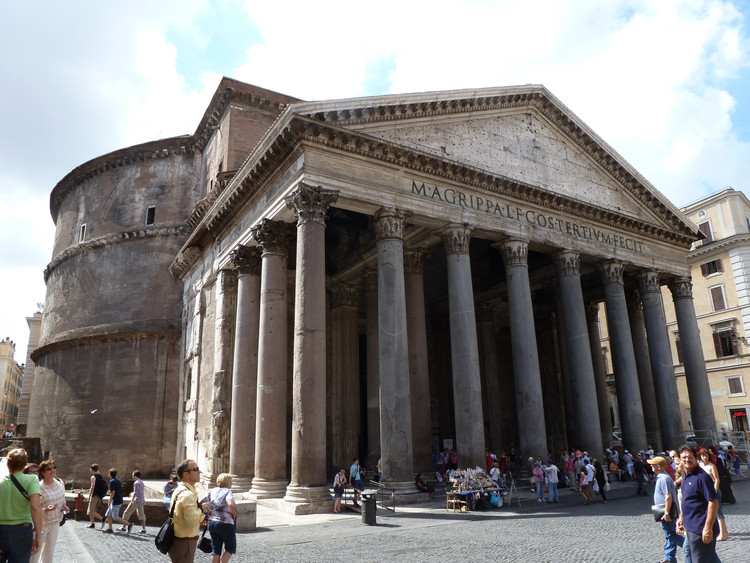
Locked within Rome’s labyrinthine maze of narrow streets stands one of the most renowned buildings in the history of architecture. Built at the height of the Roman Empire’s power and wealth, the Roman Pantheon has been both lauded and studied for both the immensity of its dome and its celestial geometry for over two millennia. During this time it has been the subject of countless imitations and references as the enduring architectural legacy of one of the world’s most influential epochs.
“They are projects that cannot be bought, cannot be owned, cannot be possess, to be kept; they are projects in total freedom. Nobody can own this, because if you own something, it’s not free.” -Christo
In this latest video from NOWNESS, Bulgarian artist Christo explains the fleeting nature of his most recent work, The Floating Piers, a floating dock system wrapped in yellow fabric that connects the towns of Sulzano and Peschiera Maraglio to the island of San Paolo in Italy’s Lake Iseo. First conceived by Christo alongside his late wife and creative partner Jeanne-Claude in 1970, The Floating Piers is in the midst of its 16 day run, lasting until July 3rd. After the conclusion of the exhibition, all components will be removed and industrially recycled, leaving its site precisely the way it was found.
Cloaked: Italian (Central) Pavilion. Image Courtesy of RAAAF
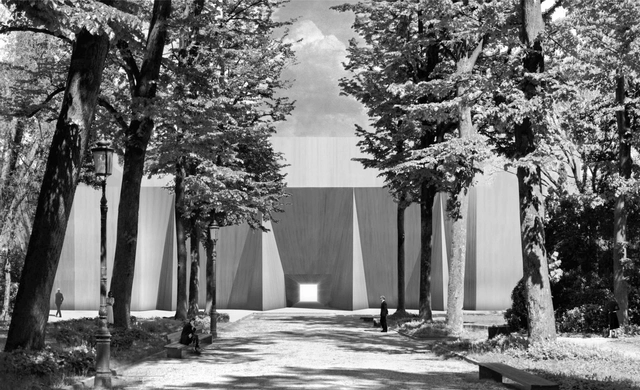
Few have ever considered what the Giardini—the park of national pavilions for the Art and Architecture Biennales in Venice—is like during the winter months. In light of the fact that, during their "off-season," the gardens are often left in a state of disrepair,RAAAF—a Dutch multidisciplinary studio based in Amsterdam, alongside architect Marcel Moonen—have proposed a series of installations in an attempt to "reclaim valuable public space" which sits at the heart of an often overcrowded city.
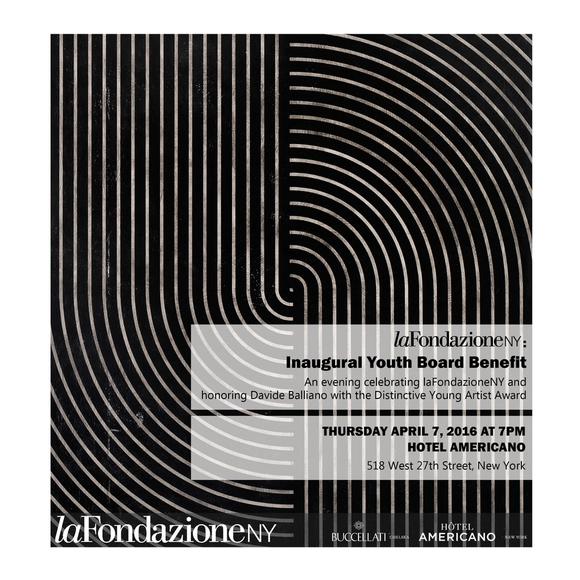
La Fondazione's Youth Board is proud to announce its inaugural Youth Board Benefit, an event that will raise awareness for La Fondazione NY’s mission as well as honor the work of emerging Italian artist Davide Balliano. Drawing references from architecture, nature, monuments and icons, Balliano’s work is the product of an ongoing investigation into the relationship between the individual and the macrocosm.
With the opening of the Fondazione Prada art galleries in May, OMA showed a different side to their practice, one focusing on preservation and assemblage rather than the iconography and diagrammatic layout that many associate with the firm. In this interview, originally published by Metropolis Magazine as "Koolhaas Talks Prada," Rem Koolhaas explains the reasoning behind this new approach, and how they attempted to avoid falling into the clichés of post-industrial art spaces.
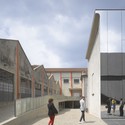
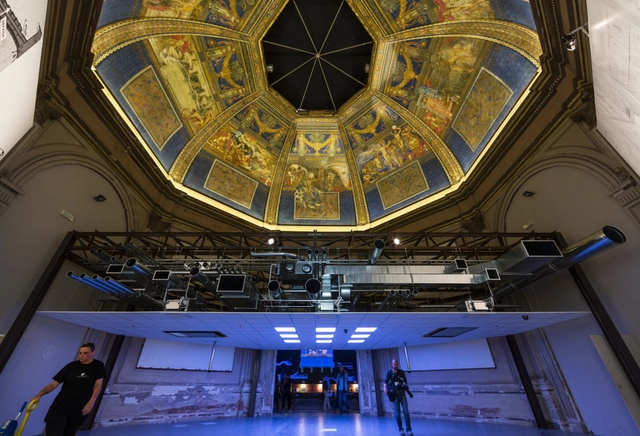
When the Fondazione Prada opened its doors to a new permanent home in Milan dedicated to contemporary culture, it not only placed the Italian city firmly at the forefront of today’s global art world, but also introduced an ambitious new way of thinking about the relationship between architecture and art. The location—an original 1910 distillery in a distinctly gritty part of the city—comprised seven spaces including warehouses and three enormous brewing cisterns with a raw industrial quality that the architects, Dutch firm OMA, retained while adding three new buildings made of glass, white concrete, and aluminum foam. One, the centrally located Podium, is intended for temporary shows, while another—still under construction—is a nine-story tower that will house the foundation’s archives, art installations, and a restaurant. The third, a theater with a mirrored facade, features folding walls that allow the building to open onto a courtyard. In total, the collection of buildings provides nearly 120,000 square feet of exhibition space, more than twice that of the new Whitney Museum of American Art. Metropolis correspondent Catherine Shaw visited the site with Pritzker Prize–winning architect Rem Koolhaas to find out more about the challenges of creating a new cultural paradigm.
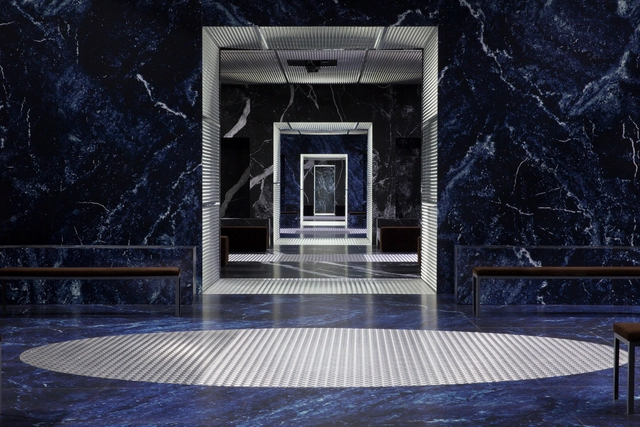
On Sunday, Prada ditched the classic runway to kickoff their 2015 Fall/Winter menswear line in a “disorienting landscape” designed by OMA’s research counterpart AMO. The partitioned catwalk transformed an exiting room inside the Fondazione Prada at Via Fogazzaro 36 in Milan into an intimate series of interconnected spaces affectionately referred to as “The Infinite Palace.”
“The existing room is disguised into a classic enfilade of rooms, gradually changing proportions as in an abstract mannerist perspective. As opposed to a single stage, the new sequence of spaces multiplies and fragments the show into a series of intimate moments,” described AMO.
Fundamentals, the title of the 2014 Venice Biennale, will close its doors in a matter of days (on the 23rd November). From the moment Rem Koolhaasrevealed the title for this year’s Biennale in January 2013, asking national curators to respond directly to the theme of ‘Absorbing Modernity 1914-2014’, there was an inkling that this Biennale would be in some way special. Having rejected offers to direct the Biennale in the past, the fact that Koolhaas chose to act not only as curator but also thematic co-ordinator of the complete international effort, was significant. This announcement led Peter Eisenman (one of Koolhaas' earliest tutors and advocates) to state in one interview that “[Rem is] stating his end: the end of [his] career, the end of [his] hegemony, the end of [his] mythology, the end of everything, the end of architecture.”
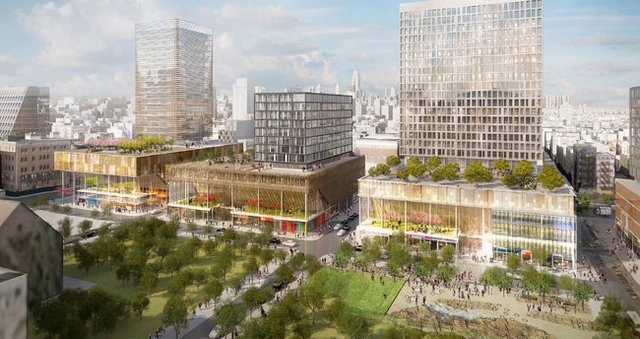
After decades of contention between residents and politicians, the Bloomberg administration will announce on Wednesday plans of constructing a six-acre complex by SHoP and Beyer Blinder Belle Architects over a ten year period. Nine vacant lots in New York City's Lower East Side will be erected into a mega-development of retail, office, entertainment, cultural and housing units. The complex will be located in rapidly gentrifying neighborhood, once home to working-class Italians, Jews, Puerto Ricans and Ukrainians, and has struggled to preserve affordable housing against an encroaching luxury market. In response, developers have collaborated with local community groups agreeing that half of the projected 1,000 apartments will be for low-, moderate-, and middle-income families.
However, is this enough to sustain a balance of varying incomes?
https://www.archdaily.com/430573/bloomberg-to-announce-mega-redevelopment-of-nyc-s-lower-east-sideJose Luis Gabriel Cruz
ArchDaily announced the winning proposal for the Young Architects Program (YAP) MAXXI 2012 in late February. In order to bring you full coverage of the annual competition, we are featuring the other four creative designs that competed against UNIRE/UNITE. NAMI, which means “wave” in Japanese, is a project that reflects contemporaneity, aims to send a message about the importance of harmony, and to create a bridge between people and cultures. This proposal, designed by VeryVery Architecture Office, is very simple and essential: an airy space provided with shadow, movable sitting benches, and a space that can accommodate different types of events and activities. Imbued with an experimental spirit and a strong attention to sustainability, NAMI offers a chance to express the social and cultural values requested by the Young Architecture Program.
Designed by Nabito Arquitectura, the QR ROME PROJECT is a new open Coliseums , a media building mixed use that works as an International multiple hub. It is located in Rome, Italy. One of the goals is to collects opportunities from the society, to feedback ideas and creativity, to give people solutions of a better quality. In this sense the building is the concrete translation of its program and goal.
Outside the Intelligent coliseum is both a infrastructural gateway to Rome and a linked way-out from Rome, it is a detectable building.
The facades of the building are QR (quick response) codes open to flexible contents and remind the user to different portals of information.
The central Veneto area, lying approximately between Padua, Treviso, Castelfranco and Mestre, has one of the most unusual settlement systems of northern Italy. This project, by LOKOMOTIV.archs office starts from the view that the phenomena of urban sprawl should be stemmed, as the sprawl gives rise to a great number of problems, among which we might mention the excessive proliferation of infrastructures, with costs for the government that are unsustainable in the long run and break the delicate environmental balance of the system created by roman agriculture colonization. More images and architects’ description after the break.
Italian architects studio wok shared with us their social housing project for Milan, which received an honorable mention in the “AAAarchitetti cercasi 2010″. More images and architect’s description after the break.
1:1 es the exhibition space for the Romanian Pavilion at the Venice Biennale. The project was designed by architects Romina Grillo, Ciprian Răşoiu, Liviu Vasiu, Matei Vlăsceanu and Tudor Vlăsceanu. Images and architect’s description after the break.
We’re so happy to share this video BIG passed along to us highlighting their contribution to the 2010 Venice Biennale. Entitled the LOOP City, the exhibition focuses on a new Metro loop that become the catalyst for development for the cross border region as different programs grow around the new stations. The loop will connect areas around the Øresund Strait in a sustainable spine of public transport, energy exchange and electric car infrastructure. The design introduces a new “vein of true urbanity” that will weave it was through the suburbs. This new loop will create a new realm by uniting specific points, yet activating each interstitial segment.






.jpg?1438347714 "The Fondazione’s inaugural exhibition, the Serial Classic, explores questions of authenticity and imitation in classical antiquity. The lifesize sculptures are mounted on an intricate flooring system designed for the exhibition and composed of travertine, brushed aluminum, and perspex—all exposed along the edges. Image © Attilio Maranzano")
.jpg?1438347662 "The gilded exhibition hall is the central focal point of the Fondazione. Called the Haunted House, the structure’s blank utilitarian features are draped in gold leaf, an ostensibly spontaneous extravagance that Koolhaas post-rationalizes on functionalist grounds. The building towers above the rest of the campus’s open-air spaces and warehouses, which all can be taken in from the Haunted House’s balconies. Image © Bas Princen - Fondazione Prada")