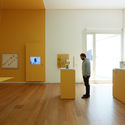
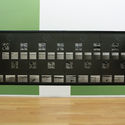
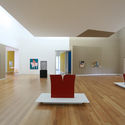
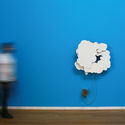
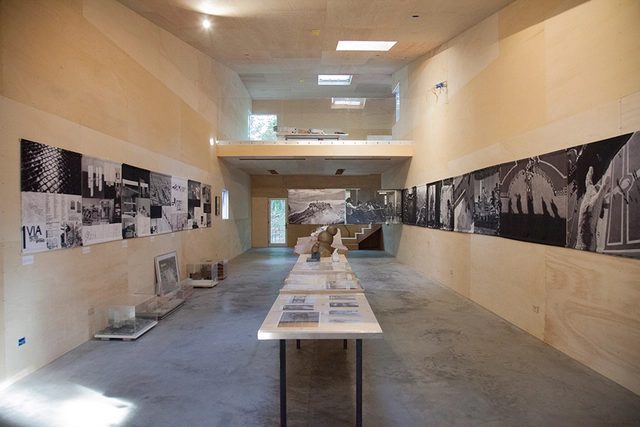
Architect and educator Astra Zarina wasn’t just the teacher of Tom Kundig, Ed Weinstein, and Steven Holl (who designed ‘T’ Space); she was also an advocator for public spaces, cohesive urbanity, and the communities that these attributes fostered. ‘T’ Space’s newest exhibit Rome and the Teacher, Astra Zarina celebrates Zarina’s life and teachings in the context of recognizing overlooked pedagogical figures, particularly women. A recent article by Metropolis Magazine describes this exhibit in detail and with it, Zarina’s own life story.
https://www.archdaily.com/922753/t-spaces-new-exhibit-celebrates-the-overlooked-history-of-an-influential-female-architect-and-educatorLilly Cao
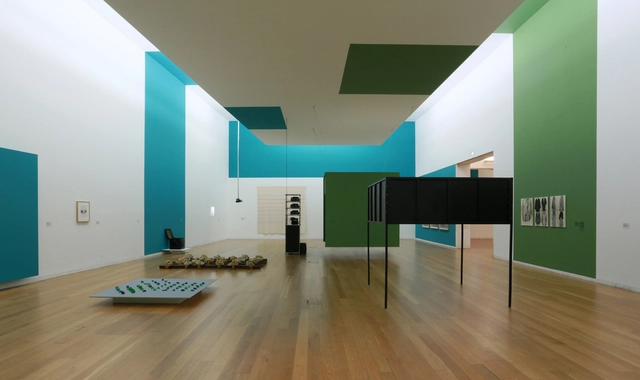
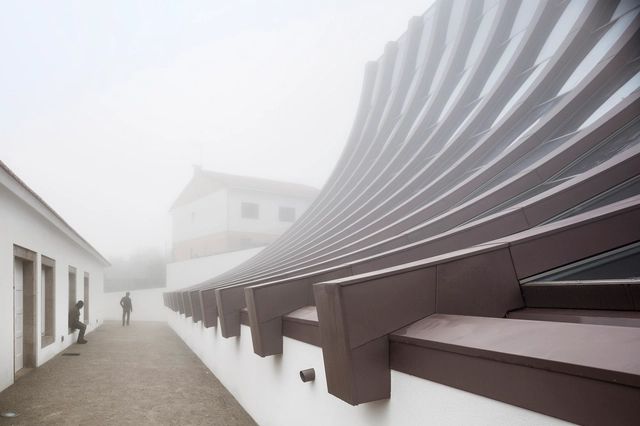
Since 2007, Lisbon Architecture Triennale has been developing its mission as a non-profit organization fostering debate, thinking and practice in Architecture. The large number of activities initiated throughout its 10 years of existence is the best witness to this commitment.
https://www.archdaily.com/921450/details-about-lisbon-triennale-2019Pedro Vada
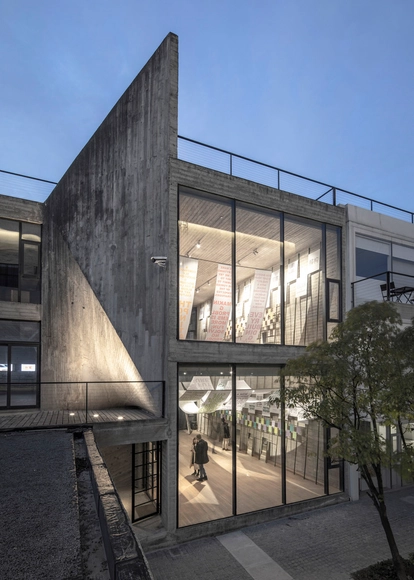
I Am Interested in Seeing the Future is an architectural exhibition, that, contrary to what you might expect, includes no models and no drawings. Instead, as soon as visitors arrive, they find themselves surrounded by text. The wall facing the entrance is covered by an installation of single words on posters, interview transcripts on colored paper, and mirrors that reflect the sentences on flimsy scrolls arcing down from the ceiling.
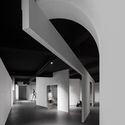
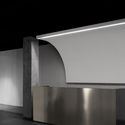
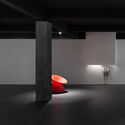
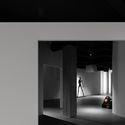
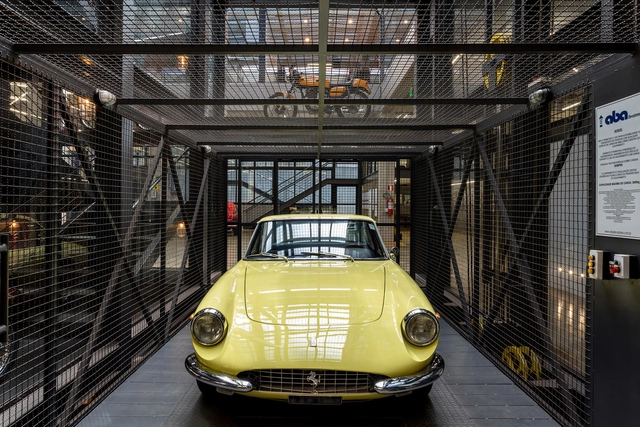
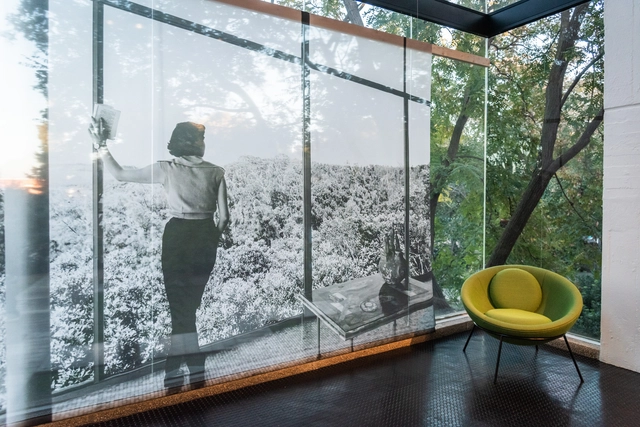
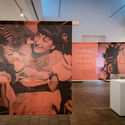
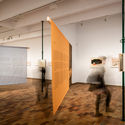
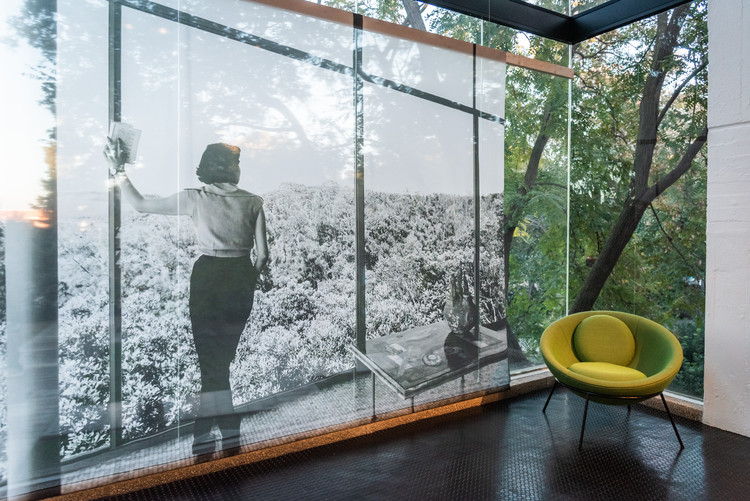
The Fundació Joan Miró presents Lina Bo Bardi Drawing, the first exhibition to focus specifically on the role of drawing in the life and work of the Italian-born Brazilian architect.
The exhibition features a carefully selected collection of a hundred drawings from the Instituto Lina Bo e P. M. Bardi, bearing witness to the importance of drawing in all the stages of Bo Bardi’s multifaceted career. The project has been curated by another architect, Zeuler Rocha Lima - also an artist, researcher, and international expert on Bo Bardi - with support from the Fundació Banco Sabadell.
Videos
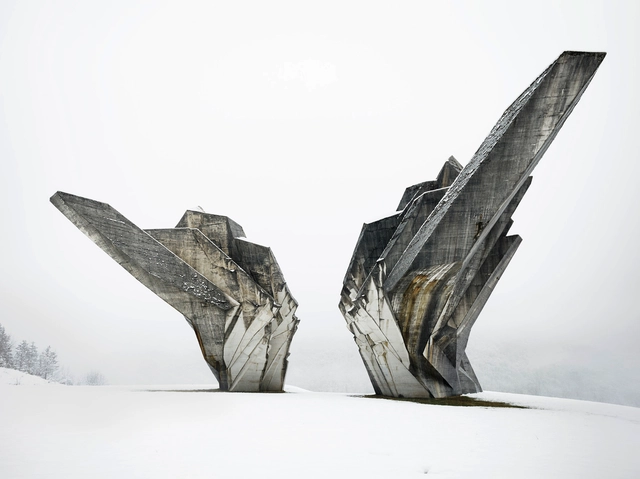
Miodrag Živković, Monument to the Battle of Sutjeska, 1965-71, Tjentište, Bosnia and Herzegovina. View of the western exposure. Photo: Valentin Jeck, commissioned by The Museum of Modern Art, New York, 2017.
With the exhibition soon coming to an end, Martino Stierli (Chief Curator of Architecture and Design at MoMA) and Vladimir Kulic (Guest Curator and Architecture Historian) have presented a 7-minute-long video guiding viewers through the highlights of the exhibition.
https://www.archdaily.com/908777/an-expert-guide-through-momas-toward-a-concrete-utopia-architecture-in-yugoslavia-1948-nil-1980Niall Patrick Walsh
Snarkitecture’s “Fun House” has opened at the National Building Museum in Washington DC, an interactive exhibition forming part of the museum’s Summer Block Party series of temporary structures created inside its historic Great Hall.
The role of the architect—and even architecture itself—in society today is changing. A lack of interest in critical social issues from a profession that holds such high responsibility within a community is a problem that should no longer be avoided.
In an exhibit currently on show at the Center for Architecture and Design in Seattle titled "In the Public Interest," Garrett Nelli Assoc. AIA challenges the profession of architecture to establish a focus on more community-engaged design. With the help of the 2017 AIA Seattle Emerging Professionals Travel Scholarship, Nelli traveled to Los Angeles, rural Alabama, Haiti, Italy and New Orleans, all the while analyzing how the built environment has the ability to influence social change.
Read on for an edited interview with Nelli about his research and how you can begin to implement elements into your design practice to help promote social change in your own communities.
As part of our 2018 Venice Architecture Biennale coverage we present the proposal for the Finnish Pavilion. Below, the participants describe their contribution in their own words.
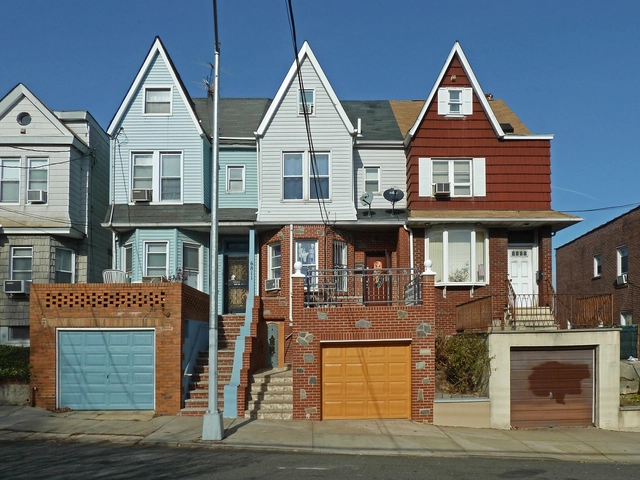
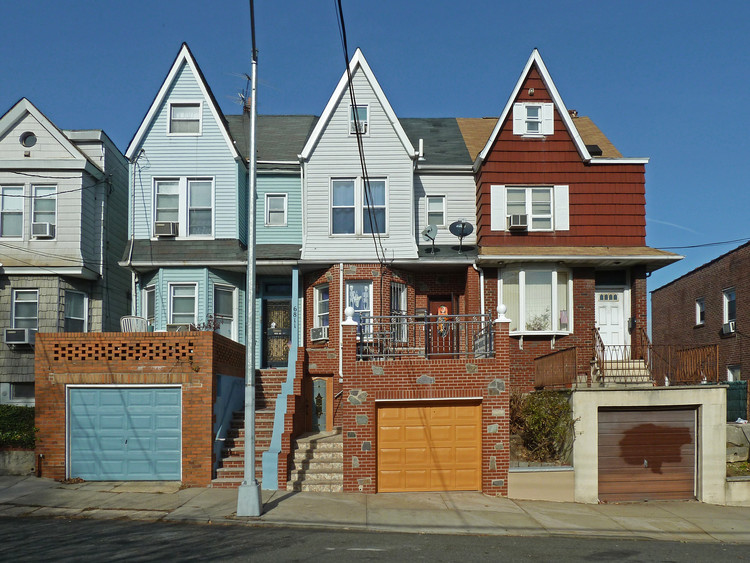
Queens, NY is one of the most diverse places in the world, so it should be no surprise that it’s residences reflect that diversity. From the Architectural League of New York comes Rafael Herrin-Ferri’s exhibition “All the Queens Houses.” An architect and artist, Herrin-Ferri compiled 273 photographs of homes in Queens. The ever growing photographic survey conveys themes of identity, differentiation, and adaptation.
This article originally appeared on guggenheim.org/blogs under the title "Nine Guggenheim Exhibitions Designed by Architects," and is used with permission.
Exhibition design is never straightforward, but that is especially true within the highly unconventional architecture of Frank Lloyd Wright’s Guggenheim Museum. Hanging a painting in a traditional “box” gallery can be literally straightforward, whereas every exhibition at the Guggenheim is the reinvention of one of the world’s most distinctive and iconic buildings. The building mandates site-specific exhibition design—partition walls, pedestals, vitrines, and benches are custom-fabricated for every show. At the same time, these qualities of the building present an opportunity for truly memorable, unique installations. Design happens simultaneously on a micro and macro scale—creating display solutions for individual works of art while producing an overall context and flow that engages the curatorial vision for the exhibition. This is why the museum’s stellar in-house exhibition designers all have an architecture background. They have developed intimate relationships with every angle and curve of the quarter-mile ramp and sloping walls.










.jpg?1550503634 "© Instituto Lina Bo e P. M. Bardi. Image Courtesy of Fundació Joan Miró, Barcelona")
_jpeg_copy.jpg?1550503683 "© Instituto Lina Bo e P. M. Bardi. Image Courtesy of Fundació Joan Miró, Barcelona")
.jpg?1530894708&format=webp&width=640&height=580)
.jpg?1530894765 "© Noah Kalina")
.jpg?1530894696 "© Noah Kalina")
.jpg?1530894809 "© Noah Kalina")
.jpg?1530894821 "© Noah Kalina")
.jpg?1530894708)