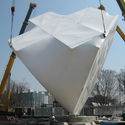
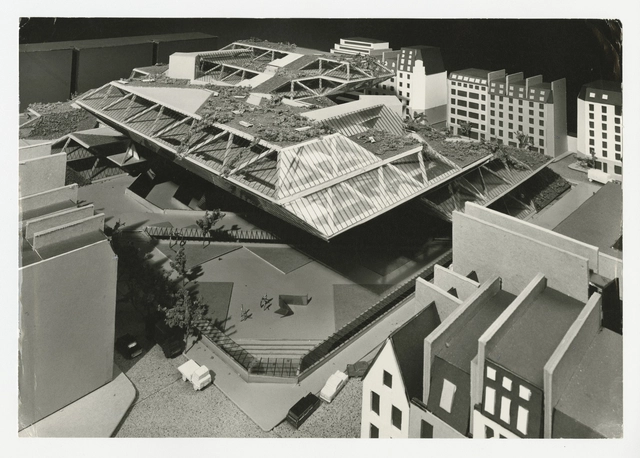
Pompidou Center Competition Model, 1971. Image Courtesy of Safdie Architects
From October 2022 through January 2, 2023, The Boston Architectural College (BAC) and Safdie Architects will display the most groundbreaking unbuilt projects by Moshe Safdie. With Intention to Build showcases the architect's creative process throughout the 55 years of his career, including models, drawings, and various texts and photographs. The exhibition provides context and tells the story behind these radical unrealized designs that have influenced projects such as Habitat 67 in Montreal, Canada, and Marina Bay Sands in Singapore.
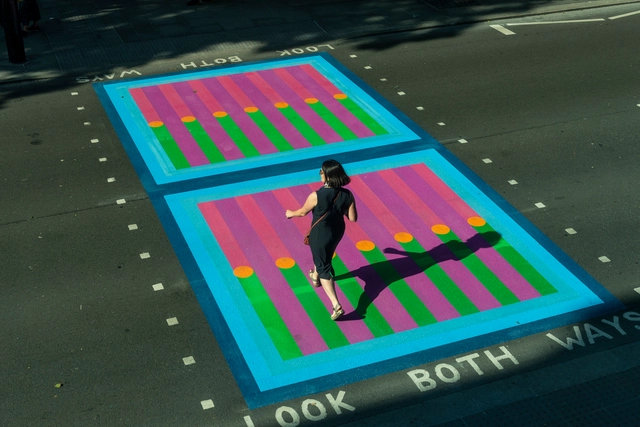
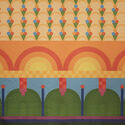
LetsBringLondonTogether. Image Courtesy of Yinka Ilori
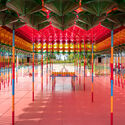
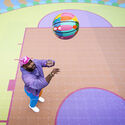
PARABLES FOR HAPPINESS by the London-based British-Nigerian designer Yinka Ilori features for the first time at the Design Museum in London. Exhibited from September 25, 2022, to June 25, 2023, essential aspects of Ilori’s work will be placed beside key influences, including artworks, photographs, and furniture, to Nigerian textiles. Curated by Priya Khanchandani, the exhibition celebrates Ilori’s mix of cultural influences and unpacks the ingredients of a diasporic visual language.
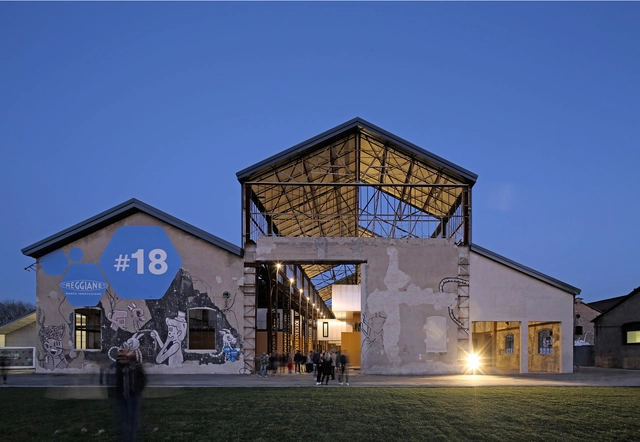
Winner project: Riqualificazione architettonica e funzionale del Capannone 18 nell’area Ex “Officine Reggiane”. Image Courtesy of Dedalo Minosse
The International Award for the Commission of Architecture “Dedalo Minosse” promoted the Italian association for professional Architects returns after three years on hold, to tribute worldwide architects. Firms like ODDO architects, Ryuichi Ashizawa, and The Kresge Foundation - Detroit are some of the winners for their promotion and contribution to the discipline. The Anniversary is also de 12th edition of the Dedalo Prize, which will be held From September 16 to October 2, 2022, in Vicenza, Italy. The event will host forums and workshops about and around the city, opening with the spectacular award ceremony at the iconic Teatro Olimpico, and continuing with a Multimedia exhibition at the Basilica Palladiana.
The Het Nieuwe Instituut in Rotterdam, The Netherlands, opens The Energy Show and the Solar Biennale on Friday, September 9, 2022. In collaboration with The Solar Biennale designer and curator Matylda Krzykowski and solar designers Marjan van Aubel and Pauline van Dongen, the exhibition presents a series of projects that explores the sun's meaning and possibilities in society, the environment, and design. With Europe in the midst of an energy crisis, The Energy Show and the Solar Biennale is an opportunity for designers and the general public to examine the transition to solar energy and technology as we move towards a post-carbon future.
“Sick Architecture” opened on May 5th at CIVA in Brussels. Co-curated by Beatriz Colomina, the exhibition investigates the intrinsic relation between architecture and sickness. The architectural discourse always weaves itself through theories of body and brain, constructing the architect as a kind of doctor and the client as the patient. Architecture has been portrayed as a form of prevention and cure for thousands of years. Yet architecture is also often the cause of illness, from the institution of hospitals to toxic building materials and sick building syndrome. The outbreak of the COVID-19 pandemic further highlighted this topic.
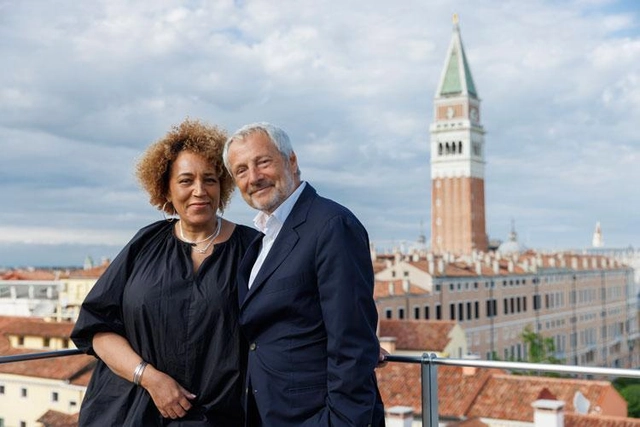
The President of La Biennale di Venezia, Roberto Cicutto, and the Curator of the 18th International Architecture Exhibition, Lesley Lokko by Jacopo Salvi. Image Courtesy of La Biennale di Venezia
Running from May 20th to November 26th, 2023 in the Giardini, at the Arsenale, and at various sites around Venice, the 18th International Architecture Exhibition will be titled: The Laboratory of the Future. Announced today by the President of La Biennale di Venezia, Roberto Cicutto, and the Curator of the exhibition, Lesley Lokko, the theme and title of this edition will consider the African continent as the protagonist of the future. “There is one place on this planet where all these questions of equity, race, hope, and fear converge and coalesce. Africa. At an anthropological level, we are all African. And what happens in Africa happens to us all”, explains Lokko.
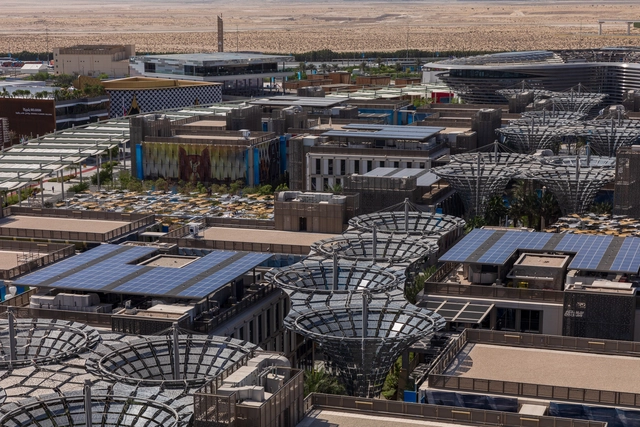
During the past two years spent photographing Expo 2020 Dubai, I was often asked by friends what exactly it was. To align with its closure on the 31st of March, I would like to address that question from two angles. Most readers will be aware that the expo is part of a tradition dating back to the 19th century - a Showcase for companies and countries, a tourist attraction, a testing ground for technical innovation. But it is also a collection of paradigm studies on opportunity, sustainability, and mobility, as well as a lucrative building project creating a new neighbourhood in the Emirates and a future means of dwelling. Perhaps this last frame of reference is the most interesting for it is what most distinguishes this expo from others.
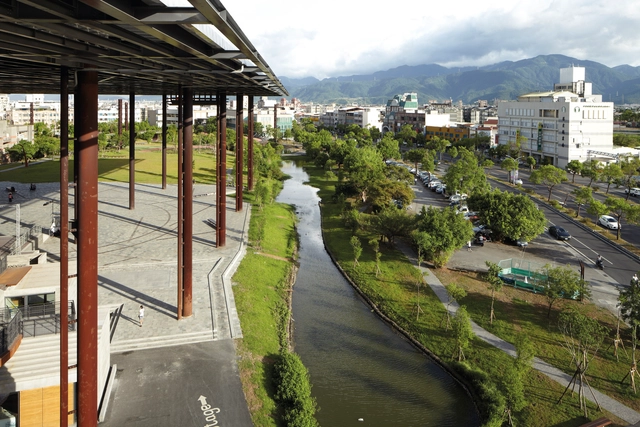
Taiwan proposes that architecture can transform a place, and to represent this idea, the work of Sheng-Yuan Huang and his practice, Fieldoffice, were chosen for the Taiwan Exhibition at La Biennale di Venezia in 2018, entitled Living with Sky, Water, and Mountain: Making Places in Yilan. Sheng-Yuan and Fieldoffice demonstrated that the notion of making places is more than building a physical space, but is equally about establishing a linkage between people, as well as people and their environment.
Alessandro Martinelli explores Sheng-Yuan and his colleagues at Fieldoffice as the avant-garde of a new architectural movement in his book, The City Beyond Architecture, which seeks to produce a new form of collective living through the lens of design and culture, touching on what the design culture of the majority of future urbanization could become. In the following, we will discuss Shen-Yuang's impact on Taiwanese architecture as he spearheaded the call to integrate and imagine public spaces that inhabited the capacity to structure a particular landscape to provide both social spaces and a sense of identity to its occupants.
The problem with being a deliberative writer is that pretty much everything has already been penned by the time you’re ready to write about something. Such is the case with the 2021 ChicagoArchitecture Biennial (CAB): The Available City. There have been several well-written, insightful essays about the CAB by Zach Mortice, Anjulie Rao,Marianela D’Aprile, and others, so it would be foolish to travel the landscape they have so expertly traversed. Instead, I’m offering a trip through this edition of the CAB, which concluded a successful and significant run on Saturday, down a road less traveled.
https://www.archdaily.com/974746/breaking-the-dead-paradigm-for-design-exhibitionsCraig L. Wilkins
Vladimir Belogolovsky talks with Mexican-American architect Francisco Gonzalez-Pulido on his exhibition 30 Projects/30 Years/30 Stories now on view at the Museo Metropolitano in Monterrey, Mexico.30 Projects/30 Years/30 Stories, a large retrospective on the work of Mexican-American architect Francisco Gonzalez Pulido, was opened on June 18 at the Museo Metropolitano in Monterrey, Mexico. The exhibition will remain on view until September 21.
Among the most renowned and well-established offices in the world, OMA - Office for Metropolitan Architecture, founded in the 1970s by Rem Koolhaas, Elia Zenghelis, Madelon Vriesendorp, and Zoe Zenghelis, is definitely part of the pantheon of the most famous. Curiously, although it receives large commissions and has already built several emblematic works in different countries, the office is often associated with an approach that is less focused on architectural design, going beyond the strict limits of the disciplinary field and encompassing other areas of practice.
Responding to “How will we live together” in 115 different ways, the 2021 Venice Architecture Biennale welcomed, physically, the large public, on May 22nd, 2021. Opening up furthermore to the world, the timeless yet context-sensitive theme engendered a collective imaginary, highlighting a world that would rather come together than stay apart. Building an architectural narrative of the present that reflects on a resilient future, the interrogation, first asked in 2019, gained more relevance with the pandemic that paused the world for a while. With a lot of optimism and love for the craft, the architectural exhibition opened its doors to a longing public and revealed recurring qualities in the showcased interventions.
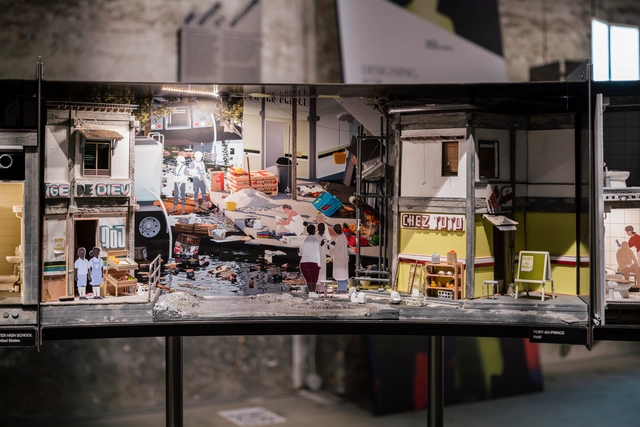
"When we enter the restroom, we are never alone. Instead, we are entangled in a network of bodies, infrastructures, ecosystems, cultural norms, and regulations". Although restrooms are often overlooked facilities that cater to the needs of individuals, they are, however, spaces where gender, religion, race, hygiene, health, and the economy are defined and expressed. For the 17th International Architecture Exhibition at La Biennale di Venezia, Matilde Cassani, Ignacio G. Galán, Iván L. Munuera, and Joel Sanders designed two pavilions that exhibit how restrooms are political architectures, serving as battlegrounds for the world's disputes.
Alterity is essential to human development. If deprived of a variety of stimuli, the brain is unable to develop, losing plasticity and deteriorating like an atrophied muscle. This reasoning is widely accepted when it comes to social relations or cognitive and physical activities. But what about the stimuli promoted by the built environment?
https://www.archdaily.com/956140/the-city-as-a-tile-based-gameMarina Oba, Daniela Moro e Gabriel Tomich
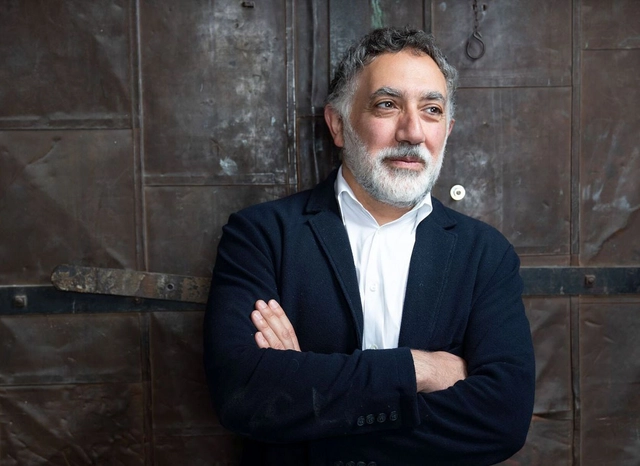
In the second part of his interview with Archdaily, Hashim Sarkis reflects on the future of architecture as he tackles the timeless question of the 2021 Venice Biennale. The curator of the Biennale, which proposes the question of “How Will We Live Together?”, discusses the role of the profession in the midst of all these new paradigms, stating that “Architects do change the world […] by creating […] wish images for what the world could be”.
In this feature, the curator of the anticipated biennale and dean of MIT School of Architecture and Planning presents his views on the evolution of Architecture, and the new directions the academic world should take, to reflect “the complexity of the urban problems of today”. Sarkis also brings up Beirut, discussing reconstruction approaches, civil society, and the exasperating notion of resilience.
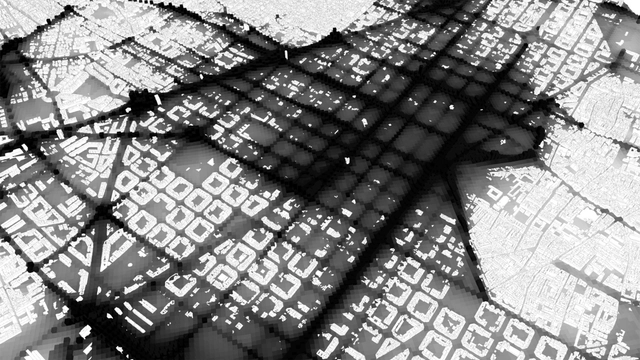
Cartography of Barcelona redrawn by air pollution. Image Courtesy of 300.000 Km/s
Catalonia in Venice - air/aria/aire, part of the Collateral Event of the Biennale Architettura 2021, is an exhibition curated by architect Olga Subirós, commissioned by the Institut Ramon Llull, with the participation of 300.000 Km/s, an urbanism studio in macro data-based strategic planning. Reflecting on the central theme of the Biennale “How will we live together?” the project investigates the role of architecture and urbanism within the context of the climate emergency and the public health crisis.
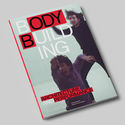
Bodybuilding, SO – IL and Ana Prvački, L’air pour l’air, Chicago, 2017. Photograph by Laurian Ghinitoiu
Six months after the release of the namesake book during the latest installment of the biennial, PERFORMA has launched Bodybuilding, which features thirty-five architecture studios who engage with performativity.
Is architecture a period or a comma? Are built forms hermetic bodies or catalysts for action? PERFORMA curator Charles Aubin and architect Carlos Mínguez Carrascor, published Bodybuilding: Architecture and Performance, during the most recent installment of the PERFORMA 19 biennial in New York City last November. Noticing a lack of a comprehensive, multigenerational survey on the subject, the duo’s interest in investigating the ways architects engage with performance goes as far back as a symposium they co-organized at the Performa 17 Hub in 2017. The book, which features essays by Mabel O. Wilson and Bryony Roberts, Lluís Alexandre Casanovas Blanco, and Victoria Bugge Øye, seeded the fundamental approaches now deeply rooted in the online exhibition: the impact of movement on systematic urbanization, the body’s relationship to buildings and monuments, and architecture’s role in action, be it physical or sociopolitical.






















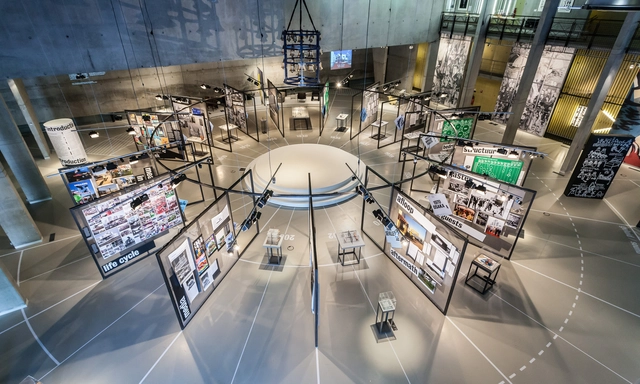
_OMA.jpg?1558539068 "Knoll Celebrates Bauhaus. © OMA / Photography by Fred Ernst")


.jpg?1622015464&format=webp&width=640&height=580)
.jpg?1622029620 "Argentina: La casa infinita by Gerardo Caballero. Image © Laurian Ghinitoiu")
.jpg?1622015439 "Germany: 2038. The New Serenity by 2038. Image © Laurian Ghinitoiu")
.jpg?1622015472 "Mexico: Desplazamientos / Displacements by Isadora Hastings, Mauricio Rocha, Elena Tudela. Image © Laurian Ghinitoiu")
.jpg?1622015529 "Spain: Uncertainty by Domingo Jacobo González Galván, Sofía Piñero Rivero, Andrzej Gwizdala, Fernando Herrera Pérez. Image © Laurian Ghinitoiu")
.jpg?1622015464)