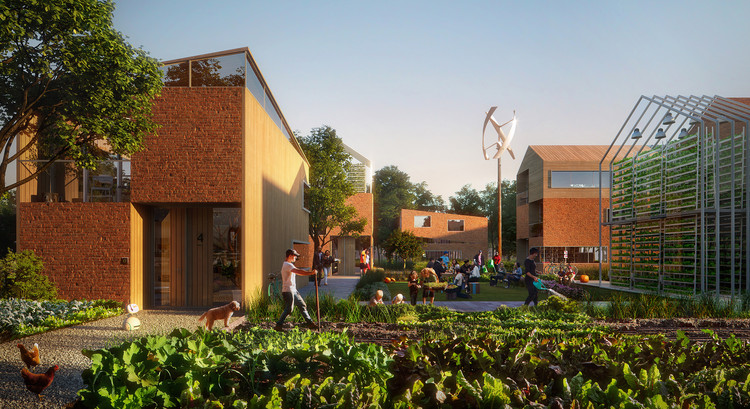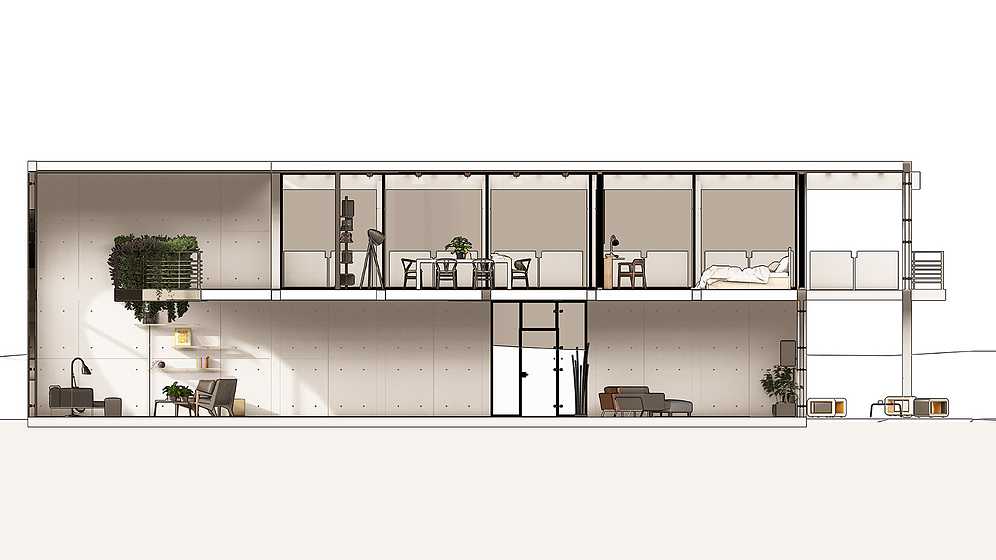
Produce personalized presentation boards that distill complex concepts into simple visual representations with a few helpful tools and effects.


Produce personalized presentation boards that distill complex concepts into simple visual representations with a few helpful tools and effects.
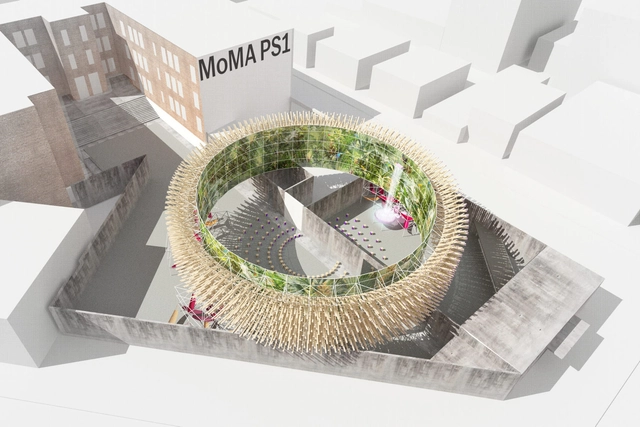
"Hórama Rama" by Pedro & Juana (Ana Paula Ruiz Galindo & Mecky Reuss) has been named the winner of The Museum of Modern Art and MoMA PS1’s 20th annual Young Architects Program. Opening in June 2019, this year’s architectural installation is an immersive junglescape set within a large-scale cyclorama that sits atop MoMA PS1’s courtyard walls. Selected from among five finalists, Hórama Rama will be on view through the summer, serving as a temporary built environment for MoMA PS1’s pioneering outdoor music series Warm Up.
For 20 years, the Young Architects Program at The Museum of Modern Art and MoMA PS1 has offered emerging architectural talent the opportunity to design and present innovative projects, challenging each year’s winners to develop creative designs for a temporary and sustainable outdoor installation that provides shade, seating, and water. The architects must also work within environmentally sensitive guidelines.
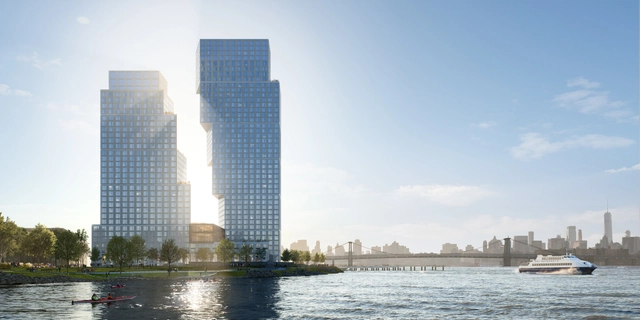
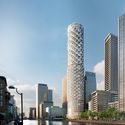
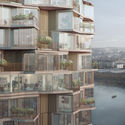
OMA, led by the firm’s partner Jason Long, has designed two towers at Greenpoint Landing in Brooklyn, New York. The towers, in conjunction with a lower seven-story building, will offer 745 housing units (30% of which are affordable) and over an acre of new public space for the neighborhood. As OMA New York’s first ground-up building in Brooklyn, the scheme will serve as “a catalyst in the transformation of the waterfront from a post-industrial edge to an accessible and dynamic part of the neighborhood.
The two towers, extending Eagle Street and Dupont Street, expand the existing waterfront esplanade, incorporating 2.5 acres of public open space along the shoreline, and 8,600 square feet of ground-floor retail. Manifesting as two dancers, the towers simultaneously lean into and away from each other. While the taller tower widens towards the east as it rises, its partner steps back from the waterfront to create a series of large terraces.
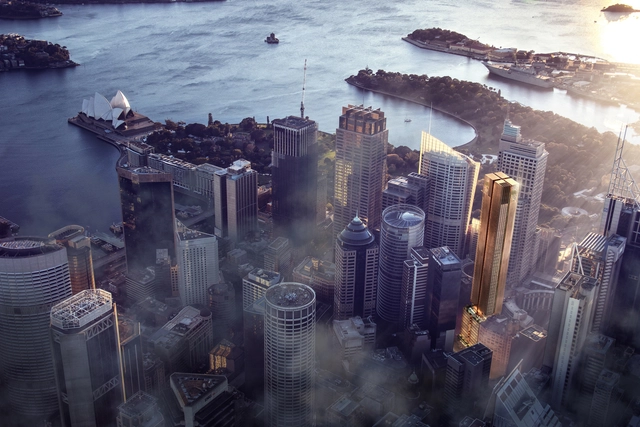
Woods Bagot has won an international competition for the design of Sydney’s first luxury hotel in 20 years. The hotel and office tower at 4-6 Bligh Street in central Sydney will be flanked by a mixture of commercial and hotel buildings, shops, restaurants, and cafes.
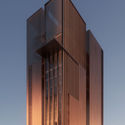
The unanimous choice of a six-person jury, the Woods Bagot scheme was praised for “a masterful architectural clarity and precision throughout the scheme,” forming an elegant and coherent anchor at the heart of the city.

French architect Yona Friedman has unveiled his first public project in the United States with The Institute of Contemporary Art and the Miami Design District. Dubbed Space-Chain Phantasy-Miami 2019, the work is sited inside of the Miami Design District's Paradise Plaza. Drawing from a lifetime of developing ideas that empower users and generate democratic cities, Friedman's new prototype is inspired by Miami. The work reflects on Friedman's perspective that architecture should be flexible, mobile, and adjust to the needs of its inhabitants.
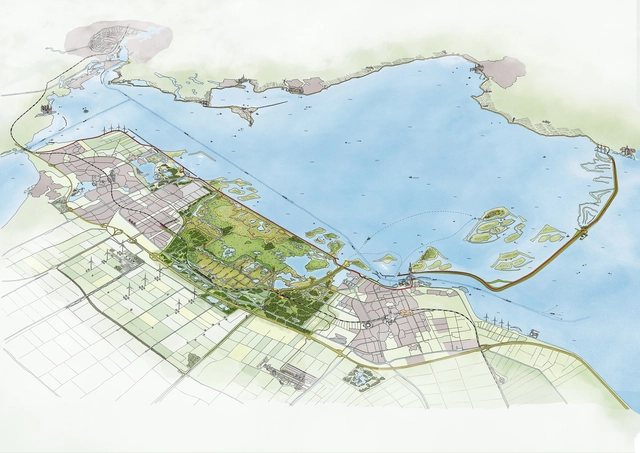
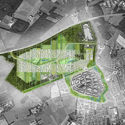
Dutch design practice Mecanoo has created a masterplan for the world's largest man-made nature park at Nieuw Land in the Netherlands. Last month, the Provincial Government approved the plan with an overwhelming majority. The National Park is located near the metropolitan region of Amsterdam and covers over 29,000 hectares. The new masterplan integrates four nature reserves to secure and protect the future of the National Park.
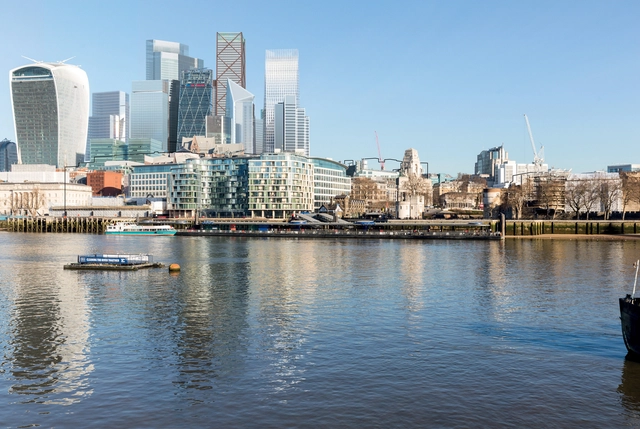
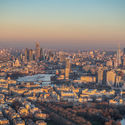
New London Architecture has published the results of their annual Tall Building Survey. Now in its sixth year, the report declares 2019 as “The Year of the Tall Building” with a record number of 76 tall buildings set to be completed in the UK capital in 2019.
Among the key findings from the report, it was revealed that the completion of tall buildings is set to be three times higher than in 2018. There are currently 541 tall buildings in the pipeline for the capital, with 22 out of London’s 33 boroughs containing tall buildings under construction. These tall buildings will offer more than 110,000 new homes for a city with chronic housing shortages.
.jpg?1551873413&format=webp&width=640&height=580)
MVRDV has broken ground on a wholesale market for fruit and vegetables in Tainan, Taiwan. Defined by a terraced, accessible green roof, the open-air market will serve as both an important hub in Taiwan’s supply chain, and a destination for meeting, socializing, and taking in views of the surrounding landscape.
Named the “Tainan Xinhua Fruit and Vegetable Market,” the MVRDV scheme transforms an often-prosaic aspect of the food industry into a public experience of food and nature. Located in a strategic position between the city and mountains, with good public transport links, the scheme sits at a convenient node for traders, buyers, and visitors.


.jpg?1551873565 "The open-air market will also be an important social hub. Image © MVRDV")
.jpg?1551873413 "The Tainan Xinhua Fruit and Vegetable Market elevates a prosaic part of the supply chain into a place for the public to experience food . Image © MVRDV")
.jpg?1551873413)
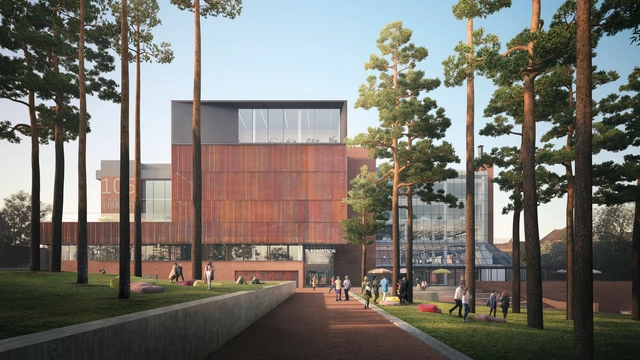
Danish design firm Schmidt Hammer Lassen is partnering with Australia-based Hames Sharley to transform the existing Curtin University Library in Australia. At the center of Western Australia’s largest university, the landmark library building will be transformed into an open, light-filled building to meet the needs of future users. The team aims to create a “living library” with new pathways for visual and physical connectivity throughout the building site.

Arata Isozaki has been named the 2019 laureate of the Pritzker Prize for Architecture. Isozaki, who has been practicing architecture since the 1960s, has long been considered an architectural visionary for his transnational and fearlessly futurist approach to design. With well over 100 built works to his name, Isozaki is also incredibly prolific and influential among his contemporaries. Isozaki is the 49th architect and eighth Japanese architect to receive the honor.
Said the jury of Isozaki in the award citation: “...in his search for meaningful architecture, he created buildings of great quality that to this day defy categorizations, reflect his constant evolution, and are always fresh in their approach.”

2019 has been an unprecedented year for the ArchDaily’s Building of the Year Awards.
But before we get to shortlisted nominees, we want to emphasize the values embodied by this awards process. As the world’s largest platform for architecture we are acutely aware of our responsibility to the profession, and to the advancement of architecture as a discipline. Since our mission is directly related to the architecture of the future—in inspiring and educating the global community of architects who will design the urban fabric of the future—the trust placed in us by our readers to reflect architectural trends from regions around the whole world creates challenges that we are eager to rise to. The democratically-voted, user-centered Building of the Year Awards is one of the key pillars of our response to these challenges, aiming to tear down established hierarchies and geographical barriers.
By participating in the process, the ArchDaily community decides what it means to push architecture forward. So without further ado, these are the most inspiring building, according to ArchDaily readers.
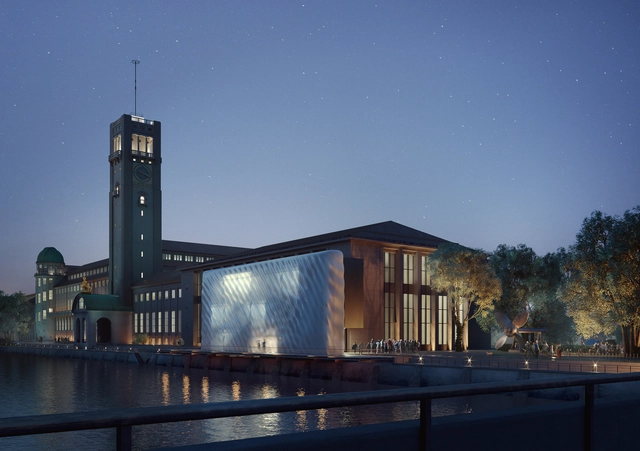
3F Studio has designed a 3D-printed façade destined to serve as the new entrance of the Deutsches Museum in Munich, Germany. The German-based startup, founded by Moritz Mungenast, Oliver Tessin and Luc Morroni, originates from the research project Fluid Morphology, a multifunctional, translucent 3D printed façade application, developed at the Associate Professorship of Architectural Design and Building Envelope at the Technical University of Munich (TUM).
3F Studio specializes in 3D Printed performative architecture and design. The computational-based design process allows for “environmentally informed architectural design” and integrates functions such as ventilation, insulation, and shading already integrated into the new façade.
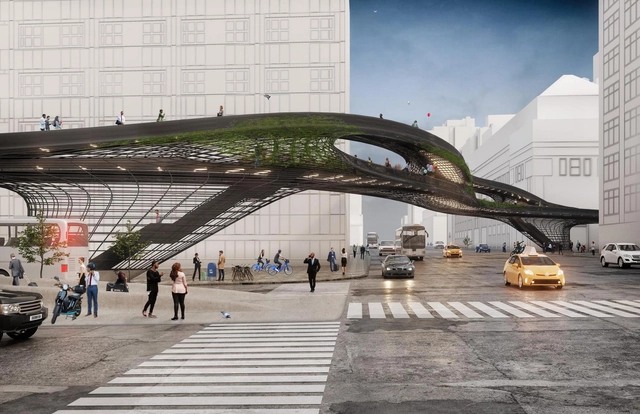
Architecture and design firm DXA studio was awarded Grand Prize for their design for an urban pathway in New York City. Submitted for Construction Magazine’s 2019 Design Challenge, the project would span 9th Avenue to connect the new Moynihan Train Hall to the High Line and Hudson Yards. The design was created to push the boundaries of contemporary steel construction and create a signature public pathway for New York.
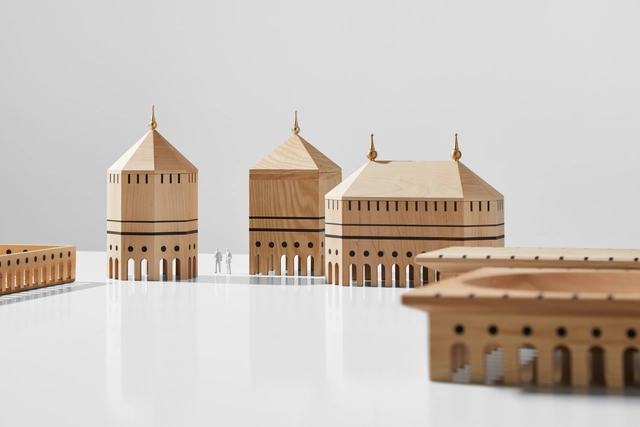
Antonio Serrano and Madrid-based Mad Lab have designed a collection of everyday objects inspired by Renaissance concepts of “Utopia.” The set of trays, boxes, and centerpieces are made from inlay maple and cedar wood, each telling “stories of entrepreneurship, design, craft, and technology.”
The collection, which manifests as a form of “scaled-down city,” considers Utopia as an imagined reflection on reality, rather than a yearning for an ideal city. The objects are full of “nods, winks, and gestures that leave us trapped in an illusion of a dream” conveyed through Renaissance architectural elements such as arches and spires.
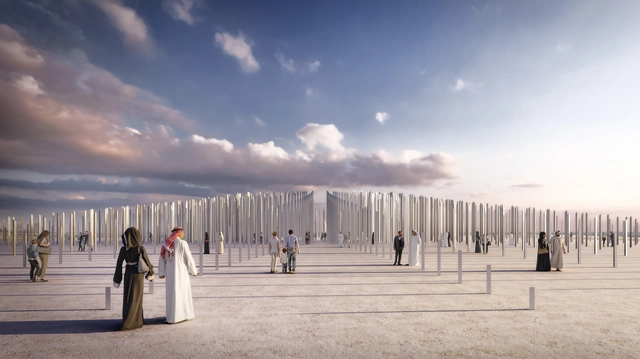
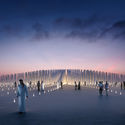
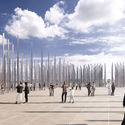
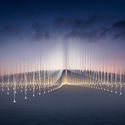
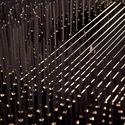
OMA and Inside Outside have collaborated on the design of a vast monument in Dubai, titled “Ethar – Honoring Generosity.” The installation consists of a field of 1,680 triangular-shaped recycled aluminum columns arrayed like a magnetic field, engraved with stories from Arabic scholars, scientists, and thinkers.
The installation was designed to celebrate the “unique culture of charitable giving in the United Arab Emirates with a physical installation that is part of the urban landscape of Dubai.” Designed for a site on Jumeirah Beach, the monument’s character can also be adapted for various contexts, whether dispersed throughout the city or appearing in key urban locations as a symbol of Emirati culture.
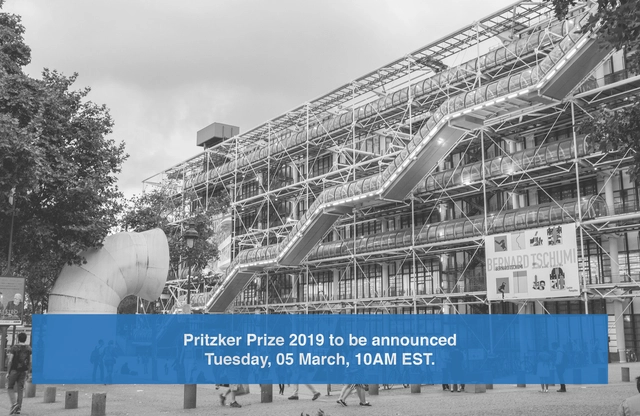
The 2019 Pritzker Architecture Prize will be announced on Tuesday, 05 March at 10am EST. Past laureates include some of architecture's most significant names, among them Rem Koolhaas, Zaha Hadid, Philip Johnson, SANAA, Oscar Niemeyer, Norman Foster, Peter Zumthor, Toyo Ito, Alejandro Aravena and, most recently, Balkrishna Doshi (full list).
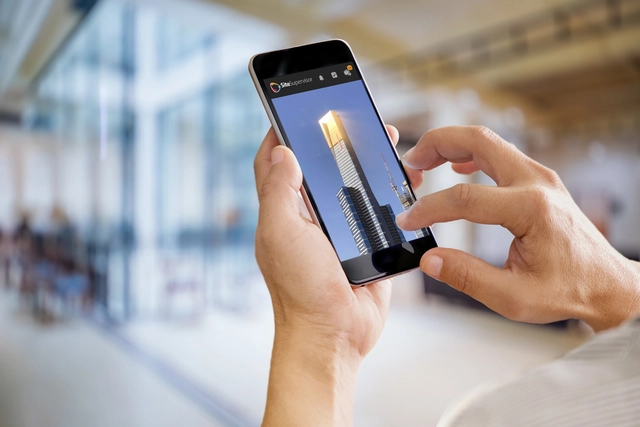
There may be times when you remember an old project you did, perhaps at uni, that you want to show someone. The one that had the amazing render that took 10hrs of Photoshopping. But no, it’s at home on hard-drive no.2 of 5. If only you had uploaded that one to SiteSupervisor, you could be showing it off right... about... now.
SiteSupervisor is your new pocket portfolio. No, not the portfolio that you keep in the drawing tube that only ever sees the light of day at a job interview, but a real, live portfolio that you can access on your phone anytime, anywhere. It's time to take pride in the work you do and have done, and really use what you have to not only bring in more work, but also solve problems.

The United States is abundant with monuments dedicated to historical figures, events, and philosophies. From Mount Rushmore to the Statue of Liberty, the symbolism behind such monuments often outweighs the expense and practicalities behind their construction.
However, the architectural history of the United States contains many monumental intentions that were never realized. To demonstrate this, CashNetUSA has teamed up with NeoMam Studios to visualize five monuments that were never built. Below, we have republished the proposals with a shortened description. For the full story, visit the CashNetUSA website here.
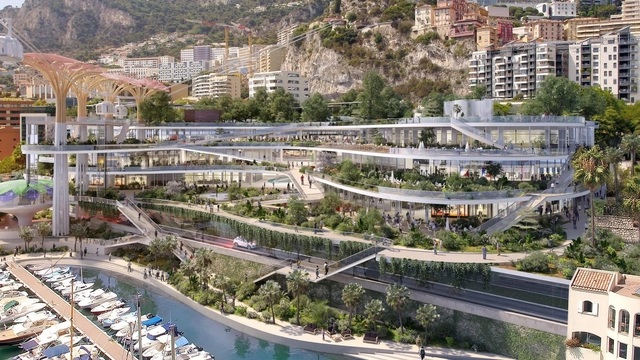
Studio Fuksas has won the competition to revitalize the Fontvieille site along the port of Monaco, France. The project is designed to provides answers to major commercial, urban, architectural and ecological issues. The idea draws inspiration from the water and the green slopes of the Mediterranean hills. The new project aims to create a vertical park that links the city to the sea.
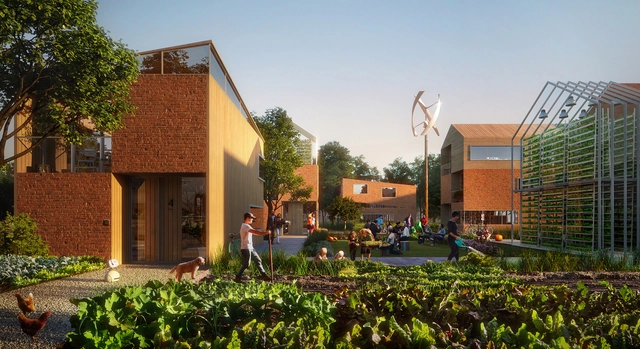
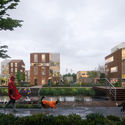
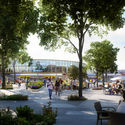
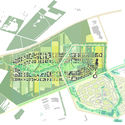
Dutch design practice UNStudio has created a new urban vision to create the world's smartest neighborhood in the Netherlands. Located in Helmond’s Brandevoort District, the project was imagined as a flexible grid that will be developed per users’ demand. Dubbed the Brainport Smart District, the project explores social cohesion and safety, health, data, new transport technologies and independent energy systems. The BSD is designed to be a living lab that embraces experimentation and ‘learning by doing’.
.jpg?1551411640&format=webp&width=640&height=580)
For this year's Women in Architecture Awards, The Architectural Review and the Architects’ Journal have selected Sheila O’Donnell as Architect of the Year and Xu Tiantian to win the Moira Gemill Prize for Emerging Architecture in the 2019 Women in Architecture awards. The Architect of the Year award recognizes excellence in design specifically in the context of a recently completed project and the Moira Gemmill Prize for Emerging Architecture is awarded to women designers under the age of 45 who show design excellence indicative of a bright future.
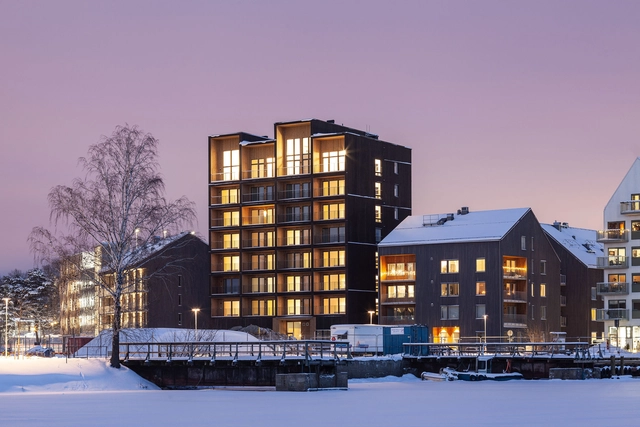
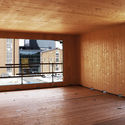
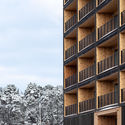
C.F. Møller Architects have completed Sweden’s tallest timber building, which is now accepting its first tenants. Situated in Västerås, one hour from Stockholm, the building is constructed from solid timber in order to radically reduce CO2 emissions, positively affect the indoor climate, and enhance the interior quality of life.
The 8.5-story-high tower features an elevated ground floor and double-height top floor, with all walls, beams, balconies, lifts, and stairwells made from cross-laminated timber. The use of CNC-milled solid timber and glulam allows for an airtight, energy-efficient structure without the need for additional cladding.



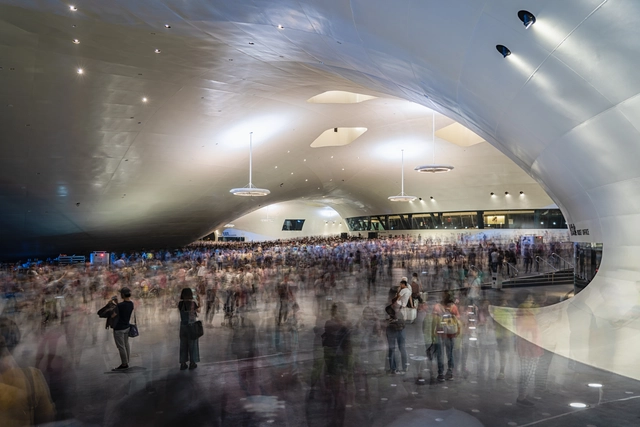
Photographer Sytze Boonstra has captured the National Kaohsiung Center for the Arts in Taiwan through a series of new images. Bringing Mecanoo's work to life, Boonstra turned his lens to the part-landscape, part-architecture building with four performance halls tucked underneath a 35-acre artificial terrain. As the largest performing-arts center under one roof, the project was made to blur the boundaries between indoors and out, solid and void.
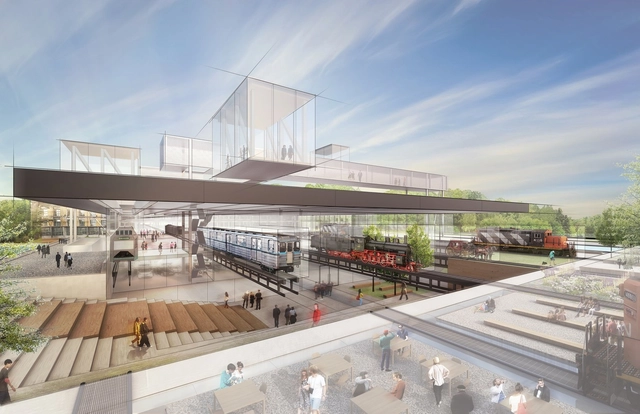
Architecture and design practice Diller Scofidio + Renfro have been selected to design the Hungarian Museum of Transport in Budapest. As the new home for one of the oldest transport museums in Europe, the project will be sited in a former railway yard. The project uses the idea of ground transportation as a central organizing principle, highlighting the central role of the ground in urban planning and infrastructure. The design de-familiarizes ground by excavating, lifting, and cutting to produce unexpected environments.





.jpg?1551304643&format=webp&width=640&height=580)
A revised design has been released for the Oakland Athletics baseball stadium, designed by Bjarke Ingels Group, James Corner Field Operations, and Gensler. The new stadium will replace the Oakland A’s existing 51-year-old Oakland-Alameda County Coliseum, which the A’s share with the Oakland Raiders football team. The mega-ballpark includes a waterfront circular stadium at Howard Terminal and would turn the current Coliseum site into a tech and housing hub.
Under the redesign, the previous “diamond box” stadium is replaced by an open, circular scheme. Encompassing the playing field, a coliseum-like seating arrangement steadily bows own to the entrance area, topped by a landscaped green roof.
.jpg?1551304643 "© Bjarke Ingels Group via mlb.com")

.jpg?1551304564 "© Bjarke Ingels Group via mlb.com")
.jpg?1551304556 "© Bjarke Ingels Group via mlb.com")
.jpg?1551304643)











_Qatar_convention_center_Hisao_SUZUKI.jpg?1551731947 "© Hisao Suzuki")

_Hisao_SUZUKI04.jpg?1551731968 "© Hisao Suzuki")