Minimaforms Presents The Order of Time at the Architectural Association School of Architecture Gallery. It is an immersive installation aimed to connect the preoccupations of physics, art, and architecture by revealing the ordering of spaces and constructed relationships through direct experience.
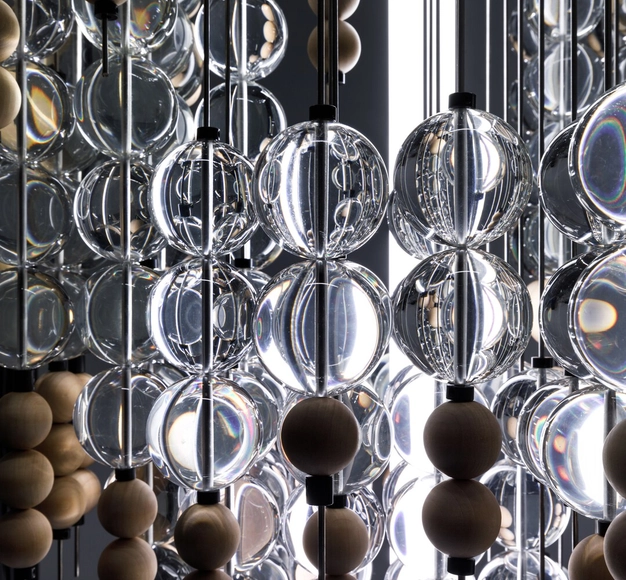
Three Sculptural installations are the highlight of the exhibition. Spherical organizations deployed through mathematical logic and designed to extend space within reflective light boxes, gifting its viewer a new immersive moment at every turn. ArchDaily had the chance to engage in a conversation with Theodore Spyropoulos; Artist & Architect at Minimaforms and Director of the Architectural Association’s Design Research Lab, on issues that tackled the interdisciplinary nature of architecture, the creative process of the installation, and how it influences the creation of spaces, buildings & cities.
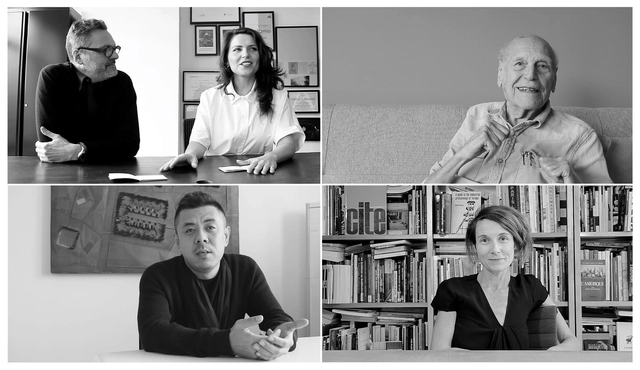
Simple in form but complex in substance, “What is Architecture?” remains an existential question for a lot of architecture students and young professionals. In an attempt to define this ever-changing interrogation and expose the different visions out there, the interview series: WIA – What is architecture? asks four, straightforward, questions to world-leading architectural designers and thinkers. Seeking to uncover their opinion on what architecture is and what it can do, these short videos reveal responses to “What is architecture? What can architecture do? What is your architectural position? and What is your design method?”.
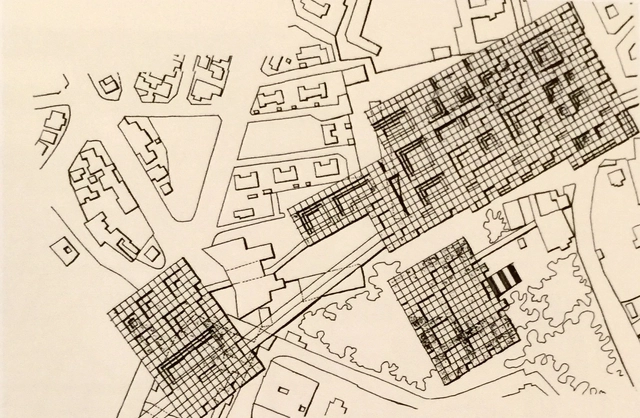
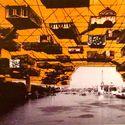
At 92 years of age, for his entire career Yona Friedman has occupied an unusual spot within the architecture world; his signature concept, the Ville Spatiale which he first proposed in 1956, combines the top-down megastructural thinking visible in later projects such as Archigram's Plug-In City with a total freedom for occupants to design and build their own homes within the structure. In this installment of his “City of Ideas” column, Vladimir Belogolovsky interviews Friedman at his home in Paris to talk about the Ville Spatiale and his theories of mobile and improvised architecture.
Best known for his theory of mobile architecture and his spatial city project, Yona Friedman has passed away at 96, as was announced in his Instagram account this morning. The Hungarian born French architect and theorist was one of the most influential figures of the profession in the late 1950s and early 1960s.
Yona Friedman is a French architect and urban planner with more than 92 years of experience that has led him to participate in numerous events, including the Venice Biennial and the Shanghai Biennial. One of his most important works was published in 1958, entitled L'Architecture Mobile, which exposed one of his most ambitious projects named: "La Ville Spatiale", a utopia that recycled mega-structures of existing cities to provide citizens with the chance to live with complete flexibility in their decisions.
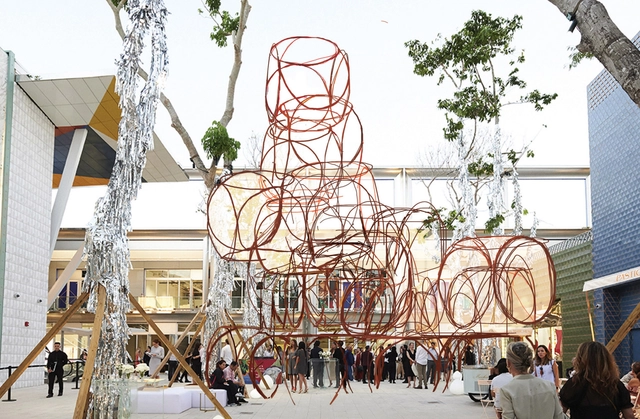
Space-Chain Phantasy-Miami 2019 Prototype. Image Courtesy of MDD & ICA
French architect Yona Friedman has unveiled his first public project in the United States with The Institute of Contemporary Art and the Miami Design District. Dubbed Space-Chain Phantasy-Miami 2019, the work is sited inside of the Miami Design District's Paradise Plaza. Drawing from a lifetime of developing ideas that empower users and generate democratic cities, Friedman's new prototype is inspired by Miami. The work reflects on Friedman's perspective that architecture should be flexible, mobile, and adjust to the needs of its inhabitants.
Text from the organizers Bi-City Biennale of Urbanism\Architecture (UABB). The Bi-City Biennale of Urbanism\Architecture (UABB), the only exhibition in the world to explore issues of urbanization and architectural development, will be opening for its 7th edition on December 15th, 2017. UABB will be held at Nantou Old Town in Nanshan district, an urban village that was once the administrative center of the Bao'An County. Hou Hanru, Liu Xiaodu, and Meng Yan (in alphabetic order) make up the curatorial team, all known for notable accomplishments in their respective fields. UABB is thrilled to host more than 200 award-winning exhibitors from 25 countries to share their perspectives on diversity and urban villages at this year’s biennale.
People can improvise the city; people can improvise architecture. That means the city shouldn’t resist [its] inhabitants, but obey [its] inhabitants… We need to get back to elasticity.
In this interview from the Louisiana Channel, architect and theorist Yona Friedman discusses the plight of the contemporary city, and how it is the responsibility of architects to design structures that can be inhibited for the widest range of individuals and purposes.
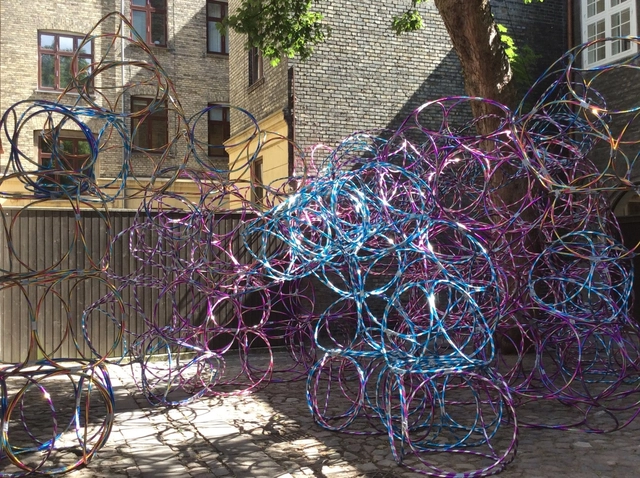
Architect and theorist Yona Friedman has brought his playful “People’s Architecture” installations to Rome’s MAXXI Museum, Paris’s Les Halles and Denmark where they were recently assembled in a workshop at the Danish Association for Architects. Built using plastic hula hoops, each installation is assembled spontaneously, creating new variations of space with each turn. Says Friedman: “Architecture for people proposes a variant of the original “Ville Spatial.” It is based on a structure easy to modify, a structure not necessarily raised over ground level, keeping that option open if wanted.”
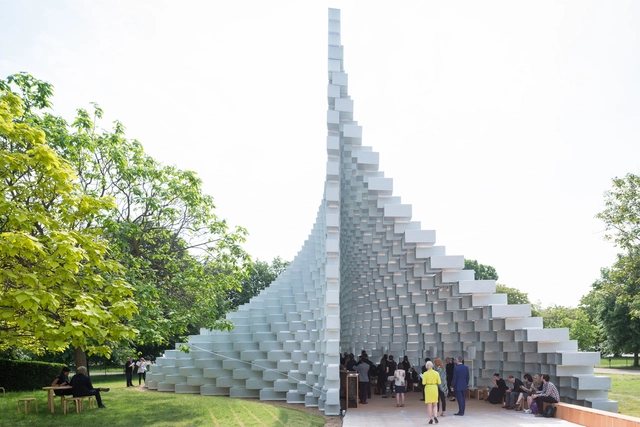
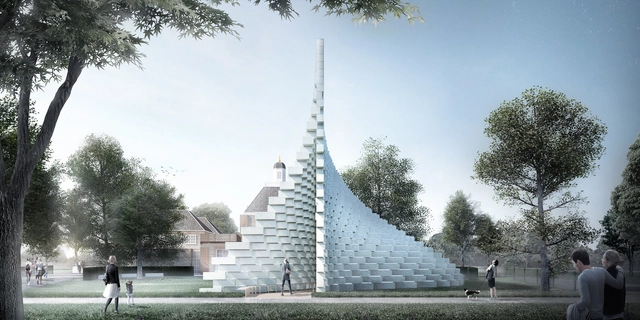
Earlier today, the 17th Serpentine Gallery Pavilionwas unveiled with a press preview ahead of its public opening this Friday. With its 13-meter tall "unzipped wall" of square fiberglass tubes, the pavilion is an impressive presence in Hyde park, standing next to the single-story Serpentine Gallery. As described by Bjarke Ingels in his design statement, the pavilion is all about its visual effects from various angles - going from an expansive, transparent rectangle when viewed from the side, and an opaque, curving sculptural shape when seen from either end.
With so much visual intrigue, the project offers plenty to be explored through photography - and accordingly, photographer Laurian Ghinitoiu was there at the opening to investigate the project's visual effects. He also captured the pavilion's neighboring Summer Houses, by Kunlé Adeyemi of NLÉ, Barkow Leibinger, Yona Friedman and Asif Khan. Read on to see the gallery.
The 2016 Serpentine Pavilion, designed by BIG, has today been unveiled at the Serpentine Gallery in Hyde Park, London. The design consists of an "unzipped wall" in which a straight line of tubular fiberglass bricks at the top of the wall is split into two undulating sides, housing the program of the pavilion. For the first time, the 2016 Serpentine Pavilion is also accompanied by four "summerhouses" designed by Kunlé Adeyemi, Barkow Leibinger, Yona Friedman and Asif Khan. The Pavilion and summerhouses will open to the public later this week, on June 10th, and will be in place until October 9th. Read on to find out more about all five designs.
Videos
Pavilion design by BIG. Image Courtesy of BIG
The Serpentine Gallery in London has unveiled the designs for this year's prestigious Serpentine Gallery Pavilion, designed by BIG, showing an "unzipped wall" which rises to a point above the entrance. In addition to the pavilion, this year the Serpentine gallery will host four smaller "summer houses" designed by Kunlé Adeyemi - NLÉ, Barkow Leibinger, Yona Friedman and Asif Khan. For these summer houses, the Serpentine Gallery asked the participants to take inspiration from Queen Caroline's Temple, a small, classical summer house near to the gallery that was built in 1734.
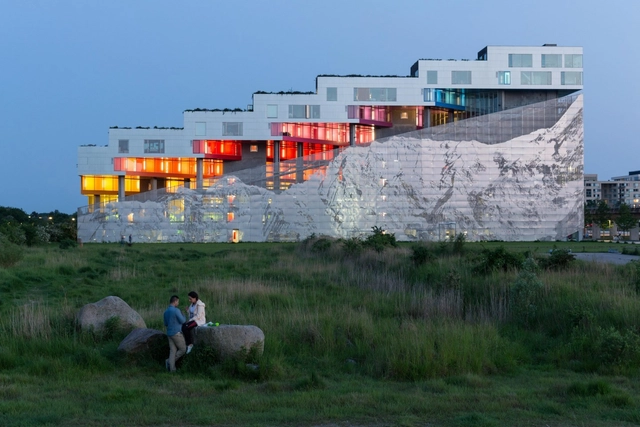
The Mountain, Copenhagen / BIG. Image Courtesy of Serpentine Galleries
The Serpentine Galleries have revealed that the 2016 Serpentine Pavilion will be designed by Bjarke Ingels Group (BIG), alongside a surprise announcement that four "Summer Houses" will also be built by internationally acclaimed practices. Kunlé Adeyemi – NLÉ (Amsterdam/Lagos), Barkow Leibinger (Berlin/New York), Yona Friedman (Paris), and Asif Khan (London) will each design a 25sqm structure inspired by the nearby Queen Caroline’s Temple, a neo-Classical summer house built in 1734 and "a stone’s throw from the Serpentine Gallery." In line with the criteria for the selection of the Serpentine Pavilion architect, each chosen to design a Summer House has yet to realise a permanent building in England.