Peter Zumthor Proposes $650 Million Overhaul for LACMA

LACMA © Flickr user Diana Lee Photography

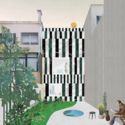
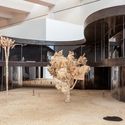
The County Museum of Art (LACMA) will soon be rolling out the red carpet to welcome Swiss legend Peter Zumthor to the Golden State. The prized architect’s debut will mark the opening of “The Presence of the Past: Peter Zumthor Reconsiders LACMA,” which will unveil the ambitious, $650 million plan to transform the LACMA’s “Byzantine maze of buildings and hallways” into an experience-based “village” of curvaceous modern structures that will produce more energy than it uses.

“The idea is to make it permeable by people,” LACMA CEO and director Michael Govan says, who has been working with Zumthor for over four years on the proposal.

Happy 70th Birthday Peter Zumthor!

Peter Zumthor at the Steilneset Memorial. Image © Andrew Meredith

Sharing a birthday with I.M. Pei, Peter Zumthor (April 26, 1943) turns 70 years old today. Known for his sensuous materiality and attention to place, the 2009 Pritzker Laureate is one the most revered architects of the 20th century.

Although Zumthor has completed far fewer projects than architects of comparable renown, his work has had a resounding impact on the world of architecture. His buildings are mysterious and enticing, but show no signs of style or formal preconceptions. His concern is with context, experience and materiality, not aesthetic. Perhaps this is his most significant contribution to architecture: a truly meaningful architecture of place and experience.

We invite you to explore Zumthor’s work, both past and present, after the break…

Royal Gold Medal 2013 Lecture: Peter Zumthor

It’s a rarity that the architecture community is presented a chance to indulge in a . Often referred to a architecture’s reclusive “man of mystery”, the Swiss legend has produced a handful of projects so eloquently designed that they have captured the attention of the world. In honor of his mastery, RIBA awarded Zumthor with the institute’s prestigious Royal Gold Medal in February. In this video, he gives the 2013 Royal Gold Medal Lecture at the RIBA, focused on the theme of Presence in Architecture. 

Peter Zumthor awarded RIBA Royal Gold Medal 2013

© Gerry Ebner

Today, the Royal Institute of British Architects () honored Swiss architect Peter Zumthor for his significant influence on the advancement of architecture by naming him the recipient of the 2013 Royal Gold Medal.

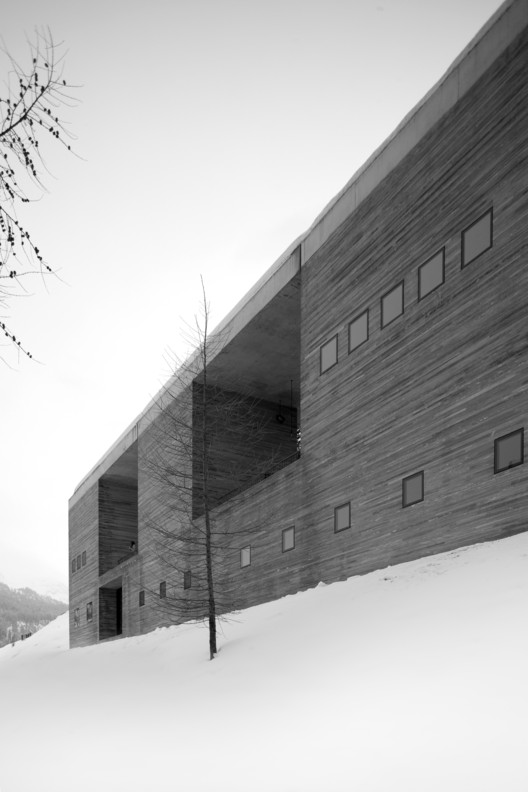
It all started in Switzerland, in 1979, when Zumthor founded his “small yet powerful and uncompromising practice”. Since, he has built a prestigious, international reputation for creating “highly atmospheric spaces through the mastery of light and choice of materials”. From his small rural chapels to the Thermal Baths at Vals, the Zumthor experience ignites the senses, with “every detail reinforcing the essence of the building and its surroundings.”

RIBA President Angela Brady, stated: “Peter Zumthor’s work renews the link with a tradition of modern architecture that emphasizes place, community and material practice.  His writings dwell upon the experience of designing, building and inhabitation while his buildings are engaged in a rich dialogue with architectural history. I will be delighted to present him with the Royal Gold Medal.”

Continue to learn more.

Correction to Wim Wenders and Peter Zumthor Rumor

© Andrew Meredith

It has been confirmed by Studio and Atelier Peter Zumthor & Partners that the news of Wim Wenders devoting his new 3D documentary film on architecture to Peter Zumthor was in fact a rumor. Although Wenders will be conducting an artistic interview film with Zumthor for the upcoming 2012 Venice Biennale, it has nothing to do with his feature documentary. The Biennale interview film and the 3D documentary on architecture are two separate projects that were mistakenly combined by the source article. We apologize for the confusion.

With that begin said, we look forward to both the Biennale film and the 3D documentary, as the internationally renowned director never seems to disappoint.

Photograph: Andrew Meredith

Video: Serpentine Gallery / Peter Zumthor


In light of the announcement that Herzog & de Meuron and Ai WeiWei will be designing this year’s Pavilion at the , we take a look back at last year’s Pavilion and the architect behind it, Peter Zumthor.

Last summer ’s Serpentine Gallery unveiled a new architectural feat in the form of the celebrated Pavilion, built to stand for just three months. In the past few years esteemed designers Jean Nouvel, Frank Gehry and Olafur Eliasson have exercised their creative muscles, and last year Swiss architecht Peter Zumthor steps up to the plate to create a relaxing space to encourage conversation. Here, Crane.tv finds out what inspired Zumthor.

Steilneset Memorial / Peter Zumthor and Louise Bourgeois, photographed by Andrew Meredith

© Andrew Meredith

In memory of those persecuted in the seventeenth-century Finnmark Witchcraft Trials, the Steilneset Memorial rests along the jagged coastline of the Barents Sea in , Norway. Photographer Andrew Meredith has shared with us his photo series documenting this masterpiece created by a unique collaboration between the world-famous Swiss architect (Basel, 1943) and the influential contemporary artist Louise Bourgeois (Paris, 1911-2010).

Zumthor simply describes his collaboration with Bourgeois in an interview with ArtInfo as the following, “I had my idea, I sent it to her, she liked it, and she came up with her idea, reacted to my idea, then I offered to abandon my idea and to do only hers, and she said, ‘No, please stay.’ So, the result is really about two things — there is a line, which is mine, and a dot, which is hers… Louise’s installation is more about the burning and the aggression, and my installation is more about the life and the emotions [of the victims].”

Continue reading to view the photographs and learn more about the Steilneset Memorial.

Majority rules against Zumthor’s “Glass Underpants” in Isny

© Peter Zumthor

The votes are in and 72 per cent of the citizens in im Allgäu (Bavaria, Germany) have vetoed Peter Zumthor’s design for the new city gate commonly referred to as the “glass underpants”. As the Swiss architect is famously praised for his context-sensitive and timeless designs, the people of Isny initially felt “lucky” to have Zumthor design for their town. They had high hopes for their very own Steilneset Memorial – the Norwegian city of Vardo’s beloved installation that has brought a surge in tourism – but ultimately were disappointed. Continue reading for more.

Winners of the Architect’s Eye Photography Competition

© Simon Kennedy - Courtesy of the International Art Consultants

Since 2006, the International Art Consultants (IAC) has celebrated architects’ passion for photography through the Architect’s Eye Awards. Simon Kennedy won the Architecture and Place category this year with his image of the ‘Heygate Estate’, while Revti Halai’s photo of the Serpentine Gallery Pavilion received runner-up. The Architecture and People category was won by Neil Dusheiko’s photograph of ‘Unite d’Habitation’, and Chris Drummond’s ‘Ghosts of the Underground’ received runner-up.

View the four winning photographs after the break.

Zumthor Photo Expose

© http://zumthor.tumblr.com/

We recently came across a photo expose chronicling numerous projects by Peter Zumthor. It features an extensive gallery covering models, drawings, and photos of his projects in various states from construction to completion. Be sure to check the site out here, and catch a glimpse into the inner workings of Zumthor.

Peter Zumthor lecture at the Centre Georges Pompidou

http://www.dailymotion.com/video/xiwj5w

Enjoy this by Swiss architect and Pritzker laureate .

The lecture took place in May 19th the Centre Georges Pompidou, where Zumthor revisited 6 recent projects:

The video has also a simultaneous french translation, but it’s still watchable in english.

Update: You can mute the right channel to remove the french translation, as some readers pointed in the comments section below.

Thanks Vicentiu for the tip!

(Remember: you can always send us tips and info using our contact form)

Serpentine Gallery Pavilion 2011 / Peter Zumthor

2011, designed by . Photo by John Offenbach

The 2011 Serpentine Gallery Pavilion by Pritzker laureate Peter Zumthor was unveiled today. A design that ‘aims to help its audience take the time to relax, to observe and then, perhaps, start to talk again – maybe not’, the materials are significant in aiding the design which emphasizes the role the senses and emotions play in our experience of architecture.

Zumthor added that ‘the concept for this year’s Pavilion is the hortus conclusus, a contemplative room, a garden within a garden. The planted garden enclosed by this dark structure was conceived by the influential Dutch designer Piet Oudolf.

The building acts as a stage, a backdrop for the interior garden of flowers and light. Through blackness and shadow one enters the building from the lawn and begins the transition into the central garden, a place abstracted from the world of noise and traffic and the smells of London – an interior space within which to sit, to walk, to observe the flowers. This experience will be intense and memorable, as will the materials themselves – full of memory and time.’

More info after the break:

Video: Peter Zumthor and Louise Bourgeois Steilneset Witch Trial Memorial

Shown under construction last month, the project is a memorial for the 91 victims of the 17th-century witch trials in Vardo, . Illuminated windows, 91 in total dedicated to each victim, are incorporated within Zumthor’s information centre design which measures over 400′ long with a connective thread of tautly stretched silk sheets.

in an interview with ArtInfo described his unique collaboration with artist Louise Bourgeois remarking, “I had my idea, I sent it to her, she liked it, and she came up with her idea, reacted to my idea, then I offered to abandon my idea and to do only hers, and she said, ‘No, please stay.’ So, the result is really about two things — there is a line, which is mine, and a dot, which is hers… Louise’s installation is more about the burning and the aggression, and my installation is more about the life and the emotions [of the victims].”

Video: Architectural Record and McGraw-Hill Construction

Peter Zumthor’s Design Revealed for the 2011 Serpentine Gallery Pavilion

Courtesy of Pavilion

Pritzker Prize winning architect Peter Zumthor’s design for the 11th Serpentine Gallery Pavilion was revealed today. A design that ‘aims to help its audience take the time to relax, to observe and then, perhaps, start to talk again – maybe not’, the materials are significant in aiding the design which emphasizes the role the senses and emotions play in our experience of architecture. The Pavilion will be Zumthor’s first completed building in the UK

Zumthor shared that ‘the concept for this year’s Pavilion is the hortus conclusus, a contemplative room, a garden within a garden. The building acts as a stage, a backdrop for the interior garden of flowers and light. Through blackness and shadow one enters the building from the lawn and begins the transition into the central garden, a place abstracted from the world of noise and traffic and the smells of London – an interior space within which to sit, to walk, to observe the flowers. This experience will be intense and memorable, as will the materials themselves – full of memory and time.’

Stay tuned to ArchDaily for more images and news on Zumthor’s design for the Pavilion.  Our previous coverage of the Serpentine Gallery Pavilion can be found here, including  Jean Nouvel’s Serpentine Gallery of 2010, and SANAA’s 2009 Serpentine Gallery.

Courtesy of Serpentine Gallery Pavilion

House of the Mosaics / Peter Zumthor

© BD Online

Commissioned by Unesco and the Palestinian Authority, Pritzker Prize winner Peter Zumthor’s House of the Mosaics is a design that provides shelter to the Middle East’s largest known mosaic.  Hisham’s Palace, home of this colorfully detailed tile mosaic, was built in 700AD and is situated just on the northern outskirts of , one of the oldest continuously inhabited cities of the world.  The mosaic along with numerous other ruins are currently susceptible to further damage by the elements in addition to possible new development.

More details about the House of the Mosaics following the break.

AD Classics: Kunsthaus Bregenz / Peter Zumthor

© Courtesy of Wikimedia Commons

A year after the completion of Therme Vals [1996], renowned minimalist architect, Peter Zumthor completed the design of Kunsthaus [1997].  The Kunsthaus museum in , is always in a constant state of flux always changing its exhibition spaces to accommodate international contemporary art.  Zumthor’s minimalist design adapts its spaces to the art that is showcased in its exhibits creating a coexisting and redefining relationship between art and architecture.

The Kunsthaus Bregenz has two main principles to their permanent collection: archives of art architecture and a collection of Contemporary art, which complements the changing exhibition spaces.  The museum strives to be the intersection of art and architecture that opens itself to culture and international influence.

More on the Kunsthaus Bregenz after the break.

Bruder Klaus Field Chapel / Peter Zumthor

©Samuel Ludwig www.samueltludwig.com

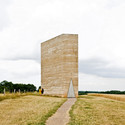
“In order to design buildings with a sensuous connection to life, one must think in a way that goes far beyond form and construction.” This quote from rings true in his design of , where a mystical and thought-proving interior is masked by a very rigid rectangular exterior.

More on Bruder Klaus Field Chapel and Peter Zumthor after the break.

Multiplicity and Memory: Talking About Architecture with Peter Zumthor

– Courtesy of Marco Masetti

This interview was completely conducted and translated by Marco Masetti, done as his bachelor’s degree thesis in Italy.

The idea of multiplicity is innate in Peter Zumthor’s projects since his very first works: works of art surrounding us put on various meanings, which do not always remain on parallel levels combining well with dialectical relationships. The vague is planned strictly, holding by the rules of the architectural language. Beauty is in the undetermined, the multiple, but it is obtainable only through precision. Multiplicity of objects is shown only when who is living with them can distinguish their single parts and, at the same time, can see the work in its wholeness. This throw back to the “unitary” character of architecture, in which every part is in relation with the others and together they give a sense to the project. Zumthor’s planning is pure: nothing is pointless. In this society, as the architect says, «architecture has to oppose resistance», and react to the naughtiness of shapes and meanings, and return to talk its own language. Original shape invention or particular composition doesn’t take to the truth. Between multiplicity and silence there’s a tense and vibrational relationship, and the idea is in their equilibrium.

Things determine the spatial dimension of the world, and therefore its knowledge and usability to us. The project triggers a linking mechanism between things, so they can assume a meaning to the user, becoming an efficient tool to know of the world. Things, objects, the world of references, transform our sensations in remembrance. The pictures that come to mind enclose Zumthor’s research heart. Shape is the result, not the reason. Beauty doesn’t come out of the shape alone, but of the multiplicity of impressions, sensations and emotions that the shape has us to discover.

Peter Zumthor for the Serpentine Gallery Pavilion 2011

A few days before Jean Nouvel’s Serpentine Pavilion is closed and dismantled, AJ has leaked the name of the architect selected to design the 2011 Pavilion: Priztker-laureate Peter Zumthor.

AJ reports that “It is understood Zumthor has been in the frame for the pavilion for some time and initial proposals resemble ‘a big block with a garden in it’ – though the design is expected to evolve over the coming months.”

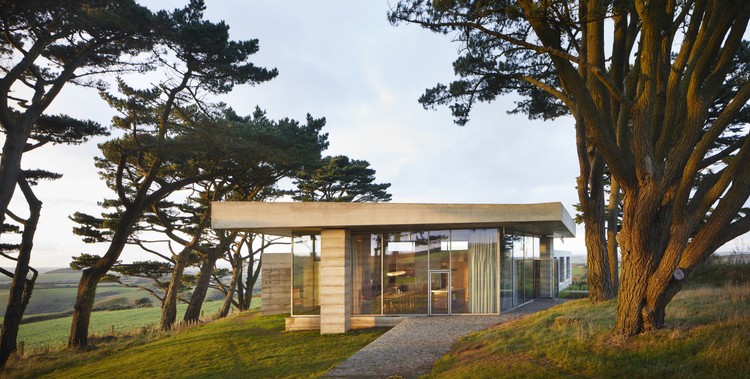
Currently Zumthor is still working on his first project in the UK, A Secular Retreat, part of the Living Architecture initiative.

We are very curious about what will Zumthor do for the Serpentine Gallery. As usual, we’ll keep you updated as more details are revealed.

What Makes Us Human: Reactions to the Shelters for Roman Archaeological Site

© Shawn Swisher

Shawn Swisher, architecture student at the  USC School of Architecture, is currently on a traveling research fellowship focusing on the work of . The research centers around Zumthor’s ability to create visceral reactions through his architecture, work that is based on fundamentals of architecture that seem to be fleeting in some emerging architectural trends. Here you will find periodic updates from his journey.

There are many ways that architecture can stimulate us. We can be enthralled by theoretical concepts that intend to revolutionize how we interact with our buildings. We can be overcome by the metaphors underlying a project’s design. And, at times, we are able to separate ourselves from these more cerebral desires and draw intrigue based solely on our reactions to space and form.

Kolumba Museum / Peter Zumthor

© Jose Fernando Vazquez

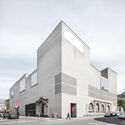
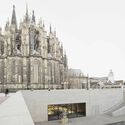
Special thanks to our reader Jose Fernando Vazquez from Urbana Arquitectura (view his work previously featured on AD) who has shared these images of Zumthor’s amazing Kolumba Museum with us.   Situated in , Germany, a city that was almost completely destroyed in World War II, the museum  houses the Roman Catholic Archdiocese’s collection of art which spans more than a thousand years.   Zumthor’s design delicately rises from the ruins of a late-Gothic church, respecting the site’s history and preserving its essence.  ”They [the Archdiocese] believe in the inner values of art, its ability to make us think and feel, its spiritual values. This project emerged from the inside out, and from the place,” explained Zumthor at the museum’s opening.

More about the project and more of Vazquez’s images after the break.