Approaching the context of widening political divides and growing economic inequalities. A new spatial contract. Learning how will we live together. These thoughts brought by Hashim Sarkis, curator of the 17th International Architecture Exhibition of Venice Biennale 2021, may raise important questions about how architecture crosses and materializes social and political conflicts. To understand a more decentralized point of view, which indicates possibilities other than those dictated by normative mindsets, we interviewed Tainá de Paula, a Brazilian architect and community mobilizer in poor suburban areas.
With a complex debate underway about monuments and the way we engage history, we should start thinking about a COVID-19Memorial. Yes, I know we are in the middle (or is it still the start?) of this pandemic, but the intensity of the moment might actually help us envision what such a memorial could be. Instead of waiting for a time when we have more distance from our current catastrophe, we should capture the passions coursing through society right now.
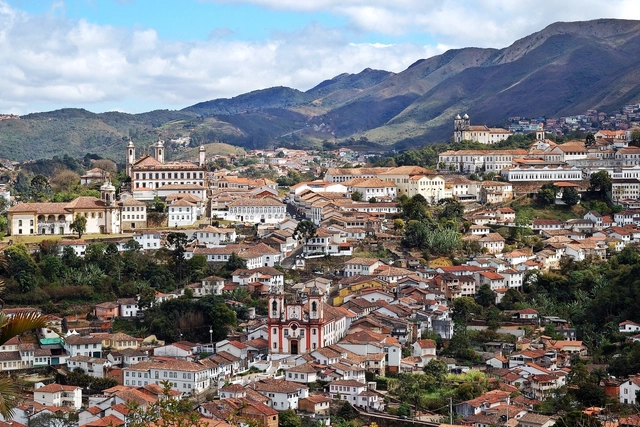
Ouro Preto, Minas Gerais. Photo by Rosino, Flickr. Licensed under CC BY-SA 2.0
In August, the city of Ouro Preto, in Minas Gerais, signed a public-private partnership for a "smart city" project, setting in motion plans to become Brazil's first historic smart city. The contract entails an investment of R$ 10 million and establishes an administrative concession for the Ouro Luz consortium to operate Ouro Preto's public lighting network and telecommunications infrastructure for 25 years.
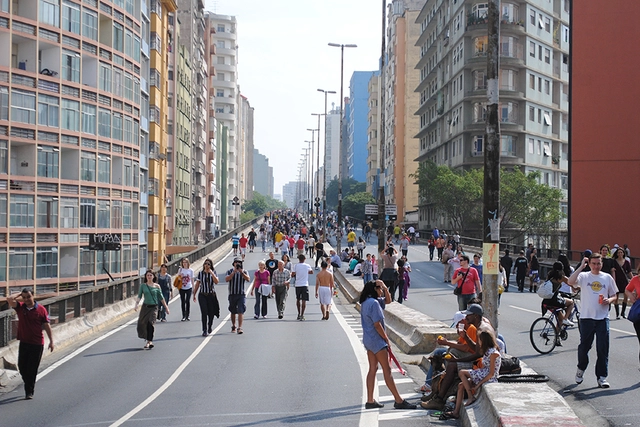
Gentrification has been one of the main points of debate regarding the project that aims to transform the Minhocão into a linear park. Image: Felipe Rodrigues
One of the most prevalent themes in current discussions about the city is gentrification. Broadly defined as "when someone different from you moves into your neighborhood," this urban phenomenon is far more complex than that, involving issues of land use, real estate speculation, public and leisure spaces, and urban planning.
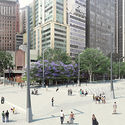
Vale do Anhangabaú. Photo: Diego3336, via Visual hunt / CC BY
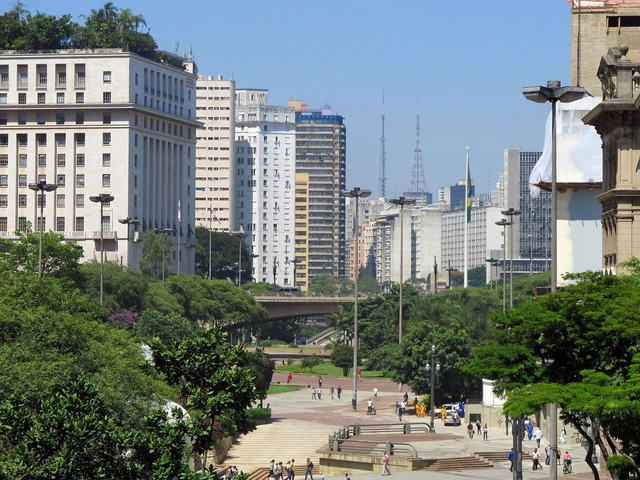
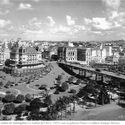
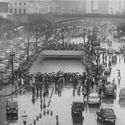
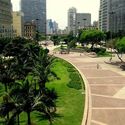
The Vale do Anhangabaú, or simply Anhangabaú, is the area of São Paulo that separates the so-called Centro Velho (Old Center) from the Centro Novo (New Center). True to its name, the Valley is the region bordering the stream of the same name—a somewhat ominous moniker that in Tupi-Guarani means “river or water of the evil spirit.” And indeed, judging by the various unsuccessful ways the space has been used over time, the “curse” embedded in its name seems to linger to this day.
The umbrella column or hollow vault (bóveda cáscara) is a reinforced concrete structure designed by Amancio Williams (Buenos Aires, 1913-1989) that, thanks to its form, has the capacity to support massive amounts of weight while independently maintaining its balance. In other words, it doesn't need any reinforcing structure, save for its singular column, to remain standing.
The studies surrounding bóveda cáscara in architecture were started by Williams in 1939, and resulted in numerous essays and small-scale models. The structures, specifically designed for high roofs and also known as 'umbrellas' or 'parasols,' are a prime example of the modern architectural movement in Argentina, distinguished by their experimentation in form and function.
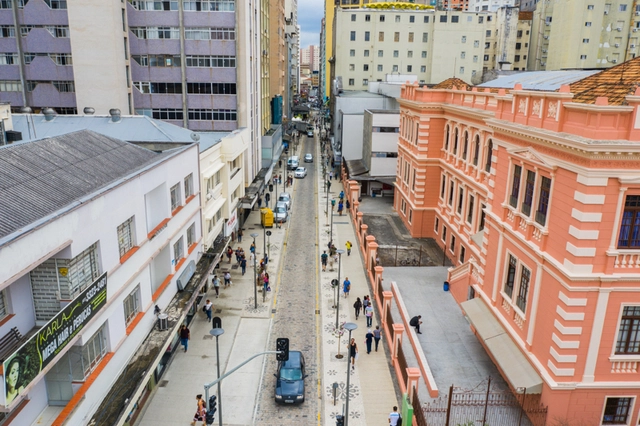
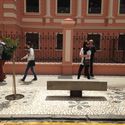
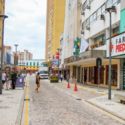
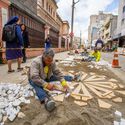
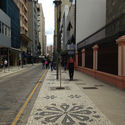
Sidewalks were widened and new street furniture was installed to encourage walking and spending time on the street. Photo: Daniel Castellano/Curitiba City Hall
Amid century-old buildings, a major bus terminal, and a thriving commercial sector, Curitiba has implemented a complete street. Completed in February, the revitalization of Voluntários da Pátria Street has made the thoroughfare safer for pedestrians moving through the central area and more inviting for staying, featuring new benches and widened sidewalks. It is a reclamation of the past that makes the present more welcoming and strengthens the construction of a more humane future for Brazilian cities.
https://www.archdaily.com/1124020/curitibas-new-complete-street-combines-pedestrian-priority-and-heritage-preservationBruno Batista, Paula Manoela dos Santos e Fernando Corrêa
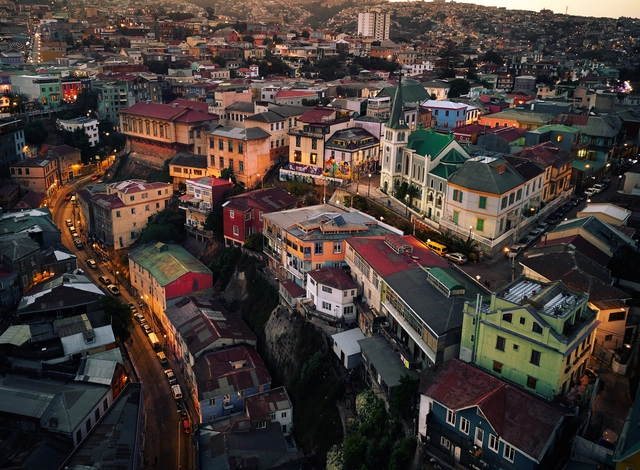
Situated at the foot of 45 hills along the Chilean coast, Valparaíso was a key port in the South Pacific during the 20th century before the construction of the Panama Canal. Thanks to its rapid industrial and commercial growth, the port underwent an urban transformation, attracting thousands of foreigners and cementing its reputation as a bustling South American cosmopolis rich in society, culture, and architecture.
Described by The Guardian as a "Berlin by the seaside", Valparaiso's historic downtown was declared a World Heritage Site by UNESCO in 2003 and the city's cultural and architectural wealth make it a must-see for tourists and architecture aficionados alike.
In this article, we present a guide written by one of the city's many enthusiasts that will give a complete and in-depth look at the port's many treasures. The guide is written as if for a walking tour, starting in Plaza Sotomayor, the city's main square. The route can be divided into two days, with the first part ending at the Palacio Baburizza and the second beginning with the Valparaiso Cultural Park. Take a tip from the experts--if you get lost, don't trust an app to find your way. Ask a local!
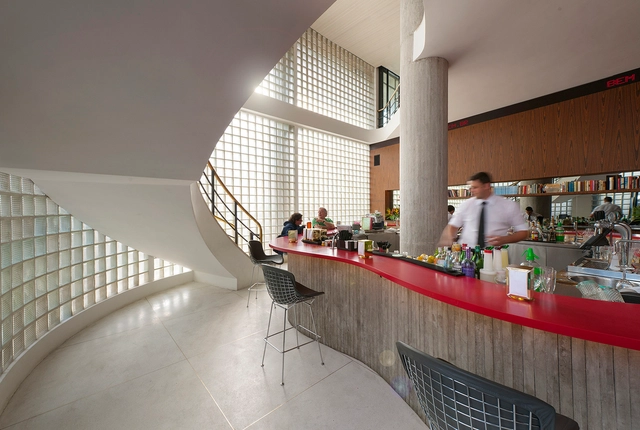
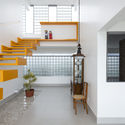
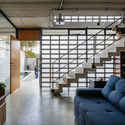
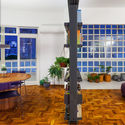
Associated with the architectural imagery of the 1980s, glass bricks—or blocks—are building elements whose sculptural potential has once again been recognized and revisited by contemporary design. First patented in 1907, this product was developed to meet the demand for light in building interiors; however, it is sought after today primarily for the visual effects produced by its translucency and texture. Currently, it is being used in diverse contexts, from bathrooms to residential partitions, and even entire facades of bars, stores, and restaurants.
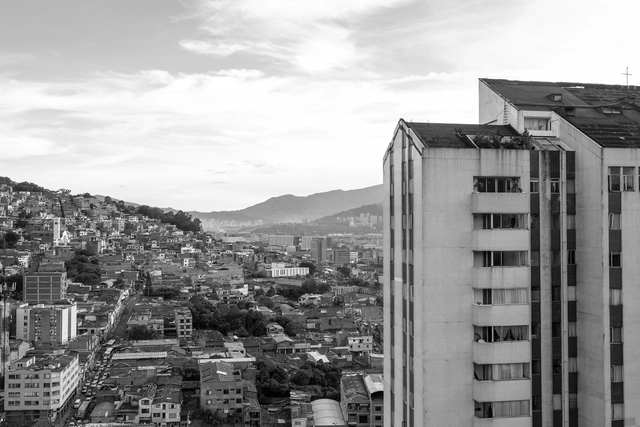
As in most cities, modern architecture left behind landmarks that endure today as exemplary icons shaping the urban landscape and defining each city's identity. One such case is the Torres de Marco Fidel Suárez, designed by architect Eduardo Arango and located in the city of Medellín. Architects and researchers Diego Andrés Agámez Berrio and Daniel Muñetón Muñetón have published a study through the Universidad de San Buenaventura and Editorial Bonaventuriana, investigating the architectural and design compositions of this landmark *paisa* project.
The planet is dying, and we are the reason why. If nature’s decline continues at its current pace, we stand to face increasing natural disasters, loss of biodiversity, and threats to public health. Waste is the largest contributing factor to this problem. And the built environment is one of the top producers of waste in the world—period. But innovation can save the planet.
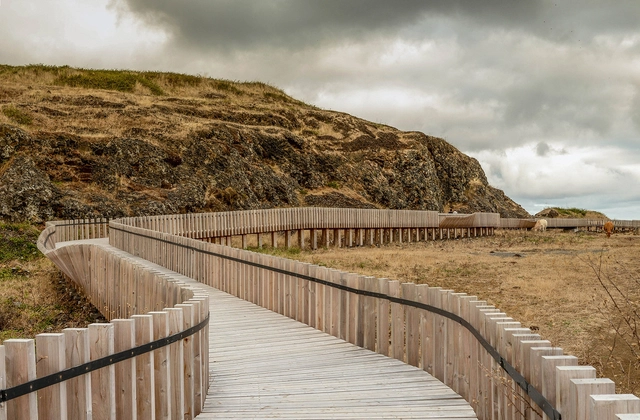
Modern Portuguese architecture has a renowned tradition of exploring the virtues of the landscape, either by integrating or emphasizing the natural elements to create new landscapes that result from the overlapping of culture and nature. Some fine examples are the Boa Nova Tea House and the Leça da Palmeira Tide Pools, both designed by Álvaro Siza, reacting to the rocky seascape where they lie, each in its own way.
However, it is not just Modern Architecture that is concerned with the landscape. In Portugal, contemporary works have been revealing exciting examples of the possibilities of approaching the natural environment, exploring its potential without compromising its integrity. To illustrate this, we have gathered 12 contemporary projects that use different resources to explore the relationship between natural and built.
The world's population is expected to reach 9.7 billion in 2050, an increase of 2 billion persons in the next 30 years.
As the world's population continues to increase, new challenges are expected to arise in addition to the aggravating issues already faced today. How will we live together? The theme of the Venice Biennale of Architecture, postponed to 2021, intends to instigate discussions and proposals concerning the role of architecture in times of increasing political differences, intolerance, and growing economic inequality.
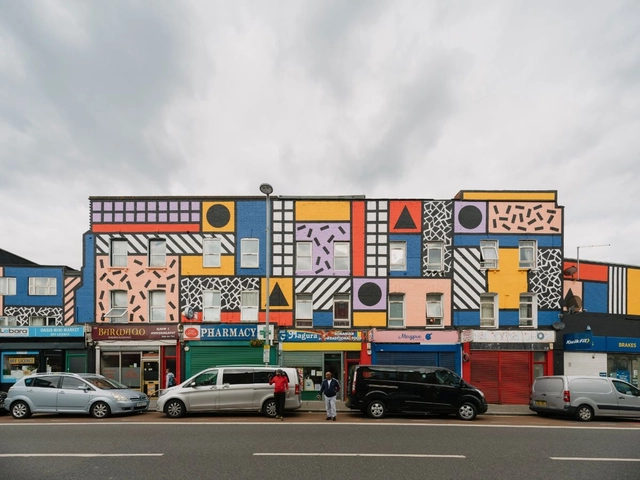
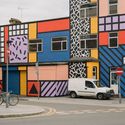
"Les Jumeaux" or The Twins is a new large-scale public urban intervention by French artist and designer Camille Walala in White City, West London. The project encompasses two pedestrian crossings and seven striking murals, created with geometric patterns and primary colors, Walala’s signature style. Moreover, Camille Walala also unveiled this month her East London intervention, a giant work of art aiming to breathe new life into the street and boost the local economy, entitled "Walala Parade".
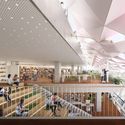
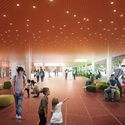
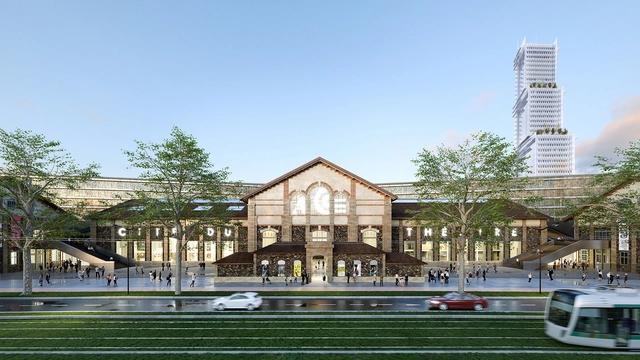
Nieto Sobejano Arquitectos have unveiled the new design for Cité du Théâtre, a large cultural center promoted by the French government in Paris. They will be working with French office Marin+Trottin Architectes, and the project will be located in the Ateliers Berthier. The winning project is based on the creation of a large elevated garden that establishes a visual continuity with Martin Luther King Park.
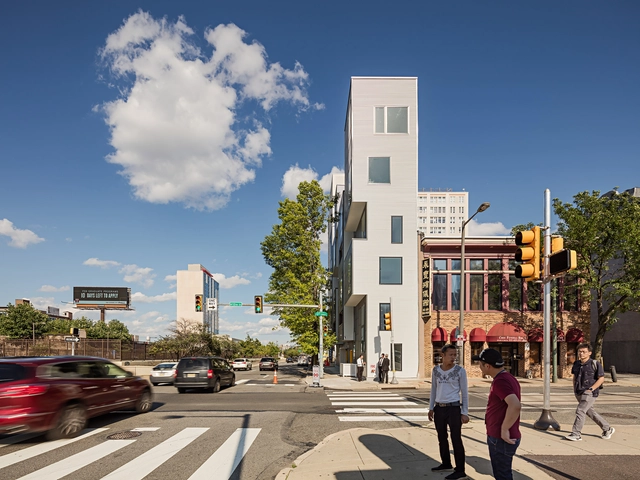
In all cities around the world, there are some forms of residual space, forgotten pieces of the urban fabric, remnants of overlapping layers of past development. This land whose conditions make it unsuitable for most types of conventional construction might be a fertile ground for architectural invention. Assigning a new value to vacant corner lots, dead-end alleys and strangely shaped plots opens up a new field of opportunities for inward urban development, expanding available living space and increasing amenities in densely populated cities. The following explores the potential for experiment and urban activation held by urban leftover space.
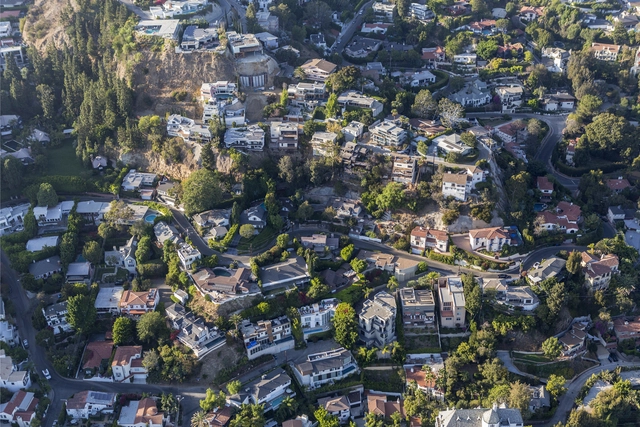
Laurel Canyon, Los Angeles, was a nexus of counterculture activity in the 60s. Now its little mountain cottages are exorbitant. Image via trekandshoot / Shutterstock
The most arresting image, among many, in the documentary Laurel Canyon: A Place in Time, directed by Alison Ellwood, is a black-and-white photograph of Eric Clapton visiting Los Angeles for the first time on tour with Cream. He sits a few feet from Joni Mitchell, who is playing guitar, with a visibly stoned David Crosby in the background on the backyard lawn of Cass Elliot’s house. Clapton observes Mitchell with such a smoldering intensity you think he’s going to blow an amp. He is transfixed by Mitchell not because she was striking—and she was—but because of her musicianship.
We may still have a long way to go when it comes to addressing the diversity of flora and fauna in urban habitats, yet it is incredible how fast, easy—and even fun—the architecture that makes this possible can be.
In practice, how are we promoting spaces for animals and plants in our cities?
The state of Guanajuato is located in the north-central region of Mexico, bordering the states of Zacatecas, San Luis Potosí, Querétaro, Michoacán, and Jalisco. Covering an area of 30,607 km², it is one of the country's most populous regions. Its most prominent municipalities include León, Irapuato, Celaya, Salamanca, and San Miguel de Allende. The latter, designated a UNESCO World Heritage Site in 2008, is characterized by its Baroque and Spanish architecture. Additionally, this city is home to the Parroquia de San Miguel Arcángel, built from the region's characteristic pink cantera stone.
Today, our perception of the construction industry has completely changed. We find ourselves in a digital era that drives us to work collaboratively in multidisciplinary teams, making BIM an essential and mandatory tool for professional advancement.
If you are already working with the BIM methodology, read to the end of the article to find out how you can improve and advance.
https://www.archdaily.com/1124025/editecas-online-bim-masters-flexible-modules-that-adapt-to-your-level-of-knowledgeArchDaily Team
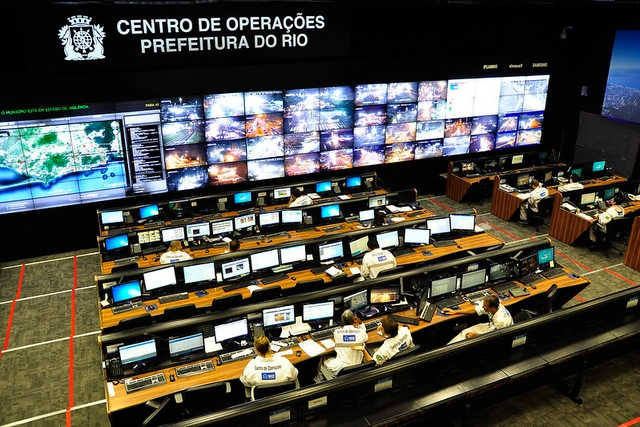
Rio de Janeiro City Hall Operations Center. Image: Mariana Gil/EMBARQ Brasil
The growing presence of Information and Communication Technologies, known as ICTs, in daily life is driving profound transformations in society, shaped by new forms of interaction based on the intensive production and use of information. In a society where information is an essential raw material, the term big data has taken center stage across corporate, governmental, and academic spheres. Big data inherently refers to the vast, varied, and fast-moving volumes of data constantly being generated.
This "Data Revolution" is certainly palpable in Brazilian cities. But how can it help us move toward a better understanding and planning of our urban areas? The opportunities opened up by big data for exploring innovative questions about urban phenomena and dynamics—especially those involving real-time analysis—are undeniable.
Neutelings Riedijk Architects has unveiled images for the Heldentoren, the latest icon of Knokke-Heist, in Belgium. Scheduled for construction starting October 2020, the mixed-use 70 meters high development is set to become one of the highest towers along the Belgian coast.
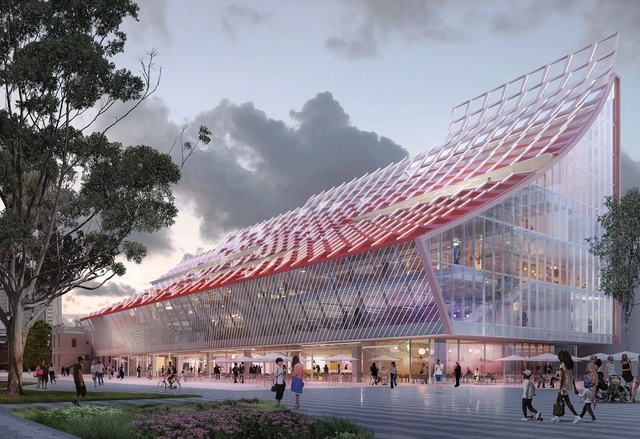
5 Parramatta Square. Image Courtesy of City of Parramatta
The City of Parramatta has released a revised vision for the new Parramatta Square civic hub in Australia. Designed by Manuelle Gautrand Architecture with firms Designinc and Lacoste + Stevenson, the multi-purpose, six-story building will accommodate a variety of uses. Called 5 Parramatta Square, the project is designed to be a new community, cultural, and civic heart.





.jpg?1597856160 "Pabellón de exposición en Palermo (1966). Image Cortesía de Archivo Williams - Director Claudio Williams")
.jpg?1597856292 "Supermercado textil en Bernal (1960). Image Cortesía de Archivo Williams - Director Claudio Williams")
.jpg?1597855792 "Casa en Punta del Este (1961). Image Cortesía de Archivo Williams - Director Claudio Williams")
.jpg?1597856029 "Escuela Industrial en Olavarría (1960). Image Cortesía de Archivo Williams - Director Claudio Williams")








__by_Camille_Walala__in_White_City_Place__London_2020_Photography_Charles_Emerson_HighRes_004.jpg?1597595156 "Les Jumeaux. Image Courtesy of Camille Walala")
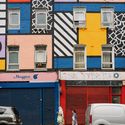
__by_Camille_Walala__in_White_City_Place__London_2020_Photography_Charles_Emerson_HighRes_002.jpg?1597595028 "Les Jumeaux. Image Courtesy of Camille Walala")





.jpg?1599092292&format=webp&width=640&height=580)
.jpg?1599092292)