What does optimism feel like in cities that can no longer rely on perfection as their ultimate ambition? Across the world, urban environments bear the weight of overlapping pressures: climate volatility, spatial inequality, political fragmentation, public distrust, and chronic infrastructural disinvestment. These realities render the idea of an ideal city increasingly detached from lived experience. Yet the hope for building better systems persists. While utopian visions may seem like an escape from the growing complexities of the modern world, the greater challenge for contemporary city-making is to confront those complexities rather than avoid them.
French-Lebanese architect Lina Ghotmehhas been recognized on the TIME100 Next 2025 list, an annual ranking of emerging leaders and innovators across disciplines. Known for her sensitive approach to context and materiality, Ghotmeh has built an international portfolio that bridges tradition and modernity. In her TIME profile, written by Danish architect Bjarke Ingels, Ghotmeh is praised for combining historical awareness with forward-looking experimentation. The acknowledgment positions her as the only architect on this year's list, highlighting the continued presence of design voices in a ranking that typically spans entertainment, politics, science, and business.
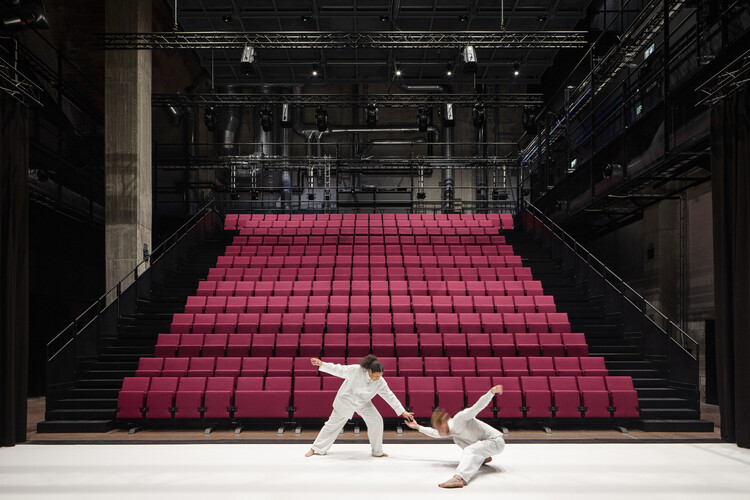
"Dance, dance… otherwise we are lost." This oft-cited phrase by Pina Bausch encapsulates not only the urgency of movement, but its capacity to reveal space itself. In her choreographies, space is never a neutral backdrop, it becomes a partner, an obstacle, a memory. Floors tilt, chairs accumulate, walls oppress or liberate. These are architectural conditions, staged and contested through the body. What Bausch exposes — and what architecture often forgets — is that space is not simply built, it is performed. Her work invites architects to think not only in terms of materials and forms, but of gestures, relations, and rhythms. It suggests that architecture, like dance, is ultimately about how we inhabit, structure, and emotionally charge the spaces we move through.
Historically, architecture and dance have operated in parallel, shaping human experience through the body's orientation in space and time. From the choreographed rituals of classical temples to the axial logics of Baroque palaces, built space has always implied movement. The Bauhaus took this further, as Oskar Schlemmer's Triadic Ballet visualized space as a geometric extension of the body. This was not scenery, but spatial thinking made kinetic. In the 20th century, choreographers like William Forsythe and Anne Teresa De Keersmaeker integrated architectural constraints into their scores, while architects such as Steven Holl, Diller Scofidio + Renfro, and Toyo Ito designed buildings that unfold as spatial sequences, inviting movement, drift, and delay.
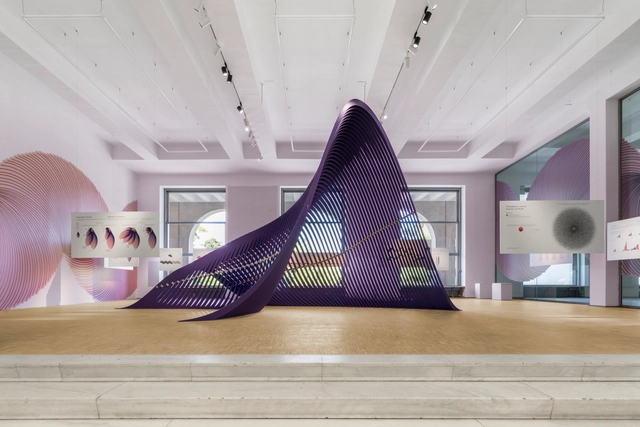
The 24th International Exhibition of Triennale Milano opened to the public on May 13, 2025, at the historic Palazzo dell'Arte. Running until November 9, this edition explores the theme of "Inequalities", continuing Triennale Milano's tradition of addressing urgent global issues through the lenses of art, architecture, and design. The exhibition is formed by two main sections: one that presents a curated selection of exhibitions and installations by individual artists and teams, and another that features international participations, including national pavilions and their contributions. At the opening ceremony on May 12th, the Bee Awards were presented to recognize selected contributions across the exhibition. From both the exhibitions and the international participations, the jury awarded one winner and one honorable mention each.
Qatar has announced that architect Lina Ghotmeh, founder and principal of the Paris-based studio Lina Ghotmeh — Architecture, has been selected to design its permanent national pavilion in the Giardini della Biennale, the historic venue of La Biennale di Venezia since 1895. The new building will be on a site adjacent to the Book Pavilion and commissioned by H.E. Sheikha Al Mayassa on behalf of the State of Qatar. With this addition, Qatar becomes one of only 31 countries with a permanent pavilion in the Giardini, joining a select group of nations with dedicated exhibition spaces. Only two new national pavilions have been inaugurated there in the past 50 years: Australia in 1988 and the Republic of Korea in 1996. Lina Ghotmeh's new Qatar Pavilion will serve as a lasting platform for showcasing the country's artistic and architectural contributions, with rotating exhibitions presented during each edition of the Biennale.
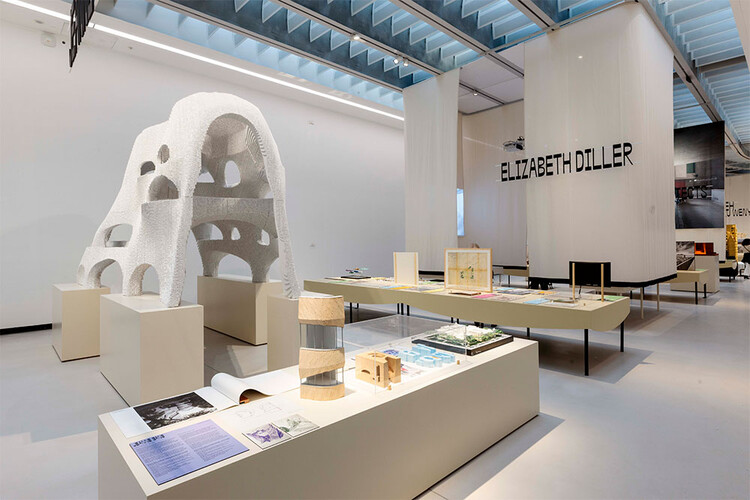
I love putting together lists of original manifesto-like statements by architects perpetually searching for breaking new ground. They provoke us to imagine possibilities we haven't dared to consider before. Questioning conventions should be a critic's primary objective to engage in a conversation with a creative. Otherwise, what is there to discuss, really? That's why speaking with Elizabeth Diller about her studio's work and intentions is like a breath of fresh air, especially nowadays when so many architects are happy to align themselves in pursuing what's expected. In one of our previous conversations, Diller put it bluntly: "We don't take professional boundaries seriously. Every time we are handed a program, we tear it apart and continuously ask new questions. Nothing is fixed." This time, we spoke about Diller Scofidio + Renfro's new monograph, "Architecture, Not Architecture." The book, a project in itself, aims to rethink the very limits of architecture. It reinvents what a book can be in the process. During our 1-1/2-hour discussion over Zoom, which I prefer for its frontal dual recording, she said eagerly, "We were always critiquing; we were always throwing grenades at things."
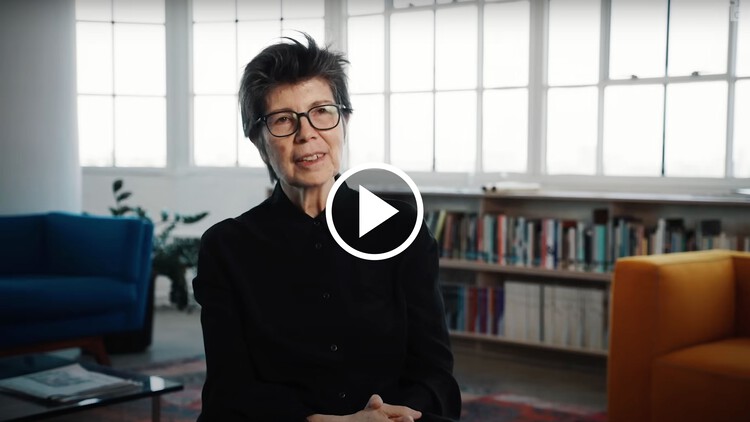
In an interview with Louisiana Channel,Liz Diller, co-founder of the renowned architecture firm Diller Scofidio + Renfro, reflects on her unconventional journey into architecture and her innovative approach to design. Starting her career with aspirations of being an artist, Diller never initially intended to become an architect. Her artistic background, which included painting, sculpture, and filmmaking, continues to influence her work today. What drew her into architecture was a combination of curiosity and practicality, driven in part by concerns about the viability of a career in the arts.
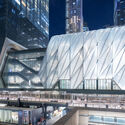
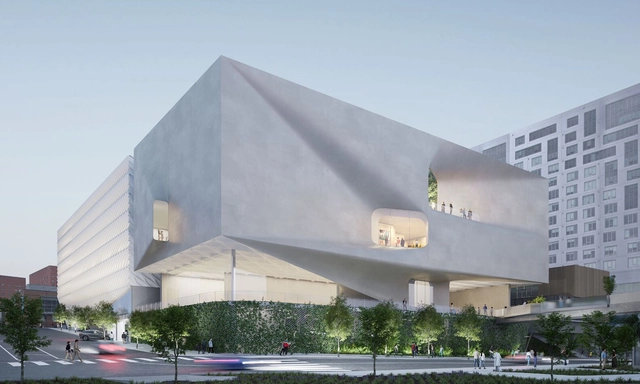
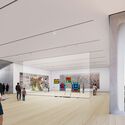
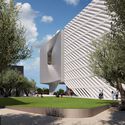
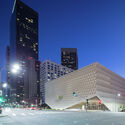
Diller Scofidio + Renfro (DS+R) has unveiled their proposal for the expansion of The Broad, a contemporary art museum founded in 2015 by philanthropists Eli and Edythe Broad on Grand Avenue in downtown Los Angeles. The project is set to adapt the existing museum, also designed by Diller Scofidio + Renfro, to the growing expectations of the public, as the institution has far exceeded its projections, now regularly attracting nearly four times more visitors than originally envisioned. The intervention aims to enhance public accessibility and offer the opportunity to host live performances and events, while also accommodating the institution’s growing collection. The expansion is expected to open before the 2028 Summer Olympics.
Momoyo Kaijima and Yoshiharu Tsukamoto of Atelier Bow-Wow and Elizabeth Diller are this year’s Architecture laureates of the Wolf Prize, an annual award highlighting scientists and artists for “their achievements in the interest of mankind”. One of Israel’s most prestigious international awards, the prize’s art categories include painting and sculpting, music and architecture, accompanied by the scientific categories of medicine, agriculture, mathematics, chemistry and physics. The jury commended the three architects’ notable work at the confluence of research, pedagogy and practice, influential for advancing the practice of architecture.
MAXXI Museum celebrates women in architecture in a new exhibition that documents the transformative role of female architects in the profession's evolution over the last century. Curated by Pippo Ciorra, Elena Motisi, Elena Tinacci, and with exhibition design by Matilde Cassani, Good News. Women in Architecture weaves together in four thematic sections the history of women in architecture, with the work of contemporary practitioners and the voices of young collectives, telling the stories of over eighty female architects.
The Second Studio (formerly The Midnight Charette) is an explicit podcast about design, architecture, and the everyday. Hosted by Architects David Lee and Marina Bourderonnet, it features different creative professionals in unscripted conversations that allow for thoughtful takes and personal discussions.
A variety of subjects are covered with honesty and humor: some episodes are interviews, while others are tips for fellow designers, reviews of buildings and other projects, or casual explorations of everyday life and design. The Second Studio is also available on iTunes, Spotify, and YouTube.
This week David and Marina are joined by Charles Renfro, Partner at Diller Scofidio + Renfro, to discuss Charles’ childhood and early interests in architecture, his education and linking ideas of sexual freedom with architecture, joining Elizabeth Diller and Ricardo Scofidio, becoming a partner at his office, his design philosophy, how New York has changed, and more.
As part of its first Virtual World Tour, Architects, not Architecture visited New York to meet Elizabeth Diller.
The international event format Architects, not Architecture is known for inviting some of the most influential architects of our time and asks them to talk about their path, influences, and intellectual biographies. With its new event series, „AnA“ brings the architecture community a bit closer together by taking attendees on tour around the globe to “visit” selected cities and virtually meet two of their renowned practices.
Courtesy of DILLER SCOFIDIO + RENFRO AND STEFANO BOERI ARCHITETTI
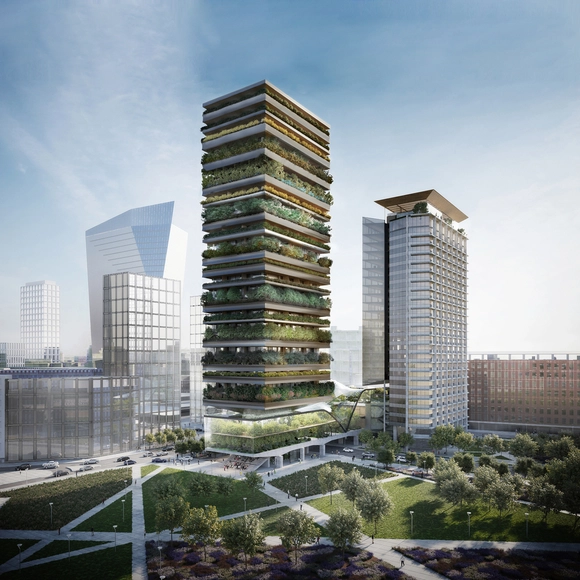
Diller Scofidio + Renfro (DS + R) and Stefano Boeri Architetti have won the international architectural competition for the renovation of Pirelli 39 in Milan. Launched on 25 November 2019, the contest organized by COIMA SGR and the municipality of Milan, gathered 70 submissions made up of 359 studios from 15 countries.
City of the Future is a bi-weekly podcast from Sidewalk Labs that explores ideas and innovations that will transform cities.
In the final episode of season 2, hosts Eric Jaffe and Vanessa Quirk discuss the past, present, and future of responsive architecture with Sidewalk Labs’ director of public realm Jesse Shapins, engineer and microclimate expert Goncalo Pedro, Bubbletecture author Sharon Francis, and renowned architect Liz Diller of Diller Scofidio + Renfro.
Follow along during the twelfth edition of the World Architecture Festival through ArchDaily's Live Stream. As the world’s biggest architectural awards program, WAF brings together more than 2,000 architects and designers to Amsterdam for three days of conference programs, awards, and exhibition events from December 4-6. Tune in to our Facebook live streams for a selection of lectures.
Elizabeth Diller, Founder and Partner at Diller Scofidio + Renfro, will give the closing keynote address at the World Architecture Festival (WAF) in Amsterdam on 6 December 2019. She will follow a stellar line-up of over 48 speakers shaping the global architecture agenda over the three-day event, including Ben Van Berkel and Doriana Mandrelli Fuksas and Massimiliano Fuksas. The festival runs from 4-6 December.
On the latest episode of Time Sensitive, a newly launched podcast produced the New York-based “conscious entertainment” media company The Slowdown, co-host Spencer Bailey interviews architect Elizabeth Diller of Diller Scofidio + Renfro in a blockbuster-length conversation. Diller talks with Bailey about designing everything from the High Line to The Shed to the upcoming expansion of MoMA, and also delves deeper into her past, revealing how it was her mother’s idea for her “go into architecture, and if not architecture, then dentistry.” But upon getting into the Cooper Union and studying with professors like Peter Eisenman and John Hejduk, Diller’s path was clear—for the most part, anyway; it’s necessary to listen to the full episode to see why her journey to where she is today was indeed unconventional and roundabout.
The Aga Khan Award for Architecture has announced the master jury for the 2017-2019 award cycle. The jury, a diverse and global group comprising architects, academics, and theorists, will select the recipients of the award, each of whom will, in turn, receive a USD $I million prize for their winning work.
https://www.archdaily.com/907212/jury-announced-for-2019-aga-khan-award-for-architectureKatherine Allen