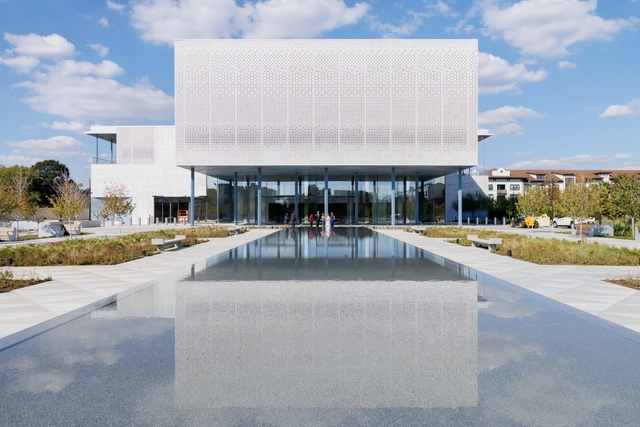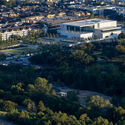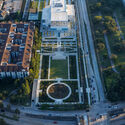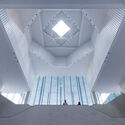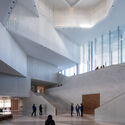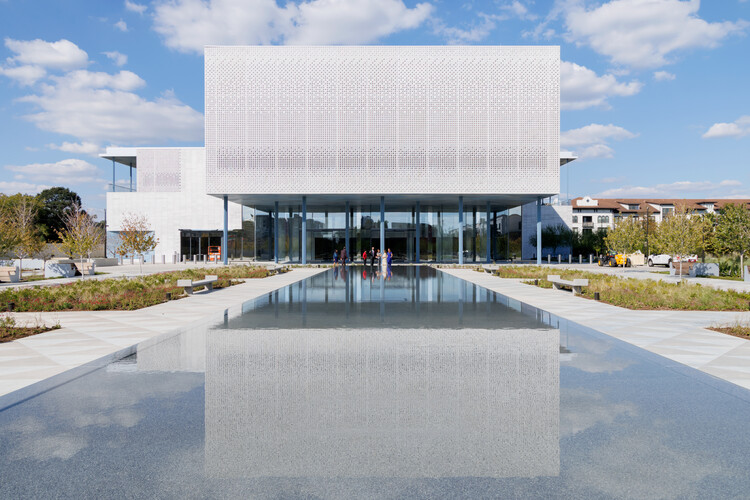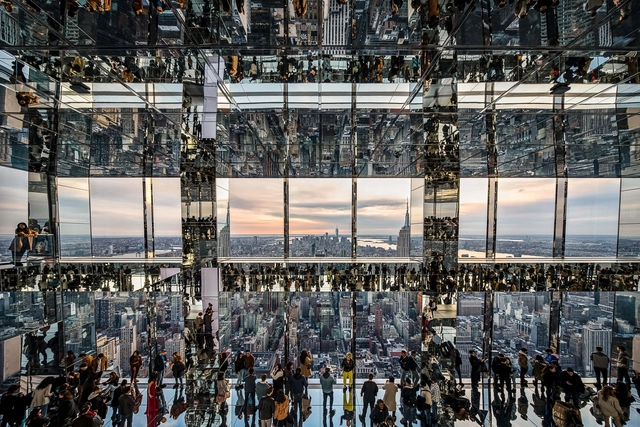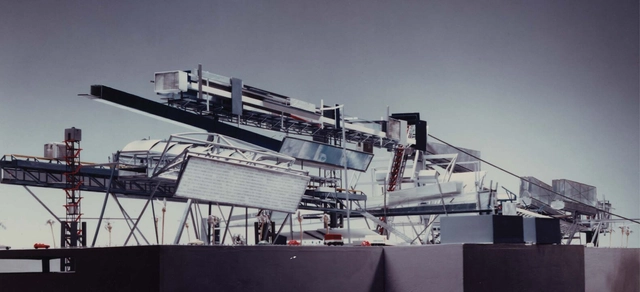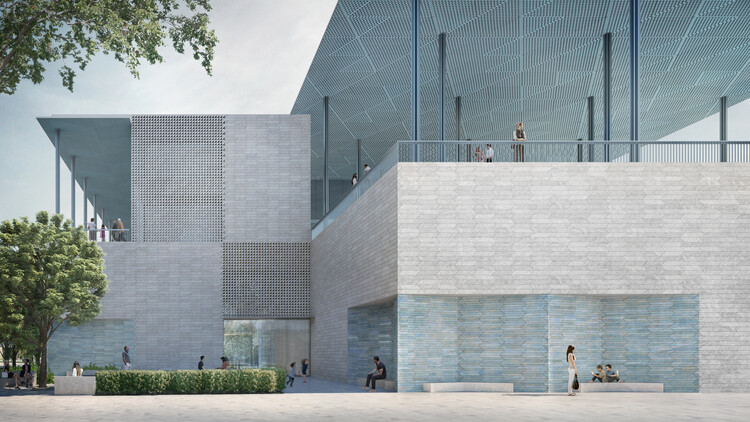
The Ismaili Center in Houston, the first of its kind in the United States, was inaugurated on November 6, 2025, by Mayor John Whitmire. Designed by Farshid Moussavi Architecture and Nelson Byrd Woltz Landscape Architects, the 11-acre site overlooking Buffalo Bayou Park establishes a new architectural and cultural landmark within Houston's urban and social landscape. Located at the intersection of Allen Parkway and Montrose Boulevard, the Center builds upon a vision first outlined by His Highness Prince Karim Aga Khan IV in 2006 and later developed under the direction of his successor. Joining six existing Ismaili Centers worldwide, in London, Vancouver, Lisbon, Dubai, Dushanbe, and Toronto, the Houston Center aims to continue a global tradition of fostering intercultural dialogue and civic engagement.
The new metaverse platform pax.world, set to launch in early 2023, has announced its collaboration with global architecture offices Grimshaw, HWKN, Farshid Moussavi, and WHY to create “Metaserai,” a vast social and cultural hub envisioned as the core of the new virtual community. The hubs are designed to host virtual cultural, social, and educational events such as concerts, theatre shows, digital art galleries, markets, lectures, parties, and festivals.
The pax.world platform aims to develop into a fully functioning society governed by a Decentralized Autonomous Organization, also known as a DAO. The virtual space will be divided into privately-owned plots of land punctuated by Metaserai communal hubs. These take inspiration from the Caravanserai of the ancient Silk Road, which became hubs for commerce and cultural exchange. Each of the architects is designing their own interpretation of Metaserai.
The tenth edition of the Architectural PhotographyAwards has announced its shortlist, selected from entries from 64 different countries. The photographs are divided into six categories: Exterior, Interior, Sense of Place, Buildings in Use, Mobile, with Bridges being this year’s theme, and Portfolio, focusing on the theme of Transport Hubs. The photographs will be displayed at the World Architecture Festival (WAF) Lisbon in Portugal from 30th November - 2nd December. The winners, two per category, will be announced by the end of the festival.
The marquee-busting title says it all: Joseph Giovannini’s Architecture Unbound is an ambitious attempt to explore the wilder shores of design and explain how and why maverick architects have dared greatly. It’s also a wide-ranging introduction to artists who laid the groundwork for architectural innovation a century ago; to the philosophers and theorists who mapped new ways of thinking, and to the complexities of chaos theory, parametric and software programs that have shaped exceptional buildings over the past few decades.
French architect Renée Gailhoustet has been awarded the 2022 Royal Academy Architecture Award for her pioneering work designing public housing and neighborhoods in and around Paris. The award is given annually by London's Royal Academy to individuals or practices whose idea or body of work has positively contributed to the public.
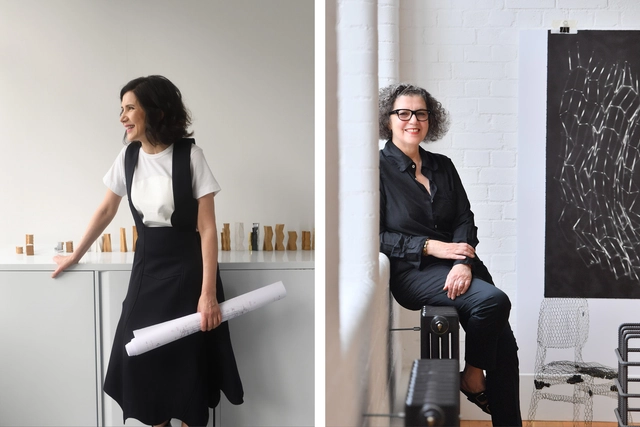
Farshid Moussavi (photograph: Anne Purkiss) and Mona Hatoum (credit: The Japan Art Association / The Sankei Shimbun / Mizuho Miyazaki). Image Courtesy of Architectural Review
Farshid Moussavi and Mona Hatoum have been named this year's recipients of the Jane Drew and Ada Louise Huxtable Prizes, two awards celebrating women's contribution to the architecture profession and the broader architectural culture. The 2022 Jane Drew Prize commends Farshid Moussavi for her achievements as architect, educator and writer, while artist Mona Hatoum, whose works take on an architectural scale, was awarded the Ada Louise Huxtable Prize in recognition of her significant contribution to architecture.
Farshid Moussavi Architecture has recently revealed the design for the Ismaili Center in Houston, a project dedicated to cultural exchanges and civic outreach. An ambassadorial building for the largest Ismaili Muslim community in the United States, the new building will host educational, cultural and social events, while also providing a space for contemplation and prayer. The design showcases a contemporary image while reinterpreting traditional Persian elements, thus establishing a dialogue between tradition and modern architecture.
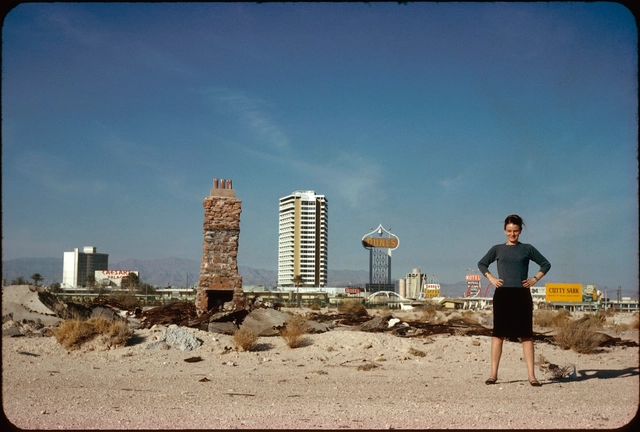
Denise Scott Brown in front of The Strip, Las Vegas, NV, US, 1966, Photo by Robert Venturi, courtesy of Venturi, Scott Brown and Associates, Inc.
Next month, American architect Denise Scott Brown will receive the 2018 Soane Medal, an award given to "architects who have made a major contribution to their field, through their built work, through education, history and theory." A powerhouse jury that included Sir David Chipperfield, Paul Goldberger, Farshid Moussavi, Alice Rawsthorn, Oliver Wainwright selected Scott Brown for the second edition of the award. The 2017 Soane Medal was given to Rafael Moneo.
Sir David Chipperfield, Trustee of Sir John Soane’s Museum, said: ‘The jury considered many outstanding candidates; however Denise Scott Brown stood apart and was the jury’s unanimous choice. Scott Brown’s contribution across architecture, urbanism, theory and education over the last fifty years has been profound and far-reaching. Her example has been an inspiration to many, and we are delighted to honour her with the awarding of the Soane Medal.’
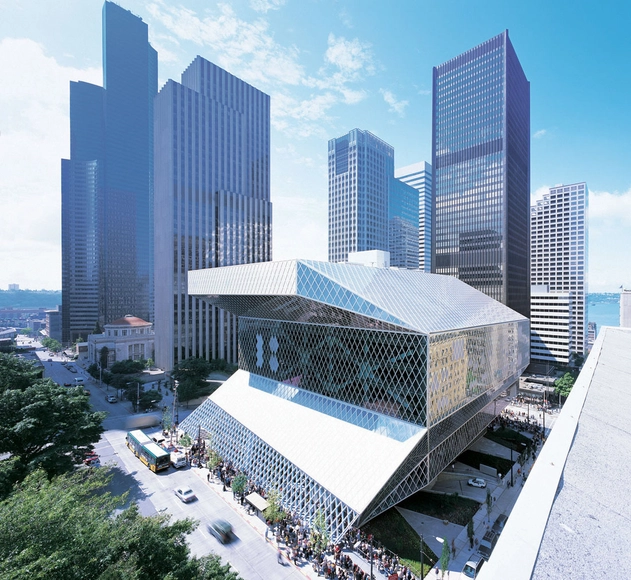
Bjarke Ingels worked on the Seattle Central Library during his time at OMA. Image Courtesy OMA
The world of architecture is small. So small in fact, that Rem Koolhaas has been credited with the creation of over forty practices worldwide, led by the likes of Zaha Hadid and Bjarke Ingels. Dubbed “Baby Rems” by Metropolis Magazine, this Koolhaas effect is hardly an isolated pattern, with manifestations far beyond the walls of OMA. The phenomenon has dominated the world of architecture, assisted by the prevalence and increasing necessity of internships for burgeoning architects.
In a recent article for Curbed, Patrick Sisson dug into the storied history of internships to uncover some unexpected connections between the world's most prolific architects. With the help of Sisson's list, we've compiled a record of the humble beginnings of the household names of architecture. Where did Frank Gehry get his start? Find out after the break.
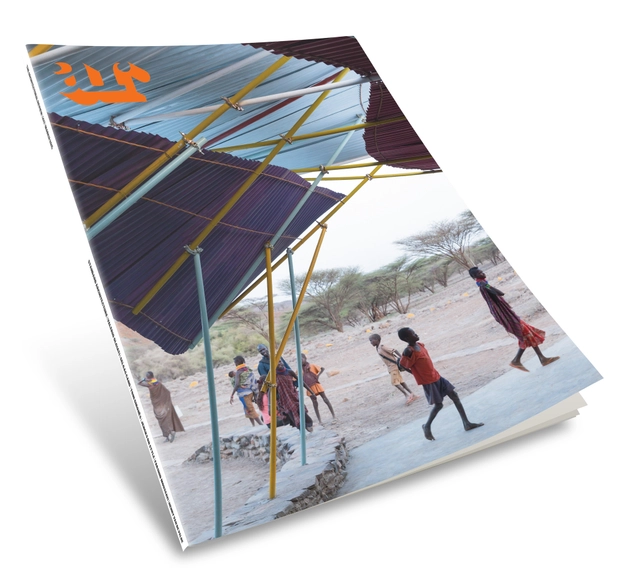
ArchDaily is continuing our partnership with The Architectural Review, bringing you short introductions to the themes of the magazine’s monthly editions. In this editorial from AR’s March 2015 issue, AR Editor Catherine Slessor discusses the phenomenon of "architects and magazines pursuing content rather than style," arguing both that architects should be raising the bar and also that the media, by nurturing their critical stance, should be a part of the solution, not the problem.
In what style shall we – or indeed, should we – build? Historically, architecture’s relationship with "style" is complicated and vexed. We can easily identify the formal attributes and origins of specific styles that attest to why Gothic cathedrals or Victorian train sheds look the way they do. But beyond the constraints of such historical determinism, Postmodernist and Parametricist multiplicities have allowed a hundred flowers to bloom, and their aroma began to stink the place out long ago.
"I’m particularly pleased to welcome Farshid because the Royal Academy architects currently comprise a more distinguished group than at any time in its long history," commented Christopher Le Brun, president of the Royal Academy.
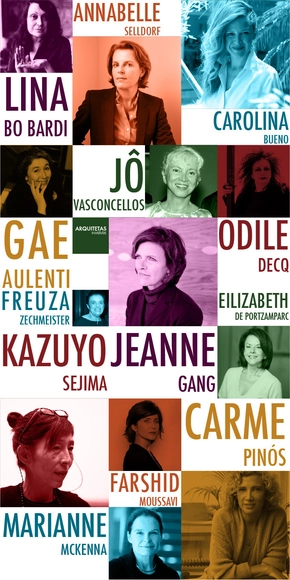
To celebrate International Women’s Day, we asked the Brazilian non-profit group Arquitetas Invisíveis to share with us a part of their work, which identifies women in architecture and urbanism. They kindly shared with us a list of 48 important women architects, divided into seven categories: pioneers, “in the shadows,” architecture, landscape architecture, social architecture, urbanism and sustainable architecture. We will be sharing this list over the course of the week.
Today we present women architects who stand out for the quality of their work.
"I cannot, in whole conscience, recommend architecture as a profession for girls. I know some women who have done well at it, but the obstacles are so great that it takes an exceptional girl to make a go of it. If she insisted on becoming an architect, I would try to dissuade her. If then, she was still determined, I would give her my blessing–she could be that exceptional one." – Pietro Belluschi, FAIA from the 1955 New York Life Insurance Company brochure, “Should You Be an Architect?”
In an era in which architectural style is constantly recycled and reinterpreted, how do we know which ideas are original and which characteristics reveal deeper functions? In a recent article by Rowan Moore from The Guardian, architect Farshid Moussavi discusses fashion, function, and physical space as they relate to the concepts of her latest book The Functions of Style, which examines style in architecture beyond external appearance with a belief that style is rooted in a building's organizational ideas. Consequently, says Moore, each of Moussavi’s works are unique and do not rely on repeating trademark artistic moves. To learn more about how Moussavi’s philosophy is embodied in her most recent works, along with her belief in the power of physical space in a virtual world, read the full article on The Observer here.
In a profession all-too-often associated with and dominated by men, women have begun to carve a space for themselves in the architecture world - but still few are recognized as they deserve.
So Alice Shure and Janice Stanton, the founders of Amici Productions LLC, began work on a new documentary, Making Space: a visual register for future generations of architects that will documentwhat is changing in architecture today and how these changes are affecting women.
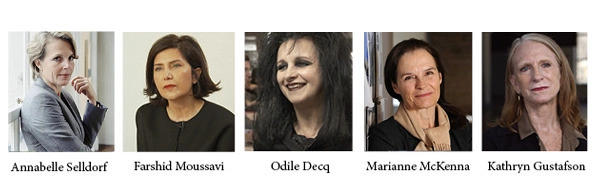
After interviewing over 30 architects, Shure and Stanton selected five women, five "rising stars" to hi-light. The documentary will show their day-to-day lives as well as tell the stories of how they achieved success.
Thanks to a recent Kickstarter campaign, this project will soon be a reality. But to get your sneak peek into these five female pioneers, read on after the break.
https://www.archdaily.com/447721/5-women-changing-the-face-of-architecturePola Mora
Just a short time since its public opening celebration, Farshid Moussavi’sMuseum of Contemporary Artis already a dynamic hub of activity for the city of Cleveland. A three-day festival in early October welcomed museum members, out-of-town guests and the general public with a series of art installations, music and entertainment, to showcase the city’s newest icon. Moussavi joined in the festivities and was honored for her sleek faceted form at the museum’s three-tiered party. Although we have been following the progress of the project since its conceptual phases, we have yet to see what the mysterious black cube has to offer in terms of interior gallery spaces and public gathering zones… until now! Check out a great series of interior photos plus beautiful exterior photos by photographers Dean Kaufman and Duane Prokop to compliment our set from the summer time.
The St. Petersburg Pier, a long-adored and long-outdated West Florida cultural attraction, has unveiled the semi-finalists in its international redesign competition. Of the twenty-three qualified inquiries received, nine were chosen to move forward in the contest. The competition attracted big names in the architecture world; BIG, West 8Urban Design, James Corner Field Operations, and HOK Architects were among the participants.