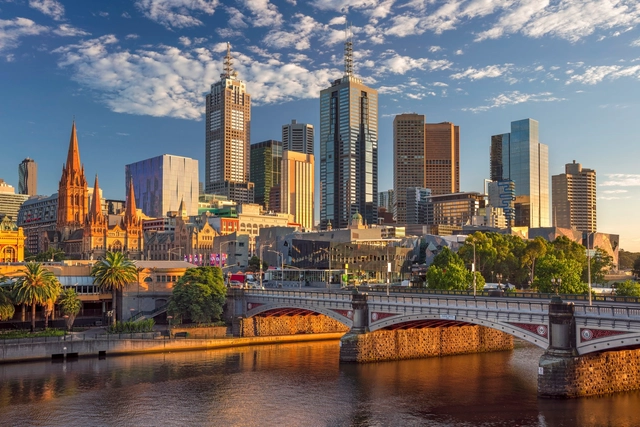
For the third year in a row, Melbourne has been selected as one of the top five most liveable cities in the world. The city is widely viewed as the leading architectural hub in Australia for its unique street culture and diverse design expression, with its layers and bold mix of architectural styles. From the very well-restored Victorian era edifices with their intricate ornamentation and detailing to the adjoining Contemporary landmarks, the city seems to achieve a nice balance of all typologies and design movements, while still being very inviting and engaging to its citizens.
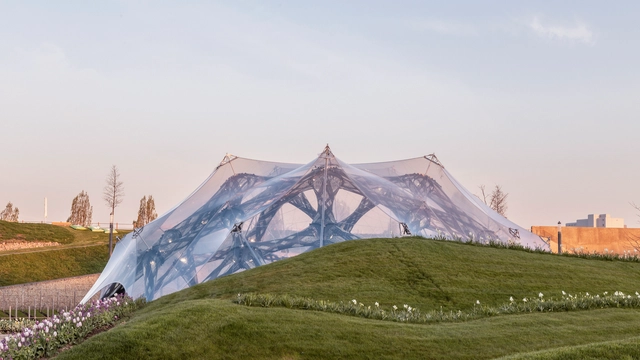
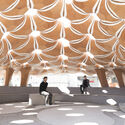
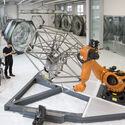
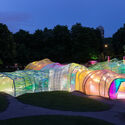
In recent years, architecture has increasingly embraced adaptability, flexibility, and responsiveness as core design principles. This evolution reflects a shift from traditional notions of static, permanent structures to dynamic environments that can adjust to changing needs and conditions. Central to this transformation is the concept of "soft architecture", which leverages pliable materials and innovative systems to create spaces that are functional, sustainable, and user-centric. Soft architecture takes shape through membranes that breathe, façades that move, structures that inflate or fold, and surfaces that bend rather than break. It involves designing for transformation — not only in how a building performs environmentally, but also in how it can accommodate shifting functions, user interactions, or temporary occupations. This approach to building challenges traditional notions of durability and control, proposing instead a more responsive and open-ended architecture. It reflects a growing awareness that buildings, like the societies they serve, must be able to evolve.
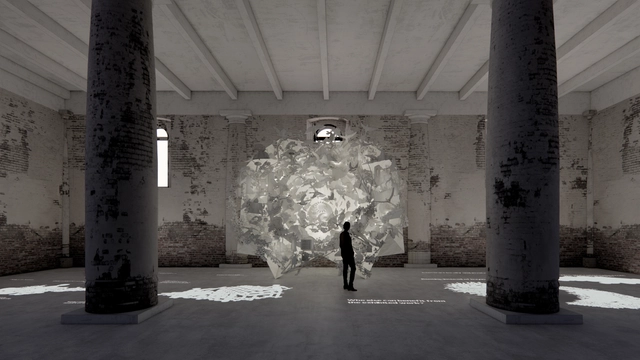
The Biennale promises to be a dynamic platform uniting over 750 participants from diverse backgrounds, including architects, engineers, mathematicians, climate scientists, and artists. Such a broad coalition of over 280 projects underlines the Exhibition's focus on inclusivity and interdisciplinary collaboration, an essential aspect for adaptation. The selection process proposed a bottom-up, open call approach through the Space for Ideas initiative, which ran between May and June 2024. It encouraged participation from global teams, from Pritzker Prize winners and Nobel laureates to emerging architects and scientists.
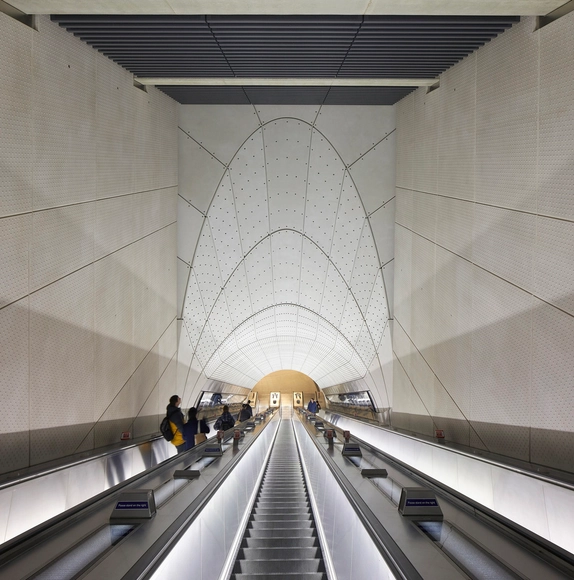
The Royal Institute of British Architects (RIBA) has announced the Elizabeth Line, designed by Grimshaw, Maynard, Equation, and AtkinsRéalis, as the winner of the 2024 RIBA Stirling Prize. Since its inception in 1996, the prestigious annual award sets out to recognize UK's best new architecture. Named in honor of Queen Elizabeth II, the Elizabeth Line represents an important development for London's transportation network. Connecting Reading and Heathrow to Essex and South East London, the development spans 62 miles of track and 26 miles of tunnels, a complex and expansive undertaking accommodating 700,000 passengers every weekday.
The Royal Institute of British Architects (RIBA) has revealed the six shortlisted projects for the 2024 RIBA Stirling Prize. Awarded annually since 1996, this represents one the most important architecture prizes in the United Kingdom, striving to reward and highlight projects that envision a more inclusive future and engage actively with current challenges of the built environment. The selected works range in scale and program, from a national art gallery to an inclusive rural retreat, major urban regeneration projects, and even a London underground line. While some of the selected architects have received previous awards, including Mikhail Riches for the Goldsmith Street in 2019 and Jamie Fobert for New Tate St Ives in 2018, other architects such as Clementine Blakemore Architects and Al-Jawad Pike are at their first nomination.
The new metaverse platform pax.world, set to launch in early 2023, has announced its collaboration with global architecture offices Grimshaw, HWKN, Farshid Moussavi, and WHY to create “Metaserai,” a vast social and cultural hub envisioned as the core of the new virtual community. The hubs are designed to host virtual cultural, social, and educational events such as concerts, theatre shows, digital art galleries, markets, lectures, parties, and festivals.
The pax.world platform aims to develop into a fully functioning society governed by a Decentralized Autonomous Organization, also known as a DAO. The virtual space will be divided into privately-owned plots of land punctuated by Metaserai communal hubs. These take inspiration from the Caravanserai of the ancient Silk Road, which became hubs for commerce and cultural exchange. Each of the architects is designing their own interpretation of Metaserai.
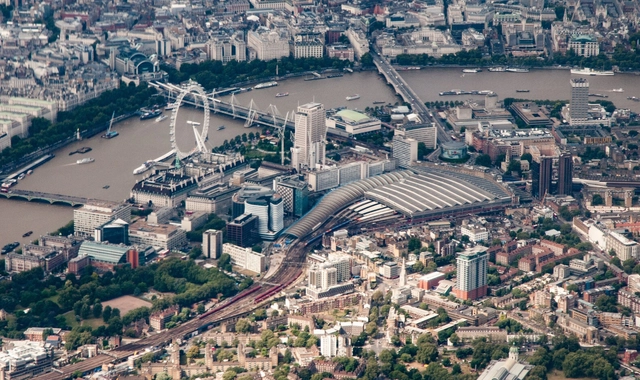
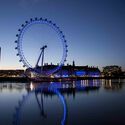
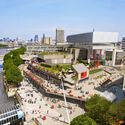
Grimshaw has been commissioned to develop the busiest transport hub in the UK, as well as London's surrounding Southbank area. The master plan will improve the traffic of 5 connections and renovate the terrain, home to world-famous attractions like the London Eye and the Tate Modern. The project is aligned with Lambeth Council's and the Network Rail's commitment to net zero emissions by 2030, through the extension of pedestrian and cycling routes.
Byzantium, Constantinople and now Istanbul, the many names this city has had over the centuries are proof of the central role it has played throughout history. Founded by Greek settlers in the 7th century, the city served as an imperial capital for a cumulated period of over 1600 years. During the Roman/Byzantine, it played a crucial role in the advancement of Christianity before its transformation into an Islamic center and becoming the sear of the Ottoman Caliphate. Today, Istanbul is a vibrant city with a rich cultural scene and multiple historical layers to be discovered.
Straddling the Bosphorus strait, the city lies in both Europe and Asia, integrating architectural masterpieces that reflect the meeting of European and Asian cultures over the centuries. As the largest city in Turkey with a population of over 15 million residents, Istanbul also serves as the country’s economic, cultural, and historic center. Istanbul is the 15th largest city and the eighth most visited city in the world. The city is also home to several UNESCO World Heritage Sites.
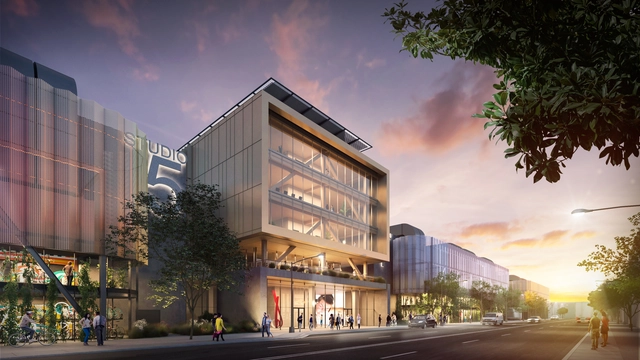
Grimshaw Architects has revealed the design for a 16-soundstage studio production campus for the independent company East End Studios. Located on a 15-acre former industrial site in the Arts District in Los Angeles, the campus will provide creative workplace buildings and production support spaces connected via a series of outdoor terraces and walkways. The project responds to its location and context by moving away from the traditional studio layout and instead opting to create a “vertical campus”. This composition creates a more open public relationship with the downtown neighborhood while ensuring that all campus facilities are well connected.
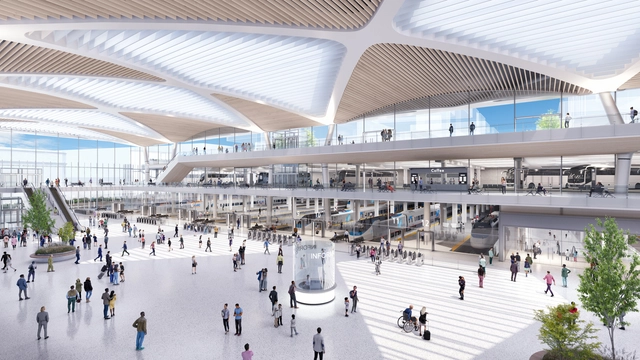
Architecture practice Grimshaw, in collaboration with Beyer Blinder Belle, Arup, and VHB, has revealed designs for the Washington Union Station Expansion Project (SEP) in Washington DC, USA. The project will ensure the preservation of the historic station and will improve access to the existing railway services, Metrorail, DC Streetcar, and bus services. The expansion aims to become a multi-modal transportation hub for the district adjacent to the historic station. In addition, the SEP will incorporate enhanced vehicle access and cycle and pedestrian routes.
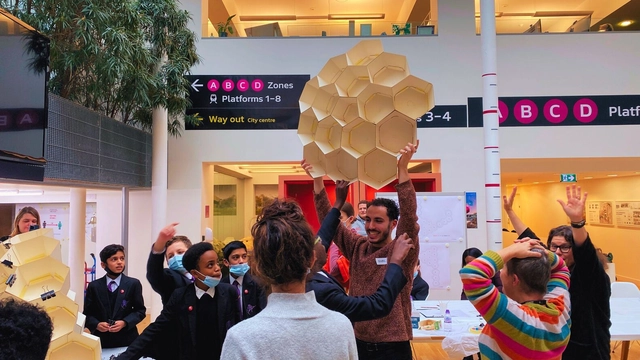
The Grimshaw Foundation is a charitable organization aiming to bring access to creative learning tools to a diverse range of young people. The organization was established by Sir Nicholas Grimshaw, in partnership with the partners of international architecture practice Grimshaw. The central purpose is to bring together a globally linked educational community of artists, architects, and designers to support and empower young people. It hopes to reach them at the stage of navigating their career options and help them discover the varied options and opportunities that the creative industry can offer. The Foundation officially launched on 6 July 2022 at the Royal Academy of Arts in London.
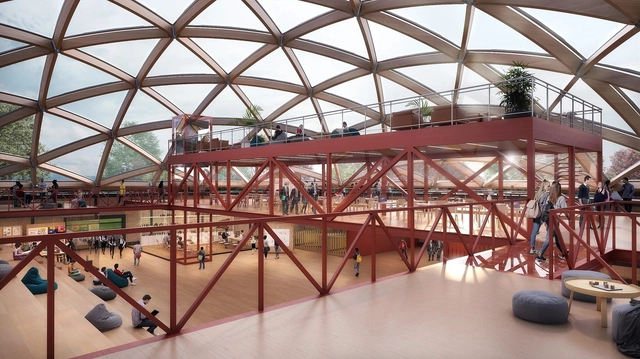
Architecture practice Grimshaw has revealed designs for the Futures Institute at Dollar Academy (FIDA) in Scotland, UK, an open-access learning platform developed by the Dollar Academy, one of Scotland’s leading independent schools. The Institute’s new building will receive the country’s first Living Building certification.
FIDA was launched in May 2021 to tackle fundamental challenges in education: providing equitable access and closing the poverty-related attainment gap; finding compelling alternatives to traditional teaching and exam systems; and addressing sustainability. The initiative invites young people across Scotland to participate in innovative projects rooted in the United Nations Sustainable Development Goals. These challenges include workshops, skills-based courses, design challenges, and competitions, all offered in-person and via an online platform to enable the broadest possible participation.
City Rail Link by Grimshaw Architects. Image Courtesy of Grimshaw
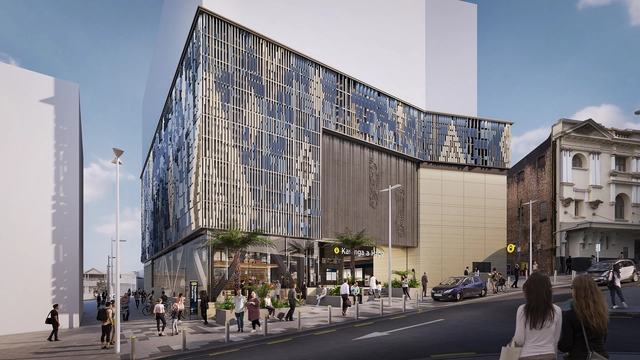
Grimshaw has revealed the final design for City Rail Link, or CRL in short, a large infrastructure project in Auckland, New Zealand. The project includes four new train stations and a 3.45km twin-tunnel underground rail up to 42 meters below the city center. It was developed in collaboration with WSP as part of the Link Alliance, a consortium of seven companies tasked with delivering the main stations and tunnels for the CRL project. The design of the stations is also developed in partnership with Mana Whenua, a local tribal authority that aims to integrate the narrative of the Māori creation story, Te Ao Marama, into the design. Each station's image and identity are a result of this collaboration, and it responds to the characteristics of each location as defined by Tāmaki Makaurau, the Māori name for the geographical region of the city of Auckland.
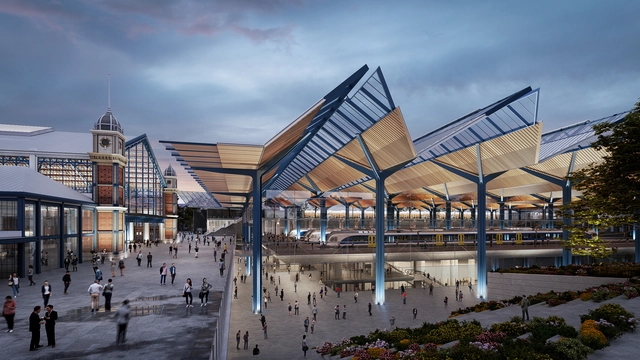
Grimshaw, in collaboration with Nautes Architects, WSP, Vogt and Turner & Townsend, have been awarded first place in an anonymous competition for the renewal of Budapest Nyugati Railway Station. Selected from a shortlist of 12 international design firms, the winning design creates a "permeable station campus" with a series of car-free streets, walkways, public squares and a park, which open up the station complex to the city and restores its significance as one of the most vibrant and historic cities in Europe.
Zhanjiang Central Station Hub by Aedas. Image Courtesy of Aedas
This week’s curated selection of Best Unbuilt Architecture highlights projects submitted by established firms. From river-side commercial centers to mixed-use towers, this article explores commercial and residential functions designed by global architecture offices that are either conceptual, have won first-prize in design competitions, or are currently being realized.
Featuring a pedestrian bridge by Grimshaw Architects in France, and a finance-district skyscraper dubbed as the "Lighthouse of the 21st Century" by Ronald Lu & Partners, this roundup explores how established architecture firms have designed buildings that cater to the spatial and environmental needs of their users and respective functions. This round up also includes designs from SOM, IMPLMNT, Gensler, and Aedas, among other notable architects.
The Royal Institute of British Architects (RIBA) has announced the shortlisted projects for the 2022 RIBA East architecture awards. The list of 22 buildings includes projects ranging from a small copper-clad home extension in Cambridge to a new youth and participation space at the Wolsey Theatre. All designs will be assessed by a regional jury, and the winning projects will be announced later this spring. Subsequently, Regional Award winners will be considered for the RIBA National Award.
Eden Project North - Morecambe. Image Courtesy of Grimshaw
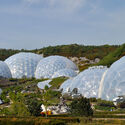
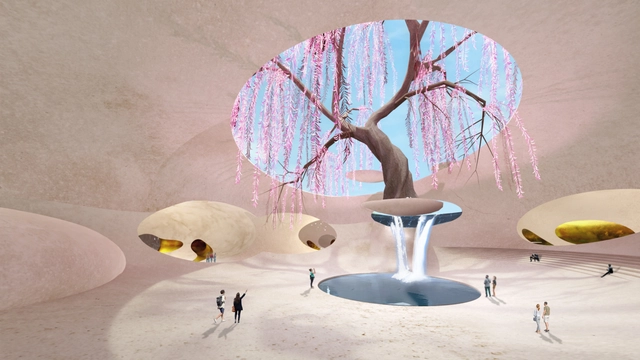
After unveiling the Eden Project North back in 2018, Grimshaw Architects has finally received planning permission from Lancaster City Council to begin constructing its Morecambe attraction. The new addition to the Eden Project series will focus on reimaging health and wellbeing by taking inspiration from the landscape of Morecambe Bay, a natural estuary south of the Lake District. Similar to the rest of the attractions, a series of shell-like structures will host the main exhibition and recreational spaces.