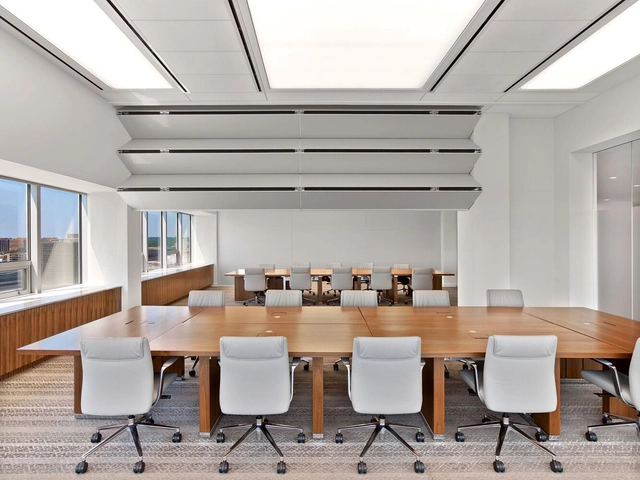
Today, our use of space—and by extension, our built environment—embraces a variety of functions, dimensions, and configurations. However, one key trait stands out: flexibility and multi-purpose design. This marks a shift from the traditional model, where spaces were rigidly defined by function, with distinct areas for working, resting, or socializing, each separated by fixed, solid walls. A key example of this shift is Skyfold's vertically folding retractable walls. With over 10,000 installations, Skyfold's operable walls redefine spatial boundaries and enhances versatility, enabling dynamic adjustments that quickly respond to evolving needs. Their widespread adoption underscores their effectiveness in addressing the challenges of modern interiors and architectural design.
https://www.archdaily.com/1023429/achieving-precision-in-flexible-design-the-path-to-10000-vertically-folding-skyfold-wallsEnrique Tovar
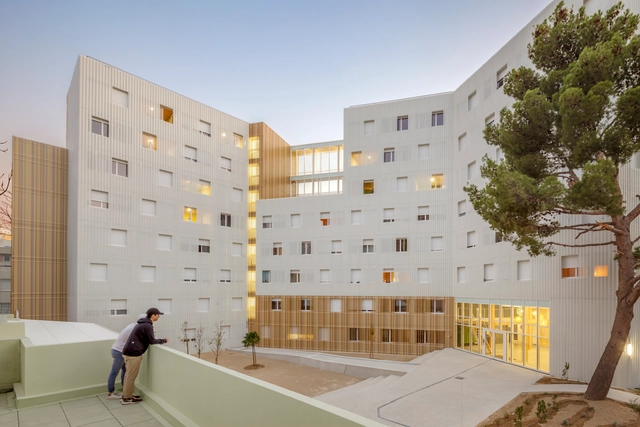
Student housing has undergone a remarkable transformation over the last century. Once seen as a utilitarian necessity, providing shelter and basic amenities for students, this architectural typology has evolved to address increasingly complex societal, cultural, and urban demands. Starting with Le Corbusier's modernist approach at the Cité Universitaire in Paris, student housing has reflected broader trends in architecture, urbanism, and social change.
Today, these buildings must cater to a highly diverse and transient population, navigating the pressures of affordability, density, and the evolving living standards of young adults. With rapid urbanization and increasing student mobility, universities now face the challenge of designing housing that is not only functional but also adaptable to different cultural and social contexts. This has led to more flexible, innovative solutions that promote both privacy and community living.
Over-providing traditionally implies offering more than is necessary, often carrying a negative connotation due to the potential for excess and waste. However, could there be scenarios within the built environment where over-providing proves advantageous? The question critically examines how overprovisioning might enhance a building's flexibility and adaptability to diverse and evolving conditions.
The underlying assumption of accurately providing what is needed for a building is that stakeholders—including owners, architects, and designers—can accurately predict and cater to a structure's current and future needs. This assumption, however, is challenging to realize, as societal, economic, and cultural shifts frequently occur in unpredictable ways. In this context, over-providing emerges as a counterintuitive yet potentially beneficial strategy. As buildings and structures inevitably transform, those designed with inherent adaptability reduce the need for costly renovations or complete rebuilds.
How have architecture and building design adapted to unforeseen future uses? As cities evolve, their needs for buildings inevitably change. Buildings may transition between cultural, commercial, industrial, and office functions depending on a city's identity and economic activity. In a world that is becoming increasingly dynamic and fast-paced, it's essential to consider the challenges static structures face when required to meet new demands. Cities have repurposed these static structures in ways not anticipated during their original design, with many successes in repurposing industrial buildings. Unlike structures designed with flexibility in mind, most manufacturing facilities were not initially intended for multiple uses. Yet, how have cities, communities, and occupants used these spaces, and what are the challenges of transforming a building’s existing uses?
Flexibility has become a distinctive feature of contemporary interiors, driven by factors like the evolution of architectural programs and the progressive reduction of interior spaces, among others. This transition has shifted interiors from static to dynamic, aiming to achieve a state-of-the-art balance in space configuration. This sentiment is well encapsulated by Ricardo Bofill's statement that "architecture is the art of structuring space."
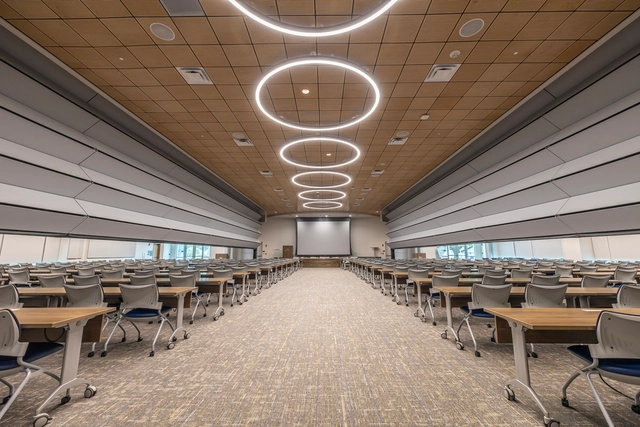
Considering the intricacies of interiors, it is essential to foster versatile spaces, aided by elements such as multipurpose design and flexible furniture. However, a challenge arises: while these strategies redefine the boundaries and dynamic essence of interiors, aspects like acoustics are often overlooked, which has become crucial in environments such as offices, conference rooms, schools, auditoriums, etc. Therefore, improving acoustics becomes essential to create functional multipurpose interiors. In that sense, Skyfold’s operable walls are an interesting alternative, as their solutions can serve as both soundproofing barriers and design pieces.
https://www.archdaily.com/1014623/movable-walls-the-transformative-effect-of-retractable-and-folding-partitionsEnrique Tovar
As a response to this rapidly changing world, flexibility has become a top priority in contemporary interior design. That explains, for example, the growing demand for spacious and multifunctional spaces over rigid, enclosed floor plans –as is the case of the open kitchen trend. This shift in spatial needs suggests that designing for the present and the future is about creating spaces that can easily adapt to many uses: one day, a room may be destined for a big event; another day, it may be needed for smaller, more private environments. Therefore, materials, products and other interior design elements must respond accordingly, integrating technology and innovation to create flexible, yet functional spaces.
Haptic and Ramboll conceptualize a novel structure that hopes to eradicate the need for demolition. The timber high-rise construction is built for maximum flexibility and longevity, being able to change its configuration and, consequently, its functions to adapt to the city’s changing needs. The design concept is based on the idea of maximizing the potential of sites in inner-city neighborhoods. To exemplify the regenerative potential of this model, the architects have applied the concept to a tight urban area in the center of Oslo, Norway.
BEYOME, led by Project Consortium together with the architects of Enorme Studio, seeks to transform traditional dwellings by providing a greater degree of flexibility in their spaces, so that they can adapt to contemporary lifestyles, taking into account the different uses that their inhabitants give to them. But how can we make the same space capable of adapting to different uses? What strategies could be developed to double the surface area of our homes and make better use of them?
UNStudio and Bauwerk have created a new ‘analog smart’ urban living concept for the Van B residences in Munich, Germany. The completely new form of housing reimagines the future of city living, catering to changing demographics and multiple family constellations. Through adaptable partitions and a system of plugin furniture, the project allows an easy change of configuration. “Quality meters over square meters”.
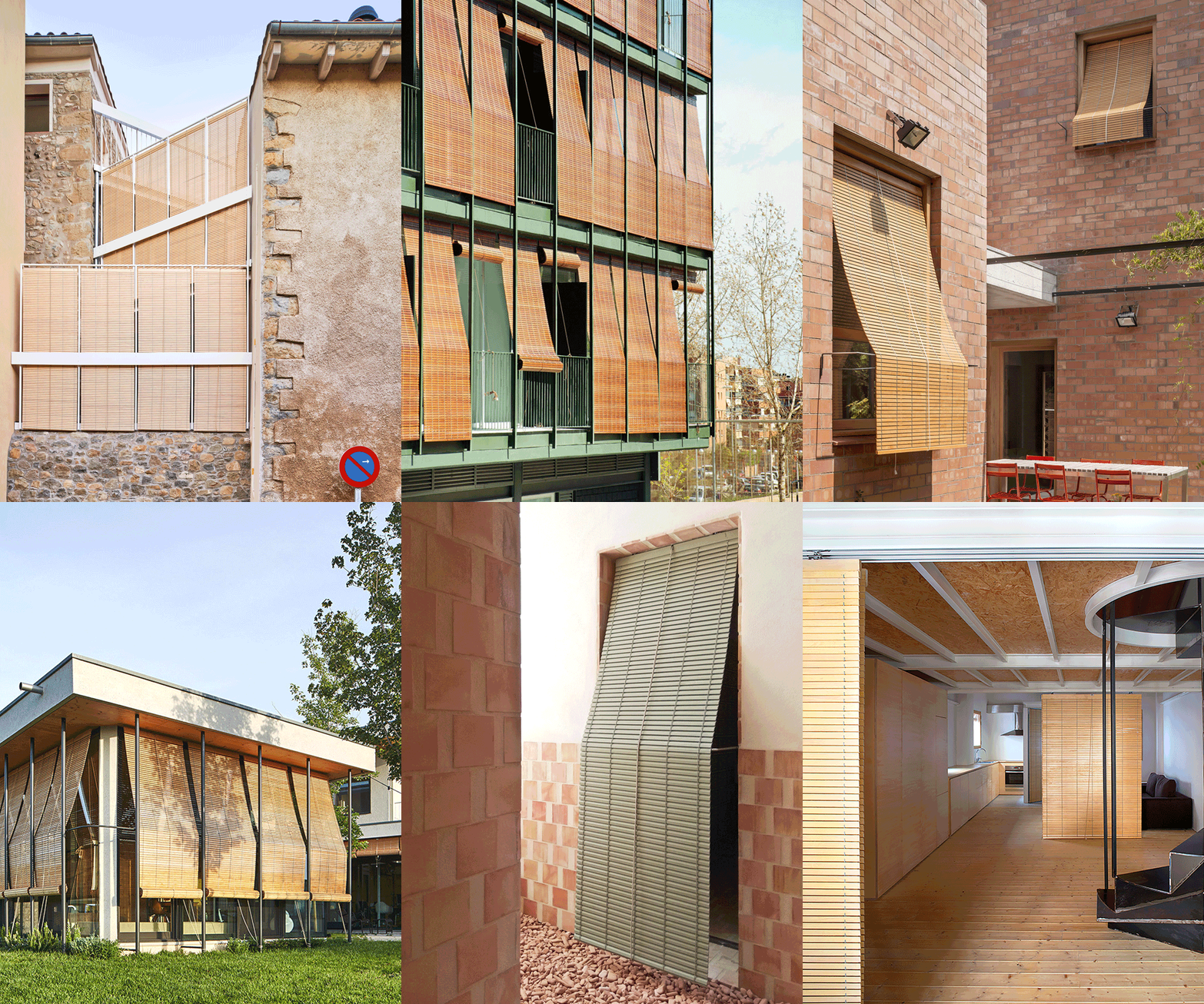
Throughout history, sunshades--light-weight screens typically made of interwoven wooden reeds--have been the go-to method of sun protection and temperature control for dwellings across civilizations, especially those located in tropical and Mediterranean climates. While offering protection from the sun's heat and rays, sunshades also allow air to permeate, making them an effective and economical cooling system for interior spaces.
When designing in times of quick and constant transformations, one must keep a close eye on the surge of new demands, and one must design spaces that embrace such mutability.
Flexible furniture is a reflection of this contemporary behavior because they can be moved around easily, they have great adaptability, and because they can perform different functions in a single piece. These pieces enable several different layouts, being able to adjust their shape according to specific requirements and changes, which helps optimizing interiors.
In a time where space grows more and more limited and people increasingly spend time at home, flexibility presents itself as an underutilized strategy of interior design. With flexible furniture, residents can optimize square footage and easily reshape configurations according to specific requirements and shifting needs. Below, we discuss the benefits and variations of furniture on wheels, closing with 7 example projects illustrating their creative and practical application.
https://www.archdaily.com/950641/why-should-we-design-spaces-with-furniture-on-wheelsLilly Cao
A new six-story net-zero carbon office development in Vauxhall, London, UK has been granted planning commission by the city council to move further. Designed by FCBStudios, the timber workspace named Paradise, will transform an abandoned site on old Paradise street, and replace the existing disused roastery.
Part of Delft University of Technology (TU Delft), in the Netherlands, Echo is a new multifunctional and flexible inter-faculty building, now under construction and due for completion in Dec 2021. Designed by UNStudio, in collaboration with Arup and BBN, the future-proof facility meets the needs of the ever-increasing numbers of students.