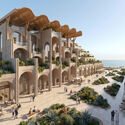
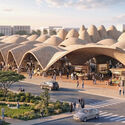
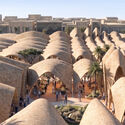
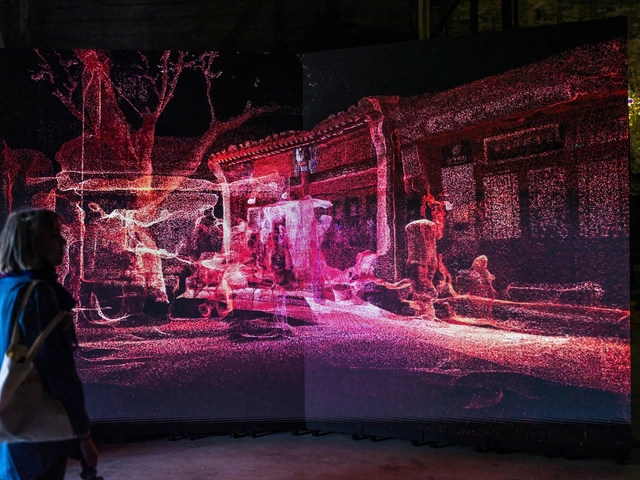
Benghazi 2050: Vision and Digital Planning Hub. Old Town. Image Courtesy of ZHA
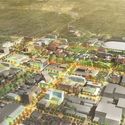
A team composed of ZHA, A&O TEC, Prior + Partners, Homa, Buro Happold, Systematica, and Fichtner recently unveiled its concept proposal for the "Next Generation City Plan" for Benghazi, Libya. The project aims to bring together the historic port city's identity-defining features with the planning technologies required to guide its development toward 2050, in a context of rapid urbanization. The proposal, developed for A&O TEC, includes a Vision and Spatial Strategy, which consists of an interpretation of the city's character and collective memory translated into an adaptable framework for development, and a Digital Planning Hub, an evidence-based model mapping the city to identify its potential and the phenomena shaping its growth.
Artificial intelligence has made its way into almost every corner of professional workflows, prompting the architectural industry to rethink how it works. To adapt to this shift, firms are now facing the limits of a model that has changed very little over the past few decades.
What has shifted, and noticeably so, is the pressure on productivity. Today's studios are expected to deliver more work faster and with greater accuracy, while managing tighter budgets, complex regulations, and rising client expectations. In practice, this translates into compressed timelines and a constant demand for precision that leaves little room for error. Often, much of this pressure falls on a small group of individuals who hold critical project knowledge.
As the building industry continues to account for a significant share of global carbon emissions, digital platforms are increasingly being developed to support carbon reduction across different stages of the design and construction process. These initiatives range from material-focused knowledge databases to project life-cycle guidance and early-stage embodied carbon assessment tools. While differing in scope and methodology, they commonly aim to improve access to technical knowledge, clarify responsibilities across the value chain, and facilitate more informed decision-making in the built environment. Recently, Henning Larsen launched OpenDetail, joining related efforts by Grimshaw and MVRDV to address decarbonization through shared digital infrastructure.
Founded by Oliver Thomas, the ATN Summit is the first flagship conference of the Archi-Tech Network, marking five years since the platform began as a grassroots initiative to share real-world architectural knowledge. Taking place on March 18–19, 2026, in London, the ATN Summit brings together architects, technologists, and industry innovators to explore how emerging technologies are reshaping architectural practice. Designed as a high-production, ideas-driven event, the Summit reflects ATN's evolution from an informal online conversation into a global platform actively engaging with the future of the built environment.
For nearly 65 years, the DETAIL brand has stood for meticulous research and comprehensive architectural documentation. The magazine articles and specialist books demonstrate how outstanding architecture is planned, designed, and executed. They provide in-depth knowledge of building construction, building typologies, and technical aspects of architecture.
DETAIL has become especially renowned for its construction drawings, which are carefully researched by editors and redrawn by an in-house CAD team in a standardized style.
How many software tools and platforms are involved today in developing a contemporary project? From designing a single-family house to a public library, relying on just one or two programs is no longer common. Instead, multiple tools combine, overlap, and interact throughout various stages, including analysis, design, rendering, coordination, and construction. This widespread use of software in the virtual world reflects not only the technical complexity of today's practice but also a more subtle yet equally significant shift: software has become less a specific tool and more an environment that accompanies and even challenges the process.
https://www.archdaily.com/1031629/architecture-in-the-age-of-platforms-what-role-does-software-play-in-practice-todayEnrique Tovar
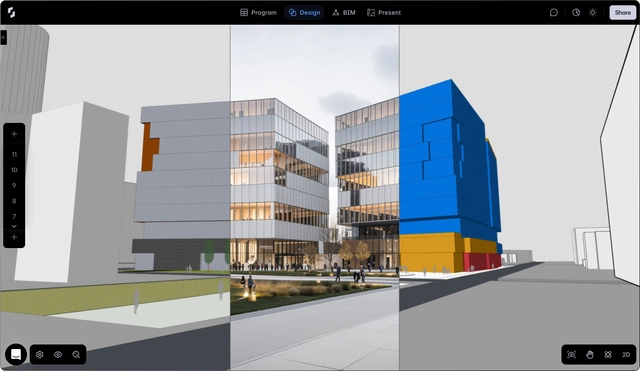
Early-stage design may be where everything begins, but without careful consideration, it's also where everything breaks down. On average, firms report that nearly 15% of all work done generates zero revenue, much of it tied to concept design. Relying on a patchwork of tools like Rhino, Excel, Revit, and Miro, architects often spend weeks swapping between platforms just to get a concept and presentation out the door. Data gets trapped in screenshots, rework piles up, and by the time the model is ready for documentation in Revit, the creative momentum is long gone. Snaptrude 3.0 Was Built to Fix that.
Finding the right job—or the right candidate—within the Architecture, Engineering, and Construction (AEC) industry can be a real challenge. As the sector evolves, professionals and companies alike are looking for more effective ways to connect, collaborate, and grow. AECO Space is a job and networking platform tailored specifically for AEC professionals. It offers a space for both employers and talent to engage in a more efficient, industry-specific hiring and networking process.
BoConcept combines heritage, simplicity, craftsmanship, functionality, and quality at the heart of their design philosophy
The modest origins of BoConcept – the furniture company founded in 1947 by young cabinetmakers Jens Ærthøj and Tage Mølholm, in the sleepy Jutland town of Herning – belie its standing as a beacon of Danish design. By harnessing and refining the key tenets of heritage, simplicity, craftsmanship, functionality and quality over 70 years, the brand has become Denmark's most globally recognizable name in furniture. It's a fact exemplified in timeless pieces such as its midcentury-style Imola armchair (inspired by the form of a deconstructed tennis ball) and the marshmallow minimalism of its Bellagio sofa – not to mention a proliferation of more than 300 stores in over 65 countries.
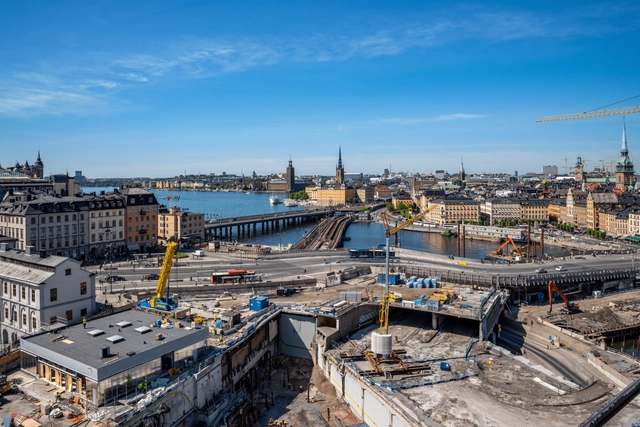
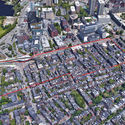
STOCKHOLM, SWEDEN - MAY 26, 2018: Cityscape view from above of large contruction site at the Old Town and Slussen in Stockholm Sweden May 26, 2018.. Image via Shutterstock | Per-Boge
Gendo Design to Image Output. Image Courtesy of Gendo
The introduction of AI generative tools represents one of the most significant technological revolutions in the field of architecture and design. While there is concern about this changing the working landscape for professionals in the field, a significant number of practices are embracing the new technology. Architectural visualizations represent one of the main areas where these changes take effect. However, the array of AI tools accessible to non-specialist users rarely allows for true control over the design process, often offering general interpretations of scripts. This can be helpful during early conceptual design phases but loses its appeal soon after. Gendo, a new browser-based app, aims to change this, offering the possibility to not only generate visualizations in seconds but also to edit and customize them, even introducing real-life products in the design. Until August 3, readers of ArchDaily can register and use the code ARCHDAILY50 to get 50% off any plan.
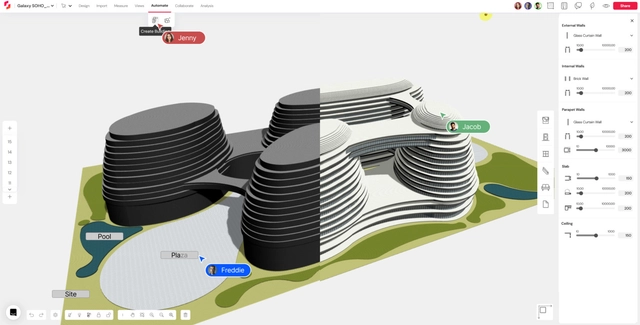
Transforming a conceptual massing model to BIM with Snaptrude’s automated workflows. Image Courtesy of Snaptrude
In the ever-changing world of design and construction, the tools at architects’ disposal have remained the same for decades. With its ability to deeply understand how architects design, Snaptrude has emerged as a collaborative 3D building design tool that incorporates smart, parametric modeling, live building information, easy real-time collaboration, and offers strong interoperability with other BIM tools like Revit.
By analyzing its wide variety of features, we showcase how Snaptrude empowers the design process to operate faster, smarter, and more collaboratively.
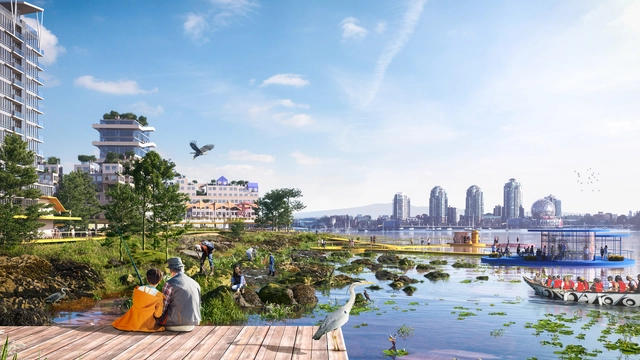
Architects, urban planners, and researchers from around the world are working on solutions to address the rising threat of climate change and climate-induced rise in sea levels and storm surges. Among them, MVRDV, as part of the North Creek Collective, has released a series of proposals for the city of Vancouver, mapping out possible adaptations of waterfront buildings, landscape, and infrastructure. On a similar note, a group of researchers led by Adrian Lahoud has developed the Second Sea Calculator, a digital tool that estimates the financial damages owned to coastal cities by different nations, while Human Climate Horizons has developed a platform for visualizing how different levels of global heating will affect people’s lives.
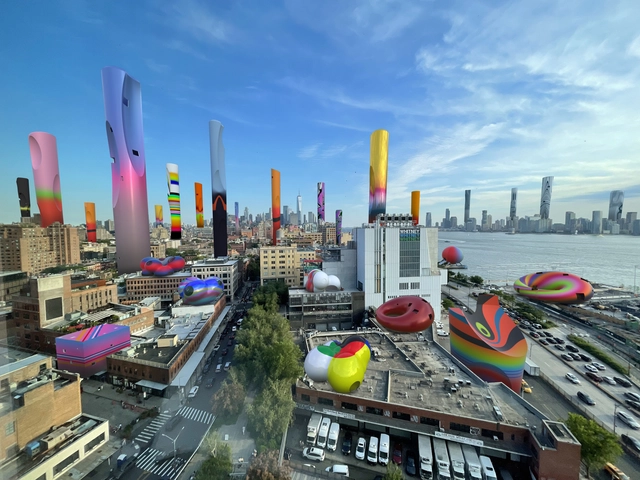
The promise of the metaverse, this new type of three-dimensional and immersive digital space, is proving to become more and more appealing to architects eager to explore the new realm of virtual creations. As it currently stands, the metaverse does not have a singular definition but is composed of many narratives and explorations. This unknown land is however fruitful ground for architects, who have to opportunity to shape not only the new environment but also the experiences of future users. The SOLIDS project represents one response to these conditions. Developed by FAR, an architect and engineer working with digital environments, SOLIDS uses a generative process to design unique, metaverse-compatible buildings.
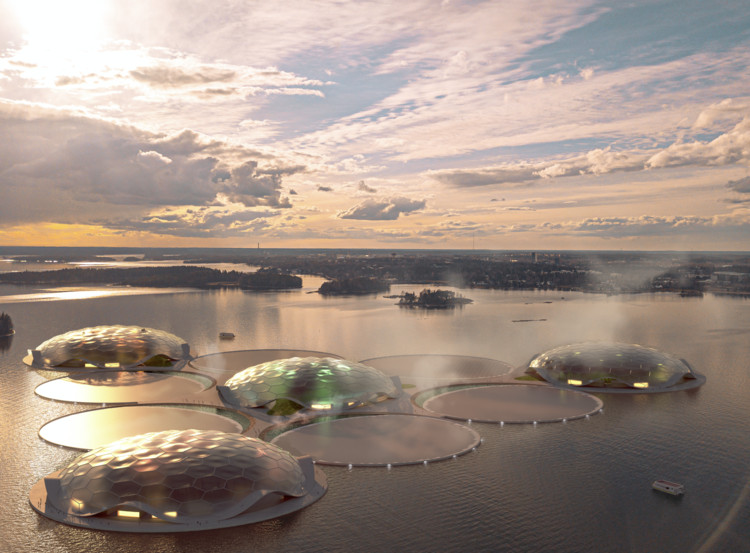
In 2021, CRA-Carlo Ratti Associati’s proposal to create sustainable alternatives for urban heating networks was selected as one of four winners of the global Helsinki Energy Challenge. The project entitled Hot Heart proposed “island-like, floating seawater reservoirs to heat the city of Helsinki in a green way”. Using Twinmotion, Epic Games’ real-time visualization platform for the architecture industry to design the intervention, the large scale infrastructural project needed a digital representation tool to possibly put scale into perspective, offer a real immersive experience to engage the client, and exhibit instant changes related to natural factors such as daylight. Come SpaceForm, a data-driven virtual presentation and design tool. Created to facilitate remote cooperation, the technology allows clients or stakeholders to be more immersed in the story of the design.
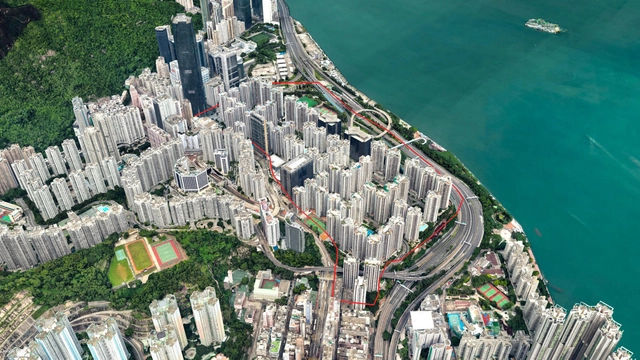
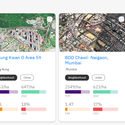
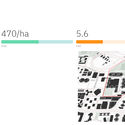
Global design firm Sasaki has announced the launch of Density Atlas, a new online platform for planners, urban designers, developers, and students immersed in the public realm, to have a better understanding about density. The platform explores the limitations of density and defines a more standardized set of metrics for understanding and comparing density across different global contexts, such as in urban centers, college campuses, or community under development.
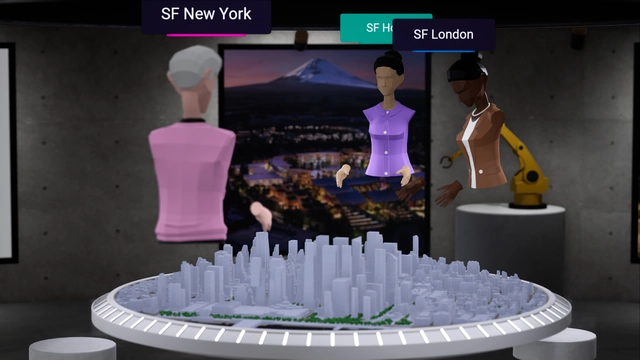
UNStudio and Bjarke Ingels Group have partnered up with Squint/Opera to develop SpaceForm, a virtual, cloud-based platform that facilitates design, review and collaboration processes for architects and developers. The new virtual workspace explicitly developed for the architecture and construction industry aims to fill a gap by creating a viable and sustainable way of collaborating and designing remotely across global teams, thus reducing the need for travel.
For the 17th international architecture exhibition – la biennale di Venezia 2021, Austria is creating a platform of debate around how we envision the architecture of the future. In fact, the Austrian contribution, entitled “Platform Austria”, curated by Peter Mörtenböck and Helge Mooshammer, seeks to articulate the profound changes established by the development of digital platforms in our built environment.