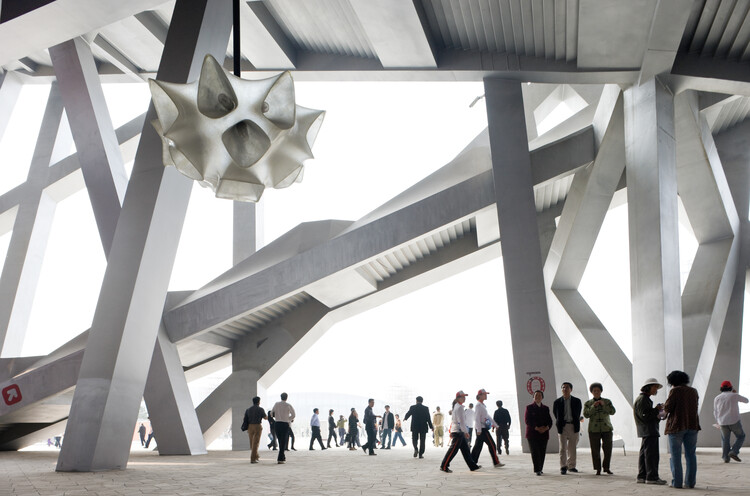
Despite being among architecture's oldest structural forms, domes continue to offer possibilities for creating large, column-free spaces and working with circular or free-form geometries beyond conventional rectangular building types. Their evolution has been closely tied to changes in materials, construction methods, and design tools. Today, digital platforms are adding another layer to this process, allowing some of the decisions traditionally developed later in a project to be explored much earlier.
An exhibition tracing the vision behind Herzog & de Meuron's ten selected projects in China will open on September 12, 2026, at the M+ Museum in Hong Kong. The exhibition marks the museum's fifth anniversary; since opening, M+ has built its collection around visual art, design and architecture, moving image, and Hong Kong visual culture from the twentieth and twenty-first centuries. The museum building, designed by Herzog & de Meuron between 2012 and 2021, is located in the city's West Kowloon Cultural District (WestK), a cultural hub spanning forty hectares alongside Victoria Harbour. "Herzog & de Meuron: In Focus" is curated by Ikko Yokoyama and Iris Ng and reviews projects dating from 2002 to 2021, including Tai Kwun in Hong Kong (2006–2018) and the National Stadium in Beijing (2002–2008).
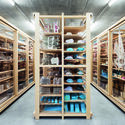
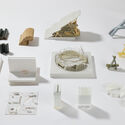
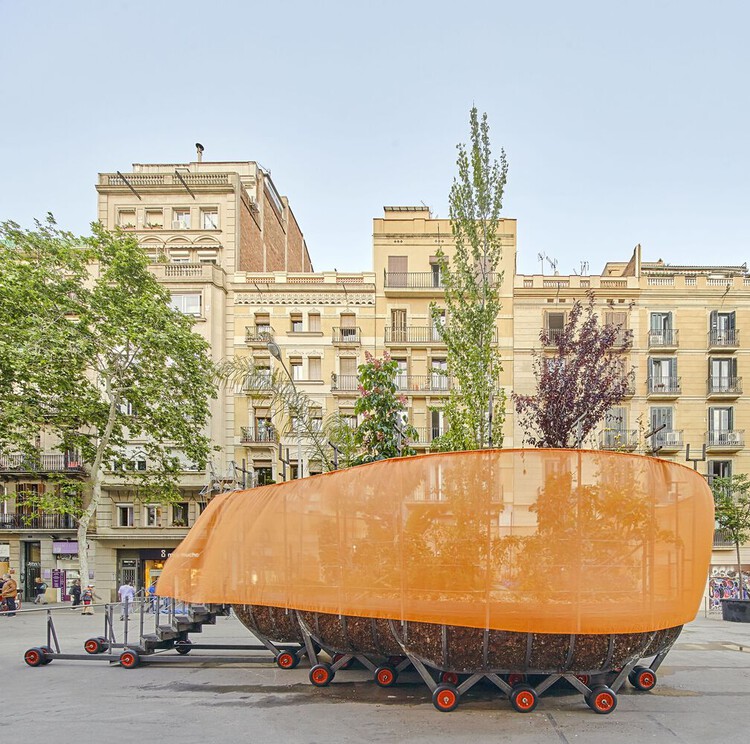
Architectural prototypes are often used to test decisions before construction begins. But in some practices, prototyping begins while those decisions are still taking shape. Moving an idea from drawing into matter introduces questions that depend on making itself: how a material can be cut or joined, how much a piece weighs, how an assembly comes together, whether parts can be reused, or even what form the project should take.
TAKK, salazarsequeromedina, and Ensamble Studio each make physical experimentation part of their design process, but they ask different things of it. For TAKK, prototypes help test how materials and components come together as a construction system. For salazarsequeromedina, models and built systems remain open to dismantling, recombination, and later uses. Ensamble Studio uses physical experiments to generate geometry and construction knowledge that can move into engineering and full-scale building. What distinguishes these approaches is not simply that they prototype, but what each practice expects to learn through the prototype.
Ellisse, location: Armando Cose, Designer: Philippe Malouin
Communicating an idea using only the essentials is a far greater challenge than it often appears. From Japanese haikus to the refined sculptures of Constantin Brâncuși, many artistic expressions have sought to condense the maximum meaning with the minimum of elements. This economy of form is not a sign of scarcity, but of intensity: every stroke, every word, every silence gains weight. There is something intrinsically appealing in what presents itself as simple and well-resolved, whether it is a text that wastes no words, a tennis player who moves with purposeful gestures, or a melody that is both direct yet unexpectedly profound.
That same principle, which transcends various artistic languages, resonates deeply in contemporary design. When reduced to the essential, furniture or everyday objects reveal a form of beauty that arises from precision and transcends their function. This is exemplified by HUM, the new collection of taps developed by designer Philippe Malouin for QuadroDesign, in which a simple gesture is transformed into a complete language.
Architectural schools usually leave lasting marks on their students, shaping their style and critical inquiry long after formal education has ended. For example, SCI-Arc, founded in 1972 and based in downtown Los Angeles, is an institution recognized for its culture of experimentation, critical investigation, and creative independence, building a reputation based on the idea that architecture should be understood as a field open to dialogue with art, technology, design, and contemporary culture. The diversity of trajectories of its alumni demonstrates how this environment can generate distinct professional approaches, but united by the same willingness to explore new possibilities.
Architecture has always depended on systems of representation to make ideas visible before they exist. But where Filippo Brunelleschi's fifteenth-century linear perspective once organized space according to human perception, today's architects face an unprecedented saturation of imagery. AI generates atmospheres in seconds, and projects circulate continuously long before construction begins. But the abundance of images does not necessarily produce greater clarity and as architectural workflows become faster and more fragmented, visuals sometimes circulate detached from the decisions, constraints, and intentions that generated them. The real value of modern visualization is no longer just about rendering a final image—it is about how design and visual communication are understood collectively throughout the entire process.
Architectural visualization has long played a key role in communicating and shaping design ideas. Today, that role is expanding. With the rise of artificial intelligence, visualization is becoming more deeply embedded throughout the entire design workflow, supporting faster iteration and more informed decision making.
Architectural drawings operate through abstraction. Plans, sections, and elevations condense spatial, constructive, and dimensional information into a set of codes that make sense within the discipline, but are not always immediately legible to those unfamiliar with this language. In some projects, this condition can create a recurring tension between what is designed and what can be understood. This intensifies when the tools used do not correspond to the scale and complexity of the design. In contexts such as single-family homes, renovations, or additions, overly complex software can introduce noise, delays, and unnecessary dependencies, making proposals harder to develop and convey.
As artificial intelligence continues to disrupt sectors of the economy and reshape entire industries, institutions and individuals alike are bracing—and rapidly adapting—to the changes that machines seem to hold over our heads. Yet the more precise pressure is not simply AI altering the way people work and live, but the business models and investment logics of the companies developing these systems: the concentration of capital, the new requirements for compute, the race for compartmentalized talent, and the infrastructural footprint needed to sustain it. In the Greater Bay Area—anchored by Guangzhou, Shenzhen, and Hong Kong—this dynamic is especially pronounced. Government-led initiatives are actively accelerating the industry's growth, with policy and planning mechanisms beginning to translate an ostensibly intangible field into physical form: zoning updates, earmarked land, and the emergence of AI-oriented building types, from research laboratories to large-scale data centers.
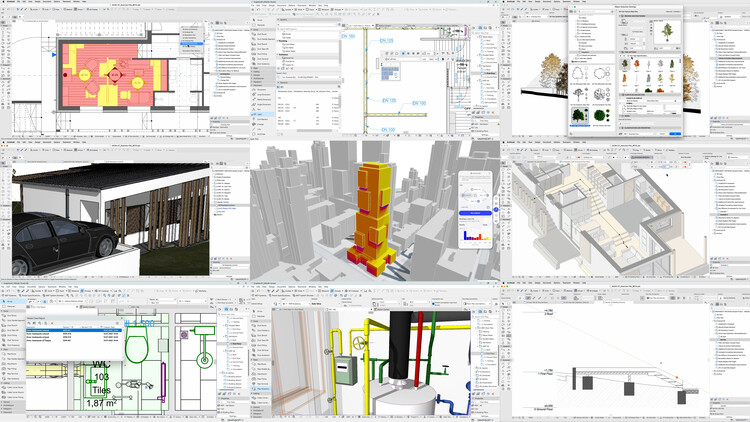
When architects are still students, a moment often marks a turning point: their first encounter with software. It's not just about learning a tool but discovering a space where ideas transcend physical models, taking shape in a digital environment and beginning a relationship many will carry throughout their careers. What happens next? Software keeps evolving, and with it, the design experience. In recent years, this evolution has accelerated—machine learning, AI, prompts, and integrated workflows have moved from the periphery to the core of design practice, becoming part of the shared language between software and users. As these tools take hold, a key question emerges: How will this reshape our experience of designing architecture in the future?
Every act of building begins with the transformation of raw materials, energy, and land, and this inevitably entails environmental impact. This encompasses all the changes a process triggers in the natural world: from resource extraction to pollutant emissions, from energy consumption to biodiversity loss. Measuring this is complex, as it spans multiple dimensions. Carbon has emerged as the common metric, translating these effects into greenhouse gas emissions (CO₂ equivalent) directly linked to global warming. This standardization has made it omnipresent and comparable across materials, systems, and sectors. Reducing carbon emissions, therefore, means addressing the root of global warming, which is a particularly urgent task in the construction industry, responsible for about 39% of global emissions. In response to this challenge, MVRDV NEXT, the innovation and digital tools division of the Dutch architectural firm, launched CarbonSpace, a free, open platform that brings carbon accounting to the architect's desk, right at the napkin sketch stage.
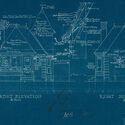
Architecture's design process has always been shaped by the tools at hand. We once drew with pen and ink on fragile sheets, copied by blueprint and guarded against smudges and tears; then Mylar arrived, making revisions and preservation easier and nudging drawings toward a leaner, more deliberate economy of lines. Computer-aided drafting followed, speeding coordination and changing how we think about scale and precision. Today, AI adds another layer—gathering information in seconds and spinning images on command—promising new efficiencies while raising fresh questions about authorship and craft. What we make, and how we make it, has evolved with each tool; the history of our methods is the history of our ideas.
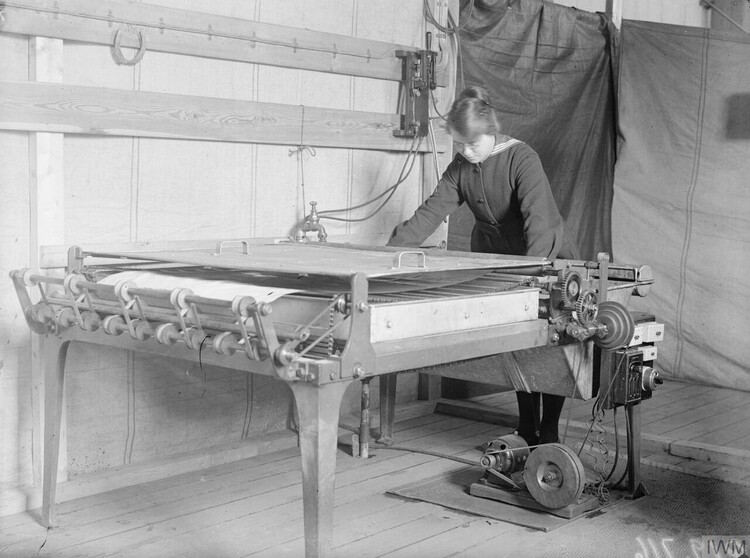
Beginning in the post-war era, Mylar (developed in the 1950s) eased drawing reproduction and hastened the shift from blueprint to whiteprint processes. Before Mylar, simply preserving drawings—keeping an idea intact, legible, and undamaged—was a significant task. Post-war design priorities often leaned toward efficiency, simplicity, and an industrial minimalism aligned with reconstruction needs. The tools reinforced this: architectural work remained predominantly hand-drawn, where every line took time to lay down and even more time to erase. That labour sharpened the economy of drawing; each stroke had to earn its place.
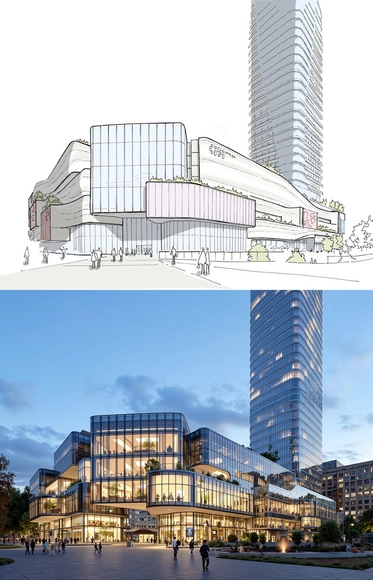
Architecture is a discipline that evolves through progressive stages, with each phase building upon the previous one. Schematic design, for example, begins with broad concepts and initial explorations, followed by site analysis, sketches, and 3D models, with adjustments made along the way. The true challenge lies not just in following this sequence but in balancing speed, quality, and efficiency to navigate the trade-off between time and quality. In this context, the integration of generative artificial intelligence in the built environment reshapes architectural dynamics by assisting architects and creating space for more experimentation and exploration. Its impact is especially significant in rendering, which was previously a constraint at different project stages—particularly during concept development. Today, however, AI-powered architectural rendering operates smoothly, allowing more focus on creative problem-solving through innovative tools and strategies.
https://www.archdaily.com/1027260/how-ai-powered-rendering-crushes-bottlenecks-in-architecture-and-interior-designEnrique Tovar
Examining the houses that architects designed for themselves can provide insight into their design process, priorities, and philosophy. While often reduced in scale, these personal residences offer a peek into the architects' mindsets and the way in which they translate their ideas into lived spaces without having client-imposed restrictions on the end result. The structures also reflect their creators' personal values, lifestyles, and aesthetic preferences.
These projects are often experiments and testing grounds for their own design principles, pushing the boundaries of architectural expression. From Ray and Charles Eames, who ended up spending their lives in an experimental house created for prefabrication, to Frank Gehry, who used his Santa Monica Dutch colonial house to test out the ideas of deconstructivism that would later come to define his career, these projects represent showcase a different face of the design process of world-renowned architects.
In an era marked by rapid urbanization, climate emergencies, and evolving societal needs, architecture has a complex role to play and a responsibility to engage actively yet sensibly with cultural, political, and economic considerations. In this context, Níall McLaughlin stands out for his balanced approach rooted in historical contexts, yet aware and responsive to contemporary challenges. His studio, Niall McLaughlin Architects, embraces a dialogue-centric approach, fostering a collaborative environment. ArchDaily's senior editor Maria-Cristina Florian had the chance to sit down with Níall McLaughlin and discuss his perspective on the role of architecture in today's society and the emerging challenges of architectural education.
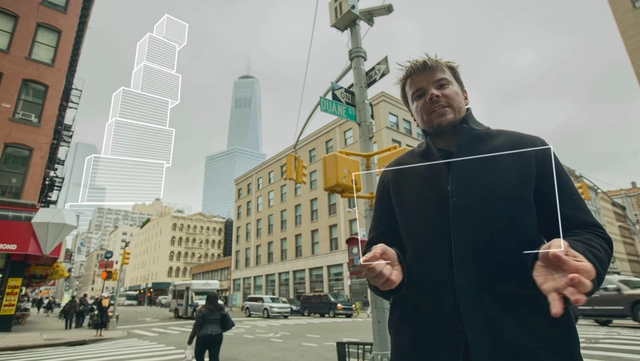
2 World Trade Center Video Clip / BIG, Squint/Opera. Image Courtesy of BIG
Architectural presentations to clients typically include renders, diagrams, and drawings. Interpreting these and envisioning the final product requires imagination and architectural insight to fill in the gaps and visualize a final product. BIG and Squint/Opera, a partnership between an architectural powerhouse and a creative digital studio, explore innovative methods to convey spatial and architectural design beyond traditional means. They reimagine architectural storytelling beyond static 2D visuals through cutting-edge video production and immersive technology, enabling clients and the general public to fully experience their futuristic visions of city planning and architectural design. Their notable collaborations include the video production for the Toyota Woven City Project and the creation of the VR collaborative design tool HyperForm.
In a conversation with ArchDaily, Daniel Sundlin, partner at BIG, and Matt Quinn, Commercial Director at Squint/Opera, discuss their insights on the future of architectural digital storytelling.
This article is the tenth in a series focusing on the Architecture of the Metaverse. ArchDaily has collaborated with John Marx, AIA, the founding design principal and Chief Artistic Officer of Form4 Architecture, to bring you monthly articles that seek to define the Metaverse, convey the potential of this new realm as well as understand its constraints. In this feature, architect John Marx questions the limits and capabilities of AI in architecture and in creating buildings that resonate deeply with people and communities.